$1B Fusion SPAC + Geothermal Cash = Green-Tech Goes Nuclear
TL;DR
- $1B SPAC: General Fusion Just Broke the Green-Tech Chart. Is Canada about to become the green-tech capital of the world?
- $80B Data-Center Bet: Google's AI Gamble Spooks Wall Street. Is Google's $80B AI bet a genius move or a reckless gamble?
- $750M Debt Move: Brookfield Bets Big on AI Future. Is Brookfield's $750M debt bet on AI genius or gambling?
🔥 The Fusion and Geothermal Power Couple Just Broke the Green-Tech Chart
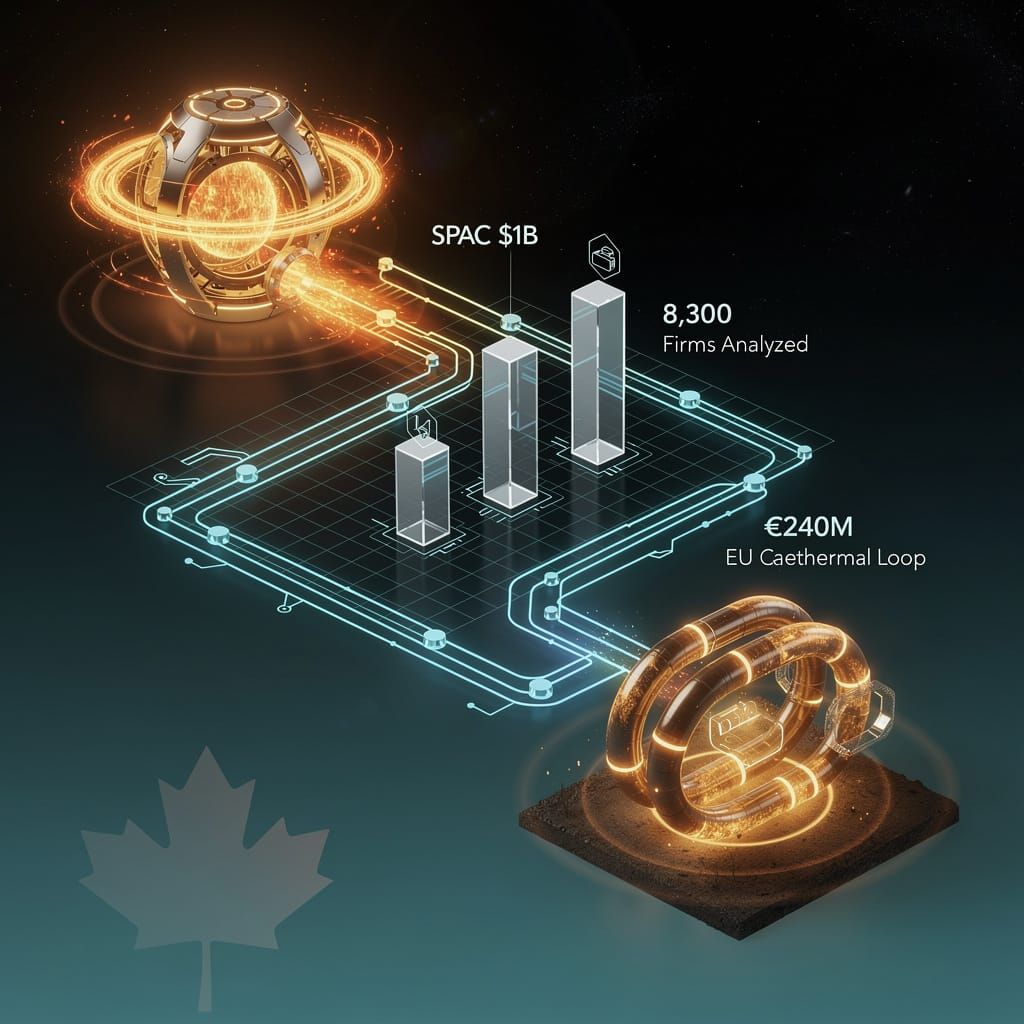
General Fusion just dropped a $1 BILLION SPAC bomb to go public on the NASDAQ 🤯 That's like buying a private jet for your fusion reactor—talk about a fast track to the future. Meanwhile, Eavor is literally making money from the earth's heat in Germany. The clean-tech race just got real. But with all that IP floating around, hackers are licking their chops. Is Canada about to become the green-tech capital of the world, or is this just a really expensive fireworks show? 🔥
Ever feel like the clean-energy revolution is moving at the speed of a glacier? Well, grab your sunglasses, because the ice just cracked. This week, the sector got a double shot of adrenaline, and two Canadian companies are at the center of the action.
Who’s Topping the Charts?
First, General Fusion and Eavor didn’t just make the list; they topped Time Magazine’s 2026 Top GreenTech Companies list. Think of it as the Oscars for the planet-friendly crowd. This isn't just a pat on the back; it’s a signal flare to the global investment community. The ranking, based on a deep-dive by Statista into over 8,300 firms, uses hard metrics—environmental impact, financial health, and IP strength. For General Fusion and Eavor, that spotlight just turned into a laser.
General Fusion’s Big Bet: A $1 Billion SPAC Attack
Hot on the heels of the Time accolade, General Fusion dropped a bombshell: a $1 billion SPAC financing to go public on the NASDAQ. That’s not pocket change. A SPAC—Special Purpose Acquisition Company—is a fast-track way to go public, and a billion-dollar one is a massive vote of confidence. The company is essentially saying, “We’ve got the tech, the timeline, and the trust. Now, give us the capital to build the future.” Expect a lot of champagne (and a few nervous investors) as they ride the market wave.
Eavor: From List to Reality in Germany
While General Fusion is chasing the sun (or rather, a star’s core), Eavor is digging deep—literally. They just launched a commercial geothermal plant in Germany, turning heat from the earth’s crust into actual, sellable power. This isn’t a pilot. It’s a revenue-generating, operational facility. They also secured funding for their first full-scale project. It’s the kind of milestone that transforms a promising startup into a serious energy player.
What This Means for the Rest of Us
This isn’t just a win for two companies. It’s a signal that the clean-tech market is maturing. JPMorgan analysts are already pointing to 250 top firms and noting robust capital inflows, with France throwing in a €240 million sustainable energy plan for good measure. The money is moving.
But with great power comes great… cybersecurity risk. All this intellectual property and data? It’s a juicy target for hackers. And the supply chain for all those shiny new solar panels, turbines, and geothermal pipes? It’s going to feel the heat. Expect policymakers to scramble to keep up with the surge.
The Crystal Ball (with a Wink)
Short-term (2026-2027): More SPACs. More capital. More headlines. Fusion and geothermal will be the darlings of the investment world.
Medium-term (2028-2029): The rubber meets the road. Deployment scales, and the real challenges—cybersecurity, supply chains, grid integration—will become front-page news.
Long-term (2030+): If these bets pay off, we’re looking at a fundamentally different energy landscape. Less dependence on fossil fuels, more resilience, and a whole lot of new tech jobs.
The bottom line? The future isn’t just coming; it’s already plugging into the grid. And it’s Canadian.
💸🚀 $80B Data-Center Bet: Google's AI Gamble Spooks Wall Street
Alphabet just dropped $80 BILLION on data centers. 💸 That's more than most countries' GDP. They're betting the house on Gemini AI. But where's the cash coming from? Debt? Equity? No one knows. Startups get cheaper cloud tools, but also face a new Goliath. You in or out? 🚀
{ "article": { "title": "## Google’s $80B Data-Center Bet: A High-Stakes Game of Cloud Poker", "sections": [ { "heading": "### The $80 Billion Question: Where’s the Money Coming From?", "content": "Alphabet Inc. dropped a bombshell on June 5th, announcing plans to raise $80 billion for a massive data-center expansion. The goal? To fuel its Gemini AI ambitions and keep pace in the cloud-computing arms race. But here’s the kicker: investors immediately started side-eyeing the funding sources. Is Google planning to tap debt markets, sell equity, or raid its piggy bank? The lack of clarity has Wall Street buzzing—and not in a good way. Meanwhile, OpenAI is whispering about its own Michigan infrastructure projects, adding a spicy layer of competition. It’s like watching two tech giants play high-stakes poker, except the chips are data centers and the pot is the future of AI." }, { "heading": "### Jim Cramer: The Cheerleader or the Canary?", "content": "Jim Cramer has been on an Alphabet hype train since May 18th, when he raised his price target to $515 and praised the company’s cloud and Gemini AI growth. Bank of America and Goldman Sachs followed suit, reaffirming Buy ratings and fueling a bullish sentiment. But here’s the twist: Cramer also warned about Trump-era tariff discussions on AI manufacturing, which could throw a wrench into Google’s plans. It’s a classic case of "buy the rumor, sell the news"—except the news is an $80 billion bill. Cramer’s analysis on June 10th highlighted Alphabet’s stock-repurchase strategy and strong underwriting performance, but he also noted increased capital availability for competitors. In other words: Google’s moves are shaking up the entire ecosystem." }, { "heading": "### The Domino Effect: What This Means for Everyone Else", "content": "Alphabet’s expansion isn’t happening in a vacuum. Here’s how the fallout is already playing out:", "bullets": [ "Cybersecurity Risk: Rapid AI adoption and sprawling data centers create more attack surfaces. Expect a spike in phishing and ransomware targeting cloud infrastructure.", "Competitive Pressure: Microsoft, Amazon Web Services, Meta, and Apple are now under the gun to match Google’s pace. This could trigger a capital-spending war, squeezing smaller players.", "Supply-Chain Strain: Hardware and construction materials for data centers are already tight. This $80 billion injection will only worsen shortages, driving up costs for everyone.", "Market Volatility: Analyst ratings and stock-repurchase announcements are creating whiplash. Investors are reassessing risk premiums, leading to choppy trading in tech and financial sectors." ] }, { "heading": "### The Startup Angle: A Blessing or a Curse?", "content": "For startups, Alphabet’s aggressive AI push is a double-edged sword. On one hand, more cloud capacity and AI tools mean lower barriers to entry for building on Gemini. On the other hand, Google’s sheer scale could crush smaller competitors in the AI infrastructure space. The startup ecosystem might see a wave of acquisitions as Alphabet gobbles up innovative firms to fill gaps. But for bootstrapped founders? It’s a reminder that the AI game is now a billionaire’s playground." }, { "heading": "### The Bottom Line: A High-Risk, High-Reward Gamble", "content": "Alphabet’s $80 billion bet is a textbook example of "go big or go home." The upside? Dominance in AI and cloud computing, with Gemini leading the charge. The downside? A potential capital-allocation nightmare, supply-chain headaches, and a target on its back from regulators and competitors alike. For investors, the advice is simple: buckle up. The next few quarters will be a rollercoaster of earnings reports, tariff updates, and IPO cycles. And if Jim Cramer is any guide, the hype is real—but so are the risks." } ], "swot": { "strengths": "Strong analyst support (Goldman, Bank of America, Cramer), leading AI position with Gemini, massive cash reserves for repurchases, and deep cloud infrastructure experience.", "weaknesses": "Unclear funding sources for $80B expansion, exposure to tariff risks, and potential over-reliance on AI hype driving stock price.", "opportunities": "First-mover advantage in scaling AI infrastructure, partnerships with startups, and potential to set industry standards for cloud-AI integration.", "threats": "Competitors (Microsoft, AWS) accelerating their own investments, supply-chain constraints, cybersecurity vulnerabilities, and regulatory scrutiny from trade tensions." }, "forecast": [ "- 2026–2027: Alphabet’s data-center buildout will strain supply chains, but Gemini adoption could double, driving cloud revenue up 20%. Stock volatility remains high, with dips on funding announcements.", "- Q4 2028: If execution holds, Alphabet could capture 35% of the AI-cloud market, forcing rivals into costly catch-up. However, any misstep (e.g., cost overruns or security breach) could trigger a 15% share drop." ], "recommendations": "Investors should watch for clear funding details (debt vs. equity) and tariff policy shifts. Startups should explore partnership opportunities with Google Cloud but hedge against dependency. Cybersecurity teams must audit AI infrastructure risks proactively." } }
🤯 The $750 Million Question: Is Brookfield Buying Its Way Into the AI Future?
Brookfield just dropped $750M on debt to buy back its own stock. 🤯 That's enough to build an AI data center the size of a small city. They're betting the farm on AI paying off big time. If you own their stock, congrats—your shares just got a little fatter. But borrowing money to buy your own shares? Risky move if the AI bet flops. What do you think—is Brookfield genius or gambling? 💸
Alright, let’s talk about Brookfield Corporation. You know, the quiet giant that usually prefers its balance sheets boring and its growth steady? Well, it’s suddenly throwing around cash like a tech bro at a hackathon, and the market is loving it. On June 11, 2026, Brookfield renewed its share buyback program on the Toronto Stock Exchange, a move that screams, “We’re confident, and we have a plan.” But the real story started a month earlier, on May 14, when they announced a $750 million debt offering, complete with reopened medium-term notes and a 2055 bond issue. That’s not just a financial maneuver; it’s a declaration of intent.
What’s the Big Deal?
Brookfield is essentially saying, “We’re borrowing money to buy our own stock because we believe our AI investments are going to pay off big time.” The $750 million debt issuance is earmarked for strategic growth initiatives, and analysts are already raising price targets, pointing to AI positioning and revenue growth. The company is betting that the AI boom isn’t just hype—it’s a structural shift. And they want in, big time.
The Ripple Effect
- Market Confidence: The buyback signals that Brookfield’s management thinks its stock is undervalued. When a company with a reputation for conservative finance starts buying its own shares, investors pay attention. Expect a short-term boost in sentiment.
- Investor Sentiment Shift: This isn’t just about Brookfield. It’s a broader signal that “old money” is betting on AI. Expect more institutional cash to flow into AI stocks, which could inflate valuations but also accelerate innovation.
- Regulatory Scrutiny: Here’s the catch. When you start moving that much capital around, regulators start sniffing. The increased debt issuance and buyback activity could attract more oversight, especially in a politically charged environment. Cybersecurity risks also spike because more capital flowing means more targets for bad actors.
- Supply Chain & Energy Shifts: Brookfield is also an infrastructure and energy player. This capital injection will likely accelerate their investments in renewable energy and data center infrastructure, which are the backbone of AI. Expect supply chain adjustments to accommodate new capital flows, and a shift in energy investment focus toward renewables.
How It Happened: The Causal Chain
- May 14, 2026: Brookfield issues $750M in debt, reopening medium-term notes and selling a 2055 bond. The goal: fund strategic growth initiatives, primarily AI.
- May 29, 2026: Analysts raise price targets, citing AI positioning and revenue growth. Investor sentiment shifts positively, increasing market volatility as more traders jump in.
- June 11, 2026: Brookfield renews its share buyback program on the TSX, aiming to enhance liquidity while navigating regulatory environments. This is the final confirmation that the company is all-in on its AI strategy.
The Human-Scale Impact
This isn’t just about a corporation playing with numbers. Consider this:
- $750 million could fund the development of a new AI model that can diagnose diseases faster than any human doctor, or it could build a data center the size of a small city.
- The buyback means that if you own Brookfield stock, your shares just got a little more valuable. But it also means the company is borrowing money to do it—a risky move if the AI bet doesn’t pan out.
- The regulatory scrutiny could mean new compliance costs that eventually trickle down to consumers, affecting everything from your electricity bill to your cloud storage subscription.
Short-Term Outlook (2026-2027)
- 2026: Expect continued volatility in AI stocks as Brookfield’s moves validate the sector. More capital will flow in, but regulatory noise will increase. The buyback will likely boost share prices by 5-8% in the short term.
- Q4 2026: Brookfield’s AI investments will start showing early returns, but operational costs will rise due to debt servicing. Watch for margin compression.
- 2027: If the AI investments pay off, Brookfield could become a major player in tech infrastructure. If not, the debt burden could weigh on earnings. The regulatory landscape will be a wildcard.
Mid-Term Outlook (2028-2029)
- 2028: Expect Brookfield to spin off or IPO its AI infrastructure unit if valuations justify it. This could unlock significant shareholder value.
- 2029: The energy shift will be in full swing. Brookfield’s renewable investments will start to offset the carbon footprint of its AI data centers, potentially making it a darling of ESG-focused investors.
Long-Term Outlook (2030+)
- 2030: Brookfield’s AI strategy will either be a textbook case of successful capital allocation or a cautionary tale of overreach. The key metric to watch is the return on invested capital (ROIC) from these initiatives.
- Sectoral Implications: Expect consolidation in the AI infrastructure space as players like Brookfield muscle in. Smaller startups may struggle to compete, but they’ll benefit from the increased capital flow through partnerships and acquisitions.
Recommendations
- For Investors: Brookfield is a high-conviction bet on AI infrastructure, but it’s not without risk. Consider hedging with positions in cybersecurity and renewable energy to balance the portfolio.
- For Regulators: Keep an eye on the debt-to-equity ratios of companies like Brookfield. If the AI bubble bursts, the debt overhang could be significant.
- For Competitors: Partner with Brookfield rather than compete. Their capital scale is hard to match, but their infrastructure expertise can be leveraged.
The Bottom Line
Brookfield’s moves are a textbook example of how traditional finance is betting on the future of AI. It’s bold, it’s risky, and it’s exactly what the market needs to validate the AI narrative. But as always, the devil is in the details—and the debt. Keep your eyes on the balance sheet, folks.
Comments ()