Yemen cholera cases triple as response stays 12% funded
Suspected cholera cases in Yemen tripled over three weeks to 647, per WHO, with five governorates accounting for 92%. WHO's response appeal is about 12% funded, and officials say the outbreak continues without full-scale funding.
Yemen's suspected cholera cases tripled over three weeks, from 217 in the week of September 6–12 to 647 in the week of September 27–October 3, according to the World Health Organization. WHO put the cumulative 2026 total at 8,034 suspected cases and 27 deaths, reported October 13, 2026, with a quarter of all cases occurring in the last four weeks. Five governorates — Abyan, Lahij, al-Dhalea, Taiz and Aden — account for 92% of cases.
Suspected cases aren't lab-confirmed infections, and the 27 deaths are people who met the clinical case definition. That distinction matters where the testing and reporting chain is itself strained.
How the outbreak is moving
Cholera spreads when people drink water or eat food contaminated with Vibrio cholerae, usually through sewage mixing with drinking-water sources. Most infections cause mild illness or none; a minority produce severe watery diarrhea that can kill within hours through dehydration. The visible case count tracks population mobility, water quality and treatment access rather than the pathogen alone.
The reported drivers follow that pattern: renewed fighting displacing civilians, overcrowding, inadequate safe water access and disrupted health services. WHO attributes the outbreak to war-related factors, including transmission in displacement camps. More than 200,000 people have been displaced since August, by UN estimates. WHO's Annette Heinzelmann and Stéphane Dujarric have linked water contamination to the case growth, and the UN has described a tightening blockade around Taiz, including blockage of the main road that carries supplies into government-held areas. Each factor plausibly feeds the surge, but the reported evidence establishes the pattern, not the size of each contribution.
Where the response chain is failing
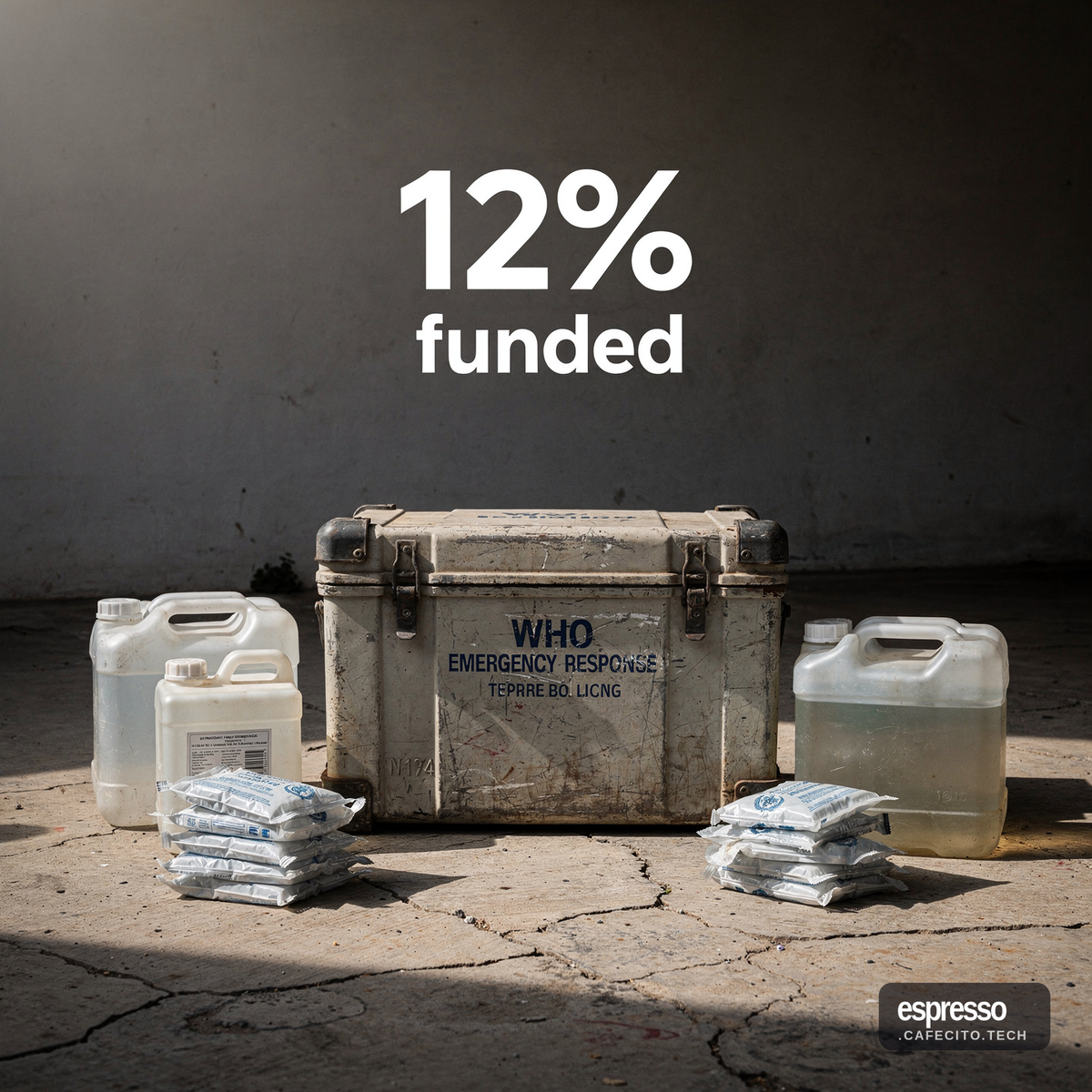
Funding is the sharpest documented gap. WHO and partners secured $3.78 million of the $31 million needed for a 90-day emergency response — about 12%. A separate UN OCHA account of the same appeal put the figure at $4.3 million. Either way, the shortfall lands on the operations that break a cholera chain: chlorinating water supplies, delivering oral rehydration solution and antibiotics, staffing treatment centers, and running the field teams that trace contacts and test samples.
Food insecurity compounds the problem. On October 2, the World Food Programme reported that 74% of households in accessible government-held areas cannot meet basic food needs — the highest level recorded this year — and that wheat flour prices rose 10% in parts of Taiz over two weeks. WFP's Matthew Hollingworth said staff can't reach about 350,000 people in Taiz and Hodeidah cut off by fighting, and that WFP needs $109 million for emergency food and nutrition. Nationally, 18.3 million people face acute food insecurity, and 2.2 million children under five are acutely malnourished, including 500,000 with severe acute malnutrition, per WFP figures. Malnutrition worsens cholera mortality because undernourished patients tolerate fluid loss poorly; the available data doesn't quantify that effect in this outbreak.
Fuel and supply constraints feed the same chain. UN OCHA reports cooking gas largely unavailable in Taiz, petrol prices tripled, and wheat and flour stocks expected to last under three weeks — shortages that threaten the water pumping and treatment services cholera response depends on.
The picture is bigger than cholera. More than 22,800 suspected measles cases and 128 deaths have been reported this year, with vaccination coverage estimated at 45% for each dose, and roughly 500 health facilities lack partner support. Those numbers describe a health system under strain rather than a single outbreak contained at a few treatment centers.
What remains unknown is how much of the three-week rise reflects real transmission and how much reflects better reporting as cases reach clinics. Without reliable testing and case-investigation data, the two can't be separated with confidence — which is why the count stays labeled suspected.
The clearest number here is the gap between the reported case count and the resources committed to the response. WHO's own assessment is that the outbreak continues unless funding reaches full scale within ten days.


Comments ()