Stelco idles Hamilton plant; up to 500 laid off
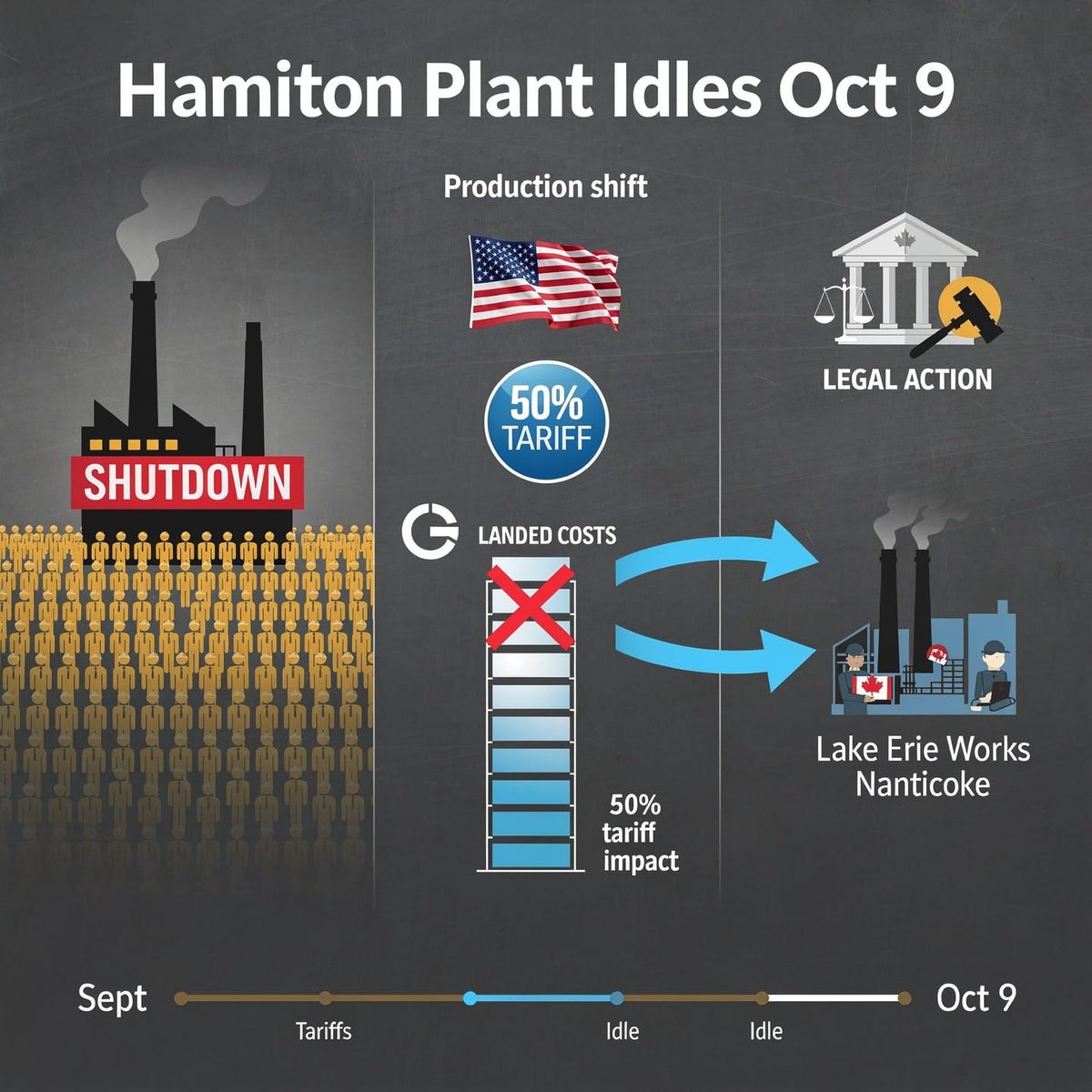
Stelco is idling its Hamilton, Ont., steel plant indefinitely starting Oct. 9, citing U.S. Section 232 tariffs that made cold-rolled and coated output for U.S. buyers unaffordable. Up to 500 workers face layoffs—the union estimates closer to 350—with production shifting to Lake Erie Works. The exact headcount and shutdown duration remain unresolved. Ottawa has floated support, but Stelco says it isn't enough to change the plan.
Stelco Holdings Inc. began idling its Hamilton, Ont., plant on Oct. 9—an indefinite shutdown tied to U.S. Section 232 tariffs, which company and government officials say have made cold-rolled and coated steel output for U.S. buyers unaffordable. Up to 500 workers could be laid off, with the union estimating closer to 350. Cold-rolled, galvanized, and coated production is being absorbed at the company's Lake Erie Works in Nanticoke, Ont., though that site has also seen delays on some jobs.
Stelco, owned by Cleveland-Cliffs Inc. since a $3.4 billion acquisition in 2024, is redirecting that production under labor continuity conditions that required maintaining unionized and non-unionized employee counts for five years. CEO Lourenco Goncalves has tied the decision directly to the U.S. tariffs, which impose up to 50% duties on Canadian steel and aluminum. The tariff structure raises the delivered cost of Canadian steel in the U.S. market, where a large share of output sells, and trade disruptions have created oversupply in the Canadian domestic market.
Here is the mechanism at issue: Cleveland-Cliffs allocates manufacturing across its North American footprint, and under the current duties running Hamilton's value-added lines for U.S.-bound orders no longer clears the landed-cost bar. With the Canadian market oversupplied on top of that, the company says it can't justify keeping the lines running and is refocusing on hot-rolled output. Unionized production staff, represented by United Steelworkers Local 1005, are covered by the layoff.
Canadian officials have responded. Prime Minister Mark Carney said the federal government has resources to pursue legal action over the move and expressed disappointment at the layoffs. Foreign Affairs Minister Mélanie Joly said Ottawa is examining the compliance risk posed by the shift. Federal authorities, per reports, are looking at the workforce losses tied to the tariffs, and federal support has been floated—though Stelco says that support is insufficient to change the plan. Trade talks between Ottawa and Washington broke down last month, with no new meetings scheduled, while President Donald Trump has said he could strike a trade deal with Canada in coming weeks.
The main open number is the exact headcount. Reports range from roughly 350 to 500 Hamilton staff, with the union and Ontario officials pressing for a final count and the disruption's duration. The timing is worth watching: reports dated late September describe the idle as indefinite, so the Oct. 9 shutdown start will show whether the announced timeline holds and whether workers actually exit under the current tariff structure—with no scheduled trade talks, there is no immediate path to reversing the idle.

Comments ()