Spain mandates pay, schedule, algorithm terms in contracts
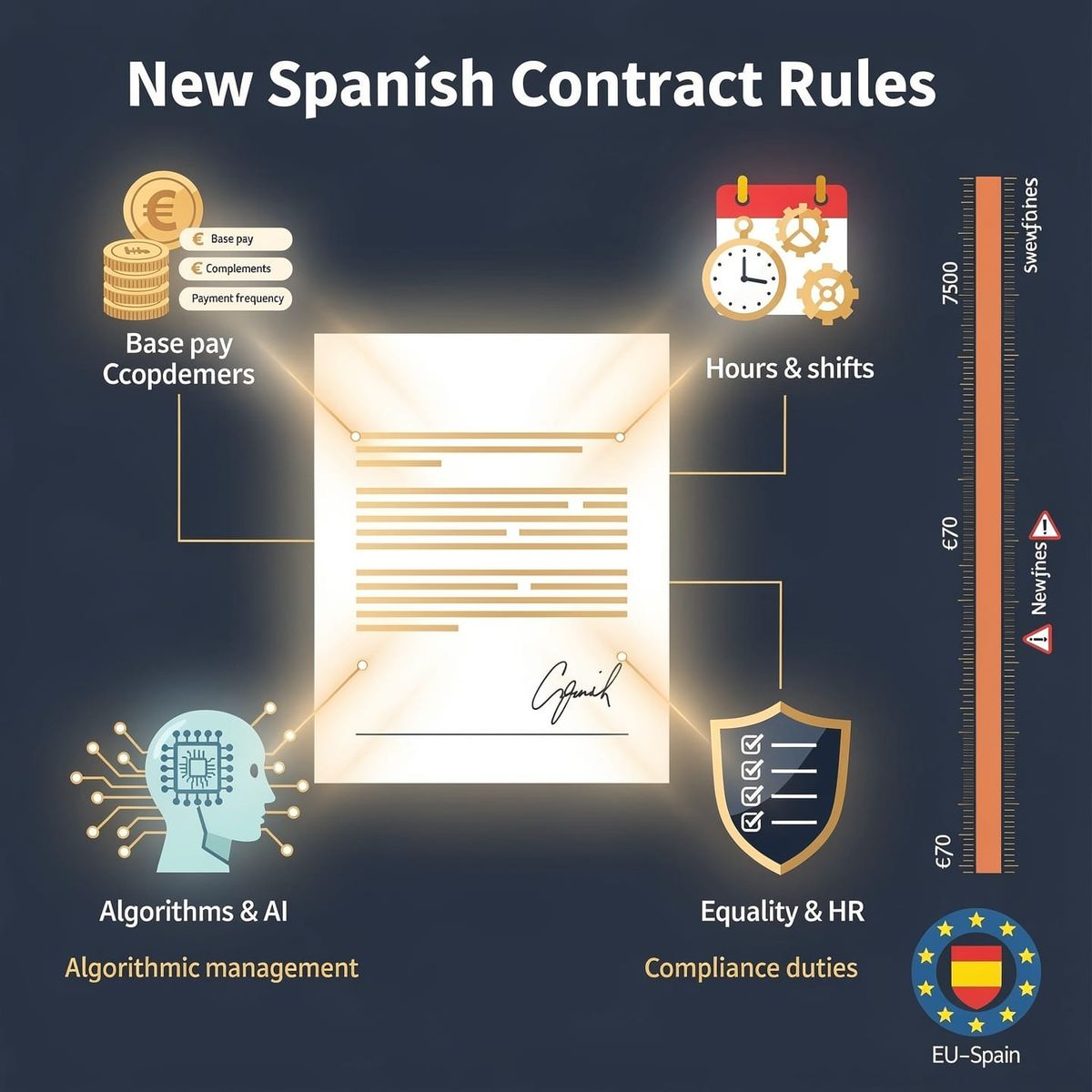
Spanish employers hit a new compliance deadline Monday, October 5: contracts must now spell out how wages, hours, scheduling, and algorithm-driven decisions are determined. The decree, published as BOE-A-2026-19200, applies across all sectors and carries fines of €70 to €7,500 for missing or incomplete clauses. Pay, schedule, and termination decisions can no longer be opaque, which strengthens judicial review of dismissal claims. But HR and payroll teams face the added burden of itemizing every remuneration component for existing staff who request it. How regulators will audit the algorithm-disclosure rule remains undecided.
Spanish employers hit a new compliance deadline Monday, October 5, under a real decreto that implements European Union Directive 2019 across all sectors. Contracts must now spell out how wages, hours, scheduling, and algorithm-driven decisions are determined. The decree, published as BOE-A-2026-19200, carries fines ranging from €70 to €7,500 for missing or incomplete clauses.
What changed
The decree rewrites standard contract information requirements across Spanish employers. Salary clauses must itemize base pay, complements, payment frequency, method, and how variable components are calculated and when they're received. Workday terms must state daily, weekly, and annual computation, and spell out handling for night shifts, rota work, irregular hour distribution, overtime, and how its premium is calculated. The Labor Ministry, under minister Yolanda Díaz, framed probation rules and compensation disclosure as part of the same transparency push.
Temporary contracts must name the enabling cause and link it to expected duration. Employers also have to disclose whether algorithmic or automated systems influence decisions on pay, schedules, task assignment, promotion, and termination, along with the rules behind those systems. Companies over 50 workers must confirm whether they maintain an equality plan, conciliation policy, sexual-harassment protocol, and LGBTI+ measures. Relevant collective agreements, their codes, validity terms, and Social Security details must be identified.
The information goes into the contract or an attached document before signing, and pre-existing employees who request the detail must get a response within 30 business days.
Who it hits hardest
Workers have a concrete payoff: pay, schedule, and termination decisions can no longer be opaque, which strengthens judicial review of dismissal claims when the documented criteria don't match what happened. But the operational stress lands on HR and payroll teams. The requirement to itemize every remuneration component and schedule rule — including algorithm logic — applies not just to new hires but to existing staff who request the detail, and the rules apply retroactively to active contracts at a time when the registry is still being stood up.
Union representatives report higher administrative burdens, and HR departments describe added document-revision time as they map pay structures and shift systems into contract language.
Where enforcement gets tricky
The decree doesn't yet answer how the algorithmic-disclosure clause will be audited — what counts as enough detail about "pautas, criterios y reglas," and which systems fall under the mandate. Fines for missing core contract elements are modest at the low end (€70–750), but non-formalization of the contract jumps to €751–7,500, so the real exposure is documentation that looks complete but fails the specificity test. Whether regulators will probe algorithm descriptions against the systems that actually run them — and how — remains the decisive unknown as the 30-business-day response deadline and auditing schedules take shape.

Comments ()