Dartmouth Health cuts 124 jobs, cancels 303 open roles
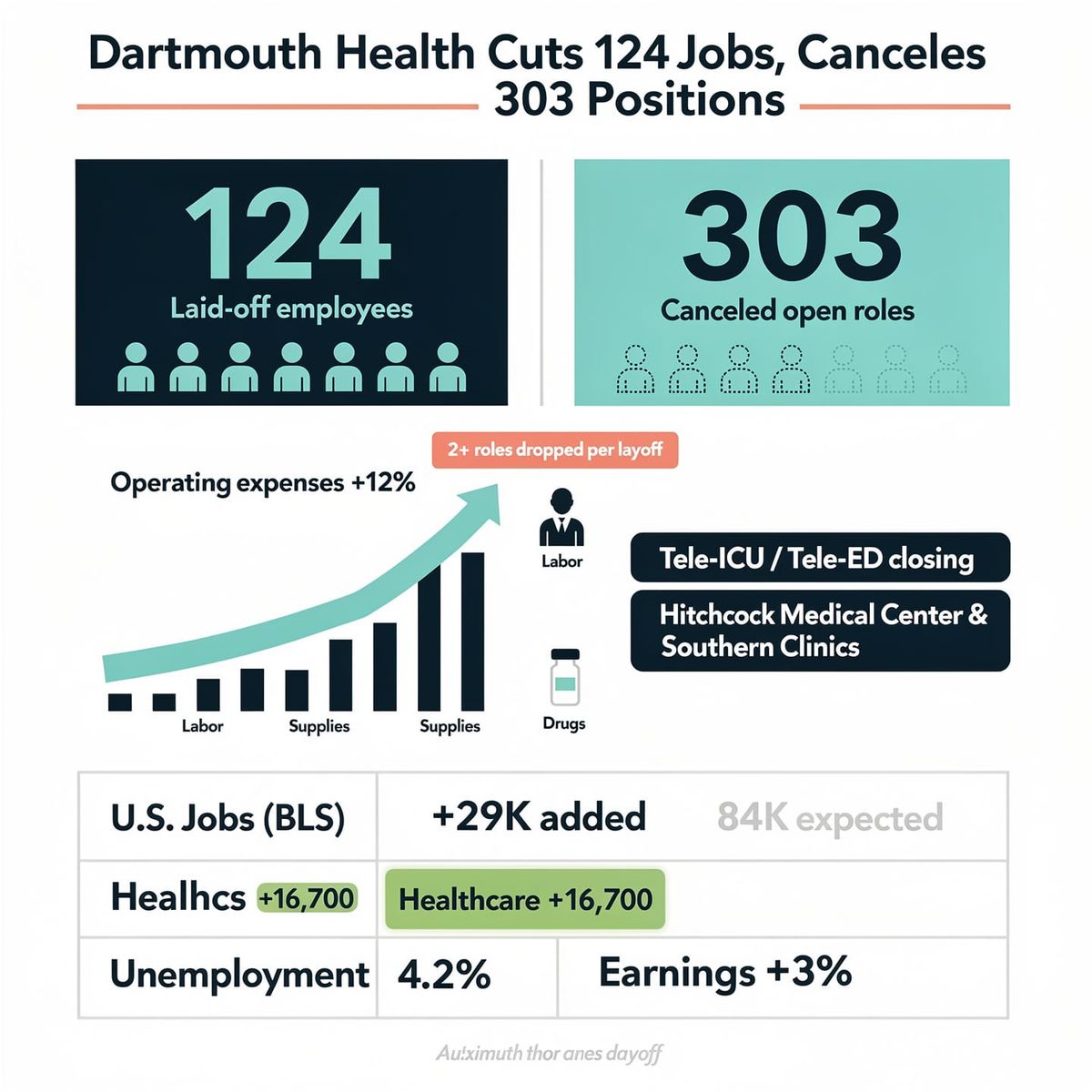
Dartmouth Health will cut 124 current jobs and drop 303 open positions by the end of October, touching Dartmouth Hitchcock Medical Center and the Southern Region clinics while consolidating leadership roles. The network frames it as a cost squeeze, not falling demand: a 12% rise in operating expenses, with labor, supply, and drug costs climbing against shrinking insurance reimbursements. It's also closing Tele-ICU and Tele-ED services, requiring alternative patient-care plans. More than two open roles are being dropped per active employee laid off—pointing to a larger future capacity cut than today's staffing.
In late September, Dartmouth Health said it will lay off 124 employees and cancel 303 open positions, effective by the end of October. The cuts touch Dartmouth Hitchcock Medical Center and Dartmouth Hitchcock Clinics Southern Region, and consolidate executive and administrative leadership roles. The network is also closing its Tele-ICU and Tele-ED services, which will require alternative patient care plans.
Dartmouth Health frames the move as a cost problem rather than a demand problem: patient revenues have been outpaced by a 12% rise in operating expenses, with labor, supply, and drug costs climbing while insurance reimbursements fall, per the organization. An Acceleration to Transformation Office created in April reviewed staffing models and fed these decisions. The results—124 current employees laid off against 303 roles dropped—point to capacity being drawn down ahead of need.
What the numbers do and don't show
The 124 layoffs and 303 cancellations don't add to a single headcount reduction of 427; the two figures describe different things and the material doesn't reconcile them into one staffing number. The sharper reading is the ratio: more than two positions dropped for every active employee laid off, suggesting a bigger future capacity cut than current staffing.
The $16.8 million savings figure in the reporting is attributed to a separate but adjacent plan. The same September announcement covered Dartmouth Health and the University of Vermont Health network; per that release, the UVM Health cuts—roughly 199 staffers across six hospitals in its New York and Vermont footprint, plus two patient care unit closures—are expected to save $16.8 million. It isn't itemized how much of that traces to Dartmouth Health's own reductions.
A sector still hiring, regionally strained
Against this sits a U.S. jobs picture that's still weak overall but keeps adding healthcare roles. The September Bureau of Labor Statistics report showed 29,000 jobs added—well under the consensus estimate of 84,000—with healthcare contributing 16,700 of that. Average hourly earnings rose 3% year-over-year, against inflation the reporting says is running faster. August's gain was revised down from 162,000 to 133,000, and July moved from a gain of 21,000 to a loss of 10,000; combined, revisions cut the prior two months by about 60,000. Unemployment ticked up to 4.2% from 4.1%, even though the labor force grew by 485,000.
The split between a sector still adding jobs nationally and a regional system cutting more open roles than active staff is consistent with facility-specific financial strain rather than a broad healthcare collapse. The release's supporting detail—rising drug and supply costs, falling reimbursements, a 12% operating expense jump—tracks the system's own account of the squeeze.
What isn't public is how the math nets out. No itemized breakdown connects the 124 layoffs and 303 cancellations to the $16.8 million savings attributed to the paired UVM Health plan. Whether those canceled roles return depends on the contract and reimbursement losses driving the restructuring, figures Dartmouth Health hasn't broken out.



Comments ()