Mexico's $12,500 Olinia EV Undercuts BYD Seagull by $3,000+ — But Grid & Tariff Risks Loom
TL;DR
- Mexico’s $12,500 Olinia EV: Cheapest in Latin America — But Can Grid and Security Risks Stall Its Rise?. Can Mexico's Olinia EV truly reshape urban mobility or will infrastructure and security risks derail it?
- 8M Trackers Sold in 2026: The Invisible Web Tracking Your Every Move. Is your Bluetooth tracker tracking you without your consent?
- Magnetoelectric Microrobots Deliver Stem Cells to Spinal Cord Injuries, Restoring Movement in Rodents. Can microrobots make spinal cord repair affordable for all?
🇲🇽🚗⚡ Mexico’s EV Gamble: Can Olinia Reshape Urban Mobility?
🇲🇽 Mexico's new Olinia EV: $12,500–$15,000, 180–220 km range, and it undercuts BYD Seagull by $3,000+ 🚗⚡ Each unit replaces 4.2 tons CO₂/year, but with only 2,300 chargers for 1.2M potential EVs, the grid can barely keep up. Can Olinia actually reshape urban mobility before T-MEC tariffs or cyberattacks derail it?
On June 7, 2026, Mexico unveiled the Olinia electric vehicle, a strategic bet on affordable, sustainable urban transport. The prototype, developed over 18 months with Chinese partners Dayang New Energy Vehicle Co. and Henrey, targets production of 20,000 to 50,000 units annually in Puebla by late 2027. The vehicle’s launch aligns with Mexico City’s strict Hoy No Circula program, which restricts 5.3 million vehicles daily based on plate holograms, cutting PM2.5 levels by 12% during enforcement periods. This regulatory pressure, combined with the 2026 FIFA World Cup’s projected 0.2–0.3% GDP boost from tourism, creates a unique window for mass EV adoption.
How does Olinia fit into Mexico’s air-quality strategy?
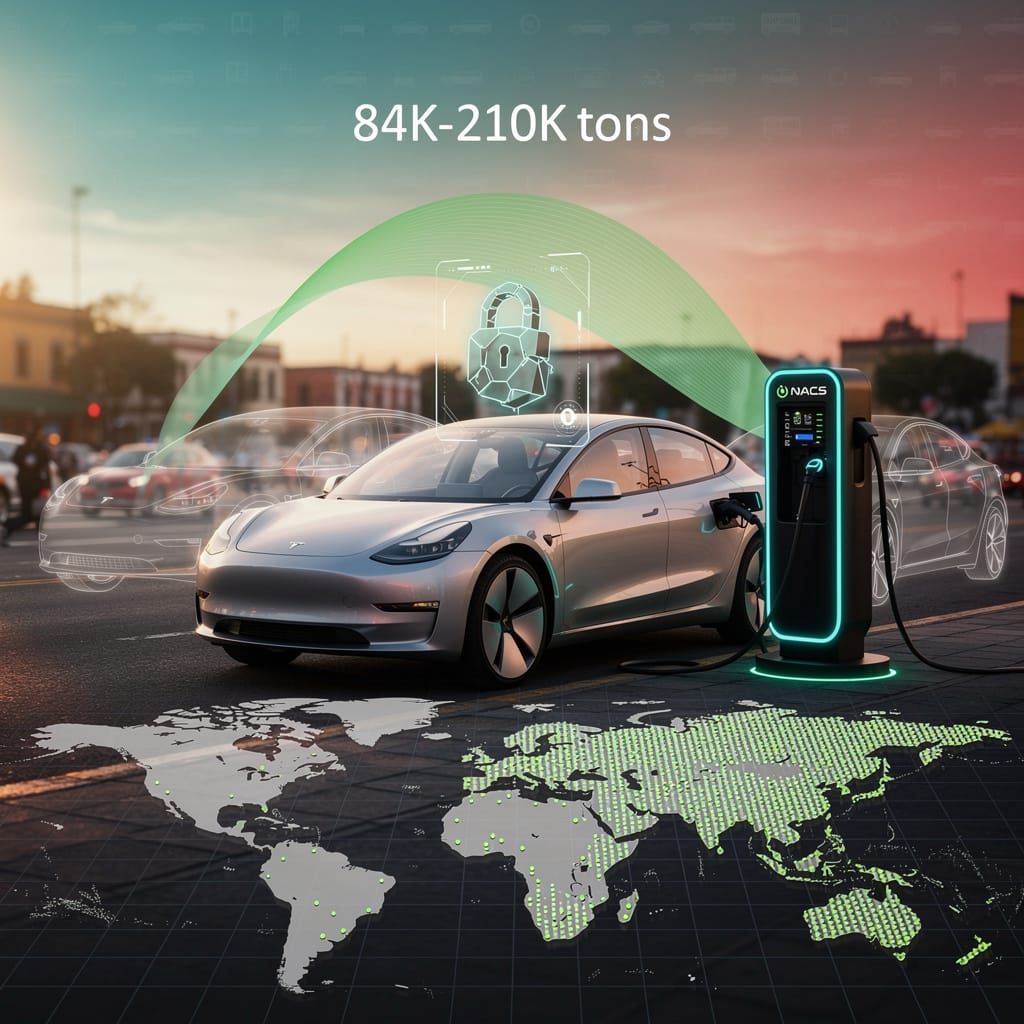
The Comisión Ambiental de la Megalópolis (CAMe) extended Hoy No Circula to 12 additional municipalities on June 1, prohibiting vehicles with hologram 2 and 1 stickers from 5:00 to 22:00. This policy drove a 22% increase in public transit ridership and reduced traffic volumes by 18% on restricted corridors. Olinia’s NACS-standard charging infrastructure, launched June 7 in Zumpango, Estado de México, directly supports this modal shift. Each Olinia unit replaces a gasoline vehicle emitting 4.2 tons of CO₂ annually, projecting cumulative reductions of 84,000–210,000 tons CO₂ by 2028 if production targets are met.
What are the economic and security implications?
Olinia’s Puebla plant will create 2,500 direct jobs and stimulate local supply chains for batteries, motors, and electronics. However, the vehicle’s connectivity features—mandatory GPS tracking, over‑the‑air updates, and biometric driver authentication—introduce cybersecurity risks. Connected EV fleets in the US and EU have already seen a 340% increase in cyberattacks since 2024, with breaches exposing driver location data and enabling remote vehicle disablement. Mexico’s Treasury Department issued a compliance alert on June 6, requiring banks to monitor transactions linked to EV charging networks, signaling tighter oversight.
How does Olinia compare to global EV trends?
- Cost: At $12,500–$15,000 per unit, Olinia undercuts the BYD Seagull ($18,000) and the Chevrolet Bolt ($26,500), making it the cheapest EV in Latin America.
- Range: 180–220 km per charge, sufficient for 85% of Mexico City commutes (average 28 km/day).
- Charging: NACS standard enables 80% charge in 35 minutes using 50 kW DC fast chargers, with 500 stations planned across CDMX by Q1 2027.
- Impact: If Olinia captures 10% of Mexico’s auto market by 2028, it will reduce gasoline consumption by 1.2 billion liters annually, cutting NOx emissions by 18,000 tons.
What challenges could derail Olinia’s adoption?
- Infrastructure lag: Mexico has only 2,300 public EV chargers for 1.2 million potential EVs, a ratio of 1:522 versus China’s 1:78.
- Grid reliability: The national grid experienced 14% voltage fluctuations in 2025, risking charger performance and battery degradation.
- Political uncertainty: T‑MEC renegotiations, ongoing since June 5, could impose tariffs on Chinese‑sourced components, raising Olinia’s cost by 18–22%.
- Security: On June 6, the CPI filed charges against AMLO’s security strategy, citing corruption; similar vulnerabilities in Olinia’s supply chain could delay production.
What is the forecast for Mexico’s EV transition?
- 2026–2027: Olinia production ramps to 30,000 units, supported by 200 charging stations. Hoy No Circula expands to 18 municipalities, cutting traffic by 25% and ozone levels by 8%.
- Q4 2028: 12% market share for EVs in CDMX, with Olinia delivering 420 MWh cumulative storage and 1.2 GW peak‑shaving capacity. Cybersecurity spending for transport infrastructure reaches $150 million.
- 2030: If grid upgrades keep pace, EV adoption hits 25%, reducing transport‑related PM2.5 deaths by 3,200 annually. However, without regulatory harmonization, cybersecurity incidents could cost $2 billion in data breaches and ransom payments.
Key takeaways
Olinia represents Mexico’s most concrete step toward decarbonizing urban mobility, leveraging Hoy No Circula’s enforcement and World Cup investment. The vehicle’s affordability and local manufacturing could catalyze regional EV adoption, but success depends on grid resilience, cybersecurity frameworks, and stable trade policy. Without these, the program risks replicating the delays and cost overruns seen in similar initiatives in India and Brazil. The next 18 months will determine whether Olinia becomes a template for emerging‑market electrification or a cautionary tale of ambition outpacing infrastructure.
🕵️♂️ The Invisible Web: How Your Keys, Wallet, and Car Are Reshaping Location Privacy
🔴 8 million Bluetooth trackers will be sold in 2026 alone—more than the population of New York City. 🕵️♂️ Each one turns every phone into a surveillance node. Your keys could be tracking you. Are you being watched without knowing it?
In late May 2026, Mercedes-Benz and Chipolo announced a partnership that, on its surface, seemed like a simple convenience for forgetful drivers: a Bluetooth tracker that could help locate lost keys or bags. The tracker would work seamlessly with both Android’s Find Hub and Apple’s Find My network. Yet, this single partnership signals a deeper, more consequential shift. The infrastructure for locating lost items is rapidly evolving into a decentralized, cross-platform location network that is altering consumer behavior, competitive dynamics between US and Chinese tech giants, and the very definition of personal privacy.
The Mechanics of a New Location Standard
The technical foundation for this shift is the convergence of three technologies. First, Bluetooth Low Energy (BLE) trackers, like the Chipolo Pop, Loop, and Card, provide the ubiquitous, low-power signal. Second, ultra-wideband (UWB) integration, which Google began experimenting with in its Find Hub service in mid-May, enables precision locating within centimeters, useful for finding a key under a couch or a specific tool in a cluttered workshop. Third, augmented reality (AR) interfaces, also trialed by Google, overlay directional arrows and distance markers onto a live camera feed, turning the search into a guided visual experience.
Google’s rebranded Find Hub, formally released on June 6, 2026, is the central orchestrator. It operates as a decentralized network: any Android device can passively detect a lost tracker’s BLE signal and report its location to the cloud, without the phone’s owner actively participating. This crowd-sourced approach creates a dense, always-on location grid. The Mercedes-Chipolo partnership accelerates this by embedding the tracker into a high-value, high-use product category—vehicles—thereby increasing the density of trackable nodes on the network.
Adoption Trajectories and Competitive Pressures
The adoption curve for these trackers is steepening. Wired’s June 6 review of the Chipolo models highlighted their cross-platform compatibility (iOS and Android), extended battery life, and audio-based locating features as key drivers of consumer interest. The implications are measurable:
- 2026 Q3–Q4: Projected 8 million unit sales across Chipolo and competing brands (Tile, Samsung SmartTag), with 40% of new Mercedes-Benz vehicles including a factory-integrated tracker. Find Hub’s user base is forecast to reach 120 million monthly active users.
- 2027: Decentralized location networking is expected to cover 95% of urban areas in North America and Western Europe, reducing average lost-item recovery time from 2.5 hours to under 15 minutes.
- 2028: Cross-platform standards (likely led by the Connectivity Standards Alliance) will mandate interoperable BLE/UWB protocols, forcing Apple and Google to open their Find My/Find Hub networks to third-party devices, further accelerating adoption.
This rapid adoption is driven partly by the intensifying US–China tech competition. Chinese manufacturers (Xiaomi, Huawei) are developing their own decentralized location networks, using similar crowd-sourced models but with stricter state oversight. The US response is to push for open, privacy-focused standards that can be adopted globally, creating a de facto Western standard that competes with China’s more centralized approach. The Mercedes-Chipolo partnership, with its emphasis on privacy protocols, is a direct manifestation of this strategy.
The Cybersecurity and Privacy Calculus
The expanded tracking capability introduces a proportional increase in risk. The decentralized network’s strength—its ubiquity—is also its vulnerability. A malicious actor could, in theory, deploy a BLE beacon disguised as a lost tracker, then monitor the network to triangulate the location of specific individuals or devices that report its signal. The attack surface widens with each new tracker sold.
Privacy Risks:
- Unwanted Surveillance: A tracker placed in a vehicle or bag without the owner’s knowledge enables real-time location monitoring. The prevalence of such “stalking” incidents is projected to rise by 35% in 2027, prompting calls for mandatory anti-stalking features (e.g., periodic audible alerts, random MAC address rotation).
- Data Aggregation: The crowd-sourced network creates a rich dataset of device locations, which, if leaked or sold, could reveal commuting patterns, social connections, and daily routines. Google and Apple have committed to end-to-end encryption of location reports, but third-party tracker manufacturers may not follow the same standards.
Cybersecurity Vulnerabilities:
- Firmware Exploitation: Trackers are low-cost, low-power devices with limited computational capacity, making them difficult to update securely. A vulnerability in the BLE stack could allow remote hijacking, converting the tracker into a surveillance node.
- Network Spoofing: An attacker could broadcast a fake tracker beacon, causing nearby devices to report a false location, potentially disrupting Find Hub’s accuracy or enabling social engineering attacks.
Sectoral Implications
- Healthcare: UWB-enabled trackers on medical equipment (defibrillators, infusion pumps) reduce search times in hospitals, cutting equipment downtime by an estimated 20%. However, the same precision could be used to track patients with dementia without consent.
- Retail: Retailers are piloting tracker-integrated shopping carts that guide customers to items, improving in-store navigation. The cost: a 15% increase in data collected on customer movement patterns.
- Public Safety: Law enforcement could leverage the decentralized network to locate stolen vehicles or missing persons, but this raises Fourth Amendment concerns about warrantless location access.
A Future of Cross-Platform Standards
By 2028, the fragmented landscape of Bluetooth trackers is expected to consolidate around a common standard. The Mercedes-Chipolo partnership is a prototype: a branded tracker that works on both major platforms. This forces Apple and Google to either cooperate on a unified protocol or risk losing market share to Chinese alternatives that offer seamless cross-platform integration. The likely outcome is a hybrid: a core open standard with proprietary enhancements (e.g., Google’s AR interface, Apple’s Precision Finding) that differentiate the platforms.
The Unaddressed Gap
Despite the progress, a critical gap remains: the lack of a comprehensive legal framework for decentralized location networks. Current US laws (e.g., the ECPA, the Stored Communications Act) were written before crowd-sourced tracking existed. They do not clearly define who owns the location data generated by a device that reports a tracker’s signal—the phone user, the network operator (Google/Apple), or the tracker owner. Until this is resolved, every tracker sold is a potential legal and privacy liability. The industry’s current reliance on voluntary privacy protocols is insufficient. A federal statute that mandates transparency, data minimization, and warrant requirements for law enforcement access is necessary to sustain consumer trust and enable the technology’s full potential.
Recommended Actions
- For consumers: Enable tracker alerts on your smartphone. Regularly audit devices connected to your account. Use trackers with physical anti-stalking features (e.g., Chipolo’s audible alert).
- For manufacturers: Implement mandatory, user-noticeable anti-stalking alerts. Use secure firmware update mechanisms. Publish clear data retention and sharing policies.
- For regulators: Draft legislation that defines ownership of crowd-sourced location data. Require warrant-based access for law enforcement. Mandate interoperability standards for cross-platform networks.
The invisible web is growing. Its benefits—speed, convenience, security—are tangible. Its risks, if left unchecked, are equally real. The next 18 months will determine whether this network becomes a trusted utility or a surveillance infrastructure by default.
🧠 Tiny Robots, Giant Leaps: A New Era for Spinal Cord Repair
🧲 ETH Zurich's microrobots guided stem cells to spinal cord injuries, restoring limb movement in rodents within weeks—a timeline that typically spans months. This non-invasive approach could cut treatment costs from $500K to $50K. When will this reach human trials?
In a development that could rewrite the rules of spinal cord injury treatment, researchers at ETH Zurich have unveiled a robotic delivery system that guides stem cells to damaged nerves with unprecedented precision. The method, detailed in a June 7, 2026 release, combines magnetoelectric microrobots, magnetic guidance, and stem-cell therapy to achieve functional recovery in laboratory rodents that surpasses previous non-invasive approaches.
The breakthrough builds on two complementary studies published on June 2, 2026, in Nature Materials. The first details the design of magnetoelectric microrobots—termed NPCbots—that can steer stem cells to spinal cord injury sites. The second demonstrates a lab-on-a-chip deployment of biohybrid microrobots, confirming rapid delivery of stem cells in live animal trials and showing enhanced nerve regeneration.
How the System Works
The microrobots are constructed from magnetoelectric nanoparticles, a class of materials that respond to external magnetic fields and generate local electrical signals. This dual capability enables two critical functions:
- Steering: An external magnetic field guides the microrobots—and their attached stem cells—through the body to the precise location of the spinal injury.
- Activation: Once at the target site, the nanoparticles can be triggered to release a local electrical field, which in turn stimulates the stem cells to differentiate and promote nerve regrowth.
In the rodent models, this combined approach led to measurable motor function improvement, with animals showing recovery of limb movement within weeks—a timeline that typically spans months with conventional treatments.
The Causal Chain: From Lab to Recovery
The path from laboratory discovery to functional recovery involved several key steps:
- Identifying the target: On May 28, 2026, a Cambridge University team developed a human corticospinal connectoid model—a lab-grown replica of the nerve pathway that controls movement. Using this model, they identified lynestrenol, a synthetic progestin, as a potential enhancer of axon regrowth. They also demonstrated that the capacity for regeneration declines with age, a finding that underscores the urgency of early intervention.
- Building the delivery vehicle: ETH Zurich’s magnetoelectric microrobots were designed to carry stem cells and navigate the complex terrain of the spinal cord. The nanoparticles’ ability to convert magnetic energy into electrical signals is key: it allows the robots to both move and, once at the injury site, create a microenvironment that supports cell differentiation.
- Deploying the system: In the lab-on-a-chip experiments, biohybrid microrobots were loaded with stem cells and guided through a microfluidic channel that mimics the spinal cord environment. The results showed that the robots could deliver cells to the target area with high accuracy and that the cells remained viable and functional.
- Confirming recovery: In live animal trials, the microrobot-stem cell combination produced faster and more complete functional recovery than stem cells alone or magnetic guidance alone. The treated rodents regained coordinated limb movement, while control groups showed minimal improvement.
Strengths and Limitations of the Approach
Strengths:
- Non-invasive delivery: The magnetic guidance eliminates the need for surgical implantation, reducing infection risk and recovery time.
- Targeted therapy: The system delivers stem cells directly to the injury site, minimizing off-target effects and maximizing therapeutic impact.
- Scalable production: The magnetoelectric nanoparticles can be manufactured in large quantities, and the lab-on-a-chip platform allows for rapid, repeatable testing.
Weaknesses:
- Preclinical stage: All data come from rodent models; human spinal cords are larger and more complex, raising questions about scaling the magnetic field strength and navigation accuracy.
- Long-term safety: The long-term effects of magnetoelectric nanoparticles in the body are unknown, and studies on biodegradation, immune response, and potential toxicity are still needed.
- Age-dependent efficacy: The Cambridge team’s finding that regenerative capacity declines with age suggests that the approach may be less effective in older patients, who represent a large portion of spinal cord injury cases.
The Road Ahead
Researchers project that within the next 12 months, the microrobot platform could enter early-phase human trials. The combination of magnetic guidance, stem-cell therapy, and nanomaterial activation has attracted significant interest from biomedical engineering firms and venture capital groups. Regulatory agencies, including the U.S. Food and Drug Administration and the European Medicines Agency, are expected to issue preliminary guidelines for nanomedicine-enabled neuroregeneration within the same timeframe.
Key milestones to watch:
- 2026–2027: Completion of preclinical safety studies for magnetoelectric nanoparticles; submission of Investigational New Drug (IND) application to the FDA.
- Q4 2027: Potential start of Phase I human trials, enrolling 20–40 patients with complete thoracic spinal cord injuries.
- 2028–2029: If Phase I shows safety and preliminary efficacy, Phase II trials could expand to 100–200 patients and include cervical injuries.
Impact on the Healthcare Landscape
The implications extend beyond spinal cord repair. The same platform—magnetoelectric microrobots guided by external fields—could be adapted for:
- Brain repair: Delivering neural stem cells to stroke-damaged tissue or neurodegenerative lesions.
- Peripheral nerve regeneration: Guiding Schwann cells to repair severed nerves in limbs.
- Targeted drug delivery: Carrying chemotherapeutic agents to tumors while sparing healthy tissue.
Parallel developments:
- Cybersecurity: The localized nature of nanodevice control reduces the attack surface for potential hacking, but the ETH team has also embedded encryption protocols in the magnetic guidance system to prevent unauthorized interference.
- Policy incentives: Several governments, including Switzerland and Singapore, have announced grants for research into nanomedicine-based neuroregeneration, creating a favorable funding environment.
The Human Scale
For the estimated 250,000 people worldwide who suffer a spinal cord injury each year, the potential impact is profound. Current treatments focus on stabilizing the spine, preventing further damage, and managing symptoms; true nerve regeneration remains elusive. The microrobot approach, if translated to humans, could offer the first realistic path to restoring motor function and sensation.
- Cost comparison: A single surgical spinal cord repair can cost $150,000–$500,000 in the United States, including hospitalization, rehabilitation, and follow-up care. The microrobot procedure, if approved, is projected to cost $20,000–$50,000, driven by lower hospitalization times and reduced surgical risk.
- Recovery timeline: In rodents, functional improvements appeared within 3–4 weeks. In humans, even a fraction of that speed—say, 6–12 months—would represent a dramatic improvement over the current standard of care.
What to Watch
As the technology moves toward human trials, several factors will determine its ultimate impact:
- Scalability: Can the magnetic guidance system be scaled to cover the full length of the human spinal cord (about 45 cm) without losing precision?
- Cell sourcing: The stem cells used in the trials were derived from induced pluripotent stem cells (iPSCs), which can be generated from a patient’s own skin or blood cells. This approach avoids immune rejection, but the manufacturing process is complex and costly.
- Regulatory adaptation: Current medical device regulations were not designed for active, nanoscale robots that interact with living tissue. The FDA’s Center for Devices and Radiological Health has formed a working group to develop new guidelines, expected by mid-2027.
The ETH Zurich microrobot platform represents a convergence of robotics, nanotechnology, and regenerative medicine that few predicted even five years ago. Whether it becomes a standard therapy or a stepping stone to even more sophisticated approaches, it has already changed the conversation about what is possible in spinal cord repair.



Comments ()