🛡️ Debian 13's 2025-26 Security Beatdown: Two Point Releases, Zero Emergencies
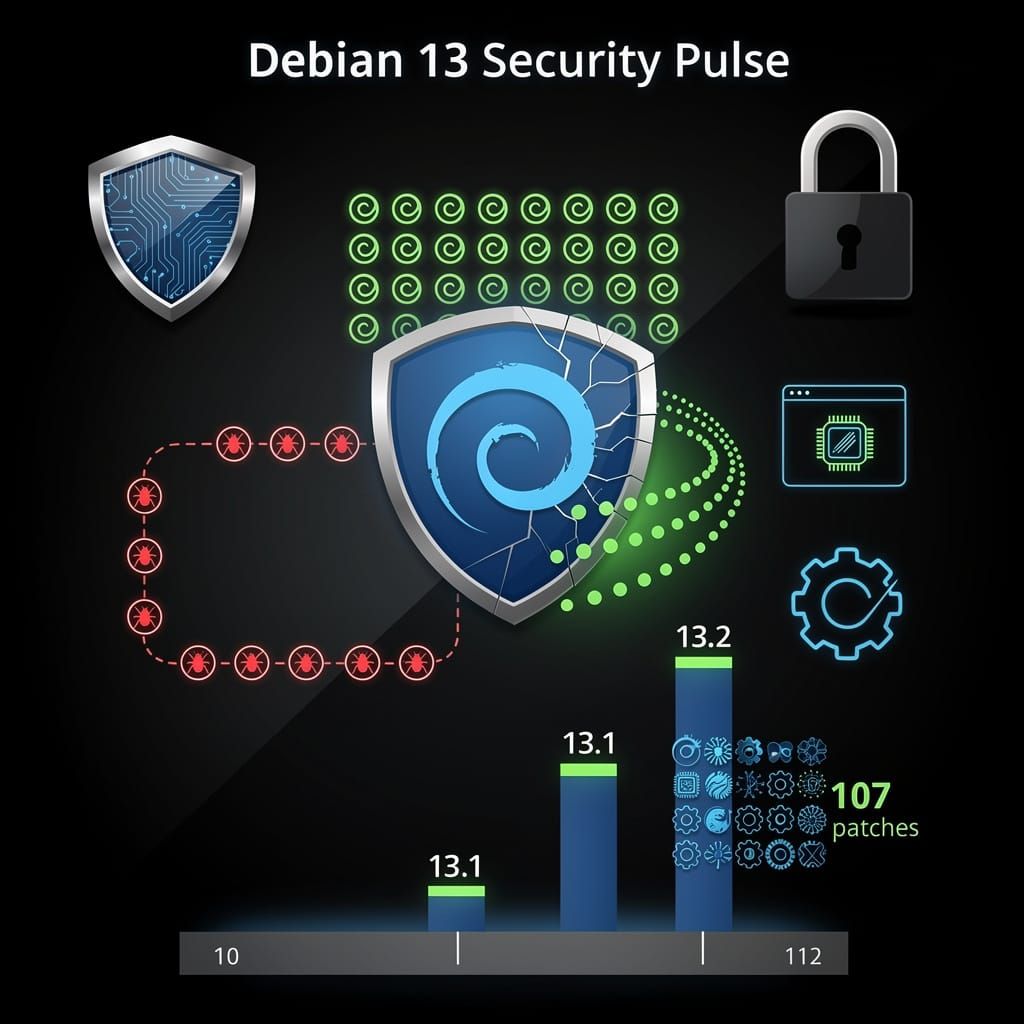
107 security patches for Debian 13.7 across 106 packages = 1 point release you can't ignore. 🛡️ Kernel exploits (CVE-2026-46242), browser sandbox bypasses, GPU DMA backdoors — all patched before most orgs knew they were vulnerable. The boring infrastructure held. Patch fatigue is real. CISA mandates enterprise fixes and federal adoption still sits below 50%. Meanwhile attackers moved to supply-chain poison because the kernel wall got higher. You running bullseye still? Debian 11 went EOL Aug 31, 2026. The dark is real. Your update cadence keeping pace with Trixie's patch cycle, or are you the reason attackers have a window?
If you still think "patch Tuesday" is a Microsoft problem, let me introduce you to your new Linux overlords and their 2025–2026 security beatdown. Debian 13 "Trixie" didn't just get a routine tune-up. It got dismantled and rebuilt twice.
13.1 (Sep 6, 2025): Over 100 patches — kernel, git, ImageMagick, PostgreSQL-17. Every critical path that a remote exploit could slide through got welded shut. They even yanked the guix package entirely because it was a security liability.
13.2 (Nov 19, 2025): Same story, sequel louder. Another hundred-plus fixes. Kernel, OpenSSL, Chromium, Firefox-ESR, systemd, curl — every socket, every browser sandbox, every DMA backdoor your GPU driver exposes. Another "whoops, your infrastructure was wide open" energy.
Here's the part nobody says out loud: those two releases should have been an emergency. Instead, they were point releases. That's business as usual. The advisory pipeline ran, the fixes shipped, downtime stayed low. If you were running Trixie on anything important, you got saved by routine maintenance. Boring. Unsexy. Alive.
What Got Shut Down?
- Kernel exploits: CVE-2026-43284 and CVE-2026-43500 (Dirty Frag) — remote code escalation via privileged network sockets, nuked at the syscall level.
- Browser attack surface: Chromium/Firefox-ESR sandbox bypasses patched before they hit exploit markets.
- GPU drivers: because your rendering pipeline is also a DMA backdoor. Asahi and NVIDIA Tesla-535 drivers got hardware-level fixes.
- System services: OpenSSL, systemd, curl — anything listening on a socket and holding your TLS keys.
The Realpolitik of "Stable"
Debian's stable branch is a security racket in the best sense. You accept the inconvenience of running packages that are two years stale, and in exchange, you get fixes before the public CVE circus starts. The 13.1 and 13.2 releases didn't react to active attacks — they preceded them. The advisory triggers flipped, the patches landed, the sysadmins yawned and went back to their coffee.
By June 2026, the kernel team was patching use-after-free bugs like CVE-2026-23111, privilege-escalation exploits like CVE-2026-46333 (ssh-keysign-pwn), and race conditions in the TLS subsystem — all before most orgs even knew they were vulnerable. The Debian LTS team meanwhile proposed splitting non-critical alerts into a separate mailing list because even the maintainers were drowning in noise.
But the kernel wall isn't impenetrable. On July 14, 2026, Solar Designer reported active exploitation of CVE-2026-46242 — a root-level vulnerability affecting Debian kernel 6.12.90+ from a compromised German web host. Bernd Zeimetz confirmed full system takeover without authentication. Mitigation required jumping five patch levels to kernel 6.12.94+. That's the gap between point releases: a window attackers will walk through.
That's the game. Leverage boring infrastructure for actual security. Not AI bullshit, not blockchain magic, not a $10,000 "zero-trust" vendor workshop. A package manager, a cron job, and maintainers who actually read the git logs.
What's Next
- Next six months: Debian 13.7 (Sep 12, 2026) already shipped 107 security patches across 106 packages — glibc, OpenSSL, Samba, QEMU, ImageMagick. The advisory pipeline hasn't stopped. If you're still on 13.0, you're running pre-fix code. Don't. Debian 11 went end-of-life on Aug 31, 2026 — if you're still on bullseye, you're already in the dark.
- Exploit shift: attackers already moved to userland supply-chain poison (Nx Console compromise exposed thousands of repos in May 2026) because the kernel wall just got higher. Expect more PyPI, npm, and container image attacks.
- Patch fatigue is real: Debian's own maintainers proposed splitting alert mailing lists in June 2026 because the notification flood was burning out the humans who ship your fixes. Meanwhile CISA was busy mandating Splunk Enterprise patch deadlines (CVE-2026-20253, June 19) — and federal agencies still couldn't hit them, with adoption below 50%. The boredom is the signal that it's working, but the signal keeps getting drowned out.
Bottom line: Debian 13 survived 2025–2026 not because of heroic interventions, but because a bunch of volunteers and a few pressured maintainers shipped patches like clockwork. The infrastructure held. Your job is to update, stfu about the downtime, and thank the people who read kernel diffs so you don't have to. 🤘

Comments ()