Arizona court voids sentence built on fake AI victim video
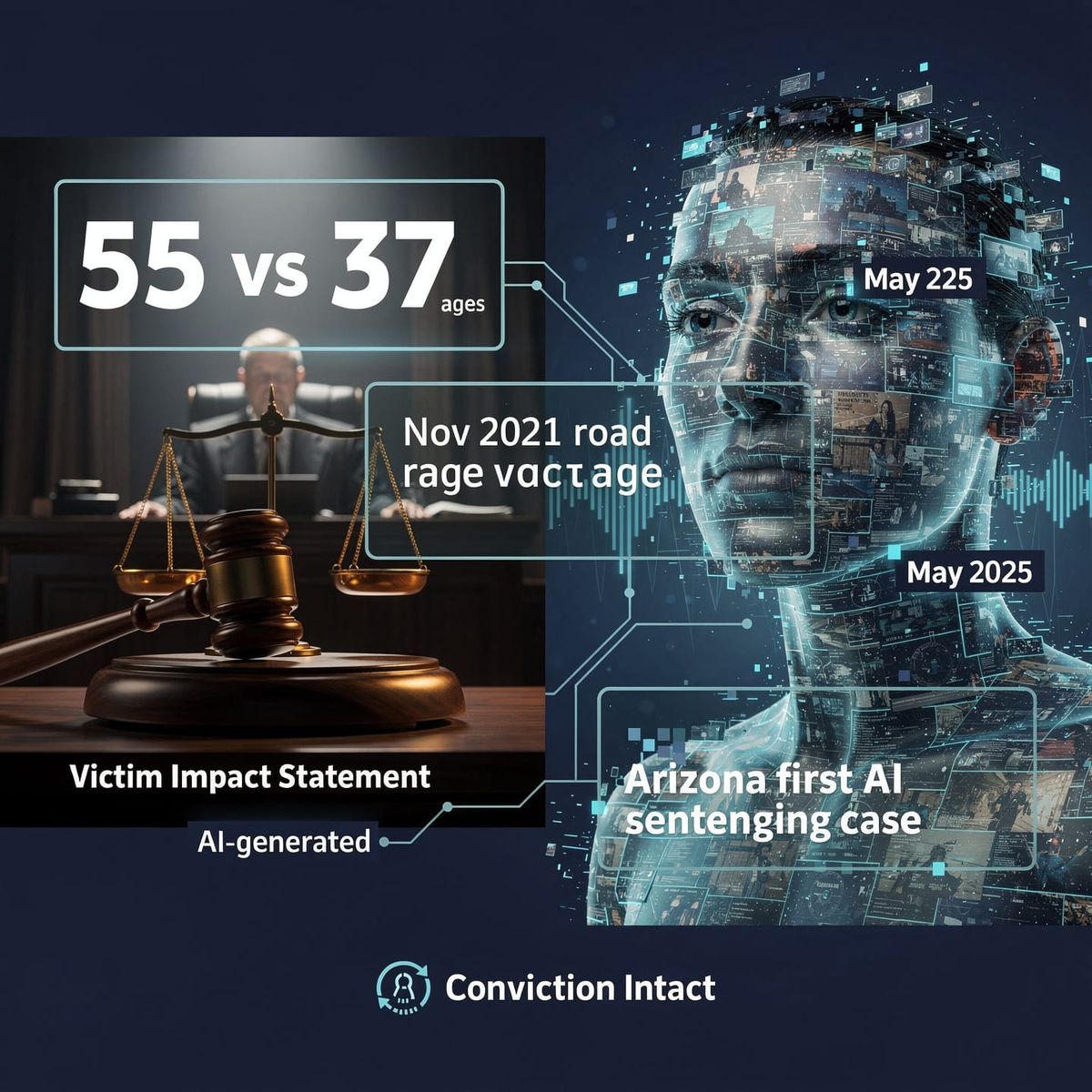
Arizona's Court of Appeals vacated Gabriel Horcasitas's manslaughter sentence because it rested on an AI-generated video of his late friend Christopher Pelkey presented as a victim impact statement. The panel found the fabricated footage—built by the victim's sister from clips, photos, and voice recordings—unreliable sentencing material, since it invented statements that never occurred. The homicide conviction stands, but resentencing is pending. The ruling exposed a gap: Arizona has no standard for when synthetic audio-visual content is reliable enough for court.
The Arizona Court of Appeals vacated the manslaughter sentence of Gabriel Paul Horcasitas, ruling that an AI-generated video of his deceased friend Christopher Pelkey could not stand as sentencing material. The case heads back for a new sentencing hearing, with the underlying homicide conviction intact.
Horcasitas, 55, was convicted for fatally shooting Pelkey, 37, during a November 2021 road-rage confrontation at a Chandler stoplight. The appellate panel found the fabricated footage unreliable for sentencing, and because the penalty had relied on it, the sentence could not stand.
What the video was doing in court
The footage, initiated by Pelkey's sister Stacey Wales, was assembled from clips, voice recordings, and pictures of her late brother to recreate his appearance and voice. It was presented as a victim impact statement—the type of evidence meant to let victims or their families tell the court how a crime affected them.
At a May 2025 sentencing hearing before Judge Todd Lang, the AI clip presented statements and expressions that never actually occurred, with imagined content framed as direct quotes from the victim. Prosecutors acknowledged the family would address the court but said they had not known the AI video's nature ahead of time. Attorneys Jessica Gattuso (for the victims) and Kristen Reller (for Horcasitas) declined to comment on the ruling.
A victim impact statement is persuasive context for sentencing, not testimony about what happened at the crime. But its function depends on the person actually saying it. Here, the central claim—a dead man expressing forgiveness and urging a particular posture—was invented.
The gap the case exposes
The reversal turned on a concrete failure: there was no accepted legal standard in Arizona for determining when synthetically created audio-visual content is reliable enough to be admitted. The panel noted the complexity of assessing such evidence in the absence of a lawful rule governing it.
That leaves a specific, unresolved question rather than a broad one about AI reliability generally. The video is not a case of a model hallucinating in production—it worked largely as its creators intended. The failure was at the courtroom gate: the system had no agreed-upon mechanism for checking whether the generated output corresponded to anything real before it was allowed to shape a criminal sentence.
What the reversal establishes
The decision confirms that synthetic witness material can taint a sentencing enough to void it, even while the underlying conviction stands. Legal observers have noted the case may be among the first instances of AI-generated content appearing in U.S. court proceedings. Still, the panel did not establish a broader test other jurisdictions can borrow, and no recognized path in the state currently lets families use such recreations as valid sentencing material.
The decisive unknown is what resentencing produces without the fabricated support. There is no indication yet whether the new penalty will be shorter, longer, or unchanged. For now, the working answer to "is AI-made victim testimony admissible" is: not in Arizona, not this time—and no one has yet written the rule that would decide the next case on steadier ground.


Comments ()