82% Password Reuse, 5-Month AWS Key Exposure, 12% Attrition: Remote Work Security Is a Welcome Mat — Anthony Spadafora Can Only Duct-Tape So Much
🔥 Anthony Spadafora: The Man Holding Your Home Office Together With Duct Tape and a Prayer
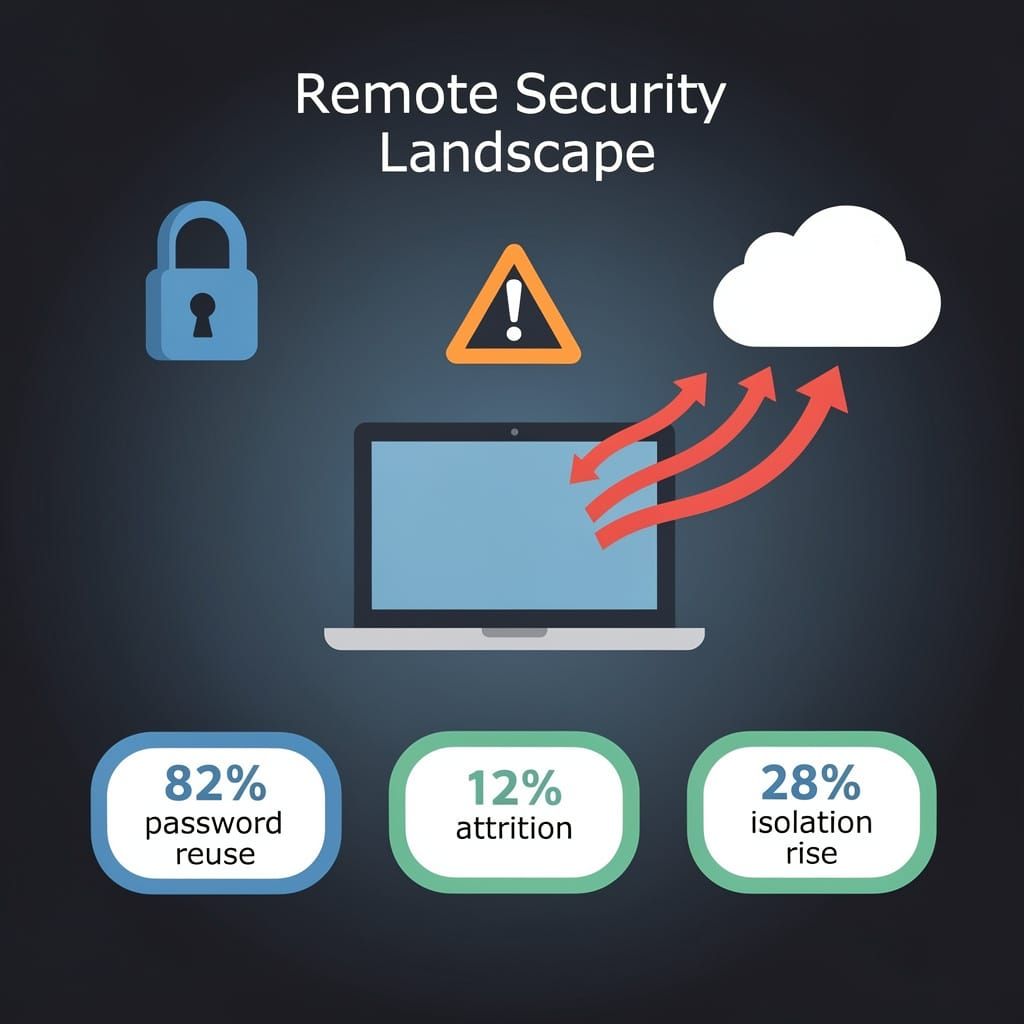
82% of remote workers still reuse passwords. AWS GovCloud keys sat exposed for 5 months — after 9 automated alerts. Detection works. Response? Files gone. 🔥 Meanwhile, cybersecurity attrition hit 12%. Fewer eyes. Slower patches. Your neighbor's unpatched router is a welcome mat for every script kiddie with a pulse. Anthony Spadafora's over at Tom's Guide duct-taping your home office together — but you're playing checkers while threat actors are playing System Shock 2 on Impossible. Assume you're compromised, or kiss your enterprise network goodbye by August 6th. 🎮
Look, I get it. You're working from home in Houston, Seoul, or maybe that one WeWork in Honolulu that smells faintly of regret and expired kombucha. You think your setup is secure. You think that because Anthony Spadafora is running VPN tests over at Tom's Guide, you're safe.
You're adorable.
Here's the reality: since July, Anthony's been cranking out security content and VPN reviews across three coverage hubs. Good on him. The guy's competent. But in June 2020 CyberArk surveyed 3,000 remote workers and found password reuse and family device access endanger business systems—77% use personal devices for corporate systems. Four years later, 26% of remote workers had experienced a cyber attack, and 82% still reuse passwords. Meanwhile, a June 2026 study of 588,322 U.S. workers linked remote roles to a 28% surge in isolation and higher antidepressant use—meaning your VPN-trusting neighbor is also depressed and distracted. 😬
The numbers don't lie:
- Detection capability: still effective. Great.
- Response times: a July 2026 CISA investigation revealed contractor-published AWS GovCloud keys sat exposed on GitHub for over five months—despite nine automated alerts. A May 2026 coordinated intrusion encrypted backups and exfiltrated data through signature-aligned channels during a power outage. Detection worked. Response still meant files gone.
- Staffing: cybersecurity attrition hit ~12% annualized loss by mid-2026—80% of practitioners cite burnout. Fewer eyes, slower patches.
Translation: the bad guys will find the hole before anyone's sober enough to plug it.
What's Actually Happening Here?
Anthony's team is doing the right thing. They're testing VPNs, reviewing password managers, pushing encrypted remote access coverage. But "rising adoption among verified users" is corporate speak for "your neighbor's unpatched router is still a welcome mat for every script kiddie in Pyongyang." The June 2026 State of Cybersecurity report flagged fragmented response mechanisms and impaired communication channels during incidents. Vendor disclosure is still broken—a CVSS 9.9 CUPS exploit appeared on BreachForums nine hours after a vague tweet in 2024, after the researcher went "no more" following two weeks of ignored outreach.
The Forecast (It's Not Pretty)
- Now: Detection works. You see the intruder.
- Soon: Response lags. A July 2026 CISA disclosure revealed it took 9 email alerts before formal action on leaked AWS keys—even GitGuardian had to publicly shame them into rotating the credentials. You see the intruder while they're already in your files.
- Later: Rapid exploit churn means the window between "vulnerability disclosed" and "data on Darkweb" shrinks to hours. On August 3rd, 2026, CISA added CVE-2026-18577 to KEV—a network-level authentication bypass with active automated exploitation. Patch by August 6th or kiss your enterprise network goodbye.
The Cheeky Part
So here's the real hack, folks: stop pretending your "home office" is secure because Anthony reviewed a VPN last week. The game is asymmetric. You're playing checkers. Threat actors are playing System Shock 2 on Impossible difficulty with a wired controller.
The only winning move? Assume you're compromised. Encrypt everything. Patch obsessively. And maybe—just maybe—stop clicking "Accept All Cookies" like it's a personality trait.
Because Anthony Spadafora can only duct-tape so much.
This article was brought to you by the letter "fuck your compliance budget" and the number 0x1337.

Comments ()