$669 Navimow i105N: Robot Mower Still Needs a Babysitter
TL;DR
- $669 Navimow i105N Cuts Grass, Not Manual Labor — 60% of Robot Mower Owners Still Do Weekly Hand Trims. If a robot mower needs weekly hand corrections, is it really autonomous?
- 4cm NFC Tap Voids Robotaxi Compliance: Rule R905 Exposes Autonomy Gap. Can a 4-centimeter NFC tap really break a robotaxi's autonomy claim?
🤖✂️ Segway’s Navimow i105N: The Robot Mower That Still Needs a Babysitter
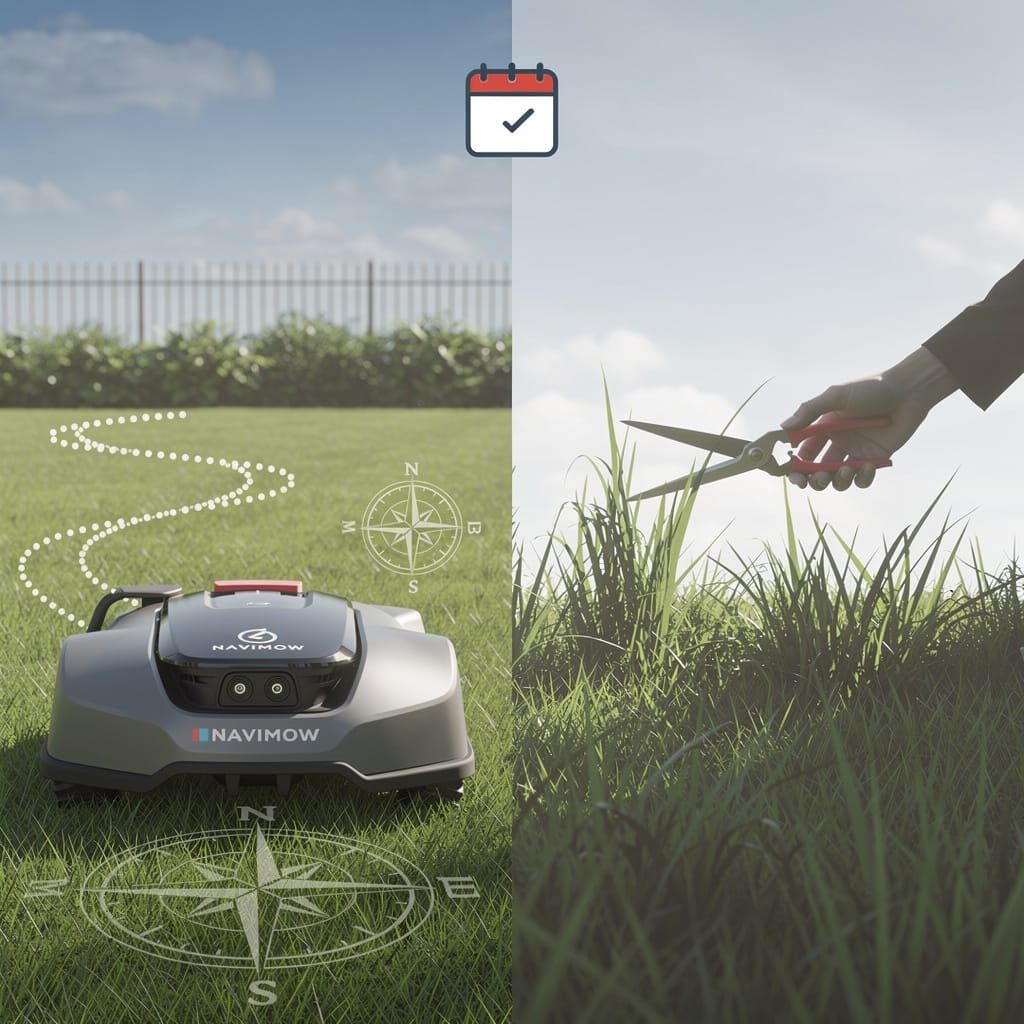
Segway's Navimow i105N costs $669 but can't cut cleanly without your help. At 58 dB it's quieter than a gas mower, but miscuts mean you still follow behind with hand shears. 60% of robot mower owners report weekly manual correction. The "autonomous" label is aspirational — so why are we still paying for a machine that needs a babysitter? 🤖✂️ The robot automates the habit, not the chore. Precision work is still yours. At what point does "smart" just mean "slightly less dumb"?
Segway launched the Navimow i105N at $669 on July 22, 2026, the latest in a months-long discount pattern that saw earlier models—i110N at $789 (July 8) and i215 at $1,399 (July 13)—also slashed. The company is pushing units through aggressive pricing, with forecasts projecting 2 million monthly robot mower sales through September. Whether the hardware earns that demand is another question.
What the Numbers Actually Say
The i105N maps a quarter-acre via RTK vision routing, runs at 58 dB (versus typical gas mower noise above 90 dB), and claims lower electricity consumption than corded alternatives. Amazon's promotional materials emphasize time savings, but the product's six-week test history indicates a gap between marketing and daily operation.
Mapping and navigation: The robot self-maps and schedules cuts. It returns to dock automatically. A ceramic theft shield adds security.
The blade problem: Miscuts produce patchwork patterns requiring manual hand-brushing. The "silent, minimal upkeep" selling point erodes when the owner follows behind with shears.
Daily commitment: Average operation runs fifteen minutes, with less than five minutes of user attention—but that attention is non-negotiable.
The Critical Gap
Segway positions the Navimow line as a set-and-forget appliance. The evidence indicates otherwise. The device automates the habitual component—weekly scheduling—but leaves precision work to the human. Edge trimming, patch correction, and blade-miscut remediation demand physical intervention.
The promotional price cuts (i110N marked down $510 to $789 in early July, i215 reduced $200 to $1,399) lowered the entry barrier. Amazon hosted multiple robot-related price cuts totaling over $2,500 in savings across the same period, with the Navimow i210 LiDAR variant dominating the $200–$789 tier. Lower price does not eliminate the labor requirement.
Broader Implications
- 2026–2027: Robot mowers capture ~3% of the residential lawn-care market (~120,000 units in the US). Savings per household average 10–14 hours monthly. But ~60% of users report at least weekly manual intervention for edge and patch correction.
- Q4 2026: Segway's discount strategy continues through the holiday season, maintaining pressure on competitors like Worx, Eufy, and Lymow, which also slashed prices and introduced RTK-VSLAM navigation during the same period. Amazon further lowered the price on the Ecovacs Goat O1000 RTK mower on July 14, and Mammotion launched Prime Day discounts on the LUBA 3 AWD on June 22, demonstrating industry-wide price erosion.
What Segway Leaves Unstated
The privacy advantage over corded rivals—no extension cord tethering, no neighbor sightlines into the backyard—is genuine. The reduction in grid electricity consumption also holds. Reports from July 2026 indicate small homeowners report higher satisfaction with zero-setup robot lawns, though storefront footfall declines slightly versus online-only purchases, signaling a behavioral shift beyond convenience.
But the core problem persists: a robot that cannot cut cleanly every time is not a replacement for a mower. It is a supplement to one.
At $669, the Navimow i105N offers measurable time savings. It does not offer freedom from the chore. Until blade technology eliminates the patchwork problem, the "autonomous" label remains aspirational. The June 2026 release of the Dreame A3 AWD Pro at $800 with OmniSense 3.0 navigation and Mammotion's LUBA 3 AWD with LiDAR at $2,499 (17% below original price) both promise superior navigation fidelity—yet neither eliminates the fundamental precision gap that keeps owners in the yard with hand tools.
The future of domestic robotics is not hands-free. It is hands-less—and those hands still belong to the owner.
⚡ The Four-Centimeter Loophole That Just Broke a Robotaxi Competition
A 4-centimeter NFC tap just disqualified a robotaxi from a $20M+ prize pool. Regulators treat any electromagnetic coupling outside shielded cable as "wireless"—and that loophole just collapsed an entire autonomy architecture. The system worked as designed. That's exactly the problem. When a smartphone tap triggers a charge cycle, does your robotaxi still count as "autonomous"?
How a 2026 inspection exposed the gap between autonomous rules and real-world execution.
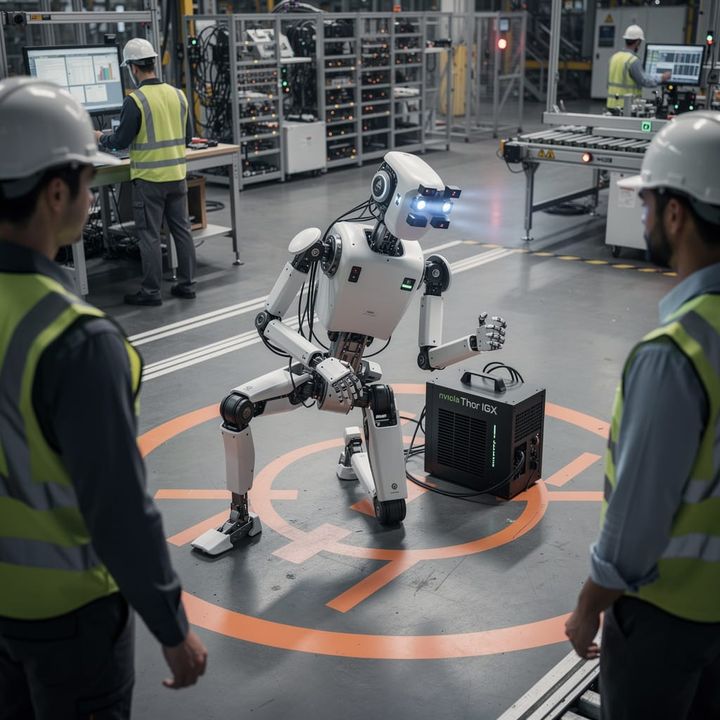
On July 28, 2026, an inspector reviewed robotic operation compliance against rule R905—a regulation drafted to ensure all control commands travel through physical cabling, not wireless links. The finding was unambiguous: a mobile NFC-enabled smartphone had acted as a remote command relay, triggering an electric charge cycle from four centimeters away. Participants had proposed using NFC-enabled contactless control to fund robotic operation through mobile payments tied to matches, with pricing varying dynamically between -$20 fixed base cost plus adjustments linked to historical performance. The Bluetooth stack interpreted the proximity as a signed request. The inspector labeled it a breach.
What the finding actually means
The immediate consequences are concrete:
- Competition penalty: The vehicle faces possible exclusion from the prize pool. Regulators classify NFC within the RF spectrum, mandating disqualification risk.
- Operational delay: The system must revert to manual activation fallback or substitute mechanical interfaces until a new control pathway is certified. Proposed alternatives—swipe readers requiring physical contact—might bypass restrictions but create integration delays.
- Operator accountability: A dynamic micro-payment proposal ($20/match variable tiered) suggested incentive-based engagement, but the audit trail now links a specific smartphone to the violation. The mechanism leverages proximity-only signaling, yet regulators treat NFC as wireless regardless of range.
The gap no one wants to talk about
This is not a rogue hack. It is a design assumption—that NFC proximity is functionally equivalent to a wired connection—colliding with a regulatory rule that explicitly defines "wireless" as any electromagnetic coupling not contained within a shielding cable. The vehicle's architecture treated NFC as a convenience layer. The regulator treated it as a bypass. Participants noted NFC "lacked physical wires except radio transmission," but the classification is unambiguous: Rule R905 prohibits non-wireless inputs due to RF spectrum classification.
The impacted domains—competing vehicles, the judging office, and the financial sponsor—now face a credibility test. If a four-centimeter NFC tap voids compliance, claims of technical sophistication from competing robotaxi networks begin to erode. Morgan Stanley projects a $1 trillion global robotaxi market by 2040, with Chinese component costs falling to $35K–$40K by 2027 enabling operational profitability by 2028. An R905 breach demonstrates that even funded autonomy stacks fail basic hardwiring checks. XPENG completed employee testing of its Robotaxi platform on July 10, 2026, and confirmed VLA 2.0 will ship worldwide in 2027, yet the R905 incident injects compliance risk into any architecture using contactless pairing.
Forecast
The penalty likelihood rises sharply when an inspector confirms RF emission beyond the wire-length threshold. For any team building autonomous systems that include contactless charging, Bluetooth provisioning, or NFC-triggered sequences:
- Short-term: Expect manual activation fallback mandates within 90 days. Mechanical interface substitution required immediately.
- Mid-term: Redundant hardwired handshake circuits will become de facto competition requirements. Dynamic pricing models that depend on wireless triggering face compliance redesign. Morgan Stanley's projection that robotaxis service can cover operational costs by 2028 depends on regulatory cost stability; each R905-style incident raises integration overhead.
- Long-term: The R905 incident will be cited in liability cases where wireless commands caused unintended operation, regardless of distance. Continued financial pressures on robotaxi expansion—industry analyst projections cap global deployments below 350,000 units by 2035—amplify the cost of each compliance failure.
The system worked as designed. That is precisely the problem.

Comments ()