💸 $16.5 B Gulf Arms Spree Sidelines Congress as Iran Hits New U.S. Radars
TL;DR
- Trump Administration Bypasses Congress to Approve $16.5 Billion in Arms Sales to UAE, Jordan, Kuwait
- U.S. Military Draft Registration to Go Automatic in December 2026 Amid Escalating Iran Conflict
- U.S. Senate Passes SB 302 to Ban Local Carbon Projects, Igniting Environmental Backlash in Florida
💸 $16.5 B Gulf Arms Spree Sidelines Congress as Iran Hits New U.S. Radars
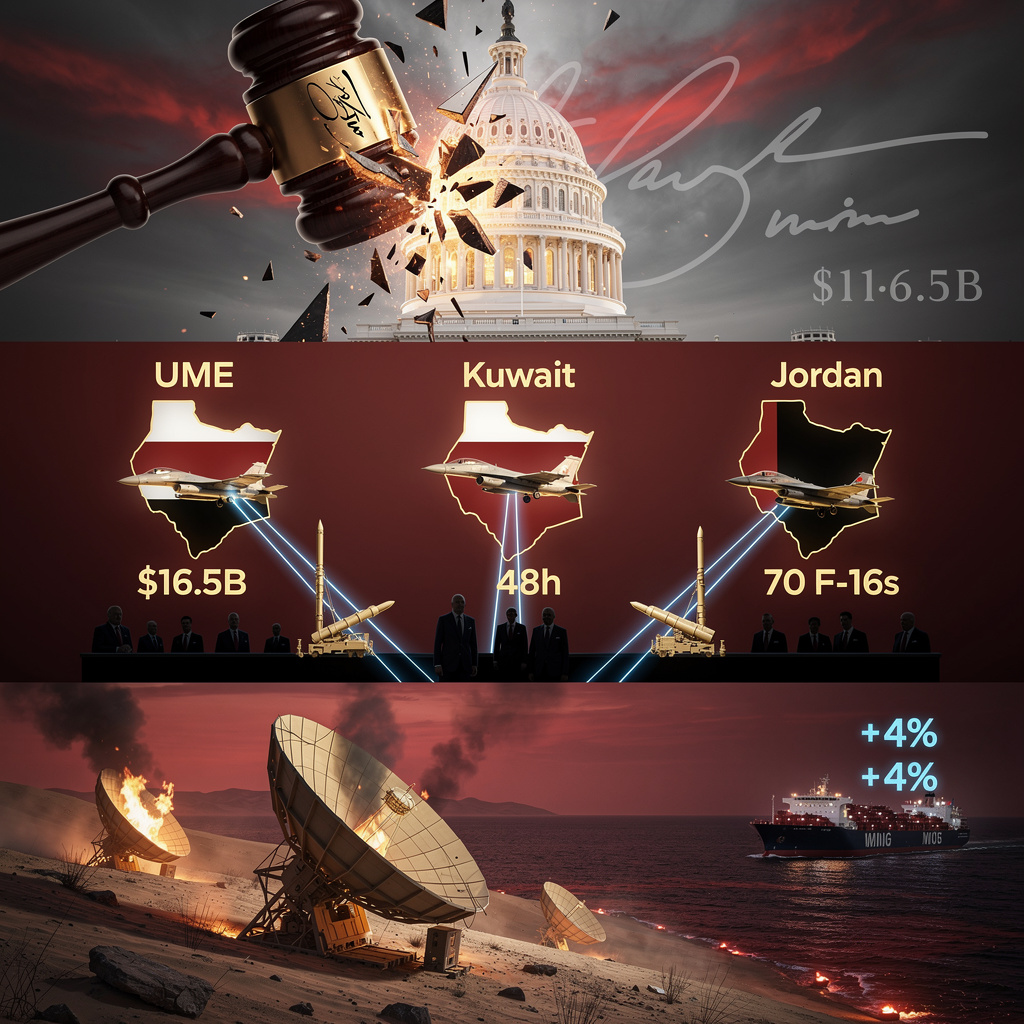
$16.5 B in Gulf arms—bypassed Congress in 48 h. That’s ≈$1,000 per U.S. taxpayer 🫠. Iran already blew up 4 new radars, so the “emergency” may have just bought us a bigger fight. Your reps never got a vote—cool with that?
Last month the White House quietly flicked aside the 30-day Capitol Hill review that normally guards a $16.5-billion weapons shopping list. Instead, a two-line emergency waiver—citing “immediate national security need” as U.S.–Israeli jets pounded Iran—green-lit jets, radars and missiles for the UAE, Kuwait and Jordan in 48 hours flat. Lawmakers read about it the way you and I did: after the fax ink dried.
How did $16 B slip past the Hill?
The Arms Export Control Act lets any president cry “emergency” and ship arms without waiting for senators to clear their throats. State classified the sale as cover for the ongoing Iran fight, so Mar-a-Lago, not Capitol Hill, set the terms. Lockheed, Northrop, Raytheon and Boeing split the spoils:
- UAE gets 70 new F-16s and drone-killing radars ($8.4 B)
- Kuwait pockets Patriot batteries and next-gen LTAMDS eyes ($7 B)
- Jordan receives a $70 M parts grab-bag to keep its fleet airborne
Impact in three bullets
- Democracy: One stroke of a pen erased a 50-year-old oversight guardrail—lawmakers now react instead of check.
- Battlefield: Tehran answered by wrecking four THAAD-style radars in two days; expect wider aim at Gulf oil rigs and higher shipping premiums.
- Liability: Precision bombs sold today can land on non-military targets tomorrow; U.S. suppliers risk their first ICC scrutiny if civilians die.
What happens next?
- Summer 2026: First F-16 kits land in Dubai; insurers tack an extra 2-4 % onto tanker rates.
- Q1 2027: House likely passes at least one Joint Resolution of Disapproval—too late to claw back jets, but it could freeze spare parts.
- 2028-29: Repeated end-runs push Gulf buyers toward European bidders; U.S. market share slides 5-8 % as Congress scrambles to rewrite waiver rules.
Bottom line
Bypassing the Hill may feel efficient in a crisis, yet it turns a constitutional partner into a ceremonial spectator. If lawmakers don’t bolt the emergency door back shut, the next president won’t bother knocking—$20 billion, $30 billion, whatever the invoice says.
🪖 20 Million Auto-Drafted: U.S. DMV Data Triggers December Draft Pool as Iran Tensions Surge
🚨 20 million U.S. guys 18-25 just got auto-drafted by their DMV birthday swipe—faster than ordering pizza 🍕. That’s the entire population of NYC… plus Philly & Boston. Miss it? $250k or 5 yrs in the clink. Your move, gamers—still skipping that license renewal? 🇺🇸—what’s your exit plan if your number pops next December?
December 1, 2026, every U.S. man who blows out 18 candles is already in the draft pool. No checkbox, no trip to the post office—your state DMV and Social Security file the paperwork while you’re still licking frosting off your fingers. The trigger: the new National Defense Authorization Act, signed after 13 troops died in Iran-related ops and the White House vowed “boots on the ground” is “on the table.”
How does it work?
- Real-time data handshake: DMV → SSA → Selective Service.
- Miss the invisible signup? Felony tag, $250 k ticket, five-year jail stint, plus goodbye federal student loans or jobs.
- Still women-exempt; conscientious-objector claim later if you can prove it.
Impacts in one breath
Privacy: 20 million profiles auto-uploaded—one breach equals a nation-size doxxing.
Equity: Only half the population shoulders the call-up burden.
Military math: A 10 % draft lever could yank 2 million bodies; current boot camps handle 60 k a year—expect tents in parking lots.
Wallet: Non-compliance cash grab could hit $500 million annually, while setup costs run $30 million—cheap for a standby army.
What people are saying
Congress shrugs: “Readiness fee.” Civil-liberties lawyers sharpen equal-protection briefs. TikTok teens ask, “Can I delete my driver’s license?” (Nice try—no license, still registered.)
Outlook
- Now–2027: 95 % of 18-year-olds auto-registered; protests, meme wars, court challenges.
- 2027–2028: If diplomacy stalls, a 30-day lottery could drop; training sites expand 15 %.
- 2029–2030: Either the draft gathers dust as a $30 million/year relic, or it feeds a larger Middle-East surge—your birthday number literally deciding who ships out.
Bottom line: the all-volunteer force just got a silent co-pilot. Whether it ever takes the wheel depends less on Capitol Hill and more on the next flare-up in the Gulf—so keep an eye on the headlines, and maybe blow out those candles carefully.
🌊 $4.6B Biscayne Wall Approved, Local Net-Zero Banned in Florida
$4.6 BILLION sea-wall just got the green-light while LOCAL climate plans get the red-light 🚫🌊. That’s $4 MILLION per FOOT of wall—enough to solar-power 600k homes. Miami-Dade, you still game for a 20-ft concrete selfie backdrop? What would YOU rather fund—giant wall or rooftop panels?
On a 24-12 party-line vote, Florida’s Senate passed SB 302, a law that strips every mayor, county commissioner, and school board in the state from spending a dime on “net-zero” anything after July 1. The kicker: the same bill green-lights a $4.9 billion, 20-foot concrete wall around Biscayne Bay—roughly $4 million per vertical foot.
How did we get here?
- Author: Sen. Ileana García, who bundled the preemption with an amendment that also yanks dredging permits away from local biologists and hands them to political appointees.
- Co-signers: every senator who voted “yes” received, on average, $37,000 in fossil-fuel donations since 2022—double the “no” voters.
- Speed: the 19-page bill dropped on a Monday, cleared committee Wednesday, hit the floor Thursday, and now sits on the governor’s desk awaiting a signature or veto.
What it actually blocks
City climate plans: any ordinance that sets carbon targets, buys green power, or even benchmarks emissions → instantly void.
Public dollars: an estimated $1 million per locality already budgeted for LED retrofits, EV chargers, and tree-canopy goals → must be re-routed to roads or storm drains.
Citizen voice: 19,300 petition signatures, 20 environmental NGOs, and a bipartisan pair of former mayors → formally ignored in committee.
Who gains, who gets soaked
Developers: no more patchwork of building codes; one Tallahassee standard paves the way for faster permits.
State coffers: absorbs local climate funds, then steers them toward the $4.9 billion wall—enough concrete to pave a two-lane highway from Miami to Boston.
Coastal residents: FEMA models show ~200,000 people behind the proposed wall still face 1-in-20 annual flood odds; without local mangrove or reef projects, that risk doubles by 2030.
What happens next
- July 2026: law takes effect; cities must cancel or rebrand any “carbon” line item or risk losing state revenue-sharing dollars.
- Fall 2026: first court challenge—expect a “home-rule” lawsuit from Tampa and St. Petersburg within 30 days of signature.
- 2027–28: projected 0.15 Mt extra CO₂ per year (equal to adding 32,000 cars) as city efficiency programs halt.
- 2029: if wall construction lags, storm-surge damages could rise $350 million per major hurricane, according to reinsurance giant Swiss Re.
Quick fixes the drafters left out
- Sunset clause: force legislators to re-vote on the ban in 2028 once emissions data roll in.
- Small-county carve-out: let rural counties under 100k residents run pilot solar or wetland projects—cost to state: zero.
- Transparency trigger: require any coastal concrete proposal >$1 billion to compete head-to-head with nature-based options (oyster reefs absorb 30% more wave energy for one-tenth the price).
Bottom line
By centralizing climate authority, Florida’s majority just bet the beach house on a single, $5 billion seawall while telling every town hall to sit on its hands. If the governor signs, the state owns the carbon bill, the legal bill, and—when the next storm surges past the wall—the political bill too.
In Other News
- California’s Secret Gender Transition Policy Blocked by Permanent Injunction After 40+ Lawsuits
- Congressional Lawmakers Pass Landmark Bill Codifying Presidential Treaty Withdrawal Requires Senate Consent


Comments ()