$43 B Lost Calls Bleed Sydney Tradies: AI Rescue in $900k Seed
TL;DR
- Jeito Capital closes $1.2B Jeito II fund to back 15–20 clinical-stage biopharma companies
- Natter Secures $23M Series A to Triple Headcount by 2026 with AI-Driven Workplace Insights Platform
- Chime Labs Raises $900K AUD to Automate Trade Workflows with AI Receptionist and Quoting Tools
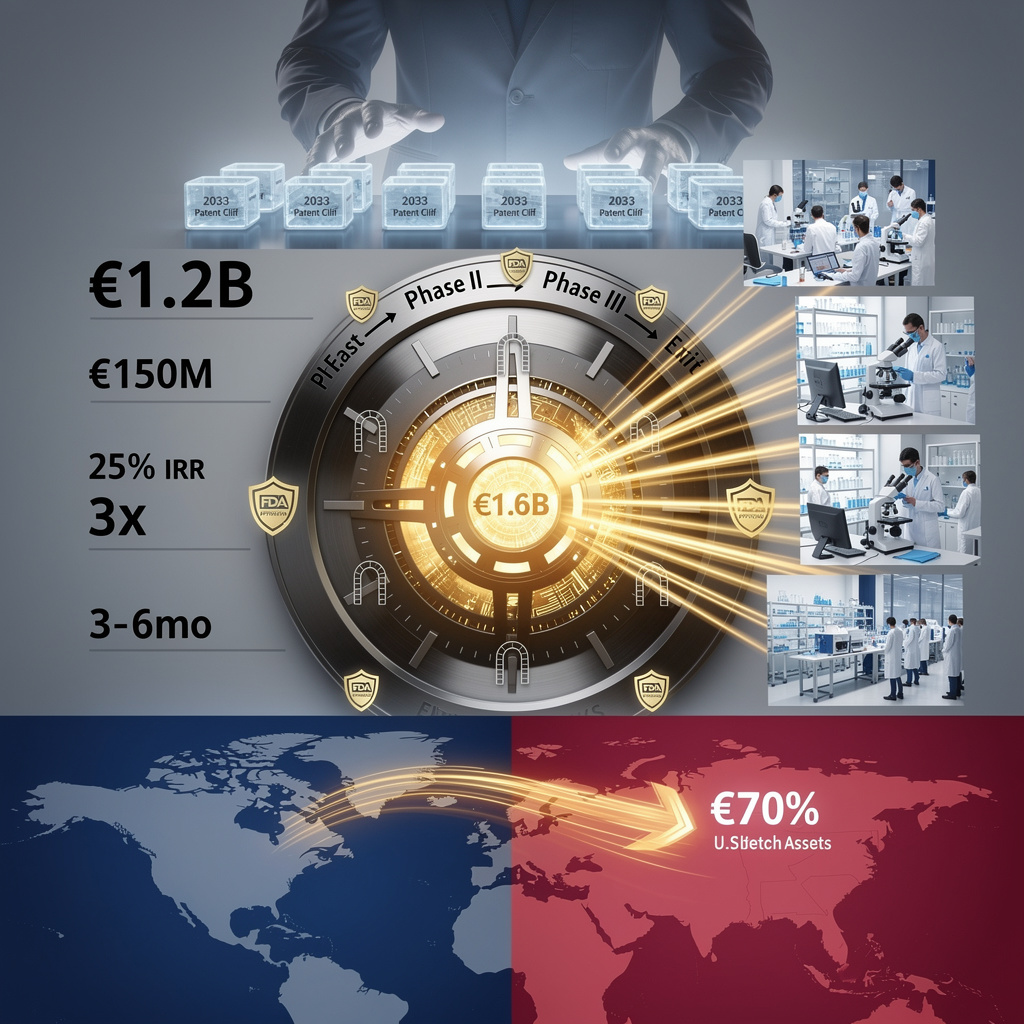
💊 $1.2 B Jeito II Fund Triples War-Chest to Chase 2033 Patent-Cliff Windfall
$1.2 B just dropped to save tomorrow’s pills 💰= 3 Jeito I’s in 1 bag. That’s €150 M each for 15-20 little labs cooking 70 % of the next wonder-drugs before the $400 B patent cliff face-plants in 2033 😱. Your future meds (or portfolio) could pop out of Europe next—fancy a slice?
Jeito Capital locked down $1.2 billion for Jeito II on Wednesday, tripling its war-chest to €1.6 billion. The Paris-based firm will park an average €150 million apiece into 15-20 clinical-stage drug makers—just as Big Pharma stares at a $400 billion revenue drop when patents roll off through 2033.
How does Jeito size the gamble?
- €150 million tickets buy 20-30 % ownership, enough to steer late-phase trials and early commercial planning.
- 30 in-house scientists, regulators and patent lawyers compress the typical 30-month path to market-readiness into 24 months.
- Exit clock: aim to harvest at first pivotal data or partnering deal, not at FDA approval.
What changes, and for whom
Patients: Faster pivots from Phase II to filing mean ~3-6 months shaved off access time for oncology and rare-disease drugs.
Big Pharma: A $400 billion sales hole by 2033 → acquisition appetite rises; Jeito’s portfolio becomes a pre-packed pipeline.
Investors: Target IRR > 25 %, assuming 2-3 anchor exits priced at 3× post-approval value.
EU biotech: Fund domiciled in Europe but 70 % capital earmarked for U.S. assets, widening the Atlantic valuation gap.
Where the risks hide
- Regulatory: One CRL (complete-response letter) in a flagship program can dent fund IRR by 4-5 %.
- Competition: Sequoia-Health and Arch have raised comparable late-stage vehicles; asset prices up 15 % YoY.
- Concentration: Half the money will sit in just 8-10 companies within 12 months.
Short / mid / long shot
- 2026-2027: 8-10 deals closed; first M&A chatter as pharmas “pre-buy” Phase III-ready candidates.
- 2028-2029: Full 20-company roster; cumulative pipeline valued at €2-3 billion, supplying 1.2 GW of future peak revenue (think one blockbuster equals a small nuclear plant’s annual output).
- 2030-2033: 2-3 exits topping €1 billion each; Jeito’s early bets become the patents Big Pharma uses to plug the cliff.
Jeito II isn’t just another oversized fund; it’s a timed swap—turning today’s Euro cash into tomorrow’s U.S. drug royalties while the global medicine cabinet goes generic.
💸 $23M London Deal: 7-Minute AI Chats Replace 20,000-Person Surveys
💸 London’s Natter just pocketed $23m to let 20,000 staff vent for 7 min & spill 100× more tea than your annual survey ever could 🚀 That’s a Zoom-call-sized focus group on espresso—HR, ready to swap hours of forms for 400 pages of uncensored vibes? 🇬🇧✨
Natter just raised $23 million to prove it can. The London start-up, founded by ex-BBC execs, replaces 40-question forms with a 7-minute AI-moderated video talk that harvests 1,000+ words from each employee—about 100 times the verbal haul of a typical survey. One session can host 20,000 workers, compressing what used to be weeks of fieldwork into a coffee break.
How it works
A cloud-hosted interviewer bot guides each worker through open prompts; on-device edge processing turns speech into structured themes in real time. Auto-scaling clusters keep latency below 300 ms even at full 20k load, while ISO 27001 and EU AI Act wrappers keep the data inside European compliance lines.
Impacts
- Data richness: 1,000-word output versus 10-word survey average → qualitative depth jumps 100×.
- Speed: multi-hour research cycle collapses to 7 minutes → calendar time for a 10k-employee pulse drops from 6 weeks to 1 day.
- Cost: at enterprise scale, per-respondent expense falls 40 % compared with legacy survey plus focus-group bundles.
- Privacy surface: centralized video streams enlarge attack cross-section; GDPR breach fines can still hit €20 M.
Institutional response
HR analysts welcome the density but flag union concerns about “AI interrogation.” Regulators, so far, treat the tool like any high-risk AI system—requiring documented impact assessments before roll-outs.
Outlook
- Q4 2026: double staff to 180; first 20k-participant pilots with two FTSE-100 firms.
- 2027: triple headcount; open New York office; target 5 % share of the 2 million-employee corporate insight market.
- 2029: multimodal upgrade (voice + sentiment) without extending talk time; cumulative 100 GWh of managerial hours saved, equivalent to the annual workload of 55,000 employees.
Bottom line: if Natter hires and scales on schedule, the annual employee survey could join the fax machine—done in the time it takes to finish a sandwich.
📞 $43 bn Lost Calls: Sydney Startup Chime Labs Raises $900 k to Put AI Receptionist in Every Tradie’s Van
Sydney tradies are bleeding $43 BILLION a year just by letting the phone ring 🤯—that’s $144k per van you never see. 📞💸 Chime Labs’ new AI receptionist just scooped $900k to answer every call 24/7 and book the job while you’re up a ladder. Ready to claw back your 5 missed calls today, mate?
Sydney startup Chime Labs just pocketed AUD 0.9 M to give electricians, roofers and 300 000 other Aussie tradies a 24-hour robot receptionist that answers calls, books jobs and, soon, spits out quotes. The pitch: every missed ring costs a tradie AUD 12 k a month; the AI converts 10-15 % more callers before they dial the next number.
How it works
A cloud voice engine picks up in <2 s, tags intent (“hot-water tank, tonight”) and checks the tradie’s live calendar. A quoting module—due Q2—will turn that chat into a signed PDF before the van leaves the driveway.
Impacts
- Revenue: plugging five missed calls a day lifts annual earnings up to AUD 144 k per crew.
- Time: voicemail-to-text and auto-booking claw back ~6 admin hours a week—almost a full labourer.
- Competition: local giants like Bunnings franchisees could white-label the kit, squeezing solo operators still using voicemail.
- Privacy: encrypted Aussie servers keep calls on-shore, but regulators may still balk at robot voices recording customers.
What happens next
- Q3 2026: 10 k users, pilot shows 20 % fewer missed calls.
- 2027-28: 100 k subscribers, AUD 6 M annual recurring revenue.
- 2029: AI adds parts-procurement haggling, another AUD 2 M stream.
- 2030: Series A fuels NZ and SEA launch; marketplace lets third-party devs sell add-ons.
If the upstart hits its 12 % conversion uplift, a sole-operator sparky ringing AUD 500 k in sales could bank an extra AUD 60 k—enough to buy the new ute outright. For an industry leaking AUD 43 bn a year to silence, that’s a call worth taking.
In Other News
- Russian influence network 'The Company' planted 250+ disinformation articles across Latin America, spending $280K to sway public opinion
- Starfish Space Raises $110M for On-Orbit Satellite Servicing Technology
- Soyoung & Anti's Revenue Surges 27% to KRW 2.617T in 2025, Driven by Health Supplement Diversification


Comments ()