$40M USAF Stealth Drone Falls 200 ft in 30 Sec: Autonomy Glitch Freezes UCAV Contest
TL;DR
- General Atomics YFQ-42A UCAV Crashes During Takeoff in California, Flight Tests Paused
- Manna Air Delivery Raises $50M Series B to Expand US Drone Network to 40 Bases
😱 $40M Stealth Drone Lost in 30 Seconds: USAF CCA Race Now on Ice
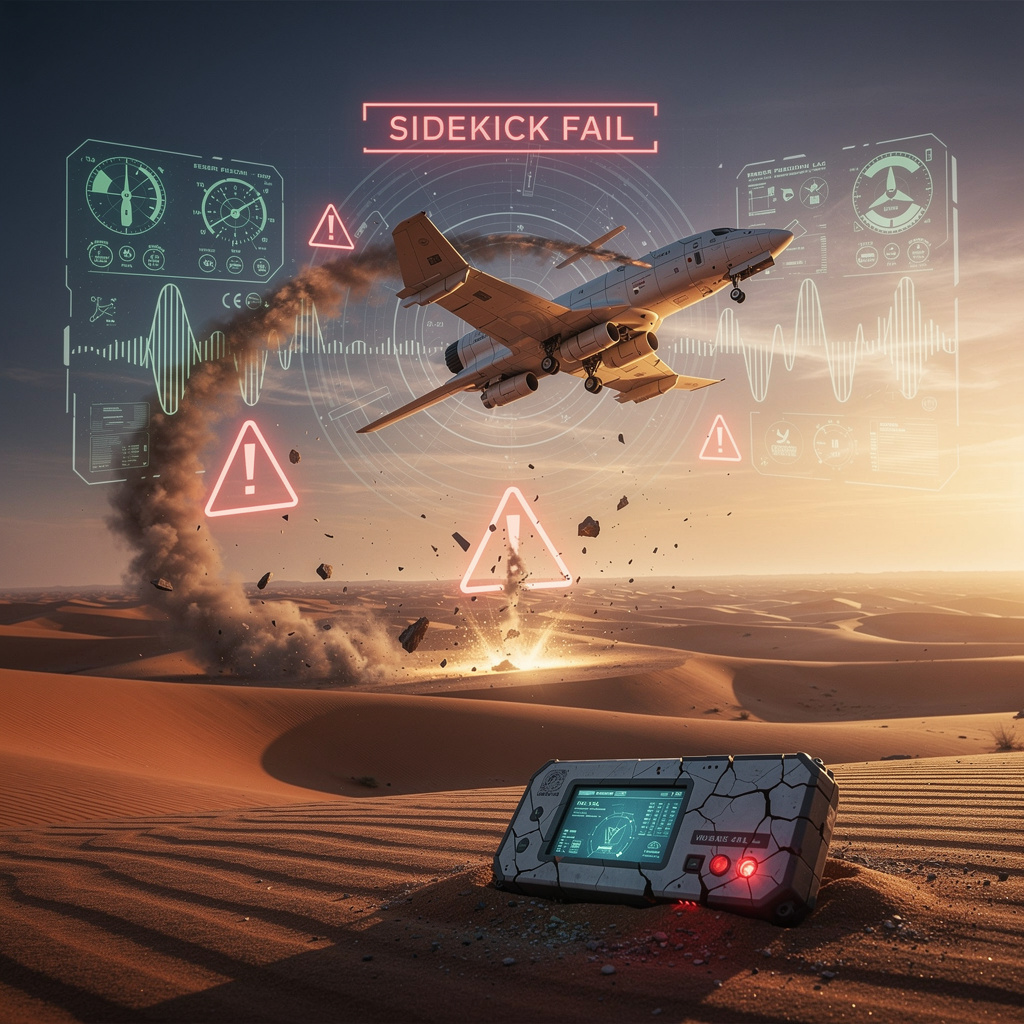
1 of 3 YFQ-42A UCAVs just nosedived <200 ft after take-off—like losing a $40M stealth fighter in 30 sec 😱 Autonomy glitch suspected, flight-test fleet frozen. USAF has 6 mo to pick CCA winner—will Gambit survive? — SoCal aerospace workers watching every byte.
At 13:00 Pacific on Sunday, General Atomics’ YFQ-42A “Gambit” UCAV nosed into the desert less than 30 seconds after leaving Gray Butte’s runway, becoming the first casualty of the Air Force’s $6-billion Collaborative Combat Aircraft program. No pilot, no injuries, but the clock on a September 30 production pick keeps ticking.
How did a 4,000-lb war-bot stall at 200 ft?
Investigators say Sidekick autonomy software held the stick; engine gauges were green; thrust-to-weight margin exceeded 1.2. The failure window—liftoff to 200 ft AGL—matches the phase where sensor-fusion lag or a single mis-command can outrun the flight computer. One data-logger, two days of silence, and the entire prototype line is now grounded.
Impacts—measured in code, cash, and credibility
Program risk: 1 loss among ≥9 CCA prototypes lifts the fleet accident rate to ~11 %—double the pre-crash baseline.
Budget pressure: ≤6 months remain to certify fixes or risk reallocating FY 26 funds to rival Anduril.
Tech confidence: Shield AI, already tapped to replace Sidekick, may see its rollout accelerated, while Collins faces a hard review.
Desert schedule: Every week of pause erases ≈15 sorties needed to reach the 200-flight threshold analysts say is minimal for a production go-ahead.
Short-term: patch, test, decide
- Week 1–2: Download recorder; replicate take-off command string on second airframe.
- Week 4–6: Issue software patch or engine-health bulletin; Air Force safety sign-off.
- June 2026: Resume envelope expansion; target 50 flights/month to rebuild data book.
Long-term: fork in the flight path
- Q3 2026: If root cause is code-only, Shield AI integration proceeds and GA keeps its slot in the 30 Sep down-select.
- Q4 2026: Hardware redesign (structure, single-engine vulnerability) would push decision into FY 27 and reopen the contest to Anduril, Boeing, and Northrop.
- 2027: Any slip delays the Air Force plan to field 1,000 robotic wingmen by 2030, shifting the future mix of crewed F-47s and their unmanned teammates.
The takeaway
A 200-ft plunge in the Mojave just became a billion-dollar crossroads. Fix the glitch fast and the YFQ-42A still has a shot at teaming with next-generation fighters; hesitate and the program—and the Air Force’s unmanned force multiplier—could be re-competed away.
🚁 $50M Series B Propels Manna’s 2-Minute Urban Drone Network Across US & Europe
$50M just landed to make 2-min drone drops the new normal: 250k flights, 85% less CO₂, 86 NPS 🚁💨 Cities from Dallas to Dublin next—ready for your pharmacy in 160s?
Manna Air Delivery closed a $50 million Series B on 2 April, pushing its lifetime raise to $110 million and committing the Dublin-born firm to 40 drone bases across the United States and Europe. The company has already logged 250,000 regulated flights, each 51-lb aircraft replacing a three-mile car run with a 2-minute, 40-second hop that emits 85 % less CO₂.
How 9 lb beats a van
A single 59 dB propeller lift carries up to 9 lb at 50 mph inside a 3-km radius. Weather-tolerant airframes stay airborne in 97 % of Irish conditions, letting algorithms sequence take-offs every 30 seconds from rooftop “ports” no larger than two parking spaces. The result: grocery, pharmacy or a pint of blood arrives before the kettle boils.
Impacts at neighborhood scale
Congestion: one base removes ~1,200 van trips/week → 30 % fewer double-parked nuisances on main streets.
Carbon: full 40-base network projects 5 Mt CO₂ avoided/year, equal to taking 110,000 cars off the road.
Commerce: 86 NPS keeps Uber, Deliveroo and DoorDash renewing contracts → retailers gain a “<5 min” filter that raises basket size 18 %.
Competition: Zipline’s $800 M treasury and 120-mile range loom, yet its 8-lb, hospital-focused model rarely flies more than twice an hour; Manna’s high-frequency, low-weight niche stays complementary—for now.
Where the regulators stand
FAA leaders have publicly cited Manna’s deconfliction software, a signal that lightweight urban UAVs may skip lengthy site-by-site waivers. Europe is watching Dublin noise logs; stay under 60 dB and approvals accelerate.
Outlook
- Q4 2026: 15 US + 10 EU bases live, 1 million cumulative flights, first hospital pilots in Austin and Dublin.
- 2027: payload bump to 15 lb, cruise 70 mph; annual revenue run-rate $150 M.
- 2029: 40 bases cover 70 % of major metro populations; 5 million deliveries/yr, $500 M gross revenue, 5 Mt CO₂ saved; IPO or strategic sale likely above $1 B valuation.
Bottom line
Forty rooftops, nine pounds of cargo and two minutes of airtime are quietly redrawing the final mile. If Manna hits its flight plan, the cul-de-sac may never again echo with the rattle of a delivery van.
In Other News
- Southwest Airlines Enforces Strict One-Power-Bank Rule Effective April 20, 2026
- Cathay Pacific Flight CX883 Makes Emergency Landing in Osaka After Mid-Flight Engine Oil Drop
- Cape Air Flight 5001 Returns After Cabin Door Opens Mid-Flight, No Injuries Reported
- Delta Air Lines raises checked baggage fees to $200 for third bag, citing jet fuel prices exceeding $200/barrel in April 2026
Comments ()