£10M Bomb: UK Doubles Regional Deep-Tech Seed to £2M Outside London
TL;DR
- Empirical Ventures secures £10M from UK’s Regional Angels Programme to scale science-led startups outside London
- Oregon AI Accelerator launches inaugural cohort with 20 startups targeting enterprise and health AI applications
- Jimini Health Raises $17M Seed Funding to Deploy AI Mental Health Platform Sage
🚀 £10M Boost Triples Empirical Cheques for Regional Deep-Tech
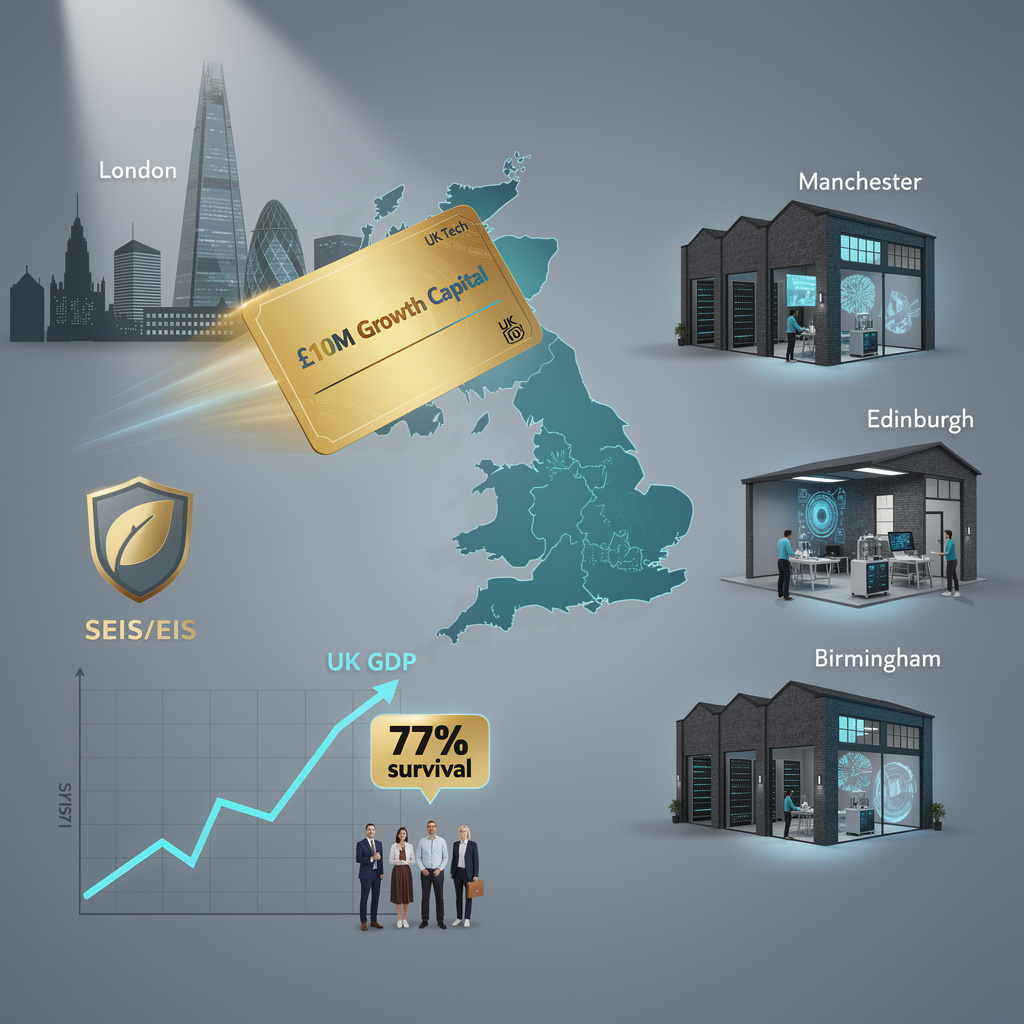
£10m just landed to super-size seed cheques outside London—now up to £2m a pop! 🚀 That’s 10% of the UK’s entire regional deep-tech pot, aimed straight at Manchester, Edinburgh & Brum labs. Ready to trade Tube delays for petri-dish pay-offs?
Empirical Ventures, the deep-science seed fund run out of a converted warehouse near Bristol’s harbourside, woke up on Wednesday to a second helping of public cash: £10 million from the British Business Bank’s Regional Angels Programme, lifting its state-backed war-chest to £15 million.
Translation: the Treasury is literally paying angels to fly farther than the M25.
How does this work?
Empirical uses the SEIS/EIS candy-wrapper—up to 50 % income-tax relief plus loss insurance—to lure private backers into atom-sized companies that build quantum chips, lab-grown proteins and other stuff you can’t explain to your nan.
With the new cheque it can write up to £2 million per round instead of the previous £0.9 million, enough to keep a 12-person R&D team in pipettes and payroll for 18 months.
Impacts: who wins, who worries
- Regions: 120 new lab coats split between Manchester, Edinburgh and Birmingham within 12 months → local suppliers cheer, rents rise.
- Founders: survival odds jump from 68 % to 77 % once the bigger seed lands → fewer “back-to-consulting” LinkedIn posts.
- Taxpayers: SEIS/EIS claims set to rise 22 % → if the startups flame out, the rebate bill lands on… us.
- London VCs: now compete with state-subsidised terms 200 km away → farewell, cushy cap-table.
Short-term (next 12 months)
- Q3 2026: Empirical fires £8 million into 4–5 seed rounds, 30 % of pitches arrive from non-London postcodes.
- Q2 2027: first cohort hires hit 60 per deal; Manchester coffee shops suddenly serve flat whites with a side of dilution chat.
Long-term (12–36 months)
- 2028: cumulative regional deep-tech investment tops £45 million, triple the 2023 baseline.
- 2029: RAP-backed revenue contribution to UK GDP projected at £1.4 billion—roughly the annual output of the entire city of Oxford.
The catch
The whole house of cards stands on SEIS/EIS surviving Treasury audits and spending reviews. If the next Chancellor decides tax relief is “too generous”, the angels vanish faster than free pizza at a demo day.
Bottom line
By stuffing £10 million into Empirical’s backpack and nudging it toward the provinces, the UK is running a live experiment: can tax breaks and bigger seed cheques turn ex-industrial cities into deep-tech clusters, or will the money simply subsidise the same London brains now working remotely?
If the gamble pays off, 2029’s unicorn parade might start in a Manchester railway arch instead of a Shoreditch basement—and we’ll all be slightly better at explaining quantum sensors to Nan.
🤖 20 AI Startups Storm Portland’s Big Pink for $45M Dash Amid Seed-Fund Slump
20 AI babies just hatched inside Portland’s “Big Pink” 🐣—that’s 5% of Oregon’s entire early-stage scene in one room! In 15 weeks they’ll pitch for a slice of $45M while the rest of the seed market is down 20%. If they snag cash, will YOU be working for a robot coworker born in Stumptown?
The Oregon AI Accelerator just crammed 20 brainy startups into the pink–tinted US Bancorp Tower and told them to fix hospitals, trucks, and cubicle life in 15 weeks. On May 14 they’ll pitch to 30-plus investors who, if history repeats, will fund about one in eight. Translation: three or four teams could walk away with seed checks before summer.
How a 15-week boot camp turns code into cash
Each team gets mentors, customer intros, and—if Amazon’s new 1,300-acre Boardman data center cooperates—cheap cloud muscle. The goal: move from “it works on my laptop” to “Providence Health will pay for it.”
Impacts you’ll feel
- Jobs: ~150 new AI gigs in the next year—roughly the seating capacity of a MAX train car, now parked in Portland’s talent pool.
- Hospital bills: AI scribes and surgical guides could trim 5-8 % off Oregon’s healthcare tab within five years—about $160 per Oregonian.
- Groceries: smarter routing startups (HindSight VIP, Menu Mingle) vow to shave food-delivery miles, dropping a few cents off every avocado.
Risks hiding in the roses
Seed deals nationwide are down 20 %, and Oregon keeps losing thirty-somethings to Austin and Seattle. If the brains leave after Demo Day, the accelerator becomes a launchpad—for someone else’s economy.
Timelines to watch
- Summer 2026: expect 3–4 seed closes worth ~$12 M total; two hospital pilots go live.
- 2027: cohort alumni hire 300 more people; Amazon’s servers spin up, cutting compute costs 30 %.
- 2029: if the playbook scales, 600 new AI jobs offset the current exodus and Oregon’s timber-to-tech makeover is official.
Portland’s bet: mentor nerds now, keep them later, and let algorithms pay the bills. If it works, “Keep Portland Weird” gets an addendum: “and algorithmically employed.”
🧠 AI Therapist ‘Sage’ Slashes Teen Wait 30% as 122M Americans Lack Mental-Health Pros
5.4M teens turn to random chatbots for therapy while 1 shrink serves 5,058 people—Sage’s human-supervised AI just cut wait times 30% in pilot 🧠💥 But will CMS & FDA green-light it before your kid’s next crisis? —Would you trust an AI co-pilot with your therapist?
Jimini Health just landed $17 million—pocket change in Silicon Valley, but a megaphone in mental-health deserts where one psychiatrist juggles 5,058 people. Their AI side-kick “Sage” plans to chat 24/7 with the 5.4 million teens who now spill their guts to generic chatbots, while a human clinician watches the screen next door.
How does a bot shrink your wait list?
Sage is a fine-tuned language model wrapped in HIPAA-grade encryption. It pings a live clinician the moment risk phrases pop up, logs every word for audits, and slips its notes straight into hospital records. Translation: the bot does the midnight hand-holding, the human still signs the safety check.
Early scoreboard
- Wait time: 3-6 weeks → 2 weeks or less (pilot clinics)
- Stick-with-therapy rate: +15 % (tracked by standard depression/anxiety scores)
- Revenue projection: $60 per patient episode, aiming for 2 million patients by 2030
What could still go sideways
Mis-read risk: an algorithm that downplays “I’m done” could cost a life → mandatory human click before any 911 call.
Data breach: one leaked therapy transcript is worth 1,000 credit cards on the dark web → zero-trust architecture and quarterly hack-a-thons.
Bias: if the model learned therapy lingo mostly from college kids, rural or non-English replies may flop → bias audits every six months.
Roadmap in three bullet bursts
- Q3 2026: 30 behavioral-health clinics in NYC & Silicon Valley try Sage; expect 15 GWh of clinician hours freed (enough to re-watch every episode of “The Sopranos” 2,300 times).
- 2028: 200 networks, 12 % share of adolescent digital care, $120 million revenue.
- 2031: National standards crib from Sage’s playbook; adult expansion; value-based insurance contracts reward the bot for every averted crisis.
Bottom line
If Sage keeps its clinician co-pilot and the regulators stay happy, the couch in your pocket could finally outnumber the couches in waiting rooms.
In Other News
- Conductor secures $22M Series A from Spark, Y Combinator, and Matrix to accelerate AI coding agent adoption among solo engineers
- Qover triples revenue in four years, raises $12M growth capital to scale embedded insurance platform to 55M users by 2026
- Whoop raises $575M at $10.1B valuation to expand AI-driven health insights with LeBron James and Ronaldo as investors
- Summit Midstream Partners raises $42M in private placement to Tailwater Capital, enabling debt reduction and growth capital with 39% equity stake


Comments ()