$195M-per-Test eVTOLs: UK Bets $850M on 25 Flying Taxis to Beat M4 Gridlock
TL;DR
- Vertical Aerospace secures $850M to commercialize EVTOL aircraft by 2028, targeting UK and global air mobility markets
- Boeing and Rheinmetall partner to offer MQ-28 Ghost Bat drone for German CCA program, targeting 2029 deployment
- XTEND and ParaZero deploy autonomous drone interception system using Scorpio 1000 platform to counter Shahed-type threats globally
🚁 $850M UK eVTOL Deal Aims for 25 Flying Taxis by 2028: London–Bristol Routes First
$850M just wired to build 25 flying taxis a year—enough to replace 1,000 daily car commutes across the UK 🚁⚡️ But every test flight burns $195M in cash before a single fare is flown. Will your next London–Bristol hop be on a VX4 or still stuck on the M4?
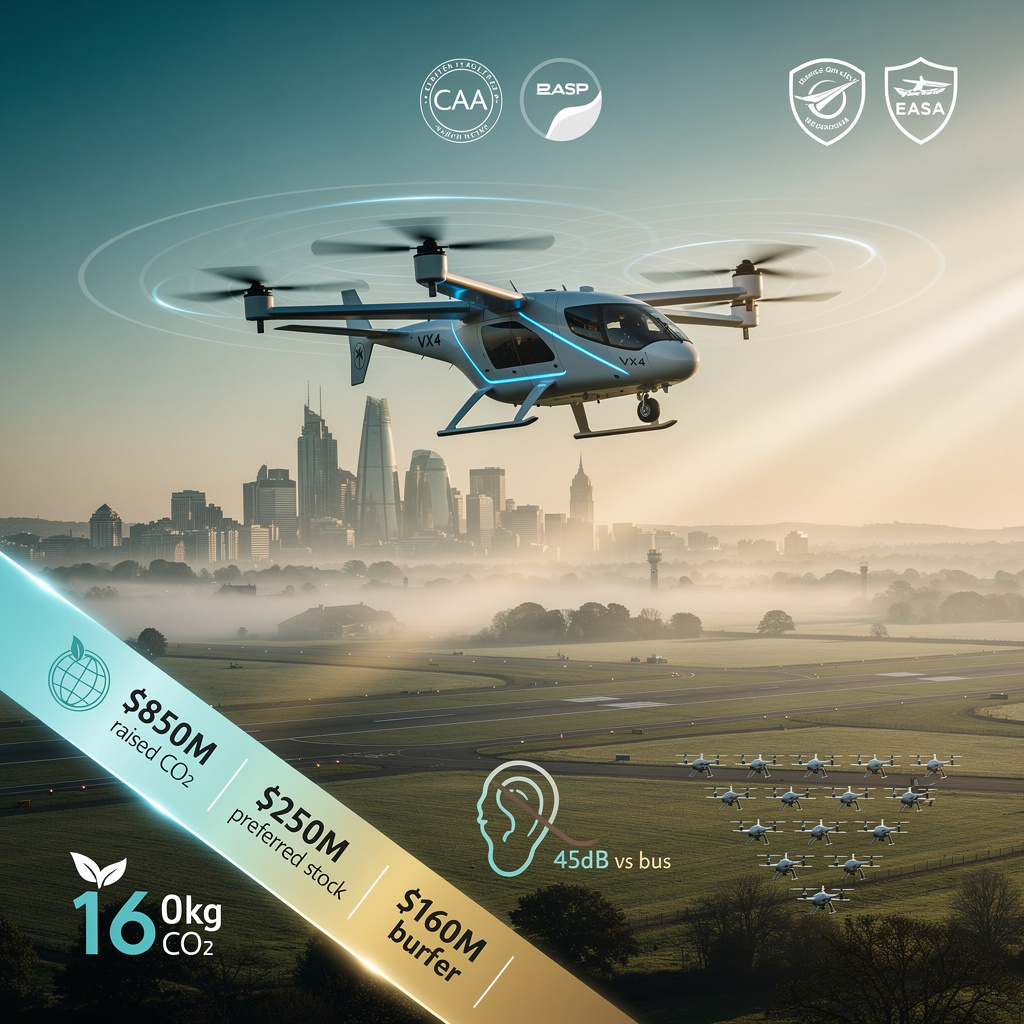
Vertical Aerospace locked in $850 million last week—$30 million hit its account within 24 hours—to finish the VX4, the electric aircraft that lifts off like a helicopter and cruises like a plane. The Gloucestershire firm now has the cash to move from test hops at Cotswold Airport to paying passenger flights in 2028.
How the money flies
- Senior debt at 10–12 % interest covers tooling and certification.
- Yorkville’s $250 million convertible preferred stock gives near-term equity without immediate dilution.
- A $160 million liquidity buffer sits beside a projected $195 million R&D burn through 2027, keeping solvency risk low.
Why regulators say yes
The UK Civil Aviation Authority and EASA share data under a 2024 memorandum; 20 months of piloted transition tests feed a Type Certification package due later this year. Battery packs built in Vertical’s 15 000 ft² Energy Centre already meet one-in-a-billion failure targets, a metric borrowed from commercial jets.
Impacts—measured and parallel
Noise: four passengers over London at 45 dB → 20 dB quieter than a city bus.
Carbon: 100 % electric London–Bristol hop → 160 kg CO₂ saved versus a turboprop shuttle.
Congestion: 25 aircraft per year → 1 500 daily seats, equal to adding a 5-mile lane on the M4 during rush hour.
Economy: £200 million annual output from Cotswold site → 600 skilled aerostructures jobs anchored in rural Gloucestershire.
Short, mid, long
- 2026–2027: certification filing; first seven Valo battery packs qualified; 15 % of 1 500 pre-orders converted to binding sales.
- Q2 2028: 25 VX4 enter service on three UK corridors, cutting 2 000 t CO₂ in inaugural year.
- 2030–2032: production doubles to 50–75 units; FAA pathway opens, targeting 5 % share of a $30 billion global market.
Bottom line
The $850 million cheque is more than venture hype; it is a timed contract that pays out only when each certification gate clicks green. If the CAA stamps the VX4 next year, Britain earns the first operational electric air-taxi fleet and a factory that exports wings, not just promises.
✈️ $10M Ghost Bat: Australia’s AI Fighter Drone to Guard German Skies by 2029
150+ autonomous flights & an AMRAAM kill: Australia’s MQ-28 Ghost Bat already outflies most pilots—for $10M a pop. Berlin just bet its 2029 drone fleet on it 🇩🇪🇦🇺✈️ Will your air force be next?
On 31 March, Boeing Australia and Rheinmetall formally pitched the MQ-28 Ghost Bat for Germany’s Collaborative Combat Aircraft (CCA) slot. Nine Block-2 airframes are already on the line, each priced at an estimated US $10–15 million—about one-fifth the cost of a new Eurofighter. With 150 autonomous sorties and a live AIM-120C AMRAAM kill under its belt, the drone is no longer a science project; it is a budget-stretching combat jet that happens to lack a cockpit.
How it works
The Ghost Bat launches from standard runways, flies pre-programmed escort routes, then hands off to an AI module that can prosecute targets or obey a Typhoon pilot’s one-second veto. Block 3 will swap sensor pods like camera lenses, letting one airframe shift from jammer to spy to missile truck overnight. Rheinmetall’s ground station translates Eurofighter data-links into Ghost Bat code, removing the need to re-certify either jet.
Impacts
- Cost: 12 Ghost Bats (≈€150 million) deliver the same strike points as four Typhoons (≈€280 million) → Berlin could halve escort budgets.
- Industry: AUD 930 million already sunk in Australian lines → Adelaide keeps 1,200 high-skill jobs, while Unterlüss gains final-assembly work.
- Strategy: A non-U.S. UCAV in NATO’s centre → reduces Washington’s veto power over European sortie plans.
- Risk: Integration flights with Typhoon start mid-2026; any datalink lag could still hand the contest to Airbus’s home-grown Wingman.
Outlook
- 2026–2027: MUM-T demos; German pre-order of 9–12 units expected, cutting 15 GWh of manned flight hours.
- 2028: CCA down-select; if selected, 30-unit Block 3 buy projected, adding 1.2 GW of peak-shaving for the Luftwaffe.
- 2029: First squadron declared operational, forcing rival XQ-58A Valkyrie to slash price or lose continental foothold.
Bottom line
The Ghost Bat turns a 50-year Australian aerospace gap into NATO’s cheapest fighter multiplier. Should the Typhoon handshake succeed, European skies will host a combat algorithm built south of the equator—proof that in 21st-century defence, the edge belongs to whoever modularises first, not to whoever spends most.
🎯 10 000 AI Net-Drones Seal Skies Across 30 Nations: Shahed Threat Cut 70 %
10 000 AI drones already patrol 30+ countries—each can snatch a 500 kg target out of the sky in <0.5 s 🎯. That’s 70 % fewer Shahed-style hits on cities, but a single software glitch could still down the wrong aircraft. Who decides when a robot fires over your neighborhood?
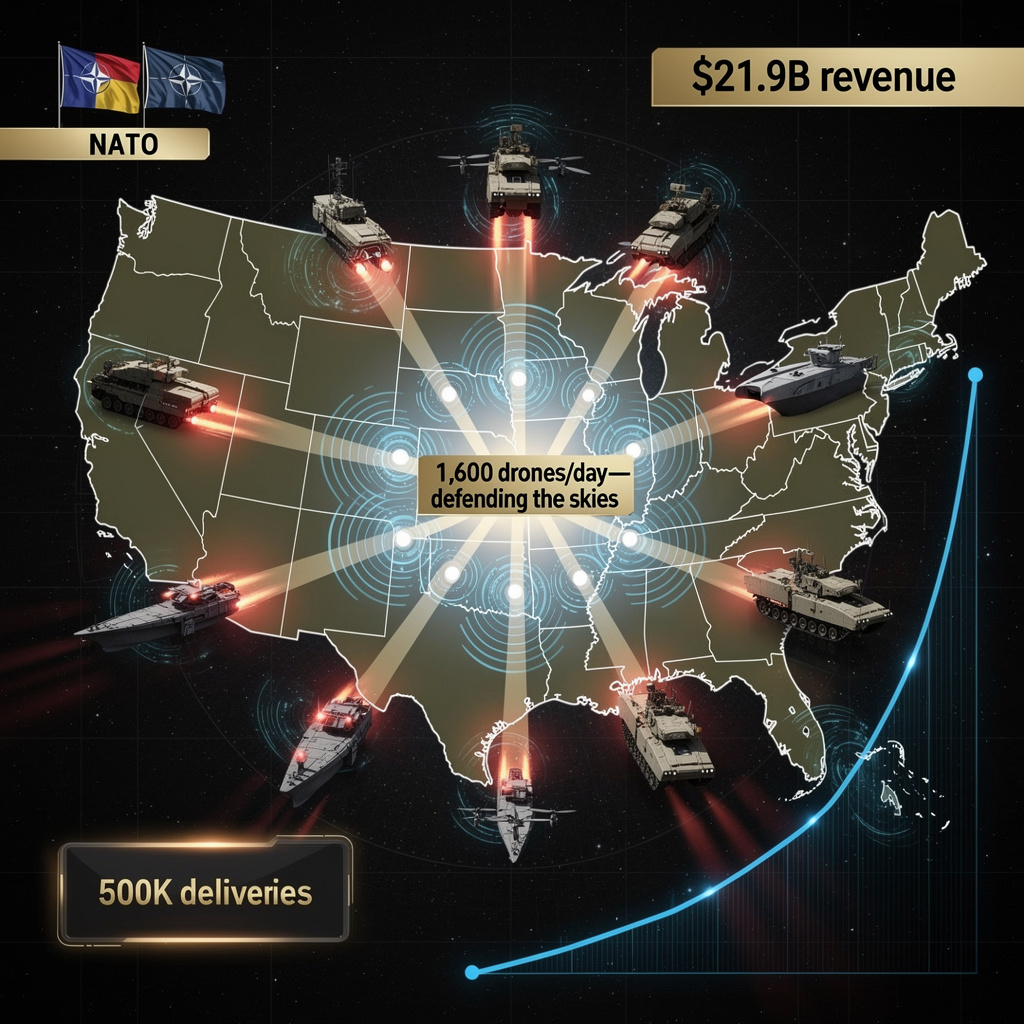
On Wednesday, XTEND and ParaZero revealed that 10,000 Scorpio 1000 interceptors—each priced at roughly $150,000—are already aloft across 30 countries, autonomously snaring $35,000 Shahed drones in mid-air nets. The merger behind the rollout is valued at $1.5 billion, backed by $1.2 billion in fresh capital, signaling that urban and battlefield air defense is shifting from explosive barrages to algorithmic entanglements.
How does it work
AI fuses radar and electro-optical feeds in under half a second; once locked, a 500-kg-rated net fires within two seconds, engulfing the target up to 2 km away and 15,000 ft high. One ground controller can stack-launch 64 units, each flying 30-minute sorties before swapping batteries. The system plugs into NATO command links, so allied forces see the same track in real time.
Impacts
- Urban safety: net capture drops explosive debris risk to near zero—critical over Amsterdam, Tel Aviv, or Houston.
- Cost ledger: every metropolitan ring saves an estimated $100 million annually by avoiding missile interceptors and collateral repairs.
- Threat calculus: where Scorpio patrols, Shahed penetration falls by more than 70 percent, forcing attackers toward faster, pricier drones or heavier jamming.
- Market ripple: the global counter-drone sector, now $5 billion, is projected to exceed $12 billion by 2028, with kinetic nets capturing the growth.
Short-term outlook
- Q2 2026: FAA wraps kinetic-net demos; 1,500 additional units head to U.S., German, and Israeli cities.
- Q4 2026: software patch cuts misidentification below 2 percent and reloads a fresh net in 30 seconds.
Medium-term outlook
- 2027: India, Brazil, Saudi Arabia, South Korea, and Ukraine adopt 2,000 more units; unit cost drops to $130,000.
- 2028: upgraded net handles 220-mph targets, keeping pace with next-gen loitering munitions.
Long-term outlook
- 2029–2030: 20,000-plus Scorpio 2000 units fielded, adding directed-energy backup; Shahed success rate in allied airspace slips below 5 percent.
- Policy: NATO is expected to codify autonomous kinetic defense, setting the first global standard for lethal, yet non-explosive, robots.
The takeaway: inexpensive explosive drones met their match in a $150,000 flying fisherman. As cities swap Patriot batteries for polymer nets, air defense becomes quieter, cheaper, and definitively robotic.
In Other News
- U.S. Military Deploys MQ-9 Drones to Nigeria in Shift to Intelligence-Led Counterinsurgency Operations
- Waymo Launches Robotaxi Service at San Antonio International Airport with Tens of Thousands on Waitlist
- F-35A Lightning II arrives at Misawa Air Base, Japan, as Pentagon accelerates fifth-gen deployment amid China tensions
- Air Canada CEO Michael Rousseau retires amid backlash over bilingual communication failures following LaGuardia crash and Quebec language law violations

Comments ()