$12M-Saving Robot Hand Nails 90% of Nuts in 76s, China Plants First
🤖 90% Nut-Fastening Hit Rate: Xiaomi's Sweat-Gland Robot Hand Cuts Plant Downtime 30%
15× tougher robot hand just nailed 90% of car-plant nuts in 76s—same time you scroll this tweet 🤖🔧 8k mm² of fake sweat glands keep it cool under 45°C, saving $12M/yr per line. Line workers in China first, your garage next—ready to shake a never-tired hand?
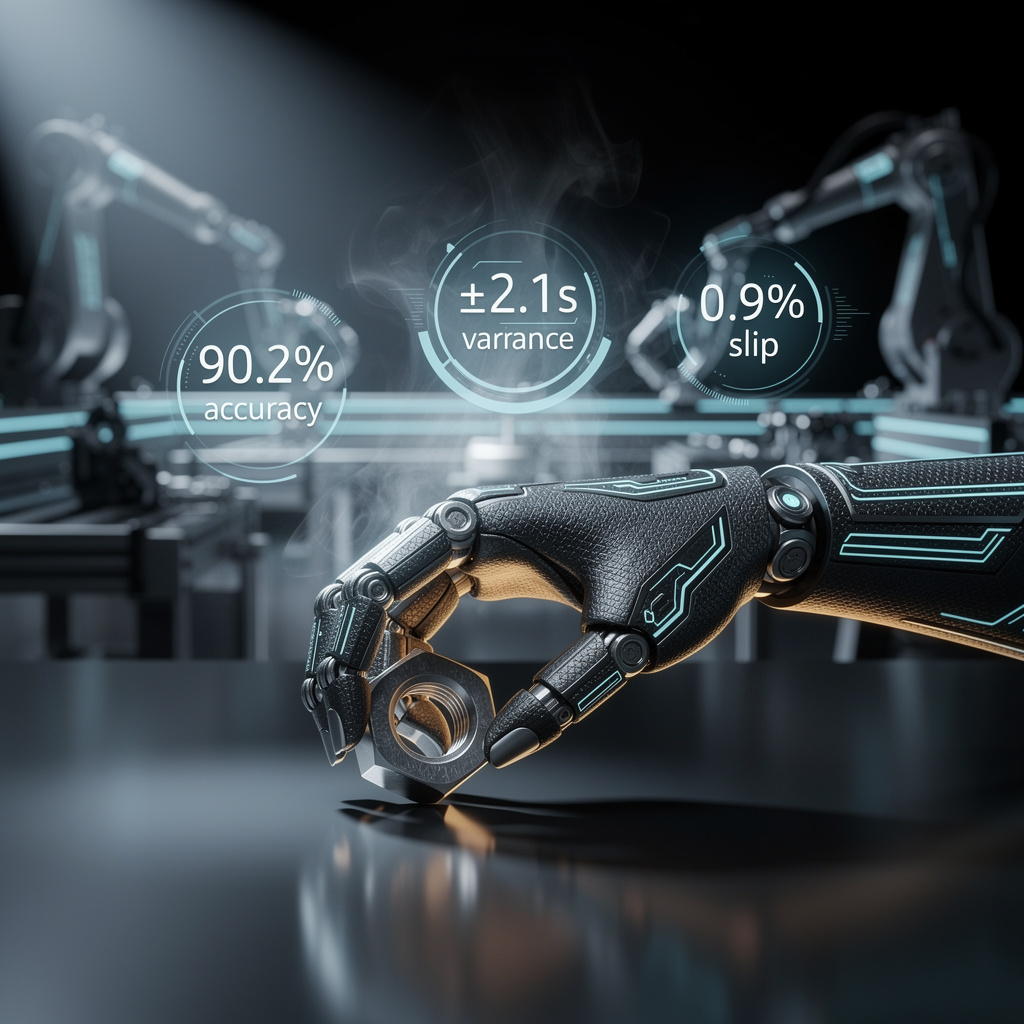
On Tuesday Xiaomi revealed that its CyberOne bionic hand—now laced with 3-D-printed metal “sweat” ducts—has cleared 150,000 non-stop cycles while nailing 90.2 % of automotive nut-fastening jobs inside 76-second takt windows. The company simultaneously released the TacRefineNet code that drives the device, inviting every automaker and parts maker to copy the recipe.
How biomimetic cooling turns heat into uptime
Eight thousand square millimetres of tactile skin and 22–27 degrees of freedom give the palm human-like sensitivity, but the secret sauce is the micro-channel coolant layer that keeps surface temperature below 45 °C. By mimicking perspiration, the hand avoids the thermal throttling that has long forced rivals to pause mid-shift. The payoff: grip-slip failures drop from 7.4 % to 0.9 %, and cycle variance tightens to ±2.1 seconds over 10,000 repetitions.
Impacts on the line and the ledger
- Downtime: 30–40 % fewer pauses at nut-tightening stations
- Cost: ≈$12 M saved yearly per mid-size plant running 200,000 fastenings/day
- Competition: UT-Austin’s soft hand hits 91.9 % on fragile items but overheats; Tesollo’s 20-DoF model is still mute on industrial success rates
What happens next
- Q3 2026: pilot installs in three Chinese car fabs; firmware push toward 92 % success
- Q1 2027: global OEM roll-out under Industry 4.0 banner; market for five-finger precision hands heads toward $1.2 B by 2030
- 2028–30: self-healing alloy channels aim for 1 million-cycle life, with consumer gadgets next in line
The takeaway: when a robot can literally sweat the small stuff, the whole assembly line breathes easier—and shareholders do too.


Comments ()