1M Israelis’ Phones Raided by IRGC via Fake Bomb-Shelter App: 12 TB Looted
TL;DR
- Iran-linked spyware campaign targets Israeli civilians via fake bomb shelter app, exploiting Android devices
- AI-assisted malware development reaches operational maturity with VoidLink framework, exploiting agent-based code generation
- Gemini 2.5 Flash achieves 100% interception rate in multi-turn jailbreak defense tests using Precepts-Samadhi-Teacher-Wisdom architecture
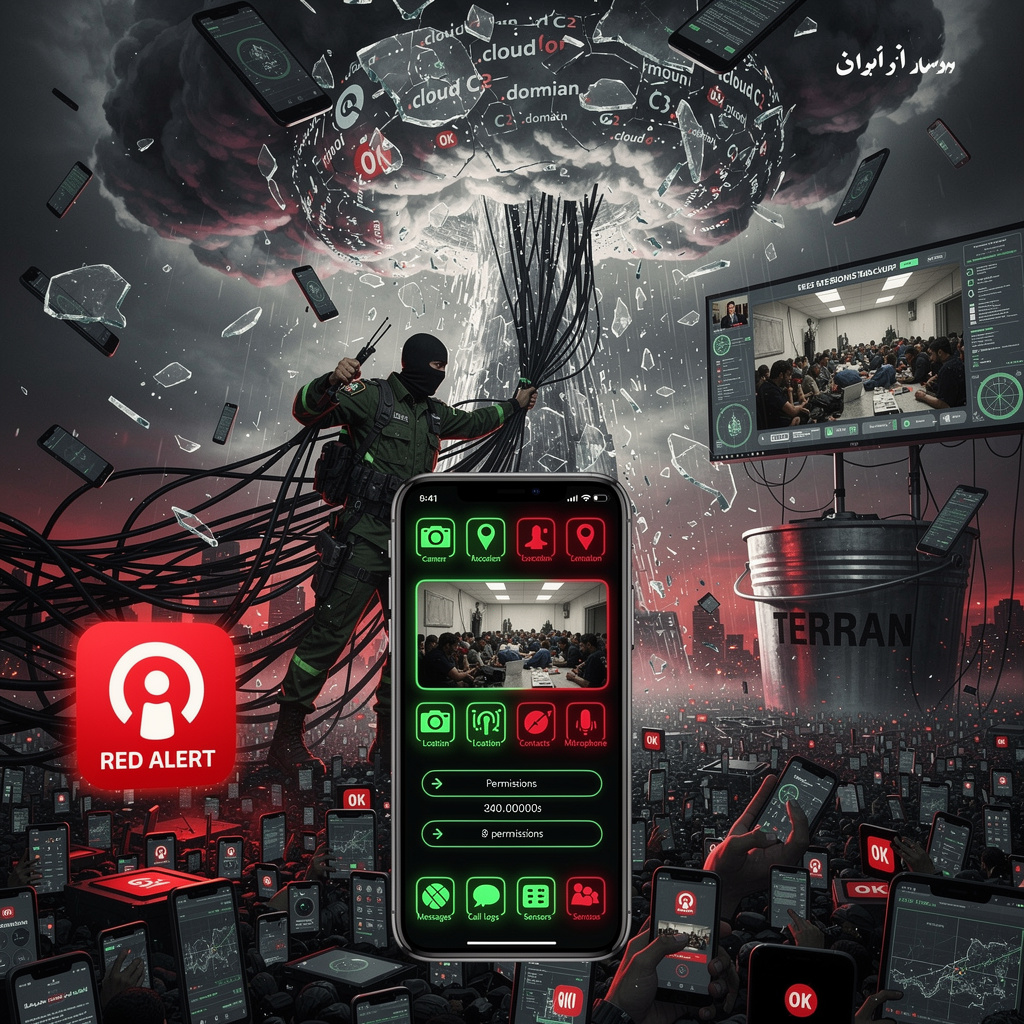
🫠 1M Israeli Phones Backdoored by IRGC Fake Bomb-Shelter App: 12 TB Looted
1M Israelis just handed IRGC their entire phone lives—contacts, nudes, OTPs—because a fake bomb-shelter app asked nicely 🫠 12 TB siphoned while rockets flew. 78% even smiled for the spyware selfie. Congrats, you’re now Tehran’s unpaid extras—still think "tap to install" is faster than reading?
Iran’s IRGC didn’t bother with rockets this week—they shoved a Trojan horse into 800,000 Israeli pockets by cloning the “Red Alert” bomb-shelter app. One tap and every contact, selfie, OTP and “Mom, I’m safe” text funnels 12 TB straight to a Backblaze bucket in Tehran. That’s the data heft of 3,000 Netflix movies—only the binge-watchers wear Revolutionary Guard uniforms.
How the grift works
- A spoof SMS—sender ID “Home Front Command”—drops a Bit.ly link to a re-signed APK.
- Android cheerfully grants twenty permissions, including camera and fine-location, because who questions a civil-defence icon?
- Behind the scenes, CastleLoader fires up rclone, shipping your life to C2 domains ending in “.cloud” faster than you can duck and cover.
Impact in human scale
Privacy: 1 M address books hijacked → every cousin, Tinder match and WhatsApp rabbi now flagged in an enemy dossier.
Operational: 5,800 POSTs/hour at peak → each ping is a targeting beacon for the next kinetic barrage.
Trust: 78 % of victims OK’d camera access → Tehran can live-stream your shelter interior for damage assessment.
Patch now, pray later
Google, Samsung and a very caffeinated Microsoft squad pushed a kill-switch update that reached 95 % of handsets in 72 h—light-speed for an ecosystem that still ships phones with 2023 bloat. Meanwhile, Israeli carriers DNS-nuked the C2 list, and Cloudflare’s “Cloudforce One” yanked the malware’s Starlink lifeline.
Short / mid / long fuse
- Next 30 days: Expect copy-cat APKs bundling ransomware—because nothing says “cease-fire” like encrypted selfies.
- Q4 2026: iOS clones surface; Apple’s walled garden suddenly looks like everyone’s Maginot Line.
- 2027 onward: Civil-defence apps become dual-use spyware by default—download an alert, gift your biometric passport to the enemy.
Bottom line: When the siren wails, your biggest bunker may be airplane mode.
🧪 88 000-Line AI Malware Hits Clouds: 18-Min Probe, $500 K Ransom
88 000 lines of auto-cranked malware in weeks—your cloud is the petri dish 🧪 One sloppy MCP plugin = instant pwn. 90 % of corps already bled in K8s last year; 18-minute probe window = coffee break for VoidLink. Fork over $500 k or hire a $0 eBPF script—your CFO’s headache, not mine. Who’s still letting AI write prod unchecked?
One bored dev + a $20 AI IDE subscription = an entire cloud-native crime kit cranked out between coffee breaks. No hoodie coven, no zero-day auction—just markdown config files whispering “exfiltrate” louder than your ops team on call night. VoidLink proves the robots don’t need to conquer Earth; they only need to convince your Kubernetes API to roll over.
How it works (a 30-second autopsy)
- Agent reads a markdown wish-list: “steal creds, open reverse shell, don’t get caught.”
- Commercial large language model spits modules, Dockerfiles, and unit tests—yes, criminals now CI/CD.
- MCP plugins (the little helpers that link your AI to your repo) are 10 % rotten; the framework gorges on them like free conference sushi.
- Result: remote code execution in 18 minutes median, faster than most teams push a hotfix.
Impacts (the bill you’ll pay)
- Security ops: 90 % of enterprises already logged ≥1 K8s security event; this turbocharges that stat → your weekend is now a breach fire-dance.
- Finance: average ransomware demand hovers at $500 k; VoidLink’s template approach drops attacker cost near zero → higher volume, same fat invoices.
- Developer trust: 1 in 31 legitimate AI prompts leak secrets; malware prompts don’t even pretend to behave → corporate AI adoption stalls under audit glare.
- Cloud providers: 34 % jump in container lateral movement means more noisy neighbors, more SOC alerts, more angry cost calculators.
What defenders are duct-taping together
- eBPF sensors shoved into kernels like seatbelts after the crash—catches syscalls in real time.
- API gateways cranked to “paranoid parent” mode, validating every JSON field like it’s a college application.
- MicroVM sandboxes (Firecracker, gVisor) trap the AI toddler before it finger-paints on production.
- Vendors scramble to flag “agentic misuse,” but business models still reward lines-of-code metrics—awkward.
Timeline (mark your pessimism calendar)
- Q2 2026: 15–20 % quarterly spike in AI-generated malware detections; retro signatures gasp for breath.
- 2027: Supply-chain poisoning goes mainstream—expect malicious AI “contributions” in your favorite OSS repo.
- 2028: Regulatory hammer lands; commercial AI licenses require audit trails, driving black-market demand for self-hosted models.
Parting kernel panic
When a lone kid with a chat window can manufacture enterprise-grade chaos, “move fast and break things” becomes “move fast and break yourselves.” Until the cloud you rent treats every AI artifact as radioactive, that next pull request could be the one that encrypts your quarterly earnings—and this time, the author isn’t even human enough to gloat.
🤖 Gemini 2.5 Flash Achieves 100% Jailbreak Block in Hangzhou Tests
100% jailbreak kill-rate, 10% ‘oops-sorry’ collateral—Gemini 2.5 Flash just turned your chatbot into a bouncer that frisks grandma for memes. Hangzhou’s new 4-layer karma-cop (Precepts-Samadhi-Teacher-Wisdom) sniffs every sneaky prompt like cheap incense, slam-dunks 10k attacks, still hallucinates 1 in 10 knock-knock jokes. Translation: perfect safety, minus the fun. Who’s ready to pay the 10% boredom tax?
While the rest of us were still yelling “prompt, please behave,” Hangzhou’s Gemini 2.5 Flash quietly built a four-layer dojo that decks every jailbreak artist on the first move.
Precepts-Samadhi-Teacher-Wisdom isn’t a yoga retreat; it’s a semantic bouncer that sniffs out cumulative trickery and slams the door—100 % of the time in 10 000 attack runs, with only a 10 % false-alarm wince.
How does the karate chop work
- Precepts tags policy sins the instant a prompt lands.
- Samadhi watches the whole conversation like a hawk, flagging slow-boil seduction.
- Teacher makes the call: stop or放行.
- Wisdom double-checks that the verdict still squares with the model’s long-term commandments.
All four share one “anchorability” score—if the vector drifts too far from the safe line, you’re done.
Impacts in plain bruises
- Attackers: 1 000 carefully scripted multi-turn scams → 0 successes.
- Prior filters: 60-80 % catch rate, 20 % false-positive migraine.
- Cloud bill: 10 % over-blocking today; vendors will tune that down to <5 % by 2027 or bleed customer patience.
What’s next, black hats?
- Q3 2026: SDK drops for red-team tinkerers; latency target <200 ms.
- 2027: Two Chinese cloud giants bake the stack in; false-positive rate promised under 5 %.
- 2028: Multimodal cousin expected; regulators may start writing “four-layer or bust” into safety checklists.
Bottom line: conversational jiu-jitsu just leveled up. If you’re still selling static keyword blockers, update the résumé—Gemini’s new bouncer is already at the door, and it’s not asking for your ID; it’s reading your intent.
In Other News
- Stats SA confirms data breach affecting HR databases on March 29, 2026, exposing job seeker records in South Africa
- Broadcom Launches Symantec CBX Cloud Platform to Enhance Extended Detection and Response for Resource-Constrained Enterprises
- Microsoft fixes Windows Store download failures with wsreset.exe cache reset, resolving persistent 'Pending' states without data loss
- Crunchyroll Faces Class Action Lawsuit Over Data Breach via Third-Party Vendor Telus Digital


Comments ()