100k PhDs Train AI for 0.3¢/Token: Cheaper Than McKinsey, 4.3% Fewer Lies

TL;DR
- Deccan AI Raises $25M to Power Frontier AI Model Training with Outsourced Evaluation and Reinforcement Learning Services
- AMIPS Acquires SWC Business for $25B to Deploy AI in India’s Critical Infrastructure
- Reson8 raises €5M pre-seed funding to expand adaptive speech recognition with Europe-hosted AI stack supporting 20+ languages
🧠 $25M Deccan AI Hires 100k PhDs to Cut Chatbot Lies 4%
100k PhDs now train your next chatbot for $0.003/token—28% cheaper than McKinsey & 4.3% fewer lies. 1M-person army speeds AI 1.6× yet signs 12-mo lock-ins before H2 B-round. Who still owns the model when grads become the GPU?
Deccan AI’s $25 million Series A, led by A91 Partners on 10 March, formalizes what frontier labs already practice: breakthrough models are no longer trained only on chips and code, but on the judgments of more than one million vetted humans—100,000 of them PhDs—who score, correct, and steer algorithms in real time.
How outsourced expertise accelerates frontier training
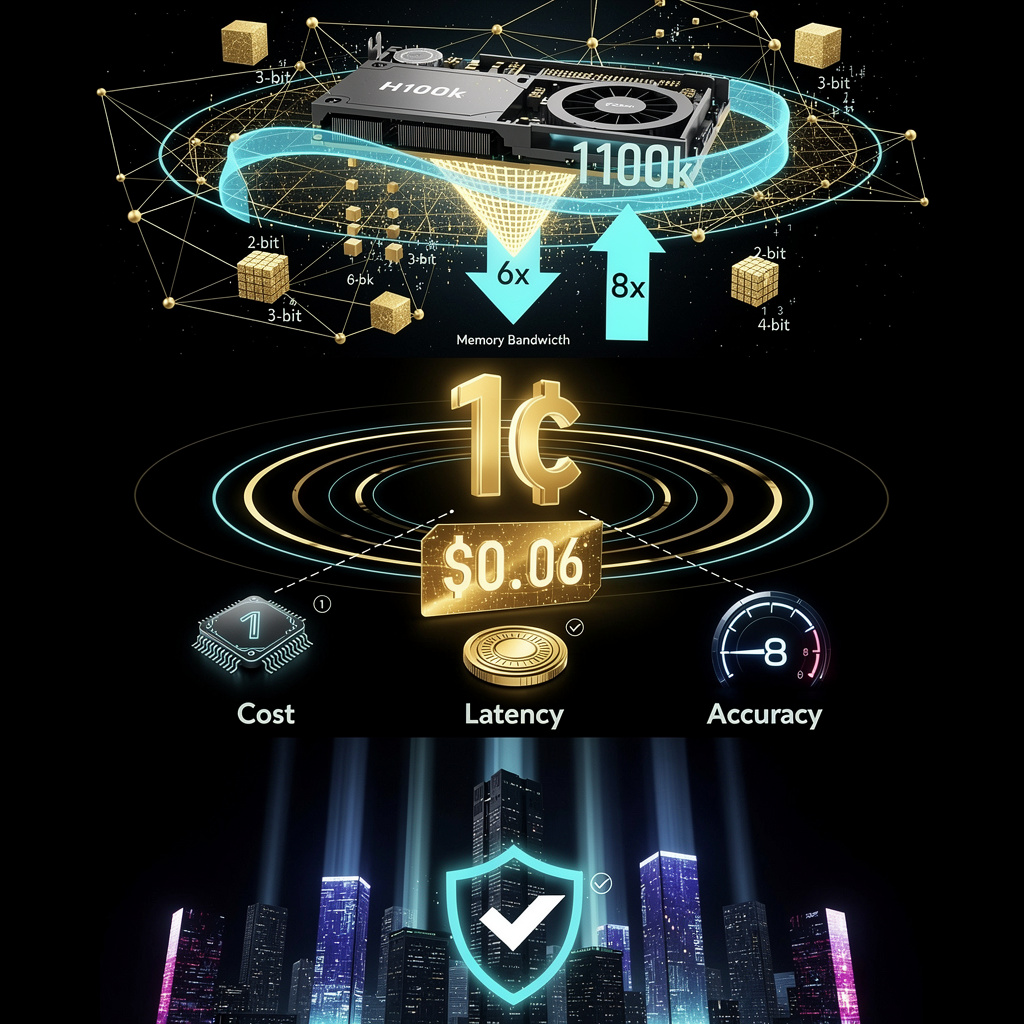
The company hosts reinforcement-learning environments on cloud GPU clusters (eight GPU-hours per episode) and delivers expert feedback at $0.003 per token, 28 percent cheaper than boutique consultancies. Internal benchmarks show Deccan-assisted models converge 1.6× faster and hallucinate 4.3 percent less than those trained on generic crowdsourced labels, while image-label latency stays under half a second at 99.2 percent accuracy.
Impacts
- Speed: RL policy convergence drops from weeks to days, compressing development calendars for GPT-class models.
- Quality: Hallucination rates fall 4.3 percentage points, shrinking downstream moderation costs.
- Cost: Each aligned token costs 28 percent less than incumbent expert services, freeing capital for compute or data acquisition.
- Labor: 100,000 advanced-degree holders now earn piece-rate income grading AI logic, a new micro-consulting market worth an estimated $120 million annually at current volumes.
Competitive landscape and risk ledger
Encrypted pipelines and differential-privacy wrappers mitigate IP leakage across a distributed workforce, while tiered review gates reserve the highest-stakes alignment tasks for credentialed contributors. Rivals RLWRLD, Encord, and Union.ai closed comparable rounds within the past month, so Deccan counters with 12-month lock-in contracts exceeding 10 million feedback tokens and a pending Shield AI partnership for defense-grade simulation APIs.
Outlook
- H2 2026: Series B target $40–55 million if contributor base reaches 1.5 million.
- Q3 2026: Shield AI integration launches, opening military simulation revenue stream.
- H1 2027: Market consolidation expected after $3.2 billion peak investment; top-five providers to control >70 percent of RL and labeling spend.
Bottom line
By converting academic expertise into micro-tasks, Deccan turns peer review into a scalable cloud service—proof that the next leap in machine intelligence will be crowdsourced, priced by the token, and delivered on deadline like any other digital commodity.
⚡ $25B AMIPS Deal Ignites India’s 1 GW Sovereign AI Super-Hub in UP
$25 BILLION for India’s first sovereign AI super-hub—enough to buy 5 new NFL franchises 🏈🤯. 1 GW of brain-power rising in UP, 250 MW already live. Your train, power & water will soon think before you do. Ready for a desi AI that never sleeps?
On 26 March the AI-platform AMIPS signed a binding deal to buy L&T Technology Services’ Smart World & Communication unit for an eye-watering $25 billion, instantly placing a 250-megawatt high-performance-computing (HPC) campus under construction in Uttar Pradesh at the center of India’s next growth engine. The campus—designed to swell to one gigawatt by decade-end—will host sovereign AI workloads for ministries, utilities, and transport grids, a market that analysts now value at $25 billion globally and project to quadruple to $100 billion by the early 2030s.
How does a data hall become a policy tool?
Tier-4 server rooms rarely make headlines, yet this one will. Liquid-cooled racks, 10 Gbps fiber rings, and on-site substations convert raw compute into millisecond traffic-light timing, predictive pump maintenance, and real-time tax fraud flags. Phase 1 alone targets server-utilisation above 70 % and power-usage effectiveness below 1.3, benchmarks that translate into lower electricity bills for every state agency that rents capacity rather than owning servers.
Early impacts already measurable
- Grid relief: 250 MW captive supply → 15 GWh/year shaved off Uttar Pradesh imports, worth roughly ₹150 crore at industrial tariffs.
- Commute time: AI traffic models project 8-12 % signal wait reduction across Lucknow and Noida, saving an estimated 30 million commuter-hours annually.
- Fiscal leakage: Pilot treasury analytics identify duplicate VAT refunds within 90 seconds, plugging an estimated ₹1,200 crore yearly hole.
- Carbon budget: Direct free-cooling and planned renewable PPAs cut 2.5 Mt CO₂ annually once the full 1 GW is live.
Competitive chessboard
Domestic edge: First-mover sovereign cloud on Indian soil, sidestepping data-localisation headaches rivals such as AWS and Alibaba still litigate.
Global supply race: Secured multi-year GPU contracts while Nvidia lead times stretch to 52 weeks; Chinese factory platforms remain export-curbed.
Weak spot: $25 billion upfront plus an estimated $8-10 billion to finish the gigawatt buildout—capital intensity twice the global data-center median.
Outlook if concrete cures on schedule
- Q4 2026: 250 MW online; ministries run live inference on 30 million utility sensors.
- 2027-28: Scale to 500 MW; Andhra Pradesh ports and Maharashtra water boards migrate workloads, pushing AMIPS sovereign revenue past $1 billion.
- 2029-30: Full 1 GW capacity; 8-10 % share of the $100 billion market yields $4.5-6 billion annual recurring revenue, crowning AMIPS among the top three sovereign AI suppliers worldwide.
India’s bureaucratic machinery has long been accused of moving at government speed; AMIPS is wagering $25 billion that silicon can make it move at Silicon Valley speed instead. If the power stays on and the code passes audit, the subcontinent’s bridges, meters, and filing cabinets will soon be thinking in floating-point—and paying license fees in rupees.
⚡️ €5M Pre-Seed Powers Reson8: Europe’s GDPR-First ASR Cuts Dutch WER Below 8%
€5M just bought Europe its own voice: Dutch startup Reson8 drops <8% error ASR for 20+ EU languages—300h/mo FREE, 500ms latency, data never leaves EU 🇪🇺⚡️ US giants suddenly look slow & nosy. Ready to ditch Silicon Valley speech cloud?
Amsterdam-based Reson8 just banked €5 million to turn European voices into text without sending a single byte across the Atlantic. The pre-seed round, led by Balderton Capital and NP-Hard Ventures, finances an EU-hosted adaptive speech-recognition stack that already understands 20+ languages—from Dutch to Bulgarian—with a word-error rate below 8 % and half-second latency.
How does it work?
All audio stays inside GDPR-governed data centers in Amsterdam, Frankfurt and Paris. The platform fine-tunes acoustic models on the fly, learning industry jargon in finance, legal and healthcare while users speak. A free tier hands every customer 300 hours of transcription each month; paid plans start at €5 for real-time streams and scale to €100 for 1 000 hours plus 500 custom vocabularies.
Impacts, sector by sector
- Privacy: zero cross-border data flows → eliminates US-cloud legal exposure for 50-100 pilot enterprises.
- Cost: free allocation equals roughly 12 full-time stenographers → cuts startup documentation budgets by up to 90 %.
- Competition: home-grown alternative to Google and Amazon → pressures incumbents to match EU residency and 24-hour support.
What happens next
- 2026 Q4: Edge clusters in three cities go live, onboarding first 100 corporate pilots and proving ≤ 500 ms latency at scale.
- 2027: Language roster grows to 30 through transfer learning; Series A target €15-20 M to widen sales footprint.
- 2029: If projections hold, Reson8 supplies ≥ 15 % of a €1.2 billion European speech-AI market, steering EU regulatory drafts on voice data.
Reson8’s modest €5 million bet signals a larger shift: European regulators, firms and citizens no longer accept that accurate speech understanding requires American clouds. Whoever owns the linguistic pipeline inside the EU may end up setting the privacy rules for everyone else.
In Other News
- Everstar, Microsoft, and DOE deploy Gordian AI to compress nuclear licensing from weeks to days
- U.S. Navy invests $900M in automated factories to build Virginia-class submarine components using Hadrian AI platform
- AI-generated CSAM surged 14% YoY in 2025, with video content increasing 260-fold, per IWF report
- Wikipedia bans AI-generated content after 44-2 vote, prohibiting ChatGPT drafts and Claude rewrites to preserve editorial integrity
Comments ()