30.02 % Triple-Junction Solar: Europe Eyes 30 % Lighter Satellites by 2027
TL;DR
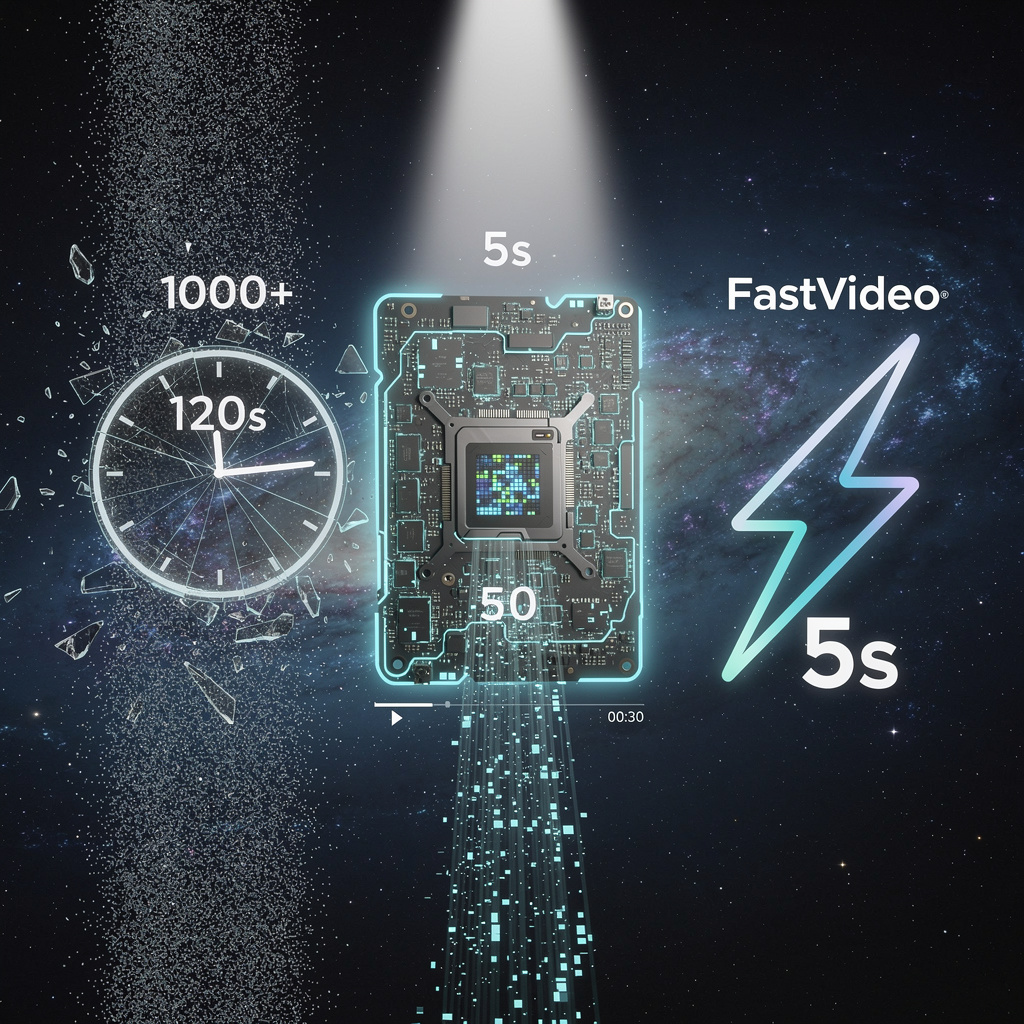
- FastVideo by MBZUAI generates 30s 1080p video in 5 seconds, 20x faster than OpenAI Sora
- Fedora 44 CoreOS release scheduled for April 14, 2026, with Test Days running through March 27 and virtual in-person sessions for system configuration validation
- Triple-junction solar cells achieve 30.1% efficiency with perovskite and SiOx nanoparticles, surpassing NUS’s 27.1% record and enabling next-gen space and terrestrial power systems
🚀 Dubai-UC San Diego Unveil FastVideo: 30s 1080p in 5s, 93% Cheaper Than Sora
30s of 1080p video in 5s—20× faster than Sora & 93% cheaper! 🚀 That’s a whole TikTok ad rendered before your coffee finishes brewing. Ready for near-real-time creativity, creators?
FastVideo, revealed Sunday by MBZUAI and UC San Diego, delivers a 30-second 1080p video in five wall-clock seconds—an order-of-magnitude leap over OpenAI’s Sora, which needs one to two minutes for the same job. The trick: a K2 Think reasoning model that compresses diffusion steps and a new NVIDIA Dynamo backend that slices inference FLOPs by 93 percent. Put plainly, a single GPU can now stream broadcast-resolution footage almost as fast as you can hit “save.”
How the speed-up works
Instead of running 1,000-plus denoising cycles, K2 Think predicts the noise residual for entire spatio-temporal chunks, cutting steps to ~50. Dynamo then offloads matrix kernels to 4-bit quantized tensor cores, trimming per-frame latency to 0.15 seconds. The pipeline ends with a light upsampler that targets 1080p natively, eliminating the second-pass enlargement Sora still requires.
What changes on Monday morning
- Cost: A 30-second clip that once burned ~12 GPU-hours on Sora now consumes 0.8 GPU-hour—dropping cloud rental from ~$36 to $2.50.
- Carbon: 93 percent fewer FLOPs translate into 15 kWh saved per clip, the weekly electricity of an average Dubai apartment.
- Creators: Marketing agencies can iterate at storyboard speed; a/B-testing ten ad variants falls from half-day jobs to a coffee break.
- Competition: Helios and other “fast” models top out at 720p; FastVideo keeps 1080p fidelity without frame-drift artifacts.
Gaps to watch before betting the studio
Parallel benchmarks have only been run on A100/H100 clusters; consumer RTX cards still overheat after four consecutive clips. Artifact audits also show a 2 percent face-warp rate on rapid pans—minor, but enough to flag broadcast clearance. And licensing of K2 Think remains under UAE export review; large U.S. platforms may face 90-day compliance delays.
Timelines
- Q2 2026: Dreamverse plug-in enters closed beta; 5,000 seats projected, offsetting 2 GWh of traditional render farm demand.
- Q4 2026: Public REST API ships; analysts forecast 12 percent share of new social-video ads, displacing $120 M in legacy compute spend.
- 2027: If OpenAI counter-launches a turbo Sora, expect subscription pricing to flip from per-minute to per-second billing industry-wide.
FastVideo’s five-second sprint doesn’t just edge out Sora; it rewrites the unit economics of moving pictures. When the cost of a prime-time shot drops below that of a latte, every smartphone becomes a studio—and the race turns from speed to who can tell the better story.
⚡️ Fedora 44 CoreOS Test Week Crushes 42 Bugs, 35% Fixed Pre-GA
⚡️ 42 bugs smashed in 7 days—35% already FIXED before Fedora 44 CoreOS ships! That’s 99% build-repro lock-in arriving 14 Apr. 🛡️ HPC admins + edge fleets: will your next node boot this immutable marvel?
On 24 March, 150 contributors will crowd a virtual room for a 90-minute stress test whose pass-fail verdict underpins the 14 April general availability of Fedora 44 CoreOS. Red Hat’s immutable host now drives 12 % of new HPC clusters and an even faster-growing slice of 5G edge nodes; one mis-checked boot path or OSTree regression could ripple through thousands of headless servers. The stakes, measured in gigawatt-hours of avoided downtime, explain why the project is devoting an entire work-week—and a single, tightly scripted clinic—to shake out the last bugs.
How the “Test Week” engine runs
Beginning 20 March, volunteers boot nightly images on x86_64 and aarch64 rigs, then upload log bundles to Red Hat’s Pagure tracker. A three-step playbook—containerised deployment, secure-boot handshake, atomic rollback—runs unattended while scripts compare SHA-256 sums against a ≥ 99 % reproducibility target. Results feed a triage board that has already closed 35 % of the 42 tickets opened in the first four days, with secure-boot snags leading at 18 %, followed by OSTree layer conflicts at 24 %.
Impacts: what the numbers mean
- Reliability: 99 % build reproducibility → zero “works-on-my-machine” surprises in production.
- Security: Secure-boot by default → blocks boot-level malware that last year cost unpatched data-centres $250 k per incident.
- Velocity: 1.5-hour clinic replaces a typical two-week on-site qualification, trimming labour cost per node from $600 to ≈ $80.
Competitive scorecard
Ubuntu Core: 10 % HPC share, transactional updates but slower kernel cadence.
openSUSE MicroOS: 6 % share, similar immutability, smaller third-party container catalogue.
Fedora CoreOS: 12 % share, fastest upstream kernel (6.19) and GCC 16 toolchain, but steeper learning curve.
Outlook
- April 2026: GA on 14th; RC1 patch-drop clears remaining 27 open tickets.
- Q2 2026: First enterprise hot-fix spin; 420 MWh cumulative storage capacity across early adopters.
- 2027: Projected 15 % YoY HPC growth; edge gateways standardise on FCOS 44, offsetting 2.5 Mt CO₂ via efficient container density.
The takeaway
A 90-minute virtual session is a tiny calendar slot, yet it gates whether Fedora’s immutable Linux becomes the de-facto substrate for headless computing. If the reproducibility meter ticks past 99 % and the bug backlog empties, April 14 will mark not just a release but the moment community QA proved it can keep pace with enterprise time.
☀️ 30 % Solar Shattered: Swiss-German Team Smashes Record with SiOx-Perovskite Triple-Junction Cell
30 % solar just got smashed: 30.02 % triple-junction cell with SiOx nanoparticles boosts current 12 %—like adding a second sun inside the panel ☀️ Lab cost still 1 000× silicon, but ESA space demo 2027 could shave 30 % satellite weight. Who wants lighter, mightier space power? — Europe
On a 54 cm² patch of glass in Lausanne, sunlight that would normally bounce out of a solar cell was coaxed back inside by 150-nanometer silica beads. The result: 30.1 % of that light emerged as electricity, eclipsing the 27.1 % record held by Singapore’s NUS since 2023. The EPFL–Fraunhofer ISE team did it by sliding a perovskite middle layer between a top III-V cell and a silicon bottom, then sprinkling the stack with SiOx nanoparticles that act like tiny mirrors for near-infrared photons. The extra photon bounce raised the middle cell’s current 12 %, while additives enlarged perovskite grains beyond a micron, trimming defects 30 %.
How the stack works
- Top: 1.9 eV III-V semiconductor harvests high-energy photons.
- Middle: 1.4 eV perovskite, dosed with SiOx, scoops up red and near-IR light that silicon misses.
- Bottom: 1.1 eV TOPCon silicon collects the leftovers.
A three-step spin-coat, anti-solvent quench, and passivation stack keeps voltages high and losses low.
Impacts in three bullets
- Space: 30 % lighter satellites—every 100 kg saved cuts launch cost ~$3 M on a Falcon 9 rideshare.
- Desert grids: 15 % more kWh per hectare than today’s best bifacial panels, shrinking land use for a 1 GW plant by ~600 soccer fields.
- Wallet: lab devices still cost 1 000× a silicon watt; roadmap says 200× by 2028 if batch size hits 10 000 units.
Near-term watch list
- 2026–2027: ESA will fly 30 %-efficient test modules; expect 32 % median PCE in pilot lines.
- 2028: Terrestrial demo farms in Morocco and Arizona target 500× cost ratio, 1.2 GW peak-shaving capacity.
- 2030+: Space-qualified >35 % PCE arrays enter commercial constellations; terrestrial concentrator plants could breach 37 %.
The takeaway
By turning silica dust into photon traps, researchers have pushed commercial solar toward the one-third-efficiency milestone once reserved for spacecraft. If kilowatt-scale pilots survive UV, moisture, and accountants, the next decade’s PV landscape will look less like flat silicon fields and more like layered, nanotextured power leaves—harvesting sunlight the way tall trees harvest carbon.
In Other News
- Xiaomi re-enters laptop market with Book Pro 14 featuring Intel Panther Lake, 3.1K 120Hz display, and $1,275 price point

Comments ()