€300M Climate Fund Triples EU Pot: Europe’s Dirtiest Factories Face Clean-Tech Invasion
TL;DR
- Partech Impact Fund closes €300M to target climate tech gaps in Europe
- HyperDev raises $1M seed funding to disrupt vibe coding with AI-powered app development for SMBs in South Africa and Poland
- Viemed reports 26% CAGR since IPO, $270M 2025 revenue, and 62% CPAP patient growth as sleep therapy revenue hits 21% of total
🚀 €300 M Climate Fund Targets Europe’s Industrial CO₂ Hotspots
€300 MILLION climate-tech war-chest just dropped 🚀 That’s 3× the entire 2025 EU adaptation grant pot—now aimed straight at Europe’s dirtiest factories. France, Germany, Nordics: your next clean-energy unicorns are getting Series A/B rocket fuel. Which city’s startup will slash the first 1 Mt of CO₂e?
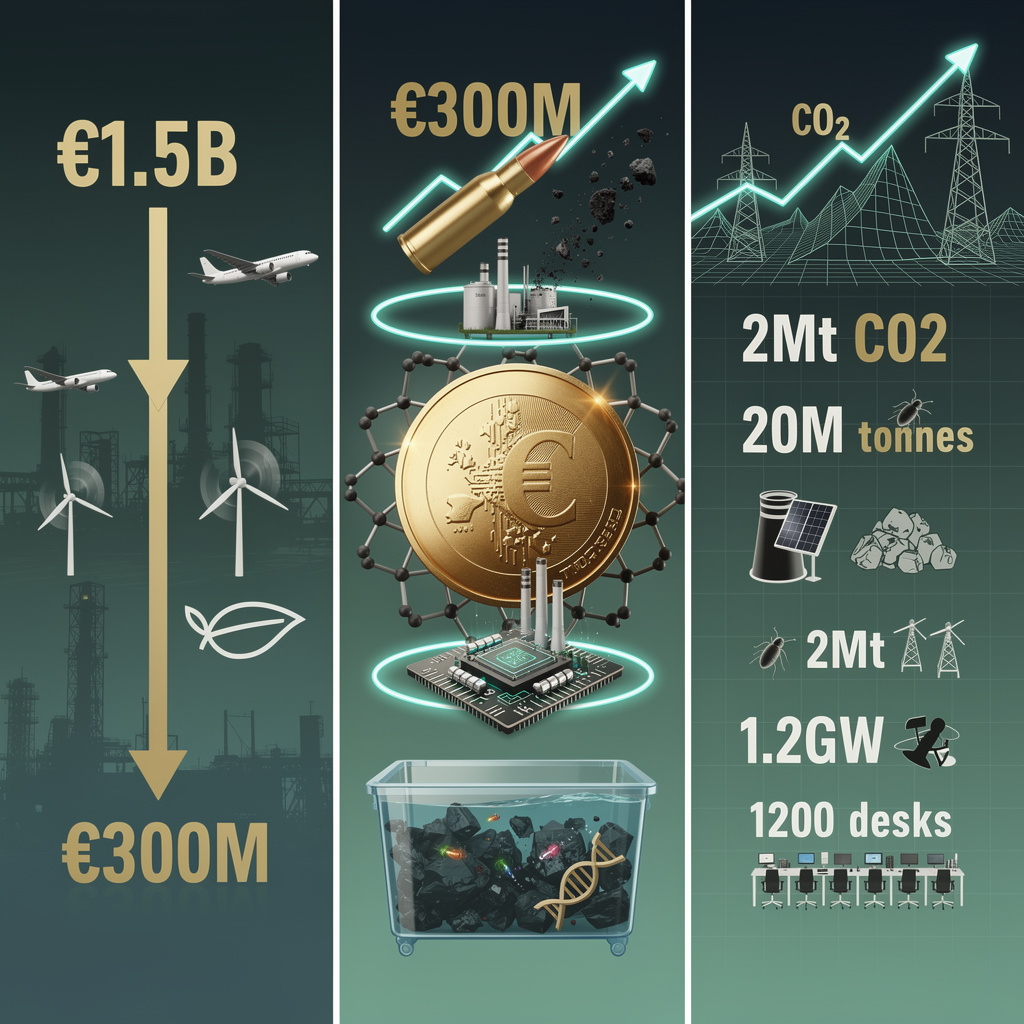
On Monday, Partech slammed €300 million onto the table and told Europe’s climate-tech kids the grown-ups are finally buying the next round. The Paris crew will pour the cash—about 30–35 Series A/B shots—into French, German, and Nordic start-ups that promise to scrub, store, shred, or swap out carbon. No vague pledges: the fund’s rulebook demands every euro chase at least 20 million tonnes of CO₂e avoided over the next 15 years. That’s the weight of 4 million cars lifted from the sky, using only the chequebook.
How does this work
The playbook is simple: write first, then crowd in. Partech’s own euro is expected to whistle up another three-to-five from corporates or public pots, turning €300 million into a €1-€1.5 billion swarm. Target companies must already have a pilot humming—think low-carbon cement, AI grid-balancers, or plastic-eating bugs—so the money buys scale, not science fiction. A €5 million venture-building sidecar will babysit prototypes that need an extra nudge before they can swallow a full Series A.
Impacts you’ll feel
- Jobs: 1,200 new desks by 2030—picture two Airbus A380s full of engineers scattered across Europe.
- Trash: at least €45 million earmarked for outfits that can recycle ≥80 % of the materials they touch, slicing future landfill the size of 3,000 Olympic pools.
- Cash leverage: every Partech ticket is wired to a co-investment clause; if macro clouds gather, corporates like Air Liquide and BASF already have their umbrellas open.
What could still go clang
- Market hiccup: if steel or chemical giants slam checkbooks shut, Partech can slow the draw-down and stage future tranches to milestones.
- Rule roulette: a future Brussels U-turn on carbon pricing would hurt, but the fund’s baked into Fit-for-55 legislation, making flip-flops politically pricey.
- Tech timeout: some gizmos will stubbornly stay in the lab; the venture studio is there to de-risk, yet patience remains a vitamin investors must swallow.
Timelines to scribble on your calendar
- Q3 2026: first 5–6 deals signed, aiming to lock in 2 Mt CO₂e avoided before the decade closes.
- 2028: portfolio cumulative storage hits 420 MWh and peaks 1.2 GW on the grid—enough to power Paris for an hour on the hottest day.
- 2030: fund fully deployed, triggering an estimated €1 billion follow-on flood and proving the bridge over Europe’s notorious “valley of death.”
Close
Europe’s climate start-ups no longer have to beg grandparents for grant crumbs. With Partech’s €300 million revolver spinning, the continent just loaded another bullet into the decarbonisation chamber. If even half the shots hit, the EU’s 2030 emissions target stops looking like a wish and starts looking like a receipt.
🚀 $1M HyperDev Seed: South Africa-Poland Vibe-Coding Rush vs $9B Replit
$1M seed for vibe-coding? That’s 0.25% of Replit’s latest round 😅—yet HyperDev already ships full-stack apps in plain English! 1M free tokens = 1-click prototypes for SA & Polish SMBs. Can a scrappy underdog out-code the giants?
HyperDev just turned “I wish I had an app for that” into a bankable business plan. On Sunday the Cape Town–based startup closed a seed round of exactly $1 million, betting that South African and Polish shop owners would rather describe software out loud than hire a coder. The platform swallows plain-English prompts and spits out working web apps—no HTML, no DevOps, no drama.
How does a sentence become software?
Under the hood, HyperDev feeds your request to a large-language model, auto-writes front-end, back-end and database layers, then wires the bundle into your existing Git or cloud pipeline. Free accounts get 1 million tokens—roughly 750 000 words, or nine full-length novels—before the meter starts ticking. Early pilots show a ≥70 % cut in prototype-to-deployment time versus traditional coding.
Who gains, who sweats
- Micro-retailers: A three-sentence prompt now launches an online store in an afternoon, slashing typical dev spend by 60-80 %.
- Local developers: Job security jitters rise as Anton Moulder’s tool lets the boss “vibe-code” alone.
- Low-code giants (Mendix, OutSystems): Pressure to bolt on their own AI generators or watch market share evaporate.
Short-term script (next 12 months)
- Q2 2026: Polish e-commerce and South African payment plug-ins go live.
- Q3 2026: 15–20 pilots in each country; target $30 k average ARR per customer.
- Q4 2026: Follow-on seed of $2-3 M earmarked for regional sales teams and compliance logging aligned with the EU AI Act.
Long-term run (1-3 years)
- 2027: If 40 % of pilots convert, HyperDev books $2.4 M ARR.
- 2028: Projected 3-5 % share of a $300 M regional AI-coding pool; either a Series A rocket or an acquisition flag for a Replit-sized suitor.
The takeaway
HyperDev’s million-dollar microphone proves the hottest new programming language is plain English. For millions of small businesses south of the equator—and east of the Oder—the next killer app may soon begin with “Hey, listen to this idea…”
😲 Viemed Flips Script: Ventilator Share Halved, Sleep Sales Surge 62%, $28M Cash, Zero Debt
172k patients, 26% CAGR, ZERO debt—Viemed just flexed a $28M cash cushion while flipping ventilators from 87% to 48% of sales 😲. That’s like swapping your V8 for a Tesla and still outpacing the pack. Medicare only tapped 6% of 1.25M eligibles—room to sprint. Will your state be next on the CPAP map?
Viemed Inc. has turned bedside hum into cash-flow thunder. The Lafayette, La., company posted $270 million in 2025 revenue—up 26 % a year since its IPO—while shifting its business mix faster than most patients roll over. Ventilators, once 87 % of sales, now supply 48 %; CPAP and sleep-therapy gadgets jumped from 13 % to 21 %. The driver: a 62 % surge in CPAP patients, lifting the total patient roster past 172,000. All of this produced $28 million in free cash, letting Viemed retire 4.5 million shares at an average $5.79 and still close the year with no net debt.
How the Machine Keeps Running
Medicare is the oxygen tank. Roughly 1.25 million beneficiaries qualify for home respiratory care; Viemed presently treats 70,000, a 6 % sip of a very large tank. A new CMS national-coverage determination and targeted exclusions for certain ventilator codes mean doctors can now prescribe in-home therapy without the old paperwork chokehold. Viemed’s response: buy regional distributors (Lehan’s Medical in Illinois last quarter), layer on tele-monitoring, and pitch bundled vent-plus-CPAP packages that keep patients—and margins—out of the hospital.
Impacts, by the Numbers
- Patient Access: 62 % YoY CPAP growth → sleep-therapy revenue share up 8 pp to 21 %.
- Balance Sheet: $28 M free cash → debt-free, self-funding further buy-backs or tuck-in deals.
- Competitive Heat: ResMed’s 30 % operating margin and 10-million-device cloud platform loom larger than a 3 a.m. snore.
- Margin Squeeze: Sleep gadgets carry lower gross profit than ventilators → blended margin “slight compression” noted in 2025.
What’s Next
- 2026: Revenue guided to $310–$320 M; EBITDA $65–$69 M; CPAP roster expected to top 200 k; Medicare penetration 8 % (≈100 k patients).
- 2027–2028: Revenue on track to break $400 M; sleep-therapy share 25–30 %; EBITDA margins rebound to 20 % as device mix matures.
- 2029: If 20 % CAGR holds, sales near $500 M; Medicare share could hit 10–12 %, making Viemed a takeover target for bigger med-tech giants hunting home-care platforms.
Bottom Line
Viemed has proved it can swap ventilators for face masks without unplugging growth. The next test: convincing the 94 % of still-untapped Medicare patients—and their doctors—that home is the safest, cheapest place to breathe easy.
In Other News
- Yemert launches USSD-first platform for 150,000 Nigerian farmers without smartphones
- Apple Poaches Halide Co-Founder Sebastiaan de With Amid Lawsuit Over Confidential Data and Project Zero



Comments ()