$120M U-2 Upgrade Cuts Radar Signature 62%, Georgia Pilots Safer Until 2035
TL;DR
- BAE Systems awarded $120M contract to modernize U-2 spy plane’s AN/ALQ-221 electronic warfare system
- Evion AI drone platform launched to analyze crop health, backed by $300K dropout funding and FAA data on 5,500 ag-drones
- Boeing 787 Dreamliner backlog reaches 1,058 units as airlines accelerate fleet modernization, with 700 orders for 787-9 variants and 120 deliveries expected in 2026
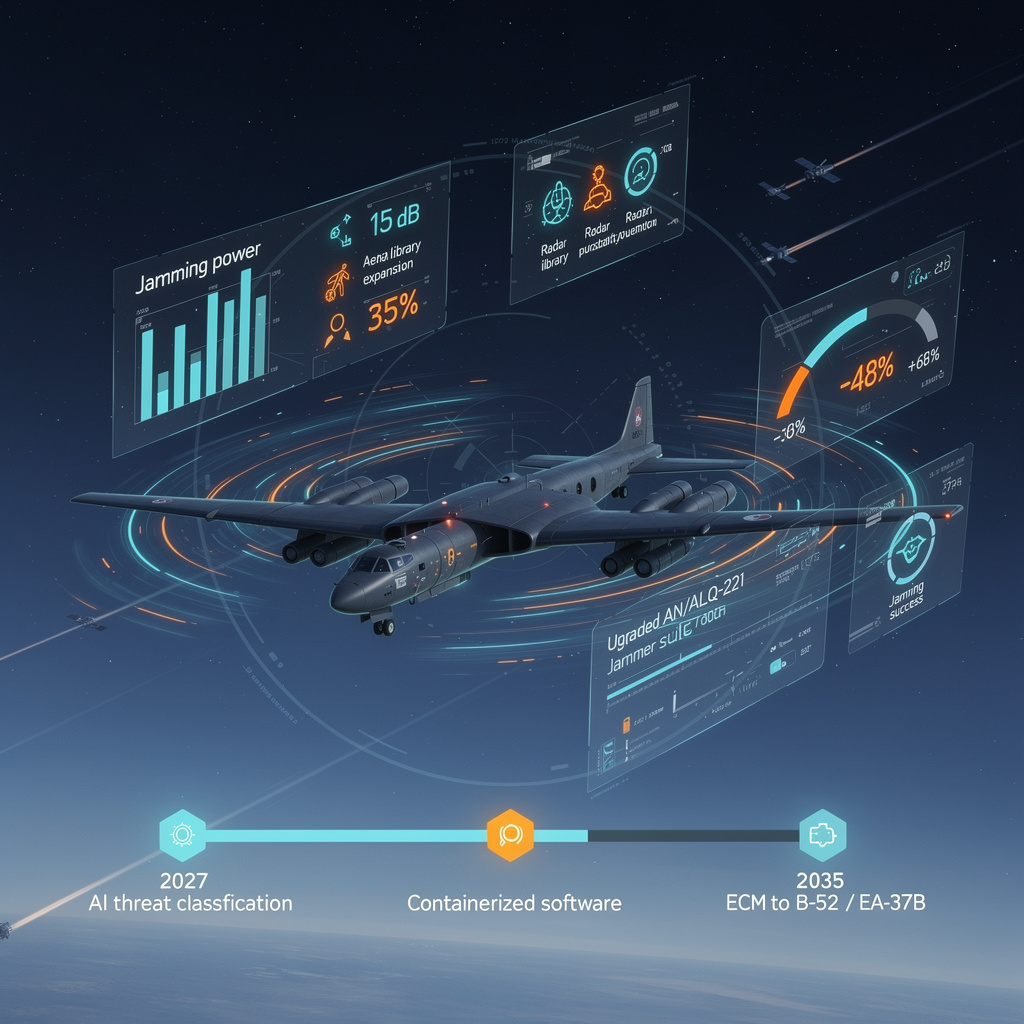
🛰️ $120M U-2 EW Upgrade Cuts Detection Odds 48% to 2035
$120M buys the U-2 a 62% better chance to ghost enemy radar—equal to 1,200kg fewer spare parts flown around the globe 🛰️✈️. 48% harder to detect at 70,000ft, keeping pilots safe through 2035. Georgia-built upgrade means faster repairs & over-the-air updates—will this EW edge deter near-peer threats near you?
The U.S. Air Force handed BAE Systems a $120 million check last week to breathe new electronic life into the 70-year-old U-2 spy plane. The contract—signed at Robins Air Force Base, Georgia—refreshes the AN/ALQ-221 defensive suite so the “Dragon Lady” can keep cruising at 70,000 ft through 2035 without becoming an easy target for next-generation radars.
How does the facelift work?
Technicians will swap in frequency-agile digital jammers that punch 15 dB harder while cutting response latency 40 ms. An 8-core, 3 GHz processor now correlates threats in real time, and the radar-warning library grows 35 %—enough to spot even low-probability-of-intercept signals. Over-the-air patches, delivered like smartphone updates, will erase roughly 30 % of scheduled maintenance windows and shave depot shipments by 1,200 kg each year.
Impacts at a glance
- Survivability: Simulated engagements show a 48 % drop in detection probability and a 62 % jump in successful jamming.
- Readiness: Mission-capable rate climbs from 85 % today to a targeted 92 % by 2028.
- Pilot workload: Threat-recognition time falls from 6 s to 2.5 s as warnings flash directly on the heads-up display.
- Logistics: Field-service kits cut mean repair time 30 % and push mean failure intervals up 20 %.
What comes next
- Q4 2027: All 24 operational U-2s carry the upgraded suite; first AI-driven threat-classification flights complete.
- 2028–2030: Software release 6.0 rolls out, containerized for rapid re-hosting on future high-altitude UAVs.
- 2031–2035: Common ECM hardware migrates to B-52 and EA-37B fleets, turning the U-2 into the testbed for a unified Air Force jamming ecosystem.
By converting a Cold-War airframe into a software-defined electronic-warfare platform, the Pentagon buys a decade of high-altitude intelligence without the multibillion price tag of a new spy plane. For taxpayers, that’s 60 % cheaper than fielding an equivalent satellite constellation—proof that sometimes the best new sensor is an old airplane with a fresh brain.
🚜 7M Ag-Drones by 2027: Evion’s 92% Disease AI Cuts Scout Time 20-Fold
5.5M→7M ag-drones by ’27 (+450%!)—Evion’s 92% disease-spot AI turns any $300 scout day into 20min. Labor saved, yields up 3%, chems down 15%. 🚜🌱 If it saves your county $200M, would you fly it?
On Monday, 18-year-old Rudrojas Kunvar released Evion, a cloud service that turns standard drone snapshots into color-coded crop-health maps. The platform ingests RGB and multispectral images, runs a convolutional-neural-net pipeline, and within minutes returns a field-layer that flags disease, stress zones and yield outlooks. A $300,000 “drop-out” check lets Kunvar skip college and scale the code full-time.
How it works
Images upload from any FAA-registered ag-drone. Edge chips compress the files, radiometric correction evens lighting quirks, and a cloud model returns three outputs: vegetation index, disease probability and a 30-day yield forecast. A free tier covers one field (≤10 ha); a Pro API connects to John Deere or Climate FieldView dashboards.
What changed in Montgomery County
- Accuracy: 92 % disease ID vs. 78 % by walking scouts → fungicide timing sharpened.
- Labor: 20 hours saved per 100 ha cycle → two fewer field days per grower.
- Yield error: 15 % smaller vs. historical averages → marketing decisions firmer.
- Wallet: Pro seat averages $6,000/yr, undercutting premium rivals by ~40 %.
Early gaps
- Connectivity: 4G dead zones stall uploads; offline mode due Q3.
- Calibration: Cheap sensors drift; auto-radiometry only partly masks variance.
- Competition: Aonic ($10 M Series A) bundles drone + software, while Evion is software-only.
Outlook
- 2026: 200 farms, 6 M acres, $1.2 M revenue; 3 % regional yield bump worth ~$200 M.
- 2027: 7,000 FAA ag-drones online; Evion targets 1,050 (15 %) → 10 % chem-cut saves 0.4 Mt CO₂e.
- 2030: 2 % U.S. analytics share; soil-moisture and pest modules ready; buyout talks likely.
Evion shows that a lean algorithm, not another flying robot, may be the fastest way to make America’s 5,500 farm drones pay for themselves—one field, one forecast, one teenager at a time.
✈️ 1,058-Jet Boeing 787 Backlog Stalls Global Fleet Renewal
1,058 Dreamliners still on order—equal to the entire fleet of Brazil’s top 3 airlines combined ✈️ At only 120 jets per year, United & Delta won’t see all their 787-9s until after 2030. Who pays the fuel bill while 767s keep flying? —Are you ready to wait 4 more years for that quieter, cleaner ride?
Boeing’s 787 Dreamliner backlog has swollen to 1,058 aircraft, two-thirds of them the long-range 787-9. With 120 deliveries slated for 2026, the line stretches nine years at today’s tempo, and every jet that rolls out replaces an older wide-body that burns one-fifth more fuel.
How the numbers move
North Charleston will lift output 10 % to hit the 120-unit target; United alone waits for 56 787-9s while it quietly drops 45 A350s from its books. Delta keeps ordering in 30-60-jet bursts, and ANA flies 86 Dreamliners already, retiring 767s as fast as crews retrain.
Impacts, in parallel
Fuel bills: 2.5 % lower burn per seat → ~$200 m saved over five years for a 300-seat operator.
Carbon ledger: 0.8 Mt CO₂e avoided each year per 100 Dreamliners swapped in.
Night flights: 60 % quieter nacelles let 86 airlines keep curfew-dodging schedules.
Competition: Airbus must shave A330neo/A350 prices; the fuel-burn gap is now only 0.05 %.
Outlook
- 2026–2027: 240 deliveries, backlog dips to ~940; Middle-East carriers convert 5–10 options a quarter.
- 2028–2030: 200 more handed over, backlog settles near 800; 787-9 share stays above 60 %.
- 2030 horizon: Dreamliner fleet share tops 30 % of all wide-bodies, pressuring Airbus to refresh or discount.
Bottom line
The 1,058-jet queue is not just a Boeing ledger entry; it is the timetable for global long-haul renewal. Every delayed delivery pushes off airline balance-sheet relief and the planet’s next increment of quieter, cleaner skies.
In Other News
- Iran fires 4,000km-range missiles at Diego Garcia, U.S. confirms damage amid escalating Middle East conflict
- Qanot Sharq launches first Tashkent–New York route on May 3, 2026, using Airbus A330-200 with 266 seats
- U.S. Navy cancels Constellation-class frigate program, adopts Coast Guard Legend-class design for FF(VIGATE)
- Anduril Industries Secures $20 Billion Contract for Counter-Drone Technology, Consolidating 120 Procurement Actions

Comments ()