$21.7 M Overnight: Indian AI Chat Startup Raises 3.5× Typical Annual Seed in 24 h—Wellness Apps Rush to Plug In
TL;DR
- CometChat raises $21.7M from Run VC and Anuj Garg to fuel AI-powered communication infrastructure for wellness, e-commerce, and hospitality verticals
- Rivia Secures $15M Series A Funding to Scale Agentic Product Development Across US and Europe
- Swarmer surges 520% post-IPO to $382M market cap, signaling investor appetite for defense tech and potential IPO wave in 2026
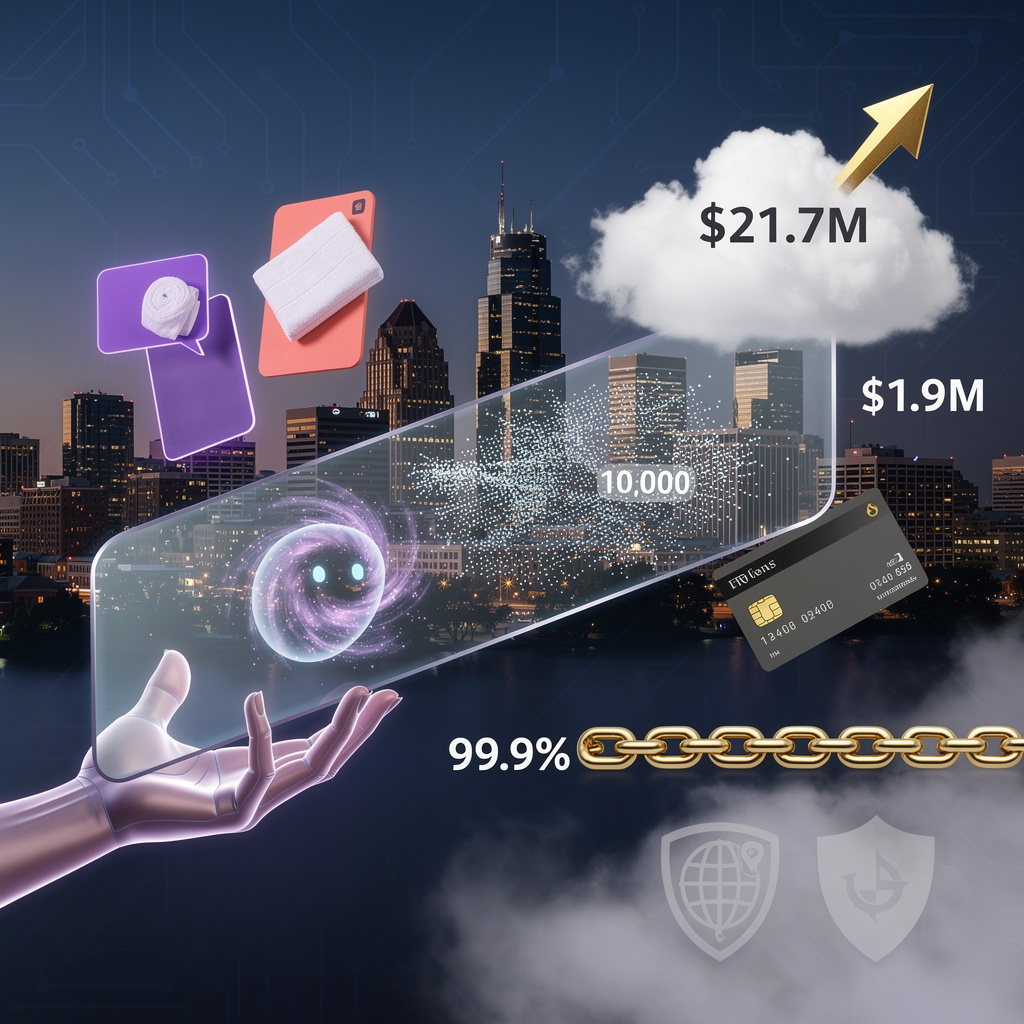
💸 $21.7 M Denver Deal: CometChat’s AI Chat SDKs Eye 150-ms Wellness Takeover
$21.7 M in 24 hrs = 3.5× what most startups raise in a YEAR 😱💸 That’s CometChat’s AI-chat war-chest to make 150-ms convos feel psychic. Wellness apps, your 30 % dev-time hack just dropped — ready to plug in?
CometChat just pocketed $21.7 million—six times everything it had raised before—to let AI do the talking for salons, shops, and hotel front desks. The Denver crew already keeps 10,000 simultaneous video chats humming at sub-blink latency; now they’ll sell pre-baked “Wellness Chat Suite” bundles so a yoga studio can auto-book, up-sell, and calm cranky clients without hiring extra humans.
What’s under the hood?
- Plug-and-play SDK drops Twilio-style pipes plus sentiment bots that spot grumpy customers in ≤150 ms.
- One server cluster handles 10,000 concurrent sessions; 99.9 % uptime baked in over six production years.
- Vertical packs promise 30 % less coding—translation: a solo dev finishes Friday instead of Sunday night.
Why verticals bite
Revenue: Premium AI add-ons could lift annual recurring cash from $62 M to $77 M within 12 months.
Cost: Replacing a part-time receptionist (~$28 k/year) with chatbots saves a single-location spa about $25 k—enough to fund a second infrared sauna.
Scale: 150 new enterprise logos this year alone; if each adds 50 locations, that’s 7,500 extra storefronts pinging CometChat servers by next March.
Competitive pillow fight
- Twilio Flex: big brand, but you still need a six-figure integrator; CometChat ships “spa mode” overnight.
- Sendbird: strong in marketplace chat, yet no AI checkout for hospitality.
- Agora.io: video king, lacks pre-trained wellness small-talk.
Risks hiding in the footnotes
Privacy: AI models tap OpenAI/Anthropic; one leaky prompt could expose client intake forms → HIPAA headaches.
Regulation: GDPR fines up to 4 % of global revenue → potential $3 M hit if audit trails lag.
Brand: Ask your average hotel CTO; odds are they still think “Comet-what?”
Timelines to watch
- Q3 2026: Intent-router v2 lands with on-prem privacy toggle; first 3 telehealth pilots go live.
- Q4 2026: OEM deal inked with major POS vendor → 12,000 hotels offered chat at check-in.
- 2027: EU & APAC push; ARR target $45 M, equal to the annual budget of a small city’s school district.
- 2029: If 5 % of U.S. wellness bookings flow through its pipes, CometChat either IPOs or becomes the tastiest acquisition snack for a cloud giant hungry for AI gloss.
Bottom line
CometChat’s $21.7 M bet says the future of customer service is industry-specific, AI-first, and conversation-shaped. If the bots keep their charm—and the lawyers stay satisfied—your next massage appointment might be set by code that learned to small-talk in Denver, not Delhi.
🤖 €13M AI Platform to Run 40 Cancer Trials at Once: US-EU Rollout Begins
€13M says AI can now DESIGN your next chemo protocol⚡️ That’s 1 clinical trial for every €870k—cheaper than a Paris flat😱🤖 40 cancer studies launching at once; if the bot goofs, 15k patients feel it first. Ready to let code pick your pills?
Because the average cancer protocol today is 198 pages of legal-ese, changes 19 times before the first patient shows up, and still manages to enroll three weeks late. Rivia’s fix: five-billion-parameter “agentic” AIs that draft, debate, and debug the paperwork overnight while humans sleep.
How it works
Each trial gets its own LLM squad fine-tuned on 50,000 historical protocols. Encrypted patient data streams in from Frankfurt and Virginia edge nodes (20 teraflops apiece, 30 % snappier than last year’s CPU farms). If the model’s confidence tops 0.85, the protocol auto-updates; if not, it pings a human. Result: amendment cycles drop from 90 days to 63.
Impacts you can measure
- Time: 30 % fewer protocol tweaks → first-patient-in arrives three weeks earlier.
- Money: 15 % faster enrollment saves roughly $1 million per midsize trial.
- Scale: 40 parallel trials, 15,000 patients, two continents—run by 60 people and a handful of GPUs.
What could still go sideways
Regulators haven’t decided how to audit a black box that rewrites its own rules. One FDA reviewer joked, “We’re great at inspecting labs, not legalese that mutates nightly.” Rivia’s answer: quarterly pen-tests, ISO 13485 badge by Christmas, and an always-on compliance dashboard that flashes red the moment any delta drifts outside GDPR or 21 CFR Part 11 guardrails.
What happens next
- Q4 2026: First AI-tweaked oncology protocols read out; expect 10 pilot sites to cut amendment cycles by 30 %.
- 2027: Expand to 20 trials, 7,500 patients; enrollment efficiency gains hit 15 % versus today’s best CROs.
- 2028: Platform hosts 80+ studies and becomes either the next big-pharma acquisition or the cloud giants’ favorite plug-in.
If the experiment sticks, “writing the protocol” will sound as quaint as “typing the memo” does today—and the only ones pulling overtime will be the GPUs.
🚀 Swarmer IPO Rockets 520% as AI Defense Boom Explodes on Nasdaq
$5→$55 in one day: Swarmer’s AI war-bots just mooned 520% 🤯—enough to buy 11 Nintendo Switches per share. While Ukraine & Iran heat up, your pension fund is now funding killer drones. Are you cool profiting from the next-gen arms race, or is it time to divest?
On Tuesday Swarmer—until recently a name known only to Pentagon procurement officers—went public at $5, closed at $55 and walked off with a $382 million crown. That 520 % moon-shot is the loudest bell yet that defense-tech has become the market’s new sugar high.
How does this work
Swarmer sells AI that lets small drones hunt in packs; the prospectus shows 12 million shares, $14.6 million net raised, and—crucially—an order book already stuffed with short-term military contracts. Investors looked at the same checklist Anduril ($2 bn), Helsing ($693 m) and Saronic ($600 m) used to vacuum up venture money and decided the next stop is the stock exchange, not another private round.
Impacts – who gets the shrapnel
- Venture firms: 6× valuation pop in a day → paper gains that will fund copy-cat funds before Labor Day.
- Taxpayers: FY-26 budget earmarks $9.8 bn for autonomous systems; every IPO success tightens the revolving door between cap tables and defense contracts.
- Public-market rookies: twelve similar startups now have a price compass; expect 3–5 listings before 2027, each hunting 8–12× revenue multiples.
Short / mid / long-term trajectory
- Q2-Q4 2026: Swarmer’s $50–55 trading band becomes the peer benchmark; first followers price roadshows at $400–500 m caps.
- 2027: cumulative market cap of new defense listings crosses $5 bn; revenue growth averages 25–30 % as NATO allies match U.S. budgets.
- 2028: if geopolitical heat subsides, expect 20 % earnings haircuts; if not, autonomous-system spending alone could surpass $12 bn annually.
Swarmer’s one-day 520 % romp is more than ticker trivia; it’s the market telling every drone, robot and algorithm with a camouflage paint job that Wall Street is open for business. Defense tech has left the venture nursery—public investors are now the ones handing out the war chest.
In Other News
- Elanco Animal Health reports 6% revenue growth to $4.7B in Q1 2025, leverages AI for 8% adjusted EBITDA target amid $276M net loss
- RunSybil secures $40M in funding led by Hosla Ventures to scale AI-powered autonomous cybersecurity testing platform
- Crossbow Therapeutics closes $77M Series B to advance next-gen cancer immunotherapy pipelines targeting solid tumors
- KAST raises $80M Series A at $600M valuation as QED Investors and Left Lane Capital lead funding in cautious venture market

Comments ()