1,100 Missing TSA Agents: 5-Hour Hobby Lines as 171M Spring Flyers Near
TL;DR
- TSA launches nationwide Touchless ID pilot using facial recognition at 65 U.S. airports to reduce security wait times
- Comac aims to expand C919 narrowbody sales in Southeast Asia, targeting Laos as first regional foothold
- TSA staffing crisis triggers potential airport closures as absenteeism exceeds 30% amid government shutdown
😱 TSA Touchless ID Cuts Wait 90% at 65 US Airports, Outpaces CLEAR at Zero Fee
75→8 min: TSA Touchless ID slashes checkpoint waits 5× at 65 airports—free vs CLEAR’s $209 fee 😱. Shutdown staff gaps still haunt non-enrolled flyers. Your face = fast-pass, but is privacy the price? —Would you trade biometric data for shorter lines?
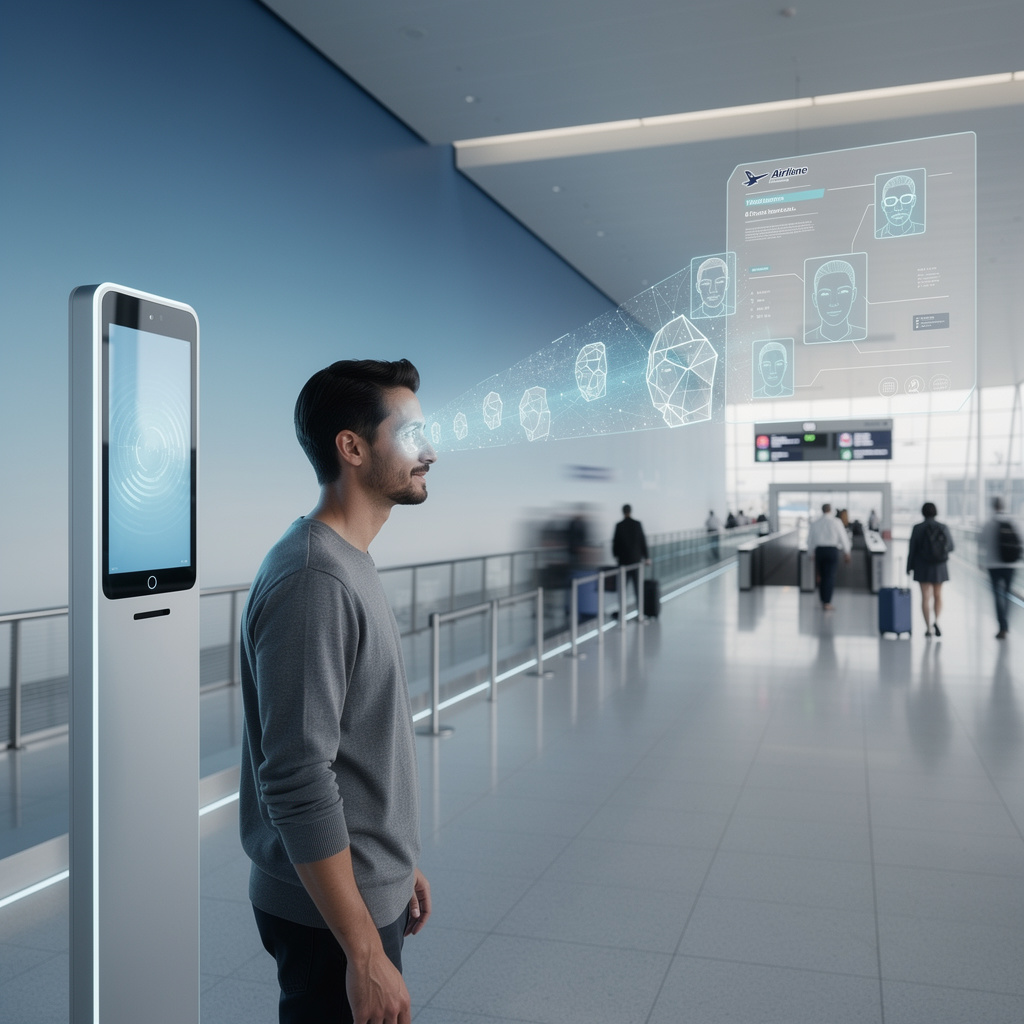
The Transportation Security Administration flipped the switch last month on “Touchless ID,” a facial-recognition lane now running at 65 U.S. airports. Travelers who enrolled through TSA PreCheck walk up to a camera, pause five seconds, and proceed—no card, no boarding-pass hand-off, no conversation with an officer. Early data show the new lane cuts checkpoint time to 8–12 minutes, down from the 75-minute peaks reached during the partial government shutdown that sidelined hundreds of screeners.
What happens behind the camera
A 3-D imager at the kiosk captures the traveler’s face, converts it to an encrypted template, and matches it against the template created at PreCheck enrollment. The raw photo is discarded within milliseconds; only the match score travels to the airline departure system. Alaska, American, Delta, Southwest and United pre-load loyalty numbers so the gate and checkpoint share one data string, eliminating duplicate ID checks.
Impacts measured so far
- Wait-time: 75 min shutdown peak → 8–12 min Touchless lane, a 75 % reduction
- Throughput: 1.2 million flyers enrolled in six months; each lane now processes ~450 passengers per hour, five times the manual rate
- Budget: TSA absorbs the cost; travelers pay nothing, undercutting private rival CLEAR at $209 per year
- Staffing: Houston absenteeism hit 50 % during the shutdown; Touchless lanes let remaining officers focus on non-enrolled bags and metals, keeping overall lines moving
Short-term/long-term outlook
- 2026 Q2–Q4: Enrollment grows 15 % per quarter; average Touchless wait stabilizes at 8–10 min
- 2027: Expansion to 120 airports projected, covering 80 % of U.S. enplanements
- 2028: Congressional privacy bills likely to require explicit opt-in and 30-day template deletion; TSA must publish bias-audit results or risk rollout freeze
The bottom line
Touchless ID turns a two-hour airport ordeal into a five-second glance, using technology the agency already owns. If TSA can stay ahead of privacy mandates and bias audits, the pilot will hard-wire facial recognition into everyday flying—making the old plastic ID feel as dated as a paper ticket.
✈️ China’s C919 Targets 10% ASEAN Share by 2030 with Laos Launch, 5% Price Cut
C919 jets for Laos: 48h parts delivery, 9-mo checks, 5% cheaper than Airbus—yet only 5% SEA share today. Can China flip the duopoly before 2030?
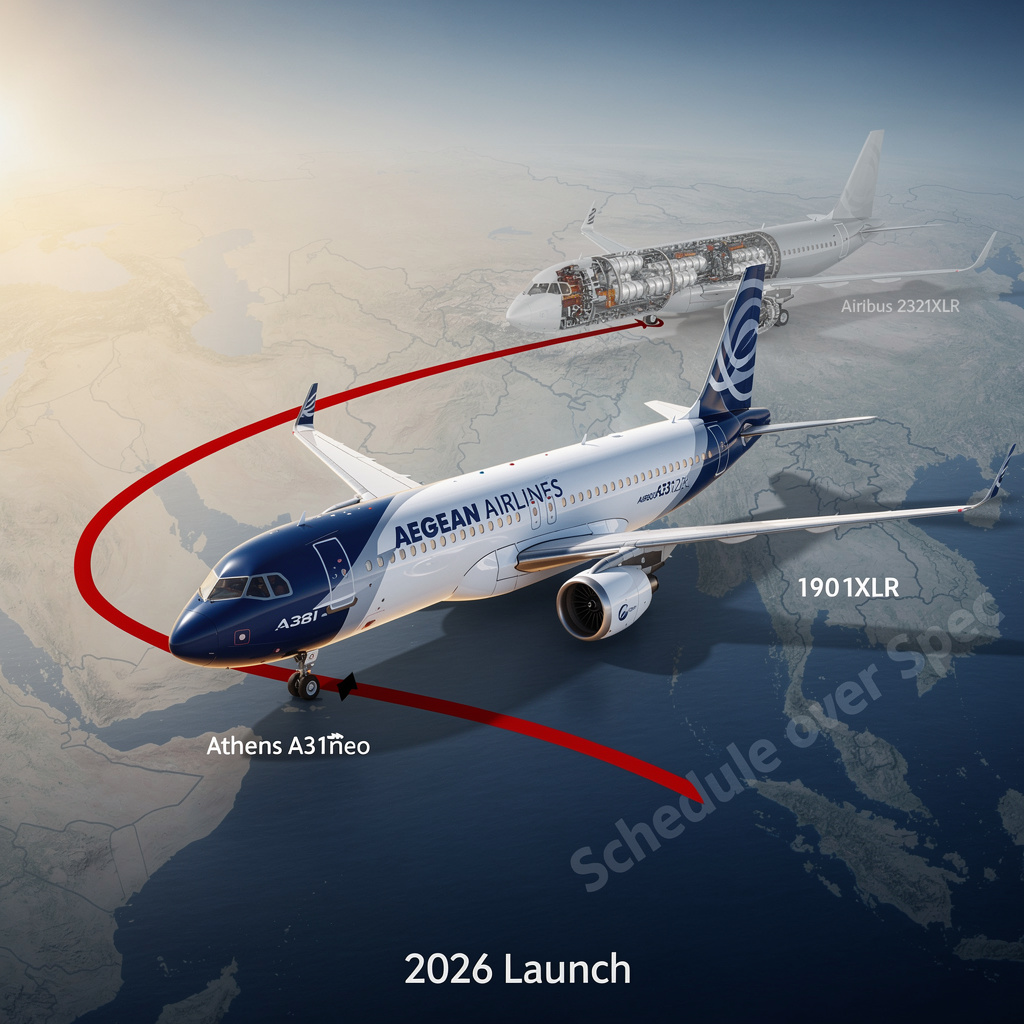
Comac has quietly turned Laos into a live showroom for its C919 narrow-body jet. After one year of domestic flying with a 99.7 % dispatch reliability, the aircraft is being pitched to humid, 35 °C Lao ramps with 48-hour spare-part deliveries from Chengdu and maintenance checks stretched from six to nine months. The hook: a sticker price 5-7 % below an A320neo and a 12-year cost edge of 3-4 %.
How the offer works
- Climate kit: beefed-up air-con packs and corrosion-resistant seals tested at >70 % humidity.
- Logistics lane: twice-weekly cargo flights carry critical components—hydraulic actuators, avionics modules—door-to-door in ≤48 h.
- Power: LEAP-1C engine, 28 kN hot-weather variant in final certification; no engine change required for existing fleet.
Impacts
Market share: Airbus 55 %, Boeing 40 %, others 5 % → C919 aims for 10 % slice by 2030.
Cost: 12-frame Lao fleet saves ~US $25 M in lease-adjusted outlays versus A320neo.
Risk: dual-source supply chains cut exposure to EU/US parts shocks; residual risk is sparse non-Chinese MRO coverage.
Short-term / long-term outlook
- Q4 2026: first 12 C919s delivered to Lao carrier; Vientiane hub stocking 1 200 parts/month.
- 2027: 2–4 aircraft trials with Vietnamese low-cost operators; hot-engine variant certified.
- 2030: 80–120 C919s across ASEAN, supported by local MROs in Ho Chi Minh City and Jakarta trimming labor cost 15 %.
If the Lao pilot stays on schedule, Southeast Asia’s airlines will face a second non-Western option just as traffic rebounds at 4.5 % annually. For Airbus and Boeing, the comfort of a locked-in duopoly is now on a countdown clock.
🚨 TSA Absenteeism Hits 21% at JFK: 5-Hour Lines, 1,100 Officers Quit as Unpaid Screeners Near 31-March Funding Cliff
50k TSA screeners unpaid since Feb 14: 1 in 5 ATL/JFK workers now AWOL, 5-hour Hobby lines 🚨. That’s 1,100+ officers gone & 171M spring flyers incoming. Congress stalls—how late will YOUR flight be?
Since 14 February, roughly 50 000 TSA screeners have worked unpaid. National absenteeism has leapt from 2 % to 6 %; at Houston-Hobby it spiked to 53 % on 8 March. Three-hundred-plus officers have already quit, and Acting Deputy Administrator Adam Stahl warns that entire small airports could go dark if Congress does not restore salaries.
How bad are the delays?
- Passenger flow: 3–5 hour queues in Houston, >2 hours in New Orleans, 90 minutes in Atlanta.
- Checkpoint count: 87 “hot-spots” nationwide on 17 March, up from 44 in the Houston region alone.
- Airline advisories: Delta, American and United now tell travelers to arrive 4–5 hours early—longer than many trans-Atlantic flights.
What does this cost?
Travelers: 171 million passengers are expected this spring; every missed connection ripples through the network.
Officers: lost wages already top $3 billion; food-bank lines now include uniformed screeners earning $50 k–$62 k.
Taxpayers: if the shutdown lasts three months, overtime could jump 40–60 % above last year’s levels, and training 500–800 replacements will add ~$400 million.
Can anything bridge the gap?
Congressional votes scheduled for mid-March are likely to fail, leaving only patchwork fixes: limited staff redeployment, cancellation of PreCheck lanes, and pleas for “patience.” None pays the rent.
Timeline ahead
- 31 Mar 2026: absenteeism projected >30 % at midsize hubs, 15–20 % longer waits.
- Jun 2026: 500–800 additional resignations, screening capacity permanently down 8–10 %.
- Q1 2027: airlines pad schedules by 30–45 minutes, eroding 2–3 % of annual sector revenue unless payroll-continuity law passes.
The security line has become a ledger of political stalemate. Until salaries flow again, every closed lane signals slower growth, frayed public trust, and a nation boarding its own economy at gate-delayed speed.
In Other News
- DJI Mini 3 drone price drops to $299—lowest ever—making it an impulse-buy entry point for consumer aerial photography and social media content
- Telesat to dedicate 500 MHz of Lightspeed LEO spectrum to Mil-Ka band for defense use by end of 2026

Comments ()