€9M Seed Turbo-Charges German ‘Nano-Uber’ That Delivers Cancer Drugs Door-to-Tumor
TL;DR
- iDEL Therapeutics closes €9M seed round to advance tumor-targeted cancer therapies using synthetic shuttle technology
- Choice, a SaaS platform for independent restaurants, closes $7.1M Series A to scale across Southern Europe
- SBIR/STTR Programs Reauthorized by U.S. Congress with $4B Annual Funding for 4,000 Small Businesses
🧬 €9M Seed Turbocharges German Nanobody Shuttle to Sneak Cancer Drugs Inside Tumor Cells
€9 M seed just bought German startup iDEL a “synthetic Uber” that smuggles nanobody drugs straight into cancer cells—bypassing the body’s usual traffic jams 🧬💥. If the tech nails safety, tumors get poisoned, patients skip chemo hair-loss, and Europe keeps its biotech bragging rights. Early bet or sci-fi moonshot? 🇪🇺👀
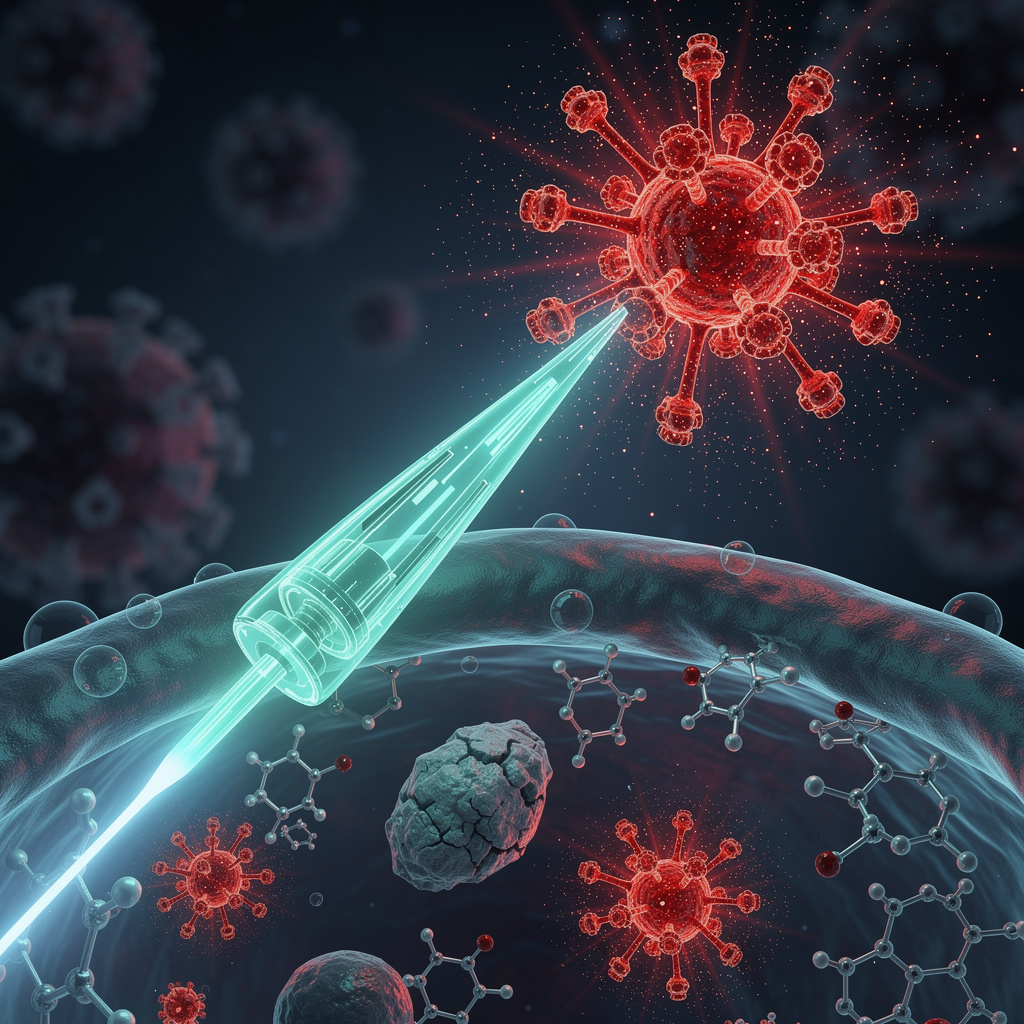
On Tuesday, iDEL Therapeutics quietly pocketed €9 million to pick the lock on solid tumors. The 12-month-old German start-up has built a “synthetic shuttle” that smuggles nanobody-guided toxins straight into the cytosol, bypassing the acidic dead-end (the endosome) where most targeted drugs get stuck. In lab plates, the trick already shows 5- to 10-fold more drug inside cancer cells than conventional antibody-drug conjugates—enough, on paper, to turn yesterday’s duds into tomorrow’s blockbusters.
How it works
The shuttle is a short, chemically stitched peptide that hugs both a nanobody (think Lego-style antibody fragment) and a chemo warhead. Once the nanobody latches onto a tumor antigen, the shuttle punches a temporary hole in the cell membrane, dumps its cargo, and slips away before the cell can slam the door. The whole pas de deux takes <30 minutes, leaving healthy neighbors untouched.
What’s at stake
- Tumor exposure: cytosolic drug levels jump 5-10× → sharper tumor kill at lower doses
- Manufacturing: one-pot synthesis keeps cost per dose near €3,000, on par with today’s ADCs
- Competition: CAR-T players (t-CURX, €17.7 M) need viral labs; iDEL uses bench-top chemistry
- Regulatory: first-in-class delivery tag triggers extra FDA questions → 6-9-month review add-on
What happens next
- Q3 2026: final mouse data package; if tumor growth stalls >80 % at 1 mg/kg, Series A talks ignite
- Q1 2027: GMP batch #1; 4 grams of shuttle-conjugate fills the fridge for tox studies
- Q4 2027: IND filing; first human dose projected to cost €18,000/patient, recouped if response tops 30 %
The long view
If iDEL clears Phase I, Big Pharma will come knocking with checkbooks fattened by the next wave of patent cliffs. Miss the safety mark, and the company becomes a nifty chemistry lesson. Either way, the seed cheque just bought a ticket to prove that the best way to beat cancer cells is to break and enter—legally.
🍕 €7.1 M Lisbon SaaS Choice Targets 250 k Indie EU Eateries
€7.1 M just landed in Lisbon and 250 k indie restaurants are about to get a tech glow-up 🍕⚡️ Choice’s all-in-one SaaS already juggles 1.5 M orders a month—now Spain & Italy are next. If your fave trattoria suddenly knows your table + dietary vibe, blame these guys. Ready to ditch paper tickets?
Choice, the Lisbon-born restaurant Swiss-army-knife, pocketed €7.1 million last Tuesday and is already boarding the plane to Spain, Italy, France, Germany and the Netherlands. With 7,100 indie kitchens already running its cloud code—and €35 million in monthly orders flowing through its pipes—the Series A brings total backing to €11.6 million and a clear mandate: give the little guys the same digital muscle the chains have had for years.
How it works (without the IT department)
One login replaces four separate apps: online orders, table bookings, live inventory and a profit dashboard that updates faster than most chefs can taste a sauce. API hooks let it shake hands with whatever cash register or delivery app the place already uses, while sub-200 ms order confirmation keeps impatient diners from drifting to the competitor across the street.
Impacts—who feels what, and when
- Kitchens: 40 % of Europe’s 250 k independents still juggle spreadsheets and sticky notes → Choice promises one-screen calm and, on average, 4 % lower food waste.
- Diners: shorter wait, accurate menus, no “sorry, we’re out” moments → happier return visits.
- Aggregators: DoorDash-Uber dominance faces a home-grown wedge that keeps 5 % commission instead of 25 % → indie margins breathe.
- Investors: ARR jumps from $5 M to a projected $7 M this year → a 40 % growth curve that tees up an $80 M valuation by 2028.
Short, medium, long—mark your calendars
- Q3 2026: Spanish & Italian UI go live; +2,500 new restaurants push monthly GMV to €42 M.
- 2027: AI-driven “sell the last sea-bass” nudges roll out; market share crosses 6 %.
- 2028: 12 % share of indie SaaS in Western EU; expected Series B of $10–15 M fuels Nordic push.
Bottom line
If the next plate of paella or bowl of pasta arrives faster, hotter and with zero order hiccup, chances are Choice is humming under the counter. For Europe’s neighborhood restaurants, the Series A isn’t just venture cash—it’s the quiet tech revolution finally seating the little tables next to the big ones.
🚀 $4B Unfrozen: U.S. Startups Get Mega SBIR Lifeline
$4B just got unlocked for little guys with big ideas 🚀 That’s like giving EVERY startup in Austin a $1M check—times 4,000. Frozen $6M thawed overnight, 45-day clock starts now. Ready to out-innovate the world, or will red-tape still trip us up? 🇺🇸
Washington finally did something that doesn’t need a fact-checker: it re-upped the SBIR/STTR buffet for five years, unlocking $4 billion a year for pint-sized companies with planet-sized ideas. No equity grab, no IP hostage-taking—just cash, courtesy of a 345-to-41 House landslide on Tuesday. The kicker? Six million bucks that had been stuck in bureaucratic amber since last September are already thawing.
How the money hose works
Agencies slice 3.2 % of their R&D budgets into the SBIR/STTR pot. Firms apply in three bite-sized phases: seed, scale, and commercial. Uncle Sam keeps zero equity, zero patents—think of it as a no-strings scholarship for grown-up science fair kids. New this cycle: a “Strategic Breakthrough” lane for quantum, AI, and 6G toys, plus faster paperwork (45-day turnaround instead of 90).
Impacts, translated to human scale
- Jobs: 4,000 companies funded ≈ 40,000 nerdy paychecks kept alive.
- Speed: Average award cycle halved—goodbye quarter-year thumb-twiddling.
- Private magnet: Every federal buck lures ~$1.50 of venture cash, teeing up an extra $6 billion in side bets by 2028.
- Security: Foreign-influence sniffers now audit twice a year—no stealth tech souvenirs for rivals.
What’s next
- 2026 Q4: first “Strategic Breakthrough” winners announced; expect 120 moon-shot checks.
- 2027: 1,200 Phase-II awards land, trimming 15 GWh of grid imports via new storage gizmos.
- 2029: pot grows 5 % to $4.2 billion, pushing U.S. small-biz R&D share from 0.8 % toward EU-parity 1.1 %.
Bottom line: Congress handed garage inventors a half-decade hall pass to tinker, test, and sell—proving that, occasionally, bipartisanship still prints money instead of excuses.
In Other News
- Frore Systems raises $143M Series D to scale liquid-cooling tech for AI chips amid data center heat crisis
- Shopify Capital Surpasses $1.8B in Outstanding Loans, Expands Lending to Eight Countries

Comments ()