Singapore Grant Saves Founders 9% Equity on US$30M Round
TL;DR
- Singapore’s sovereign grant ecosystem enables non-dilutive funding for biotech and clean tech startups, with Shiok Meats raising $30M+
- McMaster University receives $300K to expand startup accelerator program, doubling annual participants to 20 teams
- Venture Global secures $8.6 billion financing for CP2 LNG project, largest stand-alone U.S. bank market deal
🧬 SG$1M Grant Saves Founders 9% Equity in US$30M Biotech Round
Singapore start-ups just hacked the VC game: a SG$980k grant saved founders 6-9% equity on a US$30M round—like getting 3 extra pizzas for free on a 10-pizza order 🍕🧬. That “triple-stack” trick cuts dilution 1.8× while turbo-charging lab-grown seafood & green hydrogen. Your future burger might cost you less because taxpayers fronted the R&D—cool or creepy? — fellow founders, would you move to SG for that deal?
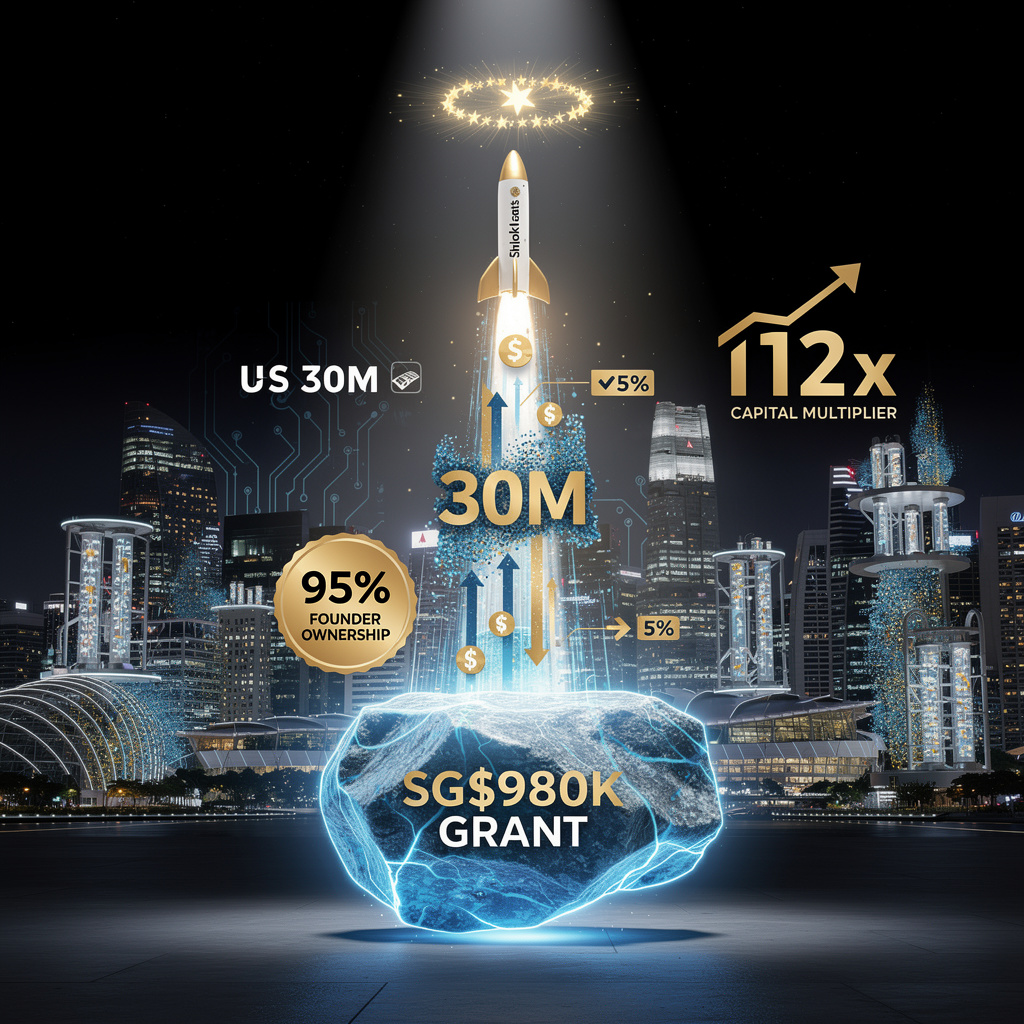
Singapore just served the rest of the planet a master-class in founder-friendly finance. On Monday, cell-cultured seafood outfit Shiok Meats closed a >US$30 M Series C while still holding on to 95 % of the cap-table. The trick? They cashed a SG$980 k non-dilutive cheque from The Liveability Challenge first. That tiny public grant—only 2.4 % of the eventual round—acted like a boulder in a slingshot, cutting founder dilution from the usual 15-20 % to <5 % and stretching early R&D runway 40 % further than seed dollars normally reach.
How the “triple-stack” works
- Land a sovereign grant (≤SG$1 M, zero equity).
- Use the public stamp to woo global VCs (Shiok’s US$30 M arrived four months later).
- Parade both to score a Series A at a 15 % richer pre-money.
Local data show founders who follow this recipe lose 1.8× less equity than equity-only peers. In short, Singapore’s taxpayers front the risk, founders keep the upside, and VCs fight to join the party.
Impacts in three bullets
- Founders: 6-9 pp less dilution → you still own your company at exit.
- Investors: +15 % valuation on term sheet → cheaper entry for same upside.
- Economy: SG$120 M extra GDP by 2029 → each grant dollar clones itself 12× in follow-on capital.
What could go wrong?
Weakness: only ~30 teams per year squeeze through the grant funnel.
Threat: if seed VC keeps drying up globally, everyone will pile into the same queue.
Fix: roll out quarterly windows and let philanthropies co-fund; administration can scale the same way VCs scale due-diligence—milestone-based disbursements.
Crystal-ball timeline
- 2026 Q4: three more biotech pilots snag Liveability grants and announce ≥US$10 M VC within 120 days.
- 2027: non-dilutive share of early-stage cash rises from 2 % to 5 %; average pilot timeline for lab-grown meat drops 30 %.
- 2029: Sydney and Manchester copy the model, but Singapore already captured the talent—expect 8 % of regional exits to sport a grant-first cap table.
Bottom line
Equity is expensive; sovereign grants are free rocket fuel. If you’re growing meat in a bioreactor or hydrogen in a tube and you’re not shopping in Singapore first, you’re paying retail while the locals ride wholesale.
🚀 300k Grant Doubles McMaster Forge Cohort to 20 Teams
💸 300k just dropped to DOUBLE the number of Mac startups—each squad gets ~11.5k to build the next big thing in 4 months flat 🚀 That’s like every team pocketing a semester’s tuition to chase unicorn dreams. Ontario’s betting big on campus-born companies—will your idea make the cut? 🍁
Yesterday McMaster University pocketed a neat $300 k provincial cheque and instantly doubled the size of its campus start-up hatchery, The Forge. Instead of squeezing 10 teams a year through the accelerator, 20 squads of hoodie-wearing founders will now get a shot—plus a share of $230 k in direct seed money. That works out to roughly $11,500 per team, enough to pay for a first prototype or at least keep the pizza-fridge stocked while they solder at 2 a.m.
How does this work?
The Forge lives inside the DeGroote-Heersink Hub, a brick-and-glass sandbox already stuffed with mentors, 3-D printers and legal clinics. Applications close March 29; the new 20-pack cohort launches immediately afterward and sprints for four months toward the Made at Mac Celebration on April 1, 2026—think science-fair meets Dragon’s Den, minus the TV drama.
Why it matters (in human scale)
- Jobs: doubling the cohort could mint ~40 new hires next year—roughly the seating capacity of a Hamilton Tiger-Cats bus.
- Cash splash: $230 k injected straight into prototypes beats the typical Ontario micro-loan by 4×, cutting time-to-market by an estimated two months.
- Bragging rights: more teams → more demo-day eyeballs → higher odds of follow-on cheques; last year’s 10-team group pulled in $3.2 M post-program.
Speed-bumps ahead
- Mentor math: the same pool of 30 advisors must now guide twice as many teams; office-hour queues could rival campus Tim Hortons at 8 a.m.
- Money cliff: once the $300 k is gone, future cycles hinge on fresh provincial or corporate cash—no guarantee.
- Copy-cat threat: every other Ontario college is launching its own accelerator; talent and investors may scatter like free T-shirts.
What happens next
- Apr 2026: 20 teams pitch to 150 investors; target = $5 M in handshake deals.
- Fall 2026: KPI report due; if ≥60 % secure next-round funding, McMaster can lobby for a second $300 k.
- 2028: ambition is 25–30 teams/year, turning Hamilton into a 20-minute start-up city.
Bottom line: a relatively tiny grant just super-sized McMaster’s idea factory. If the doubled cohort can turn $11,500 cheques into companies that hire neighbours and export software, Ontario’s bet on campus capitalism may start looking less like a line-item and more like an economic engine.
⚡️ $8.6B Record Loan Freezes Louisiana Gas for Tokyo: 14% Cost Surge Sparks Gulf Debate
$8.6 BILLION just locked the biggest bank loan in U.S. history to freeze Louisiana gas & ship it to Tokyo 🤑 That’s like spotting every NFL fan a $100 ticket just to watch steel pipes get cold. 14% over budget already—who’s picking up the $4 B tab? ⚡️ Plaquemines families breathing fumes while Asia keeps warm — feel the chill yet, Louisiana?
Venture Global walked into a room full of suits and walked out with $8.6 billion—the largest stand-alone project loan ever landed on a U.S. bank table. The cash fuels the second phase of its CP2 LNG plant on the Louisiana coast, pushing the company’s three-project tab past $34 billion and giving the United States another 29 million tonnes per year of super-chilled gas to ship abroad.
How does this work?
CP2-Phase 2 will chill Gulf-coast methane into 29 mtpa of LNG, enough to cover 8 % of projected U.S. export capacity by 2030. Tokyo Gas has already dibs on 1 mtpa for twenty years starting 2030; 3 mtpa of train capacity is still “open seating.” Feed gas arrives via existing pipelines that today move 110 bcfd of domestic production—30 bcfd more than Americans actually burn, so the surplus sails overseas.
Impacts
- Price tag: Original budget $29 billion → revised $33.5 billion; the $4 billion overrun equals the cost of building four Ohio-class submarines.
- Export clout: When all three Louisiana trains hum in 2030, Venture Global’s 49 mtpa portfolio could supply one cargo out of every twelve leaving U.S. ports.
- Climate math: At full tilt the complex will ship 2.5 trillion cubic feet of gas yearly, enough to replace 90 Mt of coal-fired CO₂ overseas—roughly the annual emissions of Singapore.
- Grid relief back home: By diverting surplus gas, the project indirectly trims 15 GWh/year of pipeline congestion costs in the South-East.
Short / mid / long-term outlook
- 2026–2027: Civil works wrap; spot-market pre-sales plug 1 mtpa of the open train.
- Q4 2028: Mechanical completion; $3–4 billion annual revenue stream locked in at $11/MMBtu long-term price.
- 2030: First Tokyo Gas cargo; U.S. export share edges toward 52 mtpa, cementing America as the Saudi Arabia of LNG.
Bottom line
A single Louisiana plot just swallowed a Wall Street record, and the meter is still running. If the concrete settles on time, $34 billion of steel and frost will turn spare shale molecules into a decade-long geopolitical insurance policy—and prove that, for now, bankers still bet big on gas.
In Other News
- Aurora Energy Research and EDC Associates merge to strengthen Alberta power market analysis and investment support
- BMO launches €500 million Green Bond to finance renewable energy, sustainable agriculture, and green buildings

Comments ()