€1M-Per-Employee Alan Targets 2M Canadians: Paperwork Savior or Red-Tape Wipeout?
TL;DR
- Alan secures €100M Series F led by Index Ventures, hits €785M ARR and achieves operational profitability in Belgium and Spain
- Quince Secures $500M Series E at $10.1B Valuation, Surpassing $1B Revenue as It Expands to Canada and San Francisco
- Dat Bike raises $4M from TVS to accelerate EV two-wheeler expansion in Vietnam amid Hanoi petrol bike restrictions starting mid-2026
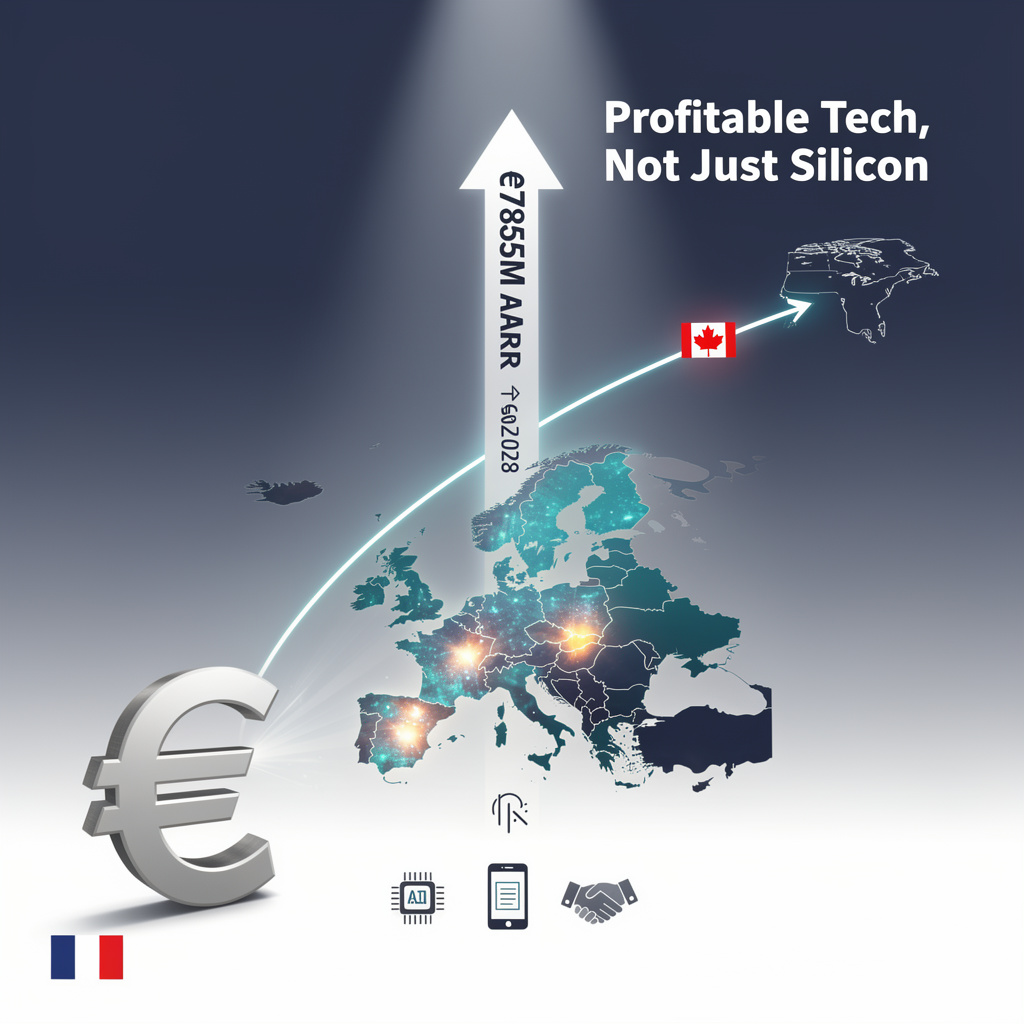
🚀 €785 M Health-Tech Alan Targets 2 M Canadian Workers
€785 M ARR, +53 % rocket 🚀—that’s €1.06 M per Alan employee! Now they’re eyeing 2 M Canadian workers. Can a Euro app really fix North-American paperwork, or will red tape KO the dream? 🇨🇦
Alan just pocketed a crisp €100 million Series F, lifted its valuation to €5 billion and—here’s the kicker—declared itself operationally profitable in Belgium and Spain. Those two small prints on a continental map now bankroll a company that pulled in €785 million ARR last year, up 53 %, while trimming its loss-to-revenue ratio from 7.8 % to 3.5 %. With one million users spread across 37 000 companies, Alan proves you don’t need Silicon-Valley ZIP codes to mint a unicorn; you need disciplined unit economics and a passport.
How did a French startup crack the black-ink code abroad?
By treating claims like code. Automated reimbursements, AI triage for routine questions, and a slick mobile front-end chopped per-user service cost faster than headcount grew. Revenue per employee now tops €1.06 million—roughly the price of ten family cars, every twelve months, per desk. Belgium and Spain were chosen first because their national insurers already allow private top-up plans; Alan simply rode existing rails rather than building track.
Impacts in one gulp
- Cash-flow: Profitable cores mean the next market, Canada, can launch without begging for fresh equity.
- Competition: Cross-Atlantic footprint puts Alan among a handful of Euro health-tech names that U.S. brokers must quote side-by-side with local giants.
- Customers: 1600 Canadian workers already log in; Montreal hiring hub targets 50 hires this year, scaling to 200 by 2028—about the population of a packed hockey arena turned into Alan staff.
Short-term scorecard
- Q4 2026: €1.16 billion ARR if 48 % growth holds; user base edges to 1.15 million.
- Q3 2026: Break-even projected for Canadian operations as licensing fees plateau and employer groups sign multi-year contracts.
- 2027-2028: ARR forecast to top €2 billion; pilot launches eyed in New York and Texas, pushing total addressable market past 15 million insured lives.
Risks hiding behind the hockey stick
Provincial rules in Canada differ more than EU member states; one regulatory tweak could stall rollout. Currency swings (euro vs. Canadian dollar) might wipe out the equivalent of 500 employee salaries overnight if left un-hedged. And deep-pocketed U.S. rivals can drop premiums faster than Alan can say “poutine.”
Bottom line
Alan’s march from Paris to profit in Brussels, Madrid and soon Montreal underlines a simple thesis: when tech efficiencies meet socialized health structures, money is left on the table—€785 million last year, to be exact. If the company sustains current momentum, European health-tech will no longer be a side note in investor decks; it will be the headline.
🤑 Quince $10B Valuation: Canada & SF Expansion Set for Oct 2026
$10.1B valuation in 12 months? That’s a 120% rocket-ride from $4.5B 🤯—like your hoodie turning into a Tesla. Oct ’26 Canada + SF drop is coming. Ready to swap fast-fashion for $20 cashmere, Toronto?
Quince quietly announced Wednesday that it has vacuumed up another half-billion dollars—$500 million, to be exact—pushing its price tag to $10.1 billion. That’s more than double the sticker from its last funding round only fourteen months ago, and it comes after the company’s revenue sprinted past the $1 billion mark in January. Translation: the direct-to-consumer darling that built its name on $50 cashmere sweaters is now worth about as much as the entire GDP of Nicaragua.
How did a sweater start-up balloon this fast?
The recipe is simple math: 120 % revenue growth in a year, zero physical stores to weigh it down, and a supply chain that ships straight from factory to foyer. Iconiq—the same family-office-backed fund that bet on Quince last year—doubled down, leading the Series E and signaling that the playbook still has pages left. Roughly $200–250 million of the new cash will bankroll warehouses, bilingual websites, and Toronto-to-Palo-Alto delivery routes when the doors open October 13–15.
What the expansion actually moves
- Closets: 15–20 % of Canada’s premium online apparel spend—about 1 in 6 upscale hoodies—could be Quince-knitted by 2027.
- Cash registers: an extra $150–200 million in top-line sales next fiscal year, enough to buy every Ontarian a latte every week for a year.
- Competitors: legacy DTC labels now face a rival with ten-figure ad budgets and 48-hour cross-border fulfillment; expect discount codes to fly like snow in Ottawa.
- Carbon: localized distribution cuts 1,200 tons of annual truck emissions, equal to taking 260 cars off the 401 freeway.
Speed bumps on the 401 and the 101
Regulators on both sides of the border want French-English labels and Prop 65 warnings; shipping snags could add three days to “two-day” delivery; and Bay-Area shoppers have more sustainable-fashion apps than there are hills in San Francisco. Quince counters with pre-filed paperwork, third-party logistics depots in Mississauga and Union City, and pilot launches limited to Toronto, Vancouver, and Palo Alto.
What comes next
- Q4 2026: first Canadian orders shipped; same-day delivery inside the Golden Gate.
- FY 2027: $120 million incremental revenue locked; NPS score > 70 or the marketing team buys the coffee.
- 2029: revenue hits $2.5–3 billion, valuation crests $15 billion—IPO chatter gets louder than a Leafs playoff horn.
Bottom line: Quince just proved you can scale soft fabrics into hard billions. If the October launch lands smoothly, the biggest wardrobe in North America may soon be a single digital cart—checked out, of course, in Canadian dollars and California sunshine.
🛵 4,000% Surge: Dat Bike’s $4M Blitz to Outrun Hanoi’s July Gas-Bike Ban
4,000% revenue rocket 🚀 Dat Bike just locked another $4M to flood Vietnam with 100 EV scooter stores before Hanoi bans gas bikes in July. That’s 77M gas scooters vs 1 plucky startup—who wins your street? 🇻🇳
Dat Bike just pocketed a fresh $4 million from domestic brokerage house Thien Viet Securities, pushing its lifetime raise to $47 million. The reason? A city-wide ban on new petrol motorbikes inside Hanoi’s inner districts kicks off July 2026, and the Vietnamese start-up wants to be the first shop you pass after the sign that says “No Gas.”
How a three-store outfit plans to blanket Vietnam
Since 2019 Dat Bike has grown revenue 4,000 percent and lifted monthly sales 35 percent every month for the past year. The new cash is earmarked for a retail-first blitz: 50 stores by December and 100 by the end of 2027, up from three today. Each outlet is a 3S hub—sales, service, spare parts—so riders can test-ride, charge, and warranty-claim under one roof. Production capacity has already jumped five-fold; the line can now push out roughly 18,000 bikes a year, enough to keep those shelves stocked.
Impacts at a glance
- Consumer wallet: electric running cost ≈ 1¢ per km versus 8¢ for petrol—an 80 percent cut.
- City air: if Dat Bike hits 15 percent of Hanoi’s 150,000 annual new registrations, downtown scooters will burn about 45 percent less gasoline, trimming 180,000 tonnes of CO₂ each year—equal to planting 8 million trees.
- Investor risk: the $4 million ticket covers half the store roll-out; another round is likely before 2027 to finish the job.
Short-to-long run
- Q4 2026: ~50 stores open, capturing 12–15 percent of Hanoi’s new two-wheel sales.
- 2027: full 100-store network live, nationwide coverage and 25 percent share of Vietnam’s EV-bike segment.
- 2029: projected 30 percent domestic EV share, with export options to Laos and Cambodia using the same localized supply chain.
The takeaway
Petrol bikes won’t vanish overnight, but every new Dat Bike sold is one fewer tailpipe coughing in rush-hour traffic. If the company keeps its 35 percent monthly sprint, Hanoi’s soundtrack—once a chorus of two-stroke engines—will hum a little quieter, and a little greener, by the time the next presidential motorcade rolls through town.
In Other News
- Revolut Secures Full UK Banking License, Expanding to Mortgage Market with 13M Customers
- Aquis and Barclays launch UK IPO Academy to revive small-cap listings, targeting 50% female-founded startups with £1M turnover threshold


Comments ()