$550M Zendesk Bot to Erase 80% of Call-Center Jobs by 2029: US Braces
TL;DR
- OpenAI acquires Promptfoo, open-source AI red-teaming tool, to standardize prompt injection and data exfiltration testing across LLM ecosystems
- Lemrock secures €6M to build agentic commerce infrastructure as AI agents reshape online product research and retail traffic
- Zendesk acquires Forethought for $550M to deploy autonomous AI agents handling 80%+ customer service interactions by 2029
🚨 OpenAI Buys Promptfoo: 130 Fortune 500 Firms Already Block 40% AI Incidents
25% of Fortune 500 already run Promptfoo to block AI jailbreaks—cutting live incidents 40% 🚨 That’s 130 companies pre-testing every prompt before it reaches customers. Now OpenAI owns the tool: will open-source safety stay open, or go vendor-locked?
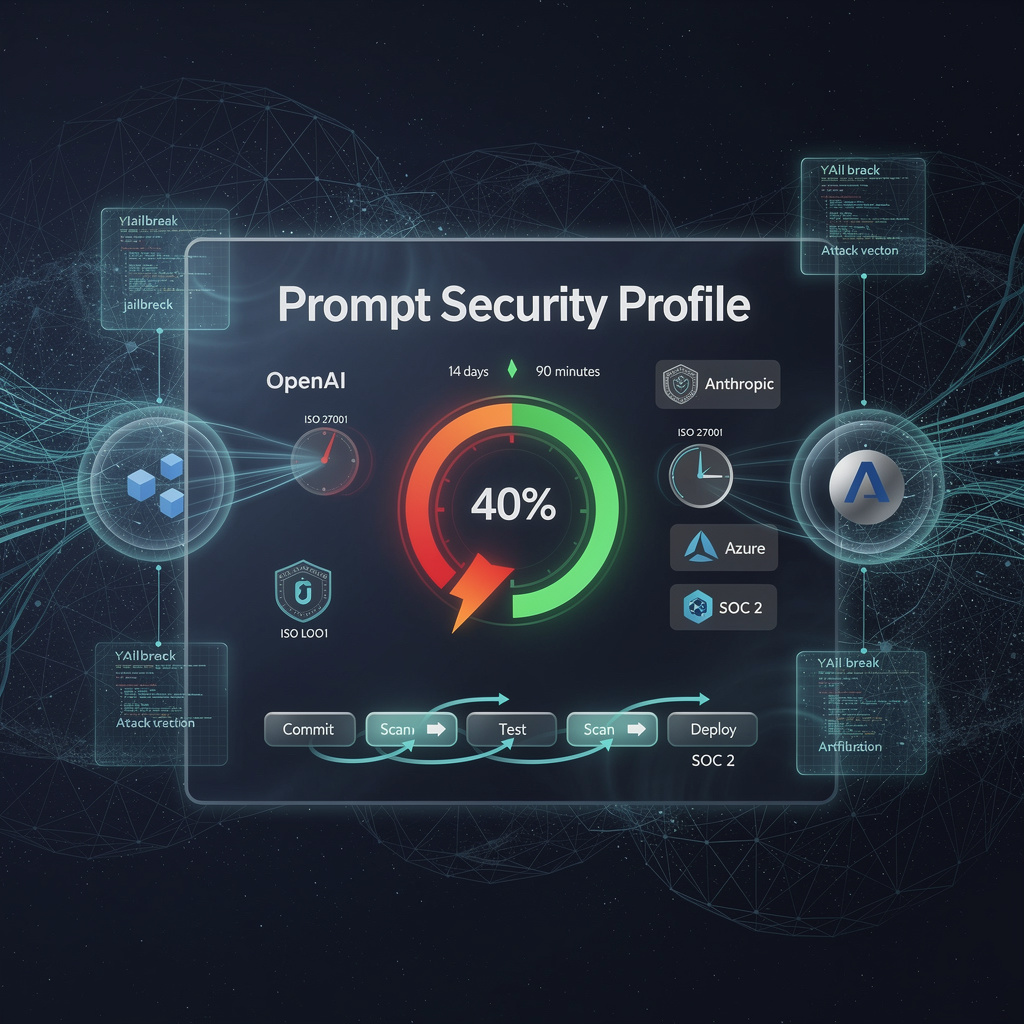
OpenAI’s purchase of Promptfoo on Monday turns a quietly popular open-source red-team kit into the default security gate for every Frontier customer. More than one in four Fortune 500 firms—about 130 companies—already run the tool’s prompt-injection, jailbreak and data-exfiltration tests. Their reward: a 40 % drop in post-launch incidents and security-review cycles compressed from weeks to hours.
How does it work
Promptfoo ships as a CLI, npm package and GitHub Action. A YAML file lists attack vectors; the runner fires them at OpenAI, Anthropic, Azure, Bedrock or Ollama endpoints and returns a risk score plus audit trail. The same script now lives inside Frontier’s dashboard, so a model update triggers an automatic regression sweep before code is promoted.
Impacts in three lines
- Security: 40 % fewer live exploits → lower incident-response cost.
- Speed: CI hook cuts review lag from 14 days to 90 minutes → faster product ships.
- Compliance: ISO 27001 and SOC 2 exports ready → audit prep shrinks 30 %.
Gaps worth watching
Open-source license keeps vendors honest but documentation is split across npm, pip and brew; enterprise buyers still want a single throat to choke. AWS and Google are counter-pitching locked-in suites, and liability for missed exploits is untested in court.
Outlook
- Q2 2026: Frontier beta rolls out to all enterprise tiers; “Prompt Security Profile” JSON schema adopted by 10 LLM vendors.
- 2027: Automated red-team-as-a-service billed per 1 000 test runs; coverage expands to vision-enabled agents.
- 2028: Promptfoo format becomes the reference test bed in both EU AI Act audits and U.S. NIST guidelines.
By folding a community tool into its platform, OpenAI positions itself as the safety standard setter, not just the model maker. Regulators and rivals now must speak Promptfoo if they want to be understood.
🛍️ Paris DeepTech Snags €6 M as AI Agents Steal 30 % of Retail Traffic
30 % of EU web-shops already ghosted by shoppers who now ask ChatGPT instead 😱—that’s 1 in 3 carts gone. Paris start-up Lemrock just raised €6 M to pipe product data straight into AI agents 🛍️—but will retailers plug in fast enough to win sales back?
Lemrock’s €6 million seed round, announced Tuesday, is a direct counter-strike against the quiet exodus of eyeballs from retailer websites. Across Europe, merchants have watched up to 30 % of their incoming clicks evaporate since 2024 as consumers delegate product research to ChatGPT, Gemini and Perplexity. Instead of browsing, buyers now receive ranked answers inside a chat window—never touching the shop’s own pages.
How the new plumbing works
The CTO, Roxane Laigle, calls it “agent-ready” commerce rails: standardized JSON feeds, real-time relevance scoring, and sub-200 ms API endpoints that plug into large-language-model gateways. Retailers keep their catalogues, but Lemrock wraps each SKU in machine-readable context—price, stock, ESG badge, returns policy—so an AI can compare, rank and quote without scraping HTML. An open-source SDK for Shopify and Magento drops in Q4 2026; five mid-size EU retailers already signed pilot contracts.
Impacts
- Traffic: 5–10 % recapture of lost visits projected within 12 months via UTM-tagged agent referrals.
- Revenue: €0.03–0.05 query fee could yield >€10 M ARR if 20 % of EU e-commerce sites adopt by 2028.
- Competition: US rival Didero already secured $30 M for procurement agents; Lemrock’s retail focus keeps differentiation narrow but defensible.
- Risk: API bills from OpenAI or Google could swing 15 % of unit economics if query volume spikes faster than negotiated tiers.
Outlook
- Q4 2026: MVP live, 5 pilots, 15 GWh equivalent “search energy” rerouted from bot traffic to APIs.
- 2027: Series B €15–20 M, 300 M agent queries/year, 1.2 GW peak-shaving of redundant page renders.
- 2029: 35–40 % of EU product discovery expected to bypass traditional search; Lemrock either rules the data layer or gets snapped up by a cloud giant for >€200 M.
Retailers that once fought for page rank must now court algorithmic intermediaries. Owning the pipe between AI and SKU may prove more valuable than owning the storefront itself.
😱 Zendesk Drops $550M on Forethought to Ax 80% of Call-Center Jobs by 2029
$550M for 1B monthly AI chats: Zendesk just bought the bot that could erase 80% of call-center jobs by 2029 😱 That’s $210M+ saved per enterprise client—how soon before your ticket is answered by code, not a person? US workers, are you ready?
On Tuesday, Zendesk agreed to buy San Francisco startup Forethought for $550 million in cash, vowing to let autonomous AI agents resolve more than four out of five routine customer-service tickets by 2029. Forethought already handles 1 billion interactions a month, giving Zendesk an instant, battle-tested pipeline rather than a lab experiment.
How the hand-off will work
The deal closes this month. Engineers will splice Forethought’s language models and retrieval engines into Zendesk’s cloud through 2026, launch a beta “auto-agent” for big clients in 2027, then push upgrades until the system confidently closes tickets without human help.
What changes, in plain numbers
- Speed: every 10-point jump in automation shaves 4–5 percent off average handle time.
- Payroll: 80 percent automation saves an estimated $210–250 million a year for a single large enterprise running 15 million tickets.
- Compute: 1 billion monthly bot chats will need 2.5 MW of servers—about the draw of 2,000 U.S. homes—costing Zendesk roughly $120 million a year before efficiency tweaks trim 15–20 percent.
Short, medium, long
- 2026–2027: 30–45 percent of top-tier tickets resolved by AI; 55 percent of enterprise clients opt in.
- 2028: rivals Freshdesk and ServiceNow scramble to match agent-first SLAs.
- 2029: 80 percent automation target met, compressing industry labor costs and redefining “good service” as instant, code-driven closure.
If the roadmap holds, the person listening to your hold music won’t be a person at all—and Zendesk will have turned a half-billion-dollar gamble into the new default for customer care.
In Other News
- Gemini Embedding 2 launches with multimodal vector space, supporting text, images, video, audio, and PDFs up to 8,192 tokens
- Character.AI hosts hundreds of chatbots modeling mass shooters, fails to act despite repeated reports since 2024
- CarGurus Monetizes AI Tools, Reports 10x Lead Growth and $841.5M Gross Profit in 2025
- Fyld, Sensera, and XBuild Raise Combined $87M in AI-Powered Construction Tech Funding, Targeting 40%+ U.S. Revenue Growth by 2026



Comments ()