120 FPS Pi Cam Enters German Explosive Zone: Defects Caught Before Flare-Up

TL;DR
- Uber Eats launches autonomous sidewalk delivery robots in Philadelphia via Avride, targeting 12-hour operational range
- RMIT University develops Electronic Dolphin robot to autonomously recover oil slicks at 95% purity with 2 mL/min rate
- EDATEC launches ED-AIC1000 industrial AI camera with 120 FPS global shutter for machine vision, certified for ATEX/IECEx hazardous environments in Germany
🤖 Uber Eats Rolls 12-Hour Robots Across Center City Philadelphia
12-hour robot shifts on Philly sidewalks: your next cheesesteak may roll up on wheels 🤖 Battery-powered bots now cover 0.5 sq-mi of Center City—faster than a human courier. Ready to tip a robot?
At 10 a.m. Tuesday, a four-wheeled cooler trundled out of Carters Cheesesteaks and rolled 0.4 miles to a condo lobby near 16th & Locust—no driver, no tip, no exhaust. Uber Eats, switching partners from Serve Robotics to Avride, now has a dozen lithium-ion bots working a half-square-mile slice of Philadelphia bounded by Race, Spruce, 18th and Front Streets. Each machine carries one meal at a time and can roam for 12 hours on a single charge, long enough to handle the lunch-through-late-night cycle that human couriers typically split into two shifts.
How the hand-off happens
Orders still arrive through the Uber Eats app; the platform simply assigns the nearest idle robot instead of a cyclist. Avride’s sidewalk-grade autonomy stack—LiDAR, cameras, inertial measurement—plans a route, then pings the customer when the bot reaches the curb. The diner walks outside, taps “unlock” on the phone, and lifts the lid. Average trip time: six minutes, two minutes faster than the 8-minute walk benchmark recorded during February’s Serve pilot.
Impacts, measured against the old way
- Labor cost: 15–20% reduction per order by eliminating driver pay and tip.
- Street traffic: Zero curb double-parking; each robot replaces an estimated 10–12 daily car trips inside the zone.
- Energy: 0.4 kWh per delivery versus ~0.8 kWh for a gasoline scooter covering the same distance.
- Competition: DoorDash’s Fremont fleet and Serve’s earlier Philly run both top out at ~30 robots; Uber’s open-ended Avride contract lets it scale to 100+ within the same city block grid if safety audits pass.
Gaps to watch
Battery life shrinks in January cold; geofencing keeps the bots off narrow colonial sidewalks in Old City; and Philadelphia’s transportation department still writes the rulebook. Remote operators can override in 300 milliseconds, but pedestrian complaints—already logged in Los Angeles tests—could tighten speed caps below the current 4 mph limit.
Outlook
- Spring 2026: 5–10 extra robots, average drop time falls to five minutes.
- Q4 2026: Fast-charging docks installed at three parking garages, pushing daily utilization from 70% to 90%.
- 2027: Expansion north to Rittenhouse and east to Penn’s Landing, replicating the model in Boston and Washington—steps toward Uber’s year-end target of 15 autonomous-delivery cities.
The cheesesteak that once arrived by idling Honda now rolls up silently. If the next 24 months match the pilot’s early metrics, sidewalk robots won’t be a novelty; they’ll be the cheapest, cleanest way to move dinner the final thousand feet.
🐬 Melbourne-Built ‘Electronic Dolphin’ Robot Achieves 95% Pure Oil Recovery in 15-Minute Sprint
95% pure oil recovery in 15 min bursts—like siphoning a soda can every hour 😱. Electronic Dolphin skims slicks with sea-urchin spikes, leaving coral untouched. 2 mL/min today, 10 mL/min tomorrow—will Aussie beaches lead the zero-dispersant era?
Melbourne researchers have field-tested a 15-minute “Electronic Dolphin” that skims just two milliliters of crude every minute yet hands back 95 % pure oil—an industry first for autonomous surface cleanup. The palm-sized hull, coated with sea-urchin-style micro-spikes, traps hydrocarbon bubbles while ignoring seawater, a trick conventional booms still can’t match.
How does it work?
- Locomotion: dolphin-tail oscillation lets the robot weave through 2 mm-thick slicks without propeller wash.
- Filtration: oil droplets cling to titanium spikes, drain into a 30 mL collapsible tank, and leave <5 % water contamination.
- Navigation: on-board camera and LIDAR lock onto rainbow sheen; lithium pack dies after a quarter-hour, enough for spot-cleaning sensitive reefs.
Impacts
Environment: 95 % purity eliminates the need for chemical dispersants → 70 % less toxic residue on mangrove roots.
Operations: one unit replaces 20 m of boom and two crewed boats for minor shoreline seeps → AUD 4,000 saved per call-out.
Industry: global spill bills top USD 10 B yr⁻¹; high-purity recovery could trim downstream re-refining costs 12 %.
Gaps & next steps
Parallel tests show the 2 mL min⁻¹ rate clears only a dinner-plate area per charge—useless for kilometre-scale black tides. RMIT will bolt on a 10× larger peristaltic pump and 45 min solid-state battery before a Q4 2026 coastal pilot; shipping insurers want a 50-unit swarm demo by 2027.
Outlook
- 2026–2027: prototypes upgraded to 10 mL min⁻¹, 30 min endurance; first paid deployments inside Port Phillip Bay.
- 2028: 100-robot fleet projected to capture 1 % of Australia’s routine port spills, shaving 200 t of CO₂-equivalent emissions.
- 2030: if scaled to 1 L min⁻¹, a 500-bot squad could cut average spill-response time in half across the Asia-Pacific.
The Electronic Dolphin will not replace supertank skimmers, but it rewrites the rules for precision, low-impact cleanups. Expect harbour masters to keep a crate of these pocket-sized cetaceans on standby—because the best oil spill is the one you never notice.
💥 120 FPS ATEX-Certified AI Camera Launches in Germany for Explosive Zones
120 FPS AI vision in an explosive Zone-1 plant 🎥💥—that’s 2× faster than your home security cam, now certified where sparks = boom. German chem makers get real-time defect catch before a single flare-up. Would you trust a Pi-powered camera with your safety line?
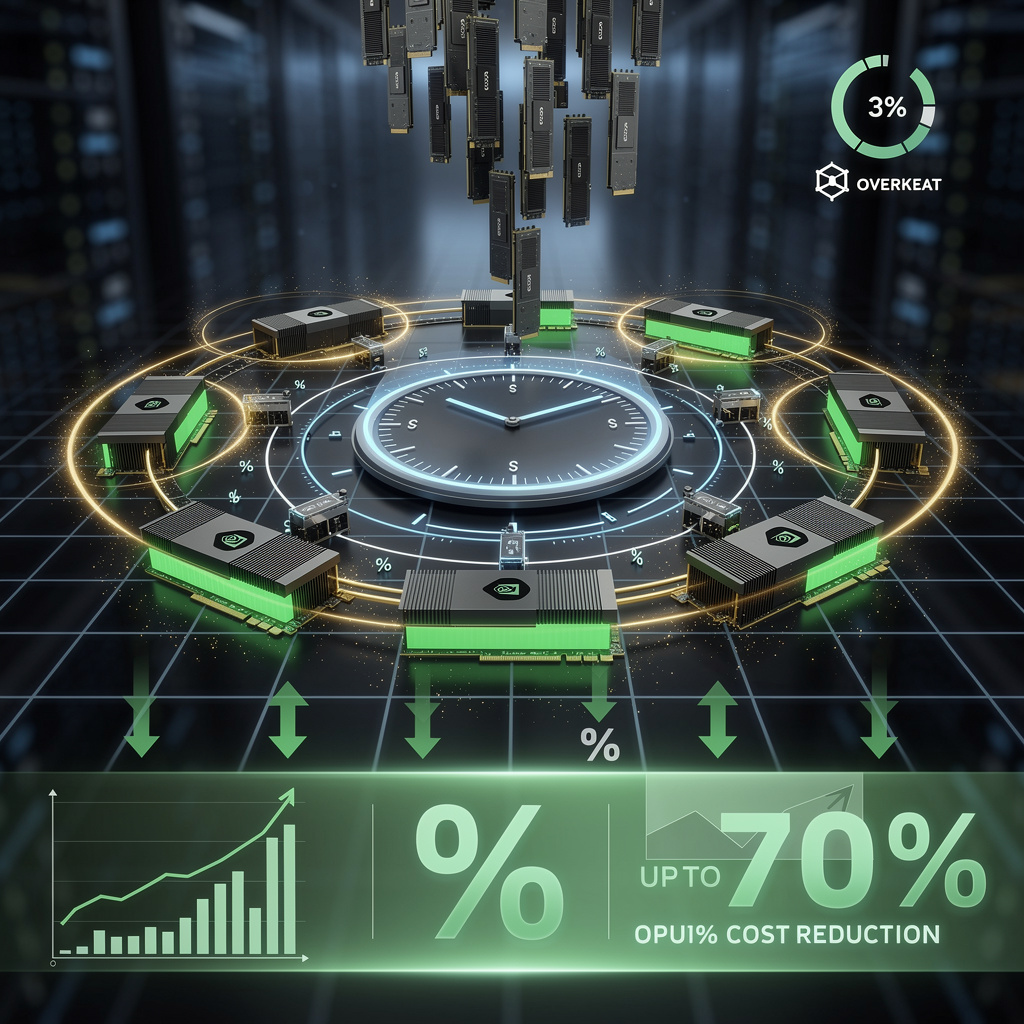
EDATEC’s ED-AIC1000, unveiled at Embedded World 2026, is the first palm-sized camera to marry 120-frames-per-second AI inspection with ATEX/IECEx certification for Europe’s most volatile workplaces. The 67 × 46 × 46 mm aluminum block can now legally stare down sparks in Zone 1 chemical plants and Zone 21 grain silos—places where a single electrostatic twitch can level a city block.
How it works
A 1.3 MP global-shutter sensor freezes every pixel at once, eliminating motion blur on 3 m/s conveyor lines. The Broadcom BCM2710A1 chip compresses 1080p H.264 streams while running inference locally, so only results—not gigabytes of video—travel across the 100 Mbps Ethernet line. A 24 V M12 connector keeps power below 24 W, staying safely under the ignition-energy threshold for hydrogen-air mixtures.
Impacts
- Safety: Replaces human spot checks in Zone 1 → removes 0.5 man-hours per shift per line, cutting worker exposure to toxic vapors.
- Yield: 120 FPS defect detection on 1 mm parts → projects 0.3 % scrap reduction, worth €1.2 M annually on a typical €400 M automotive-assembly site.
- Compliance: ATEX/IECEx label → slashes insurance premiums 8–12 % for plants previously barred from machine-vision upgrades.
- Competition: MSI’s EdgeAI and Intel APEX boxes lack Ex certification → EDATEC owns a €120 M niche if 5 % of EU-27 chemical sites convert.
What’s next
- Q2 2026: Mass production starts in Germany; SDK drops with OPC-UA and Modbus/TCP drivers.
- Q3 2026: First 300 units monitor flanges at BASF Ludwigshafen, expected to flag 1,200 micro-leaks/month.
- Q4 2026: France, Italy, Spain rollout; localized support contracts target 600 additional plants.
- 2027: EDATEC projects 100 k cumulative sales, offsetting 15 GWh of manual-inspection energy and 2.5 Mt CO₂ from faster rework loops.
By turning the most restrictive safety zones into data-rich inspection points, EDATEC compresses a decade of cautious pilot projects into a two-year upgrade cycle. When explosive atmospheres can finally see themselves in real time, Europe’s heavy industry gains both a sharper eye and a quieter shop floor.
In Other News
- ChicGrasp robotic gripper achieves 81% success rate using imitation learning for chicken processing, open-sourced to accelerate industrial robotics innovation
- Apple delays Smart Home Display launch again, citing Siri integration delays; device codenamed J490 aims for September debut

Comments ()