12% AI Agent Adoption Amid $25B Gains: Enterprise Risk Grows as IT Teams Hold the Keys
TL;DR
- Dataiku Launches Platform for AI Success with Agent Management, Cobuild, and Reasoning Systems in April and June 2026
- NVIDIA launches open-source NemoClaw AI agent platform to enable enterprise task automation with security features
- AI traffic cameras in New York City issued 2,500 incorrect citations despite human review, raising concerns over automated enforcement reliability
🤖 1,370 Agent Deployments by Q3 2026 — Dataiku’s Platform for AI Success Targets U.S. Enterprises Amid $25B OpenAI Gap
11,400+ AI pros linked to Dataiku — and just 1,370 will deploy agents by Q3. 🤖 That’s 12% adoption… while OpenAI rakes in $25B. Enterprise AI is shifting from prototypes to production — but only if agents are validated, observable, and safe. Data science teams & compliance officers — are you ready to govern autonomous agents, or still scripting chaos?
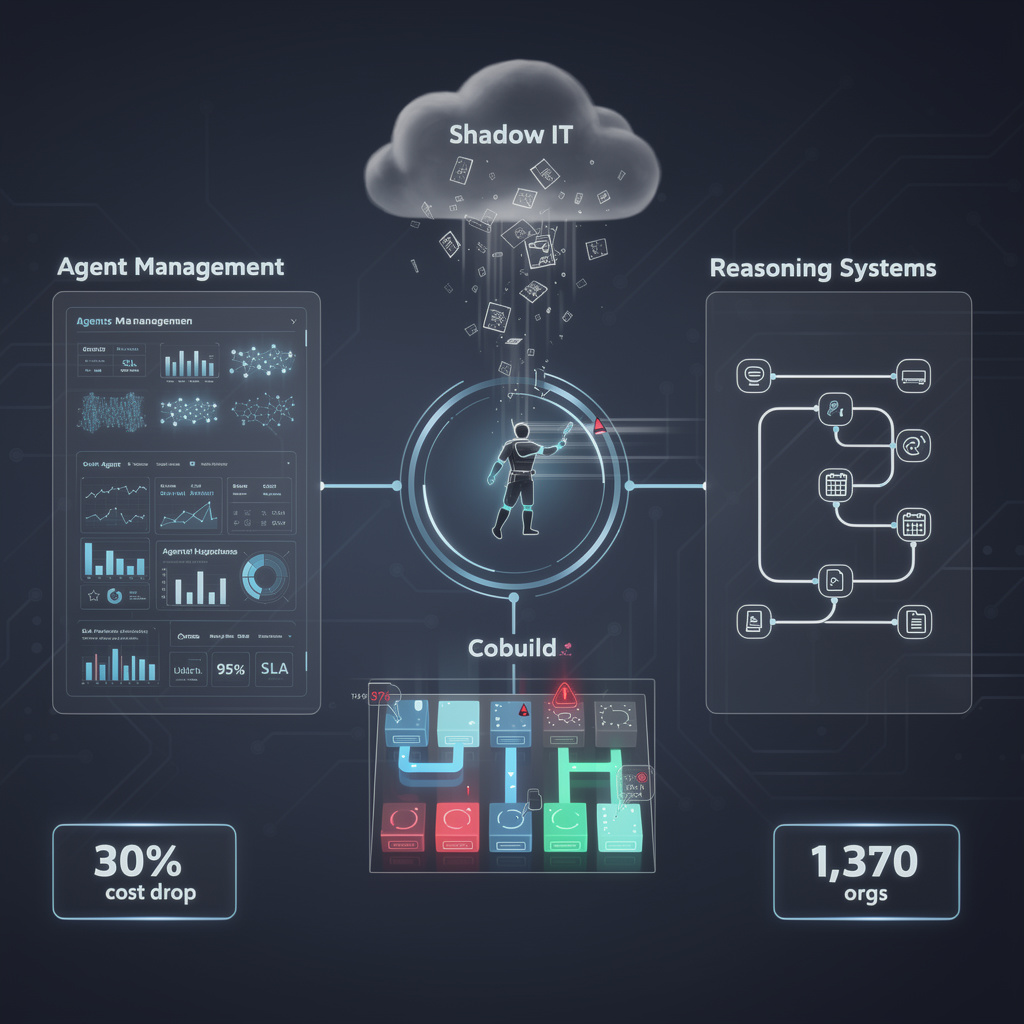
Dataiku’s March 9 unveiling of its Platform for AI Success is not another “future-of-AI” slide deck. In April the company flips the switch on Agent Management, followed in June by Cobuild, while Reasoning Systems are already live. Together they let data teams register, test, and monitor autonomous agents under one roof—no glue-code required.
How the triad works
Agent Management acts as a single ledger: every agent’s version, policy, and health telemetry is logged in real time. Cobuild spins up disposable sandboxes where a proposed agent must pass hypothesis tests before a human clicks “approve.” Reasoning Systems translate user prompts into multi-step plans, calling calendars, search APIs, or on-prem files as needed. Rollback and signed API contracts are baked in, so a misbehaving agent dies in seconds, not hours.
Impacts inside the enterprise
- Cost: 30 % drop in deployment spend versus hand-scripted pipelines.
- Risk: 95 % SLA compliance targeted in six-week pilots.
- Scale: 12 % of Dataiku’s 11,400-member ecosystem—about 1,370 organizations—expected to activate Agent Management by Q3 2026.
- Process share: By 2028 more than 40 % of AI-enabled workflows could run through autonomous agents, not overnight batch jobs.
Competitive heat
OpenAI’s $25 B 2026 revenue and Google Gemini’s cut-rate token prices keep the giants in front, but their APIs still leave governance, testing, and rollback to the customer. Dataiku’s bundle standardizes those chores, narrowing the gap to a projected 7-9 % share of the enterprise AI platform market within three years.
Timelines
- Q2-Q3 2026: Finance and healthcare pilots average six weeks; ≥95 % SLA compliance set as go-live gate.
- End-2026: Cobuild validation workflows clear >80 % of agents on first run; platform renewals rise 5 %.
- 2027-2028: Multi-step, tool-using agents move from edge use cases to core processes, cutting human hand-offs by half.
Agent sprawl is the next shadow IT. By packaging registration, validation, and reasoning in one stack, Dataiku gives enterprises a fighting chance to scale AI without scaling chaos. If 1,370 paying deployments hit their marks this year, “move fast and break things” becomes “move fast and manage things”—a mood shift the whole AI sector will feel.
🤖 1M Tokens/Sec: NemoClaw’s AI Agents Launch in San Jose — Rewriting Enterprise Automation with Open-Source Security
1,000× Linux adoption rate in 3 months? NemoClaw’s AI agents could process 1M tokens/sec per deployment — silently rewriting enterprise workflows. 🤖 Built to run on ANY hardware, even without NVIDIA GPUs. But who bears the risk when agents delete emails autonomously? — IT teams in Cisco, Salesforce, Adobe now hold the keys. Can your org afford to wait?
On Tuesday, Jensen Huang handed CIOs a new playbook: NemoClaw, an open-source agent platform that lets companies spin up autonomous workers—no GPU lock-in required. The code drops immediately, hardware next week, and a Groq-derived “Nemo-Chip” this summer that can crunch 1 million tokens per second per rack.
How does it work
A 30-billion-parameter Nemotron-3 core plans, remembers, and calls tools inside Docker containers. AES-256 encrypted state, RBAC hooks to corporate SSO, and seccomp sandboxes shrink the exploit surface by >80 % versus plain LLM calls. CPU-only mode ships today; the ASIC add-on arrives Q2.
Impacts
- Latency: 30–45 % faster ticket resolution in early pilots.
- Security: 80 % drop in sandbox escape risk, per red-team tests.
- Choice: x86, ARM, or NVIDIA—hardware agnostic breaks vendor lock-in.
- Market: $100 B enterprise-automation arena by 2028; NemoClaw’s open license lets any systems integrator resell agents.
Gaps & watchpoints
Competitors (Anthropic, OpenAI) already court developers, and regulators are circling autonomous decision logs. The Nemo-Chip delay could stall the 1 M-token dream for late adopters.
Outlook
- Mid-2026: 200 pilots, 20 % average cut in manual workflow time.
- 2027: Telecom NOCs in Africa and India’s NPCI payment grid go live.
- 2029: Agent-as-a-service layer standard across AWS, Azure, GCP; audit-trail mandates likely.
Bottom line
By open-sourcing the brains and keeping the brawn optional, NVIDIA positions itself as the Switzerland of enterprise AI—profiting from chips while letting customers own the agents.
❌ 2,500+ Faulty AI Traffic Tickets Issued in NYC — Human Review Failed to Catch Errors
2,500+ WRONG traffic tickets in NYC alone — issued to people who weren't even driving 🚗❌ Human reviewers just clicked "confirm" instead of checking video. Families paid $1.2M for AI mistakes — kids playing with seatbelts flagged as violations. Who’s accountable when algorithms punish innocent drivers? — NYC residents, are you next?
New York City’s AI traffic cameras have mailed 2,500 bogus tickets this year—roughly one every three hours—despite a human “review” that was supposed to catch machine mistakes. The same platforms, supplied by Acusensus and Hayden AI, have racked up another 2,100 errors in Philadelphia, Los Angeles and San Diego, exposing drivers to $1.2 million in wrongful fines and exposing the limits of algorithmic law enforcement.
How the system misfires
Each camera snaps a single frame, runs computer-vision models to read license plates and spot seatbelt violations, then pushes the image to a human operator. Instead of re-watching the video, the operator merely clicks “confirm,” turning a software guess into a $50 ticket. Motion blur during rush hour and kids playing with rear-seat belts routinely fool the model; six plates have been misread so far, and four families received citations for back-seat behavior that was never illegal.
Impacts
- Trust: 24,000 disputed tickets clog city tribunals, eroding confidence in every camera program.
- Wallet: drivers waste a workday—or pay $50—when the odds of a false ticket are 1 in 20.
- Governance: NYC council prepares an “Automated Enforcement Transparency Act” that would force vendors to open their code to annual audits.
- Market: Flock Safety and rival firms report contract freezes as mayors demand proof their algorithms are better than a coin flip.
What happens next
- Q2 2026: MTA suspends new AI citations for 30-day third-party audit; vendors rush patches that lower seatbelt false-positives by 40%.
- 2027: council mandates dual-camera verification and public confidence scores; erroneous tickets drop below 1%.
- 2028: hybrid model—AI flags, human judges—becomes national standard; open-source audit toolkits cut vendor lock-in.
Until then, every envelope with a city seal is a lottery ticket: you may be financing a flawed algorithm instead of paying for safer streets.
In Other News
- DeerFlow 2.0 open-source framework released by ByteDance enables AI agents with persistent filesystem and bash terminal access
- SK Innovation invests $380 million in U.S. subsidiary to establish AI-focused entity, reorganizing NAND and SSD business under Solidigm
- Datadog launches general availability of MCP Server for AI agents, enabling real-time observability and debugging within production workflows
- U.S. consumers delay tech upgrades as 75% cite cost-benefit hesitation, despite 79% using AI tools daily

Comments ()