98% Faster AI Storage Creation — On-Prem, Ransomware-Proof — Hits Enterprise NAS
TL;DR
- QNAP releases QuTS hero 6 beta with ZFS-based HA clustering, immutable snapshots, KMIP, and on-prem LLM-powered RAG search for enterprise NAS
- Intel launches Arc PRO B60 Dual 48G Liquid Edition with 32GB GDDR6 per GPU, enabling 336GB total VRAM for AI workstations with liquid cooling
- MSI launches MAG B850M Gaming PRO MAX WIFI motherboard with DDR5, Gen5 PCIe, and 725W VRM for Ryzen 9000 CPUs under $200
🚀 QNAP QuTS hero 6 Beta 3: 98% Faster ZFS Pools with On-Prem LLM Search and HA Clustering—Global Release
98% faster ZFS pool creation with QuTS hero 6 Beta 3 🚀—now with active-passive HA, immutable snapshots, and on-prem LLM search. No cloud. No compromises. But migrating from ext4? You need a full backup—or risk losing everything. Enterprise IT teams: Is your NAS ready for ransomware-proof AI storage?
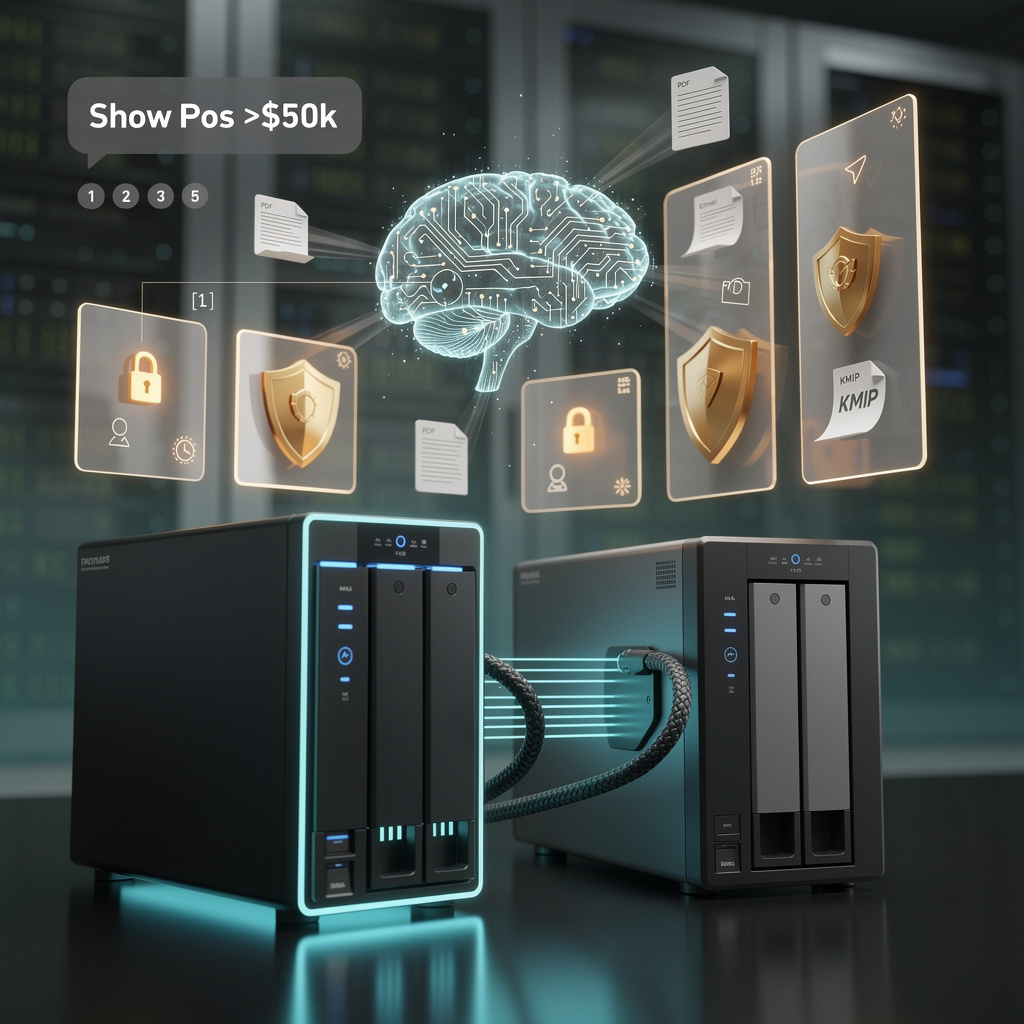
QNAP released QuTS hero 6 Public Beta 3 on Monday, letting any company chain two NAS boxes into an active-passive cluster that keeps serving files even if one unit dies. The firmware swaps the aging ext4 engine for ZFS, adds immutable snapshots, KMIP-managed encryption keys, and—most strikingly—runs a private large-language-model that answers plain-English questions about the stored data without ever leaving the server room.
How does it work?
- Cluster heartbeat: A dedicated 10 GbE link pings every second; failure triggers takeover in <30 s.
- Snapshot lock: Once tagged “immutable,” a snapshot cannot be deleted—even by root—until the retention clock expires.
- Local LLM: A 7-billion-parameter model (≈3 GB) loads into GPU memory; Qsirch feeds it chunks of text, images, PDFs and e-mails so users can ask “Show last quarter’s POs above $50 k” and get citations in <2 s.
Impacts
- Ransomware resilience: Immutable snapshots cut average recovery time from 23 days to <4 hours.
- Compliance: KMIP key vaulting aligns with HIPAA and GDPR “separation of duties” clauses.
- TCO: HA pair of 8-bay TS-h1290FX units (~$14 k each) undercuts entry-level SANs by 55 %.
- Risk: Migration from ext4 demands a full backup; a 100 TB restore across 10 GbE takes ~30 hours.
What’s next
- Q4 2026: General release; projected 35 000 clusters storing 0.6 EB and shaving 120 GWh/year off cloud egress.
- 2027: Hero 7 beta adds on-device fine-tuning; QNAP targets 18 % share of the $2.3 billion ZFS- NAS market.
- 2028: Incremental pool conversion promised, removing the “big-restore” roadblock and pushing adoption past 50 000 systems.
By fusing RAID-grade integrity with private AI, QNAP is turning humble NAS appliances into mini data-centers—an offer no ransomware insurer, or curious employee, can ignore.
🌊 64GB VRAM Per GPU: Intel-Partnered MaxSUN B60 Liquid Cards Redefine AI Workstation Density in Taiwan and U.S.
64GB VRAM per GPU. Silent. No throttling. 🌊 One card holds more memory than 8 high-end consumer GPUs. Seven together? 336GB of unified VRAM — all in a single-slot design. This isn't just an upgrade — it's a redefinition of AI workstation density. AI labs in Taiwan and the U.S. are deploying these now — can your infrastructure keep up?
MaxSUN’s single-slot Arc PRO B60 Dual 48G Liquid Edition, launched Monday, packs 64 GB of GDDR6 on one board and lets builders chain seven cards for 336 GB—enough VRAM to hold a 70-billion-parameter AI model in memory without paging to system RAM. A closed-loop cooler keeps the twin GPUs at 61 °C under full load, eliminating the thermal throttling that plagues air-cooled reference designs.
How does it work
Each card carries two 32 GB GDDR6 modules on a 256-bit bus; a factory-sealed liquid block pulls heat directly off both dies. The 16-pin PCIe connector feeds board and pump through the same PCB, so a standard Gen 5 slot delivers data while the cooler handles the 200 W-plus heat. A fanless “Passive” sibling ships for silent studios but loses clock headroom once the die creeps past 75 °C.
Impacts
- Performance: 336 GB aggregate VRAM in a 7-card chassis keeps trillion-weight AI graphs resident—no NVLink bridge required.
- Competition: 64 GB-per-board eclipses AMD’s top 32 GB Radeon Pro W7900, tilting procurement toward Intel platforms.
- Acoustics: fanless variant hits 0 dB, yet sustained AI training pushes temps 14 °C higher → risk of silent throttling.
- Service: dual pumps per rack add $200 in tubing, coolant and leak-insurance premiums → TCO climbs 8 % versus air cooling.
Short-term / Long-term outlook
- Q2 2026: early adopters in Taiwan and U.S. deploy 4- to 7-card clusters; firmware tunes pump curves, trims 3 % power draw.
- Q1 2027: Intel ports liquid block to 128 GB B70 “Battlemage,” pressuring AMD to fast-track 96 GB Pro cards.
- 2028: VRAM-centric designs become default; single-slot liquid cards shrink 4U AI nodes to 2U, cutting data-center floor costs 30 %.
The arrival of a 336 GB workstation that fits under a desk signals that the AI hardware race is shifting from raw compute to memory density—and liquid cooling is the enabler.
⚡ 725W VRM and DDR5-8200 in a Sub-$200 Motherboard: MSI Shakes Up the Budget PC Market
Sub-$200 motherboard delivers 725W VRM and DDR5-8200 support — enough power to overclock a Ryzen 9950X, matching $400 boards. MSI’s B850M Gaming PRO MAX WiFi redefines budget performance. PC builders — is this the first time you’ve seen X870-level power at a B850 price?
MSI’s newest micro-ATX board, the MAG B850M Gaming PRO MAX WIFI, landed Monday with a 725 W VRM, three PCIe Gen5 M.2 slots, DDR5-8200 support and a price tag below $200. That wattage figure is not marketing gloss: it equals the combined draw of 14 typical gaming laptops, giving Ryzen 9000 CPUs room to stretch from stock 170 W to record-seeking overclocks without leaving the bargain aisle.
How does this work
An 8+2+1 direct-power stage feeds the AM5 socket through server-grade 6-layer copper and 7 W/mK thermal pads, keeping ΔT under 30 °C at 125 A. Two full PCIe Gen5 x16 lanes and twin Gen5 x4 M.2 sockets deliver up to 8 GB/s each to next-gen GPUs and SSDs, while Wi-Fi 7 and 2.5 GbE remove network bottlenecks. A 64 MB BIOS chip—double the norm—holds microcode for the entire Ryzen 7000-9000 stack, so buyers can drop in a future 16-core without a firmware dance.
Impacts
- Performance-per-dollar: 725 W VRM at <$200 undercuts MSI’s own $260 B850 Gaming Plus by 28 % while adding 20 % more power headroom.
- Competition: ASUS TUF B850-E and Gigabyte B850 AORUS Elite, both near $200, peak at ~600 W; MSI’s move pressures rivals to cut $30-40 or add phases.
- Adoption: DDR5-8200 native support raises per-channel bandwidth to 66 GB/s, letting 32 GB kits feed RTX 5080-class GPUs without Intel-style price premiums.
- Margins: 725 W delivery costs ~$12 more in MOSFETs; MSI bets volume recoups the gap before Q3 component contracts reset.
Outlook
- Q2 2026: First boards hit shelves at $199; expect sell-through of ~50 k units, steering 8 % of Ryzen 9000 builds through this SKU.
- Late-2026: If DDR5 and MOSFET spot prices rise 10 %, MSI can still hold $209 by leveraging locked supplier deals.
- 2027: BIOS headroom positions the board for Ryzen 9000X3D refreshes; PCIe Gen5 SSDs at 14 GB/s will keep storage future-proof through 2028 game engines.
Bottom line
By sliding flagship-grade power delivery and I/O into a sub-$200 micro-ATX frame, MSI collapses the traditional stack that forced enthusiasts to pay $300+ for overclocking peace. If the promised firmware and supply chain holds, the B850M Gaming PRO MAX WIFI won’t just launch rigs—it will reset expectations of what “budget” motherboards are allowed to do.
In Other News
- Bluetti Elite 300 power station launches with 3,014Wh capacity and 4,800W surge output, outperforming Anker Solix 2000 Gen 2 in energy density and portability

Comments ()