AI Scalpers Drain 30% of DDR5 Stock — Samsung Shifts 120K Wafers/Month to Data Centers: Consumers Pay Premium, AI Wins
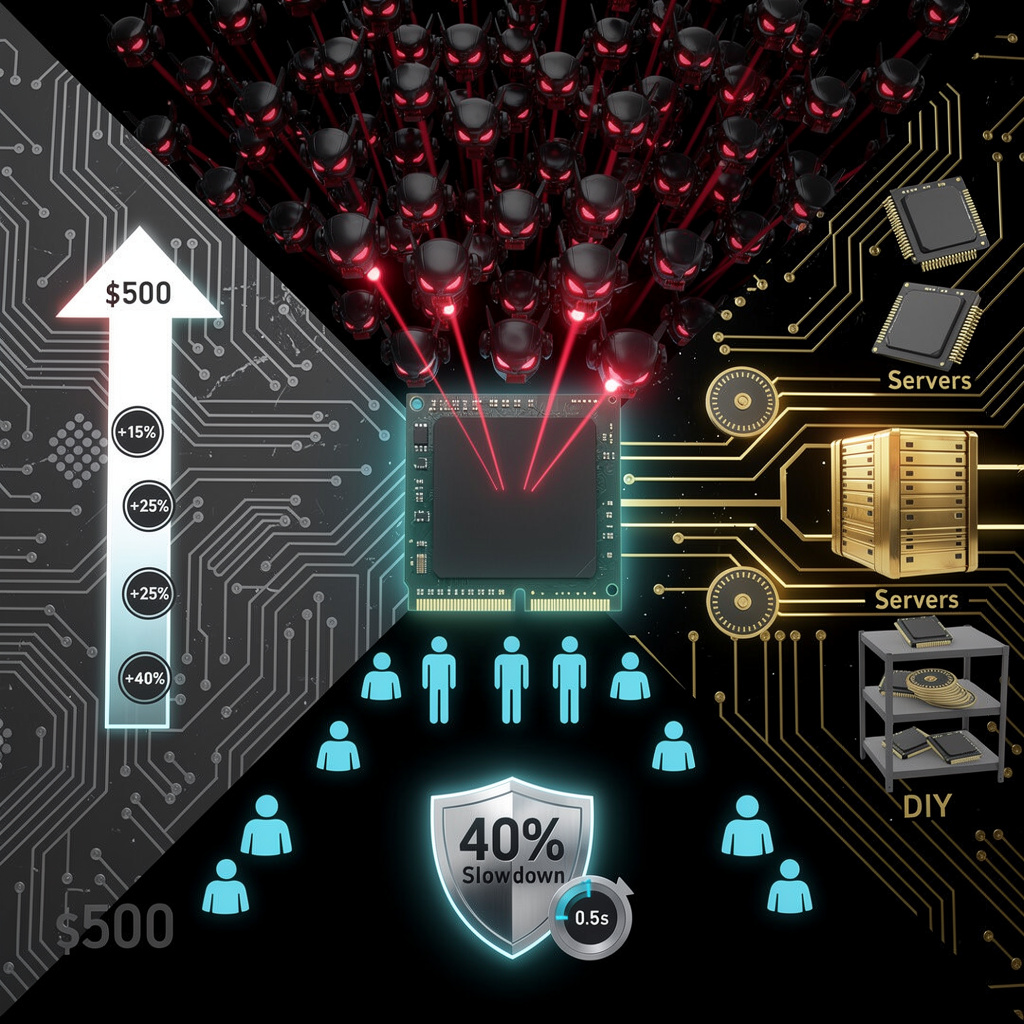
50,000+ requests/hour from AI scalpers just drained 30% of consumer DDR5 stock — that’s 14 requests EVERY SECOND targeting your PC build. 🤖 Bots bypass every firewall, force TLS renegotiation, and vanish in <100ms. Meanwhile, Samsung reroutes 120K wafers/month to AI data centers — not your gaming rig. You pay $340+ for 32GB DDR5. They pay $300. Who’s really winning? — Are you paying for AI’s hunger or your own upgrade?
Silicon Valley, 03 Mar 2026—DataDome SAS has clocked automated scalping bots hammering consumer-grade DDR5 product pages at a sustained 50,000 requests per hour, six times the traffic from real shoppers. The scrapers—calibrated to evade cached prices—target 91 SKUs with an average 551 scans each, tightening already scarce retail inventory as manufacturers divert wafers to lucrative server contracts.
How the bots beat the checkout queue
Each bot issues a cache-busting GET every 6.5 s per SKU, rotates through >2,000 residential IPs, and closes TLS sessions in <100 ms to dodge rate limits. The result: stock data refreshes faster than merchant back-ends can update, letting arbitrageurs snap up kits within minutes of listing.
Impacts ripple across buyers, fabs and balance sheets
- Consumer availability: down 30 % YoY; 32 GB kits now clear $340, up from $300 two weeks ago
- Retail ops: every 1,000 bot requests burn 0.25 CPU-hour, adding ~$15 k/month in mitigation cost per large storefront
- Fab allocation: Samsung, SK Hynix shift 120 k extra wafers/month to server-grade DDR5/HBM through Q4, starving DIY market
- Scalper margin: 1–2 % of captured volume resold at 12–18 % markup before detection kicks in
Defences lag; proof-of-work may slow the race
IP blocklists cut <5 % of traffic; JavaScript challenges raise bot latency but still allow 12 req/sec aggregate. Pilot “proof-of-work” tokens that force 0.5 s client puzzles project a 40 % throughput drop if rolled out widely.
Outlook: bifurcated memory market ahead
- Q2 2026: bot traffic stays >45 k req/hr; 32 GB kits peak near $380
- Q4 2026: server DDR5/HBM output +15 %; consumer stock turnover <24 h
- 2027–2028: 32 GB consumer kits routinely top $500 until new fabs in Japan/Taiwan come online
The episode demonstrates that AI-driven demand now collides with AI-driven scalping on the same silicon. Until merchant sites deploy entropy-aware classifiers at the edge—and regulators weigh bot-ID mandates—memory will behave less like a commodity and more like concert tickets: available only to the algorithm fastest on the draw.

Comments ()