266% Ransomware Surge, 27-Second Breakout: Nation-States Outpace Enterprise Defenses
TL;DR
- Global Ransomware Surge: 266% Year-Over-Year Increase in Nation-State Attacks, Breakout Time Drops to 27 Seconds
- ShinyHunters Claims 21M Records Breach of Dutch Telecom Odido and BEN, Exposing Plaintext Passwords and IBANs
- 1Touch.io acquired by Pure Storage for $28M to enhance cross-platform data management, integrating Kontxtual’s cybersecurity tools with Everpure Platform
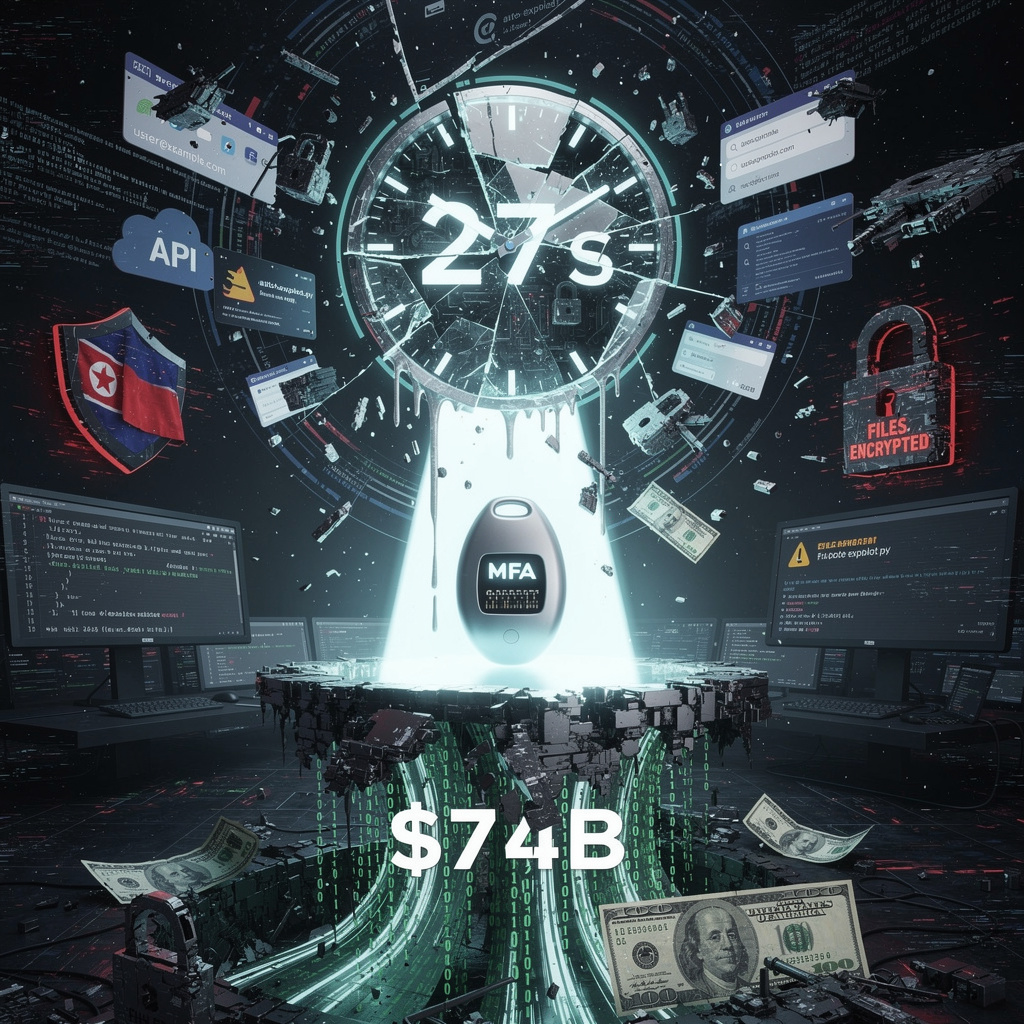
🔥 27-Second Breach: Nation-State Ransomware Surges 266% as AI Collapses Dwell Time to Sub-Minute Chaos
266% nation-state ransomware surge, 27-second breakout time—down from 29 MINUTES. That's not defense, that's a participation trophy 🏆 AI now builds exploits faster than your intern fetches coffee. 86% of attacks hit cloud APIs with zero malware installed—just stolen creds and a dream. Your "enterprise-grade" EDR? Watching paint dry while North Korea cashes checks. — Which region's getting rekt hardest: your cloud region or your mom's router?
Your 27 seconds of peace are over. That's how long attackers now need to turn a stolen password into a full-blown ransomware nightmare—down from 29 minutes last year. CrowdStrike's 2026 report isn't a warning. It's a receipt for what happens when credential theft meets AI automation and nation-state wallets.
How did we get here?
The mechanics are depressingly elegant. Credential abuse drives 33% of cloud intrusions. Compromised service accounts bypass the tedious reconnaissance phase entirely—no phishing, no malware droppers, just instant lateral movement. Meanwhile, zero-day exploitation jumped 42% year-over-year, with 40% targeting edge devices before vendors even knew they were broken. AI-generated exploits now match elite bug hunters in 30 seconds flat. The result? 86% of ransomware attacks never touch local endpoints. Everything happens remotely through hijacked cloud APIs.
What this actually costs
Speed: 27-second breakout eliminates human response windows entirely. Detection becomes retrospective.
Scale: 266% surge in nation-state activity—286 tracked campaigns, with North Korean operations up 130% and Chinese-linked groups rising 38%.
Accessibility: 82% of incidents use free open-source ransomware kits. Your neighborhood script kiddie now runs nation-state playbooks.
Economics: $74 billion projected damages for 2026. That's roughly three times NASA's annual budget, vaporized by encryption and extortion.
The institutional theater
Organizations currently "responding" with 24-hour breach reporting mandates and compliance checkbox theater. Meanwhile, 281 threat groups operated last year—24 newly named, 150 active clusters. The "sleeperware" pivot is particularly charming: attackers stopped encrypting immediately, preferring dormant payloads that activate after data exfiltration. Detection? Post-facto. Recovery? Expensive theater.
Timeline of managed decline
- 2026–2027: Breakout times likely drop below 10 seconds for cloud assets. Zero-day exploitation grows another 15–20% through supply-chain dependencies. Organizations with actual MFA and credential rotation see 40–50% fewer rapid breakouts—the rest get harvested.
- 2028–2030: NIST-aligned mandates expand, mandating 24-hour breach reporting. Zero-trust architectures reduce credential-based breakouts by ~30%—if deployed. AI tools democratize elite capabilities; the nation-state/criminal distinction flattens. More actors, same speed, worse odds.
The only honest bottom line
The 27-second metric isn't a technical achievement to admire. It's a systemic failure in credential hygiene, patch velocity, and architectural trust models—accelerated by AI tooling and state sponsorship. Organizations still running 2023 security postures against 2026 automation are not behind. They're already breached, just not yet notified.
🎭 21 Million Records: Dutch Telecom Breached by Phone Call, Not Firewall
21 million Dutch telecom records—plaintext passwords, passport numbers, IBANs—allegedly stolen by voice-phishing a help desk. That's the population of Florida, but with worse opsec. 🎭 ShinyHunters didn't hack firewalls; they called and asked nicely. Odido's still 'investigating' whether 6.2M or 21M, which is like debating how many floors fell off a burning building. Meanwhile your grandma's bank account is now a loot piñata. When did 'call back to verify' become rocket science? — Dutch friends, you switching carriers or just switching to cash?
Twenty-one million Dutch telecom customers just learned their "secure" provider was running security like a lemonade stand with a vault door painted on cardboard. ShinyHunters—a group whose entire business model is "call people, lie convincingly, grab everything not nailed down"—allegedly walked out with plaintext passwords, IBANs, passport numbers, and enough personal data to ruin a small nation's credit score overnight.
The mechanics are almost insultingly simple. Vishing calls to Odido staff. Fake IT support. Real-time MFA interception through a "Live Phishing Panel" that proxies legitimate login pages while snarfing one-time codes. Stolen SSO credentials blast open the CRM. Bulk export: 20+ GB of customer data to attacker-controlled cloud storage. The group then posts a ransom demand with Bitcoin address and 72-hour countdown—standard extortion-as-a-service playbook.
Here's where it gets chef's kiss terrible. Odido's own internal logs from February 7-8 flagged 6.2 million records accessed—explicitly noting no passwords were taken. ShinyHunters now claims 21 million records with plaintext passwords. Someone's lying, someone's incompetent, or both. When your "we weren't breached that badly" defense contradicts the criminals holding your data, you've already lost.
Financial: IBANs + plaintext passwords = immediate fraud infrastructure. Credential stuffing against banking portals starts now.
Regulatory: GDPR's 72-hour notification clock is ticking. Fines scale to €20 million or 4% global turnover—whichever hurts more.
Operational: External IR firms, log forensics, MFA hardening, mandatory vishing training for staff who clearly needed it before the breach.
Reputational: The BEN brand targets budget-conscious customers who will absolutely switch to competitors offering "we don't store passwords in plaintext" as a feature.
Odido filed with Dutch regulators. That's the bare minimum. The gap between 6.2 million internal estimate and 21 million criminal claim remains unverified—classic post-breach uncertainty where every day of silence erodes trust faster than the data spreads on dark web markets.
- Now–March 2026: Credential rotation for affected accounts; phishing campaigns exploiting leaked data spike; regulatory investigation opens.
- Q2 2026: GDPR fines materialize if negligence proven; civil litigation from affected customers; potential executive turnover.
- 2026–2027: Industry-wide pressure for FIDO2/passkey adoption; SSO providers harden against real-time proxy attacks; vishing becomes standard security training module.
The punchline? ShinyHunters didn't deploy zero-days or nation-state tooling. They called people on the phone and exploited the gap between "we have MFA" and "our MFA can be proxied by a web kit." When your multi-million euro security stack falls to social engineering and a spoofed login page, the problem isn't the hackers. It's the institutional delusion that compliance checkboxes equal actual defense.
Plaintext passwords in 2026. The real breach was whatever process allowed that decision in the first place.
🔥 Everpure's $28M Panic Buy: 500% Growth Startup Promises 30% Faster Breach Detection—After 18 Months of Integration Hell
$28M for a startup that grew 500% YoY? That's not an acquisition, that's Everpure panic-buying GDPR compliance before the EU fines them into the Stone Age. Kontxtual's 100+ connectors sound sexy until you realize you're paying $280K per integration to automate what your underpaid intern was doing in Excel. Sure, breach detection drops 30%—but only after you spend 18 months integrating, by which point your data's already on Telegram. The real win? Pure Storage finally admits "intelligent control plane" is just marketing for "we bought someone who actually understands metadata." — Which hurts more: the $28M price tag or explaining to your board why you didn't just fork the open-source alternative?
Pure Storage just spent $28 million to buy a nine-year-old startup with a name that sounds like a forgotten Tinder feature—1Touch.io, now Kontxtual—because apparently "Everpure" wasn't corporate-bloaty enough already. The deal, announced February 23, 2026, gives them 100+ cybersecurity connectors and the thrilling privilege of explaining to regulators why their data governance now spans three rebrands.
How does this even work?
Kontxtual's tech plugs into Everpure's "intelligent control plane"—a phrase that deserves its own drinking game—automating data classification and access control across on-prem, edge, and cloud environments. The connectors handle encryption, tokenization, and credential leak detection, with GDPR compliance baked in because nobody wants another €746 million fine headline.
Security posture: Automated classification cuts breach identification time by ~30%—from IBM's grim 241-day average down to something merely embarrassing.
Operational resilience: Cross-platform metadata unification reduces data-silo chaos, which is corporate-speak for "we finally know where our stuff lives."
Market positioning: Bundled storage-plus-governance could expand Everpure's addressable market ~12% within two years, assuming competitors don't just copy-paste the same connectors for cheaper.
Where the roadmap actually lands
- Q4 2026–Q2 2027: Kontxtual connectors hit Everpure Marketplace; pilot with that $2.5B credit-card client and two Fortune 500 insurers. Manual policy work drops ~40%—or one fewer Excel hellscape per analyst.
- FY 27–28: Connector library swells to include zero-day threat intel and AI-driven anomaly detection. Breach cost per record potentially falls ~15%, which is still "ouch" but slightly less "career-ending."
- FY 29+: Autonomous metadata engine with AI-generated lineage graphs; open APIs for third-party SaaS platforms. Everpure becomes the "de-facto data-governance hub"—or the thing everyone quietly resents depending on.
The $28 million price tag looks almost reasonable against 1Touch.io's 500% YoY growth and that juicy credit-card contract. But let's be real: this is storage giant buys security startup #4,847 in an industry where "unified data governance" gets pitched like miracle weight loss pills. The 5% I/O latency threshold on FlashArray 300? That's your canary. If Kontxtual's connector layer chokes performance, this acquisition becomes another cautionary slide in next year's post-mortem deck.
Everpure gets compliance automation and a GDPR shield. Enterprises get fewer manual spreadsheets. Whether anyone gets actual security remains the $28 million question nobody asks aloud.
In Other News
- ShinyHunters breached Bumble, Panera Bread, and Match Group, stealing 30GB of Bumble data and triggering lawsuit filed in Western District of Texas
- Trailer thefts surge to 970 nationwide in 2025, with recovery rates dropping to 9% and no standardized U.S./Canadian system to track stolen freight
- PayPal exposed PII of ~100 customers for six months due to software error, offering credit monitoring via Equifax until June 30, 2026
- Reltio earns Microsoft Azure Certified Software designation, enabling zero-copy data integration with Fabric and Purview for AI-ready master data


Comments ()