38,300 Epstein Files, Zero Public Access: Clinton Testimony Sealed After Rare Bipartisan Vote

TL;DR
- House Oversight Committee to depose Bill and Hillary Clinton in closed-door hearings on Epstein network ties
- Judge Aileen Cannon blocks release of Jack Smith’s special counsel report, shielding Trump from accountability
- U.S. evacuates non-emergency personnel from Beirut embassy amid fears of Iran-Israel war spillover
⚖️ 38,300 References, 2 Days Under Oath: Clintons Deposed in Epstein Probe as Bipartisan Contempt Vote Forces Closed-Door Testimony
38,300 Epstein references in 3M pages. The Clintons just spent 2 days under oath behind closed doors—after a 34-8 contempt vote forced them there. $1.5M just to transcribe their testimony. Yet the public sees nothing. 9 Democrats joined Republicans to make this happen. If a former President can be compelled, who's next? — Does your state rep support transparent accountability or closed-door deals?
The House Oversight Committee will depose former President Bill Clinton and former Secretary of State Hillary Clinton on February 26–27, 2026, at their Chappaqua, New York residence, marking the first compelled testimony of a former president in a congressional investigation since the Nixon era. The closed-door hearings, chaired by Representative James Comer, stem from a 34–8–2 committee vote advancing criminal contempt resolutions against Bill Clinton and a 28–15–1 vote against Hillary Clinton—votes that drew bipartisan support from nine and three Democrats respectively.
How the investigation operates
The depositions follow months of procedural negotiation. After Clinton attorneys initially offered non-transcribed testimony in August 2025, Comer rejected the terms and renewed contempt threats. The final agreement mandates transcribed, video-recorded testimony under oath, with a $1.5 million transcription cost. Investigators will cross-reference testimony against approximately 3 million pages of DOJ-released documents containing 38,300 references to "Epstein," alongside FAA flight manifests showing Bill Clinton logged 16 private-jet trips on Epstein's aircraft between 2001–2003—a frequency matched by Donald Trump in the same period.
Documented impacts and risks
- Legal exposure: Contempt convictions carry penalties of up to one year imprisonment and $1 million fines per individual; successful deposition averts immediate sanctions while preserving referral authority to DOJ.
- Political precedent: Bipartisan enforcement of subpoena compliance against former first family members signals elevated institutional willingness to pursue high-profile accountability, with potential 2026 midterm narrative effects.
- Evidentiary integrity: Closed-door format restricts public transparency but establishes complete audio-visual records for judicial or future legislative use.
Institutional response and procedural safeguards
The Committee implemented strict chain-of-custody protocols for recordings, appointed independent counsel for transcription oversight, and established redaction guidelines to balance privilege protection against evidentiary preservation. These measures address criticism from ranking members who warned that residential deposition sites risk perceptions of preferential treatment.
Projected timeline
- March 2026: Committee finalizes transcription and internal report; votes on DOJ referral recommendation.
- Q2 2026: Anticipated summary briefings without raw footage release.
- 12–18 months: Potential DOJ prosecution for contempt if findings warrant; deposition material may enter civil litigation or subsequent congressional inquiries.
The compelled testimony establishes a procedural benchmark for congressional oversight of executive-branch alumni, demonstrating that subpoena authority retains enforceable weight even against former presidents. Whether the evidentiary record yields prosecutorial action or merely archives another chapter in the Epstein network's documented history, the mechanism itself—bipartisan contempt votes yielding negotiated compliance—indicates institutional resilience in separation-of-powers contests.
🔒 1,200 Classified Items, $10M+ Taxpayer Cost: Judge Cannon Permanently Seals Jack Smith Report Before Appellate Review
1,200+ classified items. "Tens of millions" in taxpayer dollars. Permanently sealed by a Trump-appointed judge 48 hours before appellate review. 🏛️ The Jack Smith report—spanning 1,000+ pages on election interference and Mar-a-Lago documents—now locked away from Congress, historians, and you. Transparency vs. executive privilege: which matters more when the defendant is a former president? — Would your representative fight to see this report?
On February 23, 2026, U.S. District Judge Aileen Cannon—appointed by Donald Trump—issued a permanent injunction blocking public release of Special Counsel Jack Smith's classified-documents report. The ruling halts disclosure of findings that consumed tens of millions in taxpayer resources and spanned over 1,000 pages of evidence, including more than 1,200 classified items marked at the highest sensitivity levels. Cannon's decision protects Trump and two co-defendants from scrutiny while the Eleventh Circuit weighs an expedited appeal.
How did this suppression unfold?
The procedural path reveals escalating judicial intervention. Cannon first rejected Smith's initial publication request in July 2024, citing "manifest injustice" and presumption-of-innocence protections. She then declared Smith's appointment unconstitutional in December 2024, dismissing the underlying prosecution. After the DOJ sealed Volume I (election interference) in January 2025, Cannon's February 2026 order targeted Volume II—the Mar-a-Lago documents investigation—invoking grand-jury secrecy under Rule 6(e) and Federal Records Act confidentiality provisions. The Knight First Amendment Institute and American Oversight, denied intervention at every stage, now await appellate review.
What consequences does this generate?
- Accountability: Congressional oversight and public scrutiny of alleged presidential misconduct blocked → evidentiary record permanently restricted.
- Precedent: Judicial discretion overrides transparency claims in high-profile investigations → politically appointed judges control national-security disclosures.
- Fiscal: Tens of millions in investigation costs → findings inaccessible to the public that funded them.
- Institutional: Executive-branch privilege conflicts with judicial oversight → structural tension unresolved.
Where do institutional responses fall short?
Current safeguards lack mechanisms to prevent single-judge suppression of politically sensitive investigations. The DOJ's gag order and Cannon's sequential rulings demonstrate how procedural delays—spanning 19 months from initial motion to permanent injunction—can outlast public accountability windows. No independent review panel exists for sealing orders involving former high-office holders; congressional subpoena authority remains untested against this judicial barrier.
What timelines govern possible release?
- March–August 2026: Eleventh Circuit rules on mandamus petition; seal persists unless reversed.
- September 2026–August 2027: Potential Supreme Court review if appellate decision favors disclosure; congressional subpoena attempts likely litigated.
- 2028–2031: If seal holds, precedent shapes future special-counsel investigations; legislative reforms to mandate declassification timelines may emerge.
The ruling establishes that judicial paternalism—rather than statutory transparency mandates—can determine whether the public accesses evidence of executive misconduct. For a democracy funding investigations it may never see concluded, the cost extends beyond dollars to eroded institutional trust.
⚠️ U.S. Evacuates 50 Embassy Staff as Israel Threatens 'Massive' Lebanon Strikes: Dual Carrier Groups Deploy to Eastern Mediterranean
50 U.S. staff evacuated from Beirut in 24 hours—32 already airborne—as Israel threatens "massive and unprecedented" strikes on Lebanon. That's the entire diplomatic floor of a mid-sized embassy, gone overnight. Two carrier strike groups now converging on the region while Patriot batteries roll into Jordan. Geneva talks bought time, but who's buying safety for Lebanese civilians caught in the crossfire? Would you want your family waiting out a war in Beirut right now?
The U.S. State Department ordered approximately 50 non-emergency personnel to depart the Beirut embassy on February 23, 2026, with 32 flown out the same day—a rapid extraction that signals acute concern over imminent regional war. The move directly follows Israeli warnings of "massive and unprecedented" strikes on Lebanon and Iranian notifications of missile relocations, creating a narrow window for civilian evacuation before potential hostilities engulf the Eastern Mediterranean.
How military posture enables diplomatic withdrawal
The evacuation coincides with a significant U.S. force buildup. The USS Gerald R. Ford transited the Strait of Gibraltar on February 20, carrying strike aircraft toward the Eastern Mediterranean, while the USS Abraham Lincoln already operates in CENTCOM's area. Supporting assets include 18 F-15E Strike Eagles, 12 F-16s, 6 EA-18G Growlers, 2 MQ-9 Reapers, and 11 KC-46 tankers staged at Lajes Airfield. Patriot and THAAD air-defense batteries now protect U.S. installations in Jordan and the Gulf. Hundreds of troops have withdrawn from forward bases in Qatar and Bahrain—repositioning that reduces exposure while preserving rapid-response capability.
What the numbers indicate about risk severity
- Diplomatic exposure: ~50 personnel evacuated reduces immediate U.S. casualty risk in a city of roughly 2.4 million.
- Ground violence: 12 deaths in Bekaa Valley (February 22–23) demonstrate ceasefire collapse and rising lethality.
- Naval presence: Two carrier strike groups with ~50 combat aircraft provide substantial power projection, comparable to the 2013 Syria crisis deployment but concentrated faster.
- Regional troop risk: Thousands of U.S. personnel remain potentially within Iranian missile range.
Where operational gaps persist
| Strengths | Weaknesses |
|---|---|
| Robust carrier-based strike capability; rapid extraction executed within 24 hours. | Minimal ground presence in Lebanon limits real-time intelligence; airlift routes vulnerable if airspace closes. |
| Opportunities | Threats |
|---|---|
| Evacuation signals seriousness to all parties; carrier presence may deter Israeli-Hezbollah escalation. | Israeli "massive" strikes could trigger Iranian retaliation against U.S. bases; broader Middle East war remains plausible. |
What happens next
- Immediate (1–4 weeks): Possible closure of ancillary consular services; enhanced carrier air patrols over the Eastern Mediterranean; Geneva talks attempt temporary de-escalation corridor.
- Medium-term (1–3 months): Authorization for limited U.S. strikes on proxy sites if Israeli operations commence; potential F-35 and expanded THAAD pre-positioning in the Gulf; review of shifting diplomatic operations to Amman.
- Long-term (6–12 months): Permanent dual-carrier presence in the Eastern Mediterranean; renegotiated basing agreements with Jordan and Saudi Arabia; sustained disruption to Eastern Mediterranean maritime trade and global energy markets if conflict persists.
The Beirut evacuation demonstrates how diplomatic risk management and military signaling operate in parallel—withdrawal protects personnel while carrier movements project resolve. Whether this combination produces restraint or merely precedes engagement depends on Israeli operational decisions and Iranian responses in the coming weeks.
In Other News
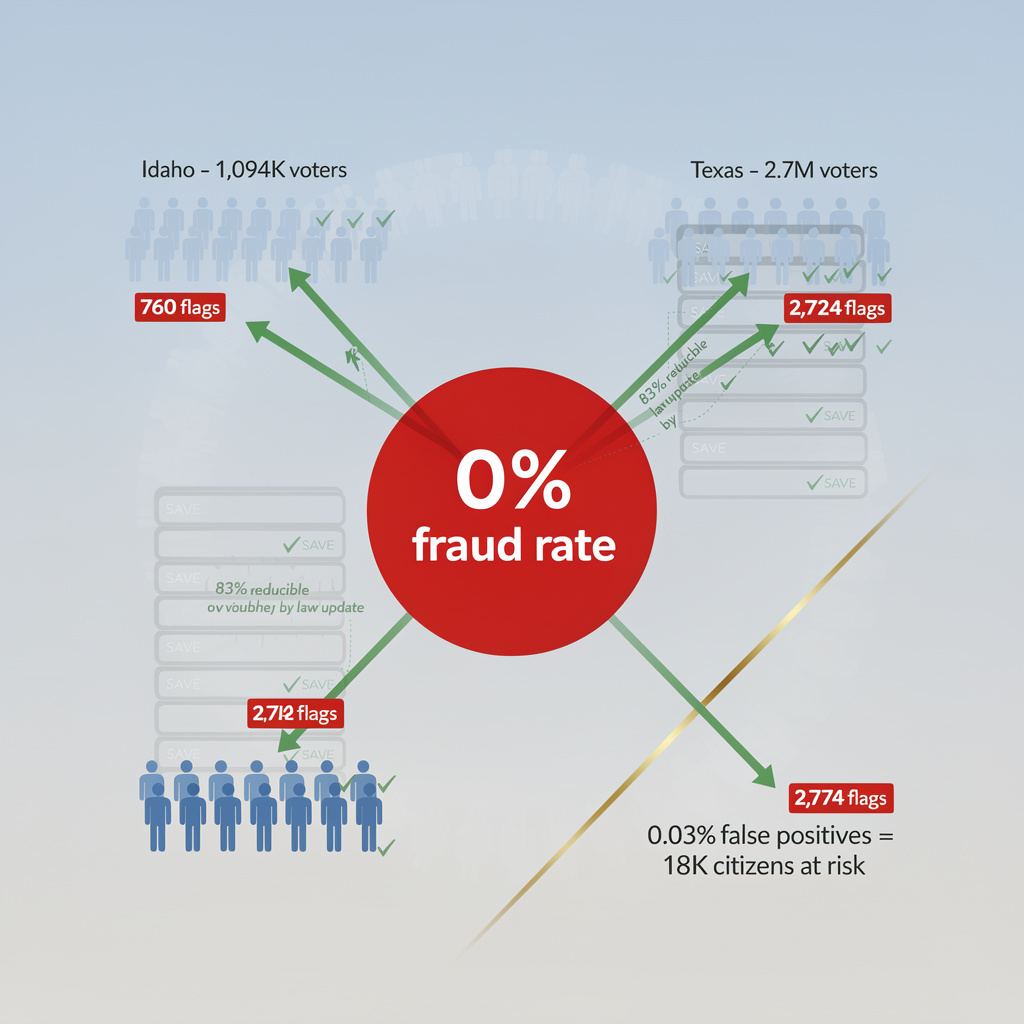
- House passes SAVE Act requiring documentary proof of citizenship for federal voting, sparking legal and civil rights backlash
- CJNG cartel leader 'El Mencho' killed in Jalisco raid, triggering 60+ deaths and U.S.-backed counter-narcotics operation
- Trump administration targets immigration status applicants with mandatory social media disclosure, sparking privacy and discrimination fears
Comments ()