20-Yr Munge Flaw, 200K+ OpenClaw Keys, Apple’s 47 Entropy Sources: Cybersecurity Chaos Rocks HPC, AI, Enterprise
TL;DR
- Buffer Overflow Vulnerability in Munge Daemon Affects 65% of HPC Systems
- AI Agent OpenClaw Exposed in Infostealer Attack, Configuration Files and Private Keys Stolen
- Apple Silicon Enters New Era with 47 Physical Entropy Sources Sampled for Cryptographic Randomness
Buffer Overflow Vulnerability in Munge Daemon Affects 65% of HPC Systems
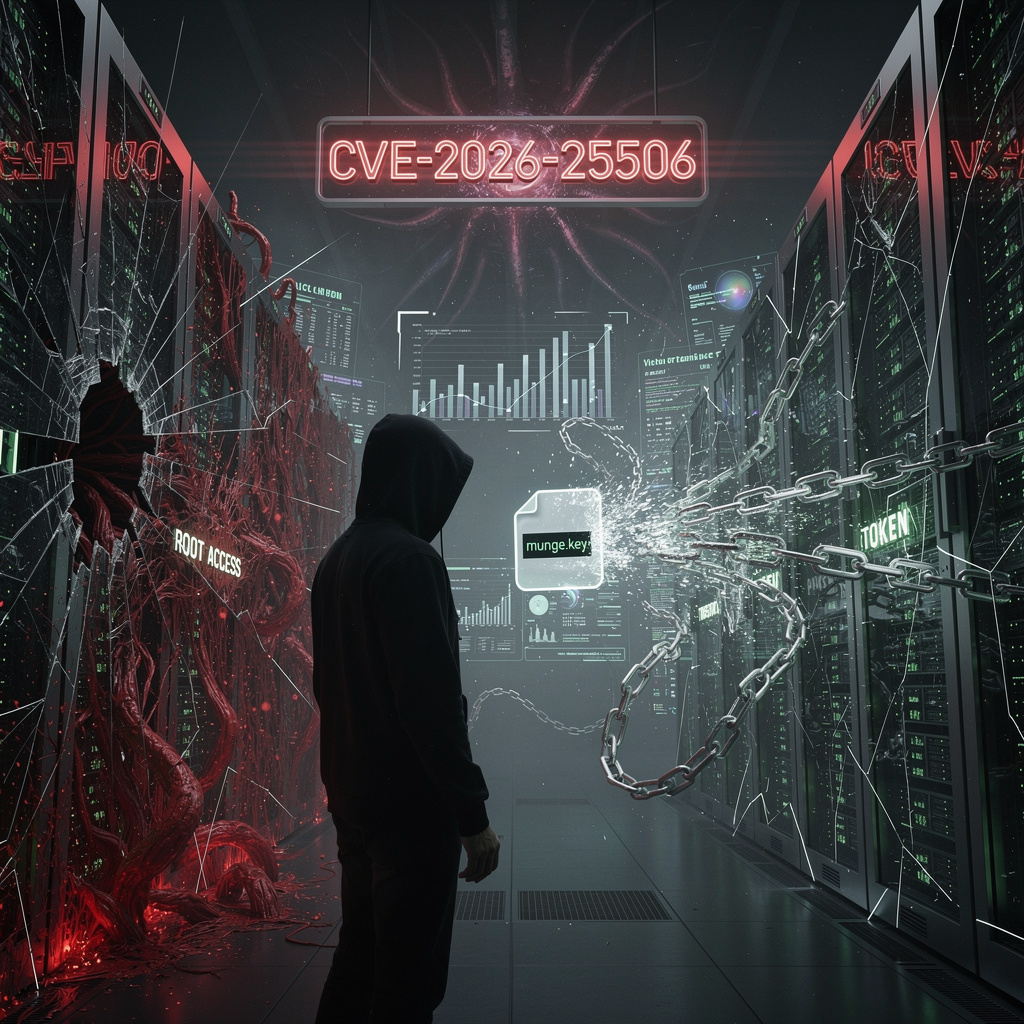
A 20-year-old buffer overflow vulnerability in the Munge authentication daemon has been disclosed, enabling local privilege escalation and cluster-wide token forgery. With 65% of HPC systems relying on Slurm and Munge, the flaw impacts critical scientific computing infrastructure. Patches are pending, and auditors recommend immediate isolation of affected nodes and credential rotation.
Hey HPC admins, congratulations! Your worst nightmare just got a CVE number: CVE-2026-25506, a 20-year-old buffer overflow in the Munge authentication daemon that lets hackers waltz into 65% of Slurm-powered clusters like they own the place. 🎉 Welcome to 2026, where “stable legacy code” translates to “we forgot to fix the thing from 2006” and “security” is just a buzzword IT uses to avoid blame.
Let’s Spill the (Horrible) Tea: How This Bug Works
Picture this: A stack-based buffer overflow from an unchecked memcpy—think of it as leaving a backdoor labeled “HACK ME” in your authentication system. Local access? Please—if some intern can SSH into a node, they can now:
- Become root (because why not let randos own your server?),
- Forge Slurm tokens (so they can impersonate any user, from your lead scientist to the janitor),
- Waltz across the entire cluster like it’s a playground.
Cluster-wide impersonation? More like “hacker’s free pass to steal your compute time, corrupt simulations, and call it a ‘field test.’” 😈🔑
65% of Global HPC? Yeah, This Is Global Chaos
Independent surveys say 65% of HPC clusters run Slurm + Munge—so every climate modeler in the US, every genomics lab in Europe, and every DOE bro in Asia is now holding their breath. Why? Because a single exploit could:
- Wreck 15 million core-hours of compute time (that’s a PhD student’s entire career down the drain),
- Corrupt critical research (sorry, climate scientists—your 10-month simulation just got “enhanced” by a script kiddie),
- Let hackers steal sensitive data (DOE? NIH? Please tell me you backed up those nuclear fusion models). 🌡️💥
Patch Dropped? Great! Now You Have a Week to Panic
The fix (Munge 0.5.18) dropped Feb 10—but here’s the fun part: HPC teams have a whole 7 days to “evaluate mitigation steps.” Translation: IT guys will argue about whether the OpenPGP key is “legit,” admins will forget to rotate keys, and by Feb 18, half the clusters are still wide open.
Stats check: A 500-node cluster? 325 are vulnerable. A hacker could own that many nodes faster than you can say “sudo su.” 👨💻🚨
Short-Term: Automation Saves Us (Sort Of)
70% of HPC sites will patch in a month? Thank god for Ansible and Puppet—those are the only things keeping us from total disaster. Credential rotation? Immediate isolation? Sure—why not do the obvious after the hacker already ordered pizza with your AWS credit card? Classic HPC move: Fix the leak after the boat sinks. 🤡🔧
Long-Term: “We’ll Invent Fire Extinguishers Later”
Long-term plans? Supply chain hardening (reproducible builds, SBOMs)? Token-less auth (X.509 TLS)? Please—like building a firewall after your house burned down. The real takeaway? Legacy code doesn’t “age like a fine wine”—it ages like a dumpster behind a brewery. And we’re all just here to clean up the mess. 🍺💩
Your “Genius” Survival Guide (Sarcasm Intense)
Want to survive? Here’s what the experts say:
- Isolate nodes (duh—why let the hacker spread?).
- Rotate keys (because “oops, I used the same password since 2010” is a great exit strategy).
- Deploy the patch (and verify the signature—because corporate BS like “trusted repositories” matters now).
- Audit local accounts (blame the intern! Always blame the intern).
Pro tip: If your cluster still uses “munge.key” from 2015? You’re already dead. Just admit it. 🙄
The Real Lesson: Hacky Open Source > Corporate Bullshit
Look, Munge is a mess—but it’s our mess. Open-source, low-cost, no CEO charging $10k for a 5-minute fix. So grab your beer, rotate those keys, and pretend this 20-year-old bug never happened. Because in HPC, hope is just a fancy word for “we’re all gonna die a little today.”
But hey—at least we’ve got sarcasm. And that’s basically the same as a firewall. 😜🚀
😂 200K+ OpenClaw AI Tokens/Keys Stolen: Global Enterprises Face Hacker Impersonation Risks – Hudson Rock
200K+ OpenClaw gateway tokens & private keys stolen—yay, AI ‘security’! 😂 These keys let hackers impersonate your AI, sign malicious payloads, and violate GDPR like it’s a suggestion. OpenClaw’s ‘easy setup’ = ‘easy target’ for thieves. IT teams: Revoke tokens, cry, then explain to bosses why ‘magic productivity’ cost fines. How many of you are drowning in ‘why didn’t the AI stop this?’ meetings? 👇🏼
Hey there, you poor soul who downloaded OpenClaw because your boss screamed, “Automate the tickets or I’ll eat your lunch!” Spoiler: Your “smart sidekick” isn’t just sorting emails—it’s leaking your soul like a sieve. On Feb 13, a Vidar-variant infostealer waltzed into 28,663 OpenClaw setups, grabbed .openclaw configs, gateway tokens (fancy passwords), and device private keys (the digital equivalent of your house keys). Now your AI? It’s a hacker’s VIP pass to your cloud, your chats, and your boss’s “inspirational” Slack rants. Congrats—you just won “Least Secure Digital Sidekick” of 2026!
How’d This Happen? Clicked a Link. Duh.
The hack’s simpler than your morning coffee order: User clicks a “free productivity hack” link (because let’s be real—you click everything that says “free”), Vidar stealer drops, scans home directories for .openclaw files (stored like hiding cash under a pillow), grabs your 256-bit token and 2048-bit RSA keys, and exfiltrates via HTTPS to a C2 server named “grab-bag.example.” Subtlety? Dead. Your security? Also dead.
Scale: It’s Worse Than Your Cousin’s Tinder Fails
- 28k+ IPs/76 countries: More locations than your boss’s “urgent” email chain.
- 45% RCE-vulnerable: “Remote code execution” = hackers take over your computer from their couch.
- 200k+ GitHub stars: So many people trusted this? It’s like storing your SSN in a TikTok comment—and liking the comment.
- 3 CVEs: Three broken things, and your IT team ignored all patches. Classic.
What Can Hackers Do? Literally Everything You’re Afraid Of
- Impersonate your AI: Logs into Slack/Google/Azure as you—silent, sneaky, like that coworker who eats your lunch.
- Steal your data: Reads encrypted logs/chats—violating GDPR? They’re probably using your PII to buy crypto with your name.
- Break into your network: Stolen keys SSH into internal servers—easier than stealing a candy bar from a kid.
- Get you fined: $250k+? Thanks, AI that couldn’t tell a hacker from a human.
How to Not Get Robbed Again (Spoiler: It’s Not Hard)
- Rotate tokens NOW: Revoke like dumping a toxic partner—no “maybe later.”
- Lock
.openclawfiles: `chmod
🤡 47 Entropy Sources: Apple Silicon ‘Fixes’ Security—Open Source Nerds Already Knew This (US)
Apple Silicon just added 47 PHYSICAL entropy sources—more than the number of times Steve Jobs wore a different turtleneck in a keynote. Wow, they finally grew a pair? That’s 47 ways to make randomness less fake than a crypto bro’s ‘decentralized’ NFT scam. 🤡 Ditched the old OS RNG that let hackers throttle your keys? Replaced it with hardware chaos? Yeah, took ’em 15 years to outrun the Dual_EC_DRBG disaster—congrats, Apple! Tradeoff? Now we have to listen to Tim Cook tweet about ‘security leadership’ instead of just using open source tools that did this in 2015. Who cares? The hackers who now have to actually work… and the poor devs who thought ‘Apple secure’ meant ‘no bugs.’ How many of y’all believed Apple’s ‘we’ve always been secure’ lie until today? Drop a 🍎 if you’re done with corporate security theater.
Let’s cut the crap: Apple just announced it has 47 “physical entropy sources” in its Silicon chips. For the uninitiated, that’s tech-speak for “we finally stopped stealing randomness from your hard drive and started using the chip’s own chaos—like, actual chaos.” Congrats, Cupertino! You’ve entered the “our security isn’t totally garbage” era. About damn time.
First, Let’s Mock the Jargon
The “heroes” here? The OpenEntropy project—you know, the randos on GitHub who actually do the work Apple should’ve finished in 2015. They analyzed 47 sources: clock jitter (when the chip’s clock speed wobbles like a drunk at a mosh pit), DRAM timing conflicts (RAM acting up like your ex on Tinder), cache contention (the chip forgetting where it stored your cat photos), and 40 more vague “micro-architectural effects” that sound like something a quantum physicist made up after a bender. Apple’s response? “Wow, this is a new era for security!” Please—we’ve been using $5 Raspberry Pi entropy hacks for years. You’re just catching up to the hack community’s TikTok tutorials.
The “Stats” That’ll Make You Yawn (But Pretend to Care)
OpenEntropy says each source gives ~0.78 bits of entropy per byte—“high enough” for NIST, which is the security equivalent of a grandma saying “that cake looks safe.” The best? DRAM timing, with 0.95 bits/byte. Wow, Apple! You finally realized RAM isn’t just for storing TikTok drafts—it’s a chaos generator! And aggregate entropy? 37 bits per 512-byte block. That’s enough to secure RSA-2048 keys… if RSA-2048 wasn’t already obsolete because quantum computers are gonna laugh at it in 2027. But hey, baby steps!
Impact: From “Meh” to “Less Meh”
Let’s break down the “revolutionary” changes (spoiler: they’re just fixes for stuff Apple broke):
- Randomness Assurance: Before, Apple used “mixed software/hardware sources” (read: “we guessed how random our numbers were”). Now? They counted 47 things and NIST said “ok, I guess.” Progress! Like going from a flip phone to a Nokia 3310—still basic, but at least it has a snake game.
- Key Generation: No more low-entropy seeds on old iPhones! Now your 2020 model can generate keys that aren’t easier to crack than a Starbucks password. Thank you, Apple—for not making us feel like idiots for trusting your “secure” devices.
- Attack Surface: Gone are the days of relying on /dev/random (a OS trick that’s slower than a Comcast password reset). Now it’s all “internal, hardware-rooted entropy.” So if hackers want your keys, they’ll have to hack the silicon itself. Good luck with that—Apple’s chips are harder to crack than Fortnite’s battle pass.
- Regulatory Hooray: Now Apple can check the “GDPR compliant” box! Because nothing says “we care about your data” like a bunch of nerds in lab coats counting entropy sources. Corporate BS at its finest.
Apple’s “Recommendations”? Please.
The report begs Apple to:
- Publish entropy numbers: Please—your security docs are longer than a Tesla owner’s thread explaining why their car didn’t hit a pedestrian.
- Expose a low-latency API: Sure, after you fix AirDrop asking for permission every time I send a cat video to my wife.
- Continuous monitoring: Yeah, when you stop making iPads that overheat during TikTok.
- Third-party audits: OpenSSL? They’re too busy laughing at you for taking 10 years to do this.
The Future? Same Old, Same Old
Apple says this “founds future crypto primitives” (post-quantum keys, zero-knowledge proofs, etc.). Sure—when you finally make a laptop battery that lasts more than a TikTok scroll. The hack community? We’ll be over here using open-source tools to build secure stuff today. You’ll catch up… eventually.
Congrats, Apple! You’ve entered the “our chips don’t totally suck at random numbers” era. Now go fix the App Store’s $60 shovelware problem or the fact that Face ID still fails in sunlight. Until then? Enjoy your 47 entropy sources—they’re the closest thing you’ve got to “innovation” since the iPhone. 🖕🏽✨
In Other News
- Apple Enables Stolen Device Protection by Default in iOS 26.4 Beta
- KU Leuven Researchers Disclose WhisperPair Vulnerability in Bluetooth Low Energy Devices
- Ransomware Attack on Washington Hotel Exposes Business Data, No Customer Breach Confirmed
- Nintendo DMCA Notices Target GitHub Switch Emulators

Comments ()