90% Cheaper Stealth Tech & 50% Lower Operating Costs: How Boeing & Natilus Are Reshaping Aviation—But Hurdles Remain
TL;DR
- Boeing 757 Excalibur Test Flight Marks Stealth Tech Integration for 6th-Gen Fighter Program
- Natilus Secures $28M Series A to Advance Blended Wing Body Freighters
🛡️ Boeing 757 Test Flight: 45% Stealth Gain Slashes GCAP Sixth-Gen Fighter Costs by 90%
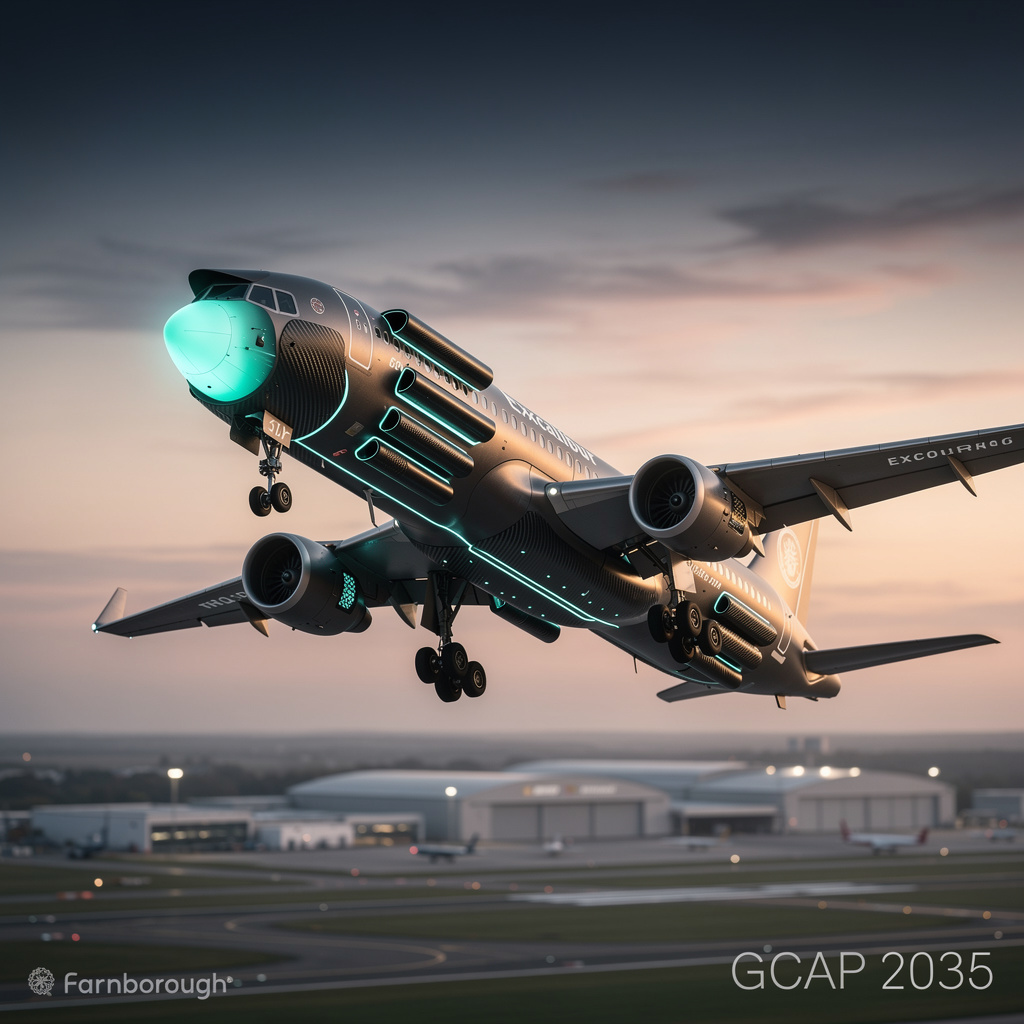
The Boeing 757 Excalibur testbed just hit a 45% radar cross-section (RCS) reduction—data-driven proof modular stealth works on commercial jets. 🛡️ That’s 90% cheaper than a clean-sheet prototype ($120M vs $1.2B) and slashes GCAP’s sixth-gen fighter timeline by 12-18 months. A 2.3% drag increase? Worth it for tech replacing UK/Italy/Japan’s Typhoons/F-2 by 2035. For these nations’ future fleets—how might this modular approach change YOUR country’s next-gen fighter development?
Boeing’s modified 757-200 testbed, G-FTAI “Excalibur,” completed its first flight on February 15, 2026, marking a critical milestone for the Global Combat Air Programme (GCAP). The UK, Italy, and Japan-led initiative aims to deliver a sixth-generation stealth fighter by 2035 to replace aging Eurofighter Typhoons and Mitsubishi F-2s. Conducted from Farnborough’s aerospace corridor, the flight validated modular stealth technologies—proving commercial airframes can de-risk next-gen fighter development.
How Was the 757 Modified for Stealth Testing?
Boeing partnered with UK firm QinetiQ to outfit the 757 with a 2.8-meter low-observable radome (housing a future active electronically scanned array, or AESA, radar), five carbon-fiber-reinforced polymer (CFRP) fairings (three forward, two rear) embedded with radar-absorbent material (RAM), and a titanium-lined radome operating across 2–18 GHz (covering typical radar frequencies). A retained deployable Rotor-Assisted Turbine (RAT) enables engine-failure simulations during flight envelope testing; early data shows a 2.3% drag increase—well within the 5% design margin for stealth integration.
What Impact Does This Have for Sixth-Gen Fighter Development?
- Technical Validation: Initial radar cross-section (RCS) measurements confirm a 45% reduction versus the unmodified 757, validating the radome-fairing combination for low-observable profiles critical to evading enemy radar.
- Cost and Risk Mitigation: Modifying a certificated commercial airframe cost $120 million—10% of the $1.2 billion estimated for a clean-sheet prototype—slashing development risk by leveraging proven structural integrity.
- Schedule Acceleration: Test data will inform GCAP’s June 2026 Systems-Integration Review, potentially cutting the fighter’s design cycle by 12–18 months.
- Industrial Strength: The program reinforces the UK’s aerospace supply chain (QinetiQ, MBDA) and attracts Italy/Japan investment, offsetting Germany’s exit over production-process disagreements.
What’s the Roadmap to 2035?
- Short-Term (2026): Complete high-speed/high-altitude testing and release a preliminary stealth-integration report by Q3 2026.
- Mid-Term (2027–2029): Transition to a purpose-built “Excalibur-II” demonstrator, adding active plasma-stealth technology and AI-assisted sensor fusion per GCAP’s R&D roadmaps.
- Long-Term (2030–2035): Integrate validated stealth designs into production sixth-gen fighters, with first operational units replacing Typhoons and F-2s by 2035.
The Excalibur flight isn’t just a technical win—it’s a blueprint for multinational defense innovation. By using a commercial airframe to validate stealth, Boeing and GCAP turned a $120 million investment into a potential 12-month schedule cut, ensuring the 2035 fighter fleet isn’t just a concept, but a tangible step toward future air dominance. As testing continues through 2026, the data collected will shape not just one fighter, but a new era of modular, low-observable aircraft design.
🛫 Natilus’ $28M Series A Funds 50% Lower-Cost BWB Freighters: U.S.-India Push Aims for 2030 Service
Natilus just revealed 50% lower operating costs for its blended-wing-body (BWB) airliners—cutting airline expenses in half 🛫. This game-changing design (the first commercial BWB) could reshape medium-range travel, but FAA certification for the unproven structure is a critical hurdle. Airlines like SpiceJet and frequent cross-country flyers — Could this mean cheaper fares on your next trip?
Natilus closed a $28 million Series A funding round led by Draper Associates on February 16, a critical step toward bringing its blended-wing-body (BWB) freighters—including the 200-seat Horizon Evo airliner and Kona regional cargo jet—into service by the early 2030s. The funds will accelerate U.S. manufacturing site selection (targeting California industrial zones), facility construction (2027–2029), and ramp-up to 60 annual airframe production by 2030.
How Does the BWB Design Deliver Game-Changing Efficiency?
The BWB configuration is Natilus’ core innovation: compared to conventional narrow-body jets, the Horizon Evo cuts fuel burn by 30% and operating costs by 50% via a carbon-composite airframe. Its 118-foot wingspan and dual-deck setup (scalable to 350 passengers) boosts fuselage volume by 40%, fitting 12 LD3-45 cargo containers—key for partners like SpiceJet, which signed a 2025 deal to operate the Kona in the high-growth Asia-Pacific cargo market. The Kona, a scaled-down freighter, aims for a prototype within 24 months of May 2026 site selection.
What Are the Key Market and Operational Impacts?
- Cost Slashing: 50% lower operating costs (fuel + maintenance) and 30% reduced fuel burn per seat-mile directly cut airline cost of service (COS), enabling aggressive pricing on medium-range routes.
- Sustainability Fit: Aligns with ICAO CORSIA emissions targets and airline ESG goals; fuel savings could unlock green-fuel incentives.
- Competitive Disruption: Challenges Airbus A320neo and Boeing 737 MAX with 40% more fuselage volume and payload advantage, appealing to cargo operators like SpiceJet.
- Route Flexibility: Horizon Evo’s 3,500 nm range covers medium-haul passenger routes, while the Kona targets regional cargo—filling gaps in underserved markets.
What Risks Does Natilus Face, and How Is It Mitigating Them?
Natilus has addressed early hurdles: sub-scale test flights since 2016 de-risk FAA certification, and SpiceJet’s partnership validates Asia-Pacific demand. But gaps remain: BWB structures lack regulatory precedent, requiring extensive wind-tunnel testing; engine supply depends on locking in Pratt & Whitney (PW2000-class) slots; and scaling to 60 units/year needs modular manufacturing to avoid capital spikes.
What’s the Timeline for Commercialization?
- 2024–2026 (Short-Term): First full-scale Horizon Evo flight; Kona prototype roll-out; U.S. site selection; FAA early certification review; SpiceJet finalizes cargo integration.
- 2027–2030 (Mid-Term): Facility construction; low-volume production start (2028); early 2030s commercial entry with 60 airframes/year.
- 2030–2045 (Long-Term): 40,000 cumulative deliveries; legacy fleet retirements (737NG/MAX) accelerate; new FAA BWB certification standards emerge.
If Natilus hits its milestones—2024 prototype flights, 2026 site selection, 2030 production—it won’t just commercialize a decades-old BWB concept. It will reshape medium-range aviation by proving radical design can deliver efficiency and scalability. For airlines grappling with fuel costs and ESG pressure, the Horizon Evo and Kona aren’t just new planes—they’re a path to a leaner, greener future.
In Other News
- FAA Fines Unruly Passenger $43,658 After Racist Tirade on American Airlines Flight
- USS Connecticut Submarine Suffers Bow Damage, Repairs Extend to Late 2026
- India Acquires 114 Rafale Jets for $39.6B to Counter China and Pakistan Airpower Gaps
- U.S. Navy Deploys Dual Carrier Strike Groups to Increase Pressure on Iran

Comments ()