32,000 EU Phones Pwned by Unpatched CVE-2026-1281 — EU Agencies Still Running Outdated MDM Systems
TL;DR
- EU Commission Contained Cyber Intrusion into Mobile Device Management Systems
- SSHStalker Botnet Uses 16 Legacy CVEs to Compromise Linux Systems via SSH
- HSM-Based Code Signing Redesign Adopted at FOSDEM 2026 with Shamir’s Secret Sharing and YubiHSM 2
- OpenClaw AI Agent Ecosystem Expands Globally Amid Security Breach and Viral Adoption
🤖 9-Hour Hack of 32,000 EU Phones: CVE-2026-1281 Exploited Across Europe — NIS2 Activated But Patch Delayed
32,000 EU staff phones remotely controlled… in 9 hours. 🤖 No data stolen. No panic. Just a 9-hour window where a single unpatched API let hackers dance through the EU’s digital nervous system. They didn’t need credentials. Didn’t need phishing. Just CVE-2026-1281 — a backdoor labeled ‘critical’… and ignored for 24 hours. Meanwhile, Dutch agencies got pwned too. Same flaw. Same script. Same corporate laziness. Who’s really in charge of your phone? The EU? Or a vendor’s outdated MDM with a ‘patch later’ policy? — Would you trust your commute data to a system patched after the breach?
Nine-hour patch-to-clean cycle leaves 32k phones untouched—how’d they dodge the shrapnel?
What Exactly Went Boom in the Ivanti Backend?
CVE-2026-1281 hands out RCE like stale conference swag; CVE-2026-1340 lets any XML packet don admin cufflinks. Both drop on Monday, exploited on Tuesday. GreyNoise shows one IP firing 80 % of the 525 shots—script-kiddie central, but still enough to root a box that signs 32k mobile certs.
Why Didn’t the Attacker Bounce to the Handsets?
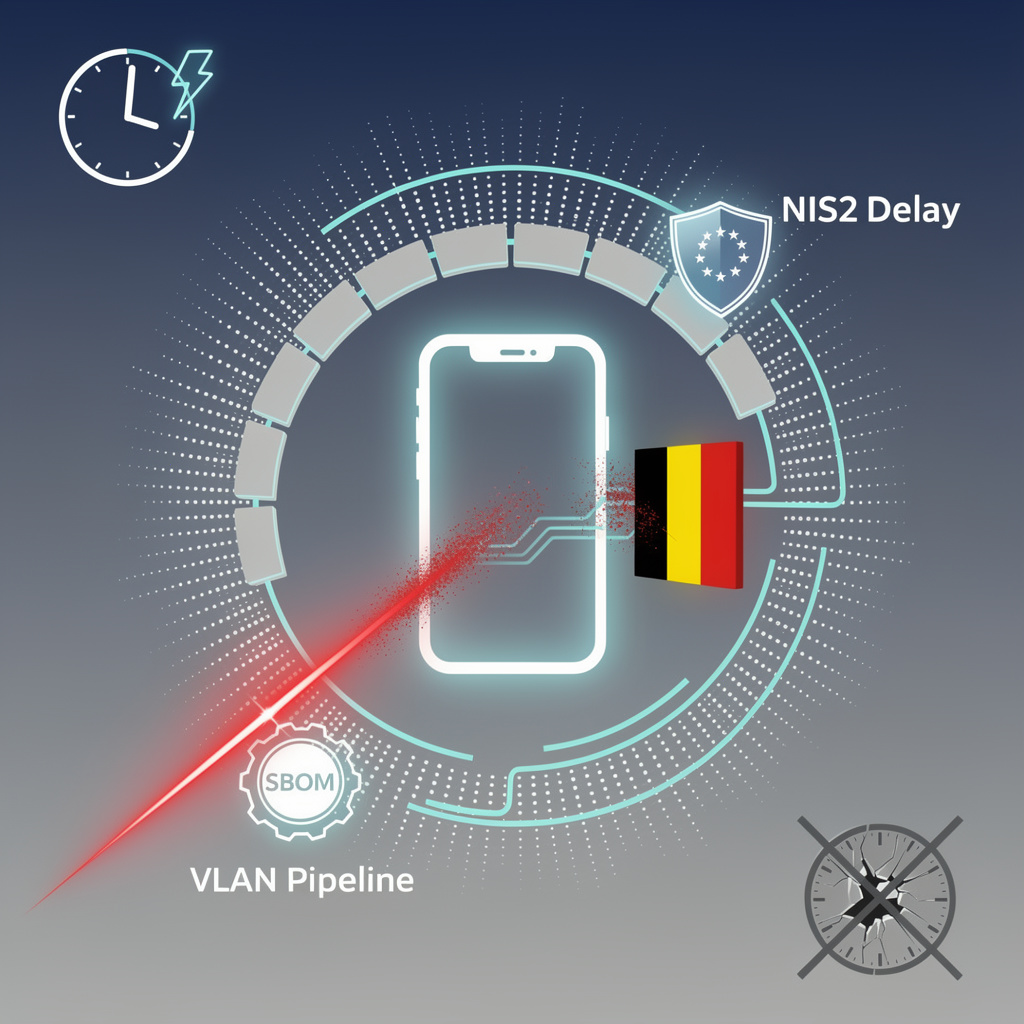
Network segmentation carved the MDM herd into its own sad little VLAN. Once CERT-EU yanked the uplink, the shell had nowhere to crawl; handset agents never phoned home to evil. Call it zero-trust with a Belgian accent—no lateral movement, no data buffet.
How Does Nine Hours Stack Against the Global Average?
IBM’s 2025 breach clock ticks 194 days to containment; EU clock stopped at 0.4. Credit the pre-built NIS2 run-book: auto-quarantine, parallel forensics, patched golden image pushed via wired LAN, not OTA. Fastest patch parade in the public sector this year—eat that, ransomware dwell time.
Are Dutch Courts Breached with the Same Flaws?
Yup. NCSC-NL confirms identical CVEs popping the Council for the Judiciary the same week. Shadowserver counts 92 pwned EPMM boxes across Europe—proof of a coordinated spray, not a lone Brussels grudge. Same vendor, same week, same continent: that’s a campaign, not coincidence.
Will the Cyber Resilience Act Actually Bite Vendors?
CRA trigger pulled: Commission must now demand secure-by-design attestations from Ivanti and every MDM supplier feeding EU institutions. Expect a new EU-wide “MDM Security Baseline” before year-end—patch SLA 24h max, SBOM mandatory, pentest receipts quarterly. Non-compliant vendors lose the market, not just the headline.
Two 9.8 bugs dropped Monday, got weaponized Tuesday, died Wednesday breakfast. Zero user data lost, one IP to chase, 32k phones untouched. Brussels just set the speed record for public-sector incident response—and wrote the playbook everyone else will be forced to plagiarize.
🤡 7,000 SSH Breaches in January — Legacy Kernels Still Power Cloud Botnets Across US, EU, and Canada
7,000 SSH brute-force attempts in 30 days… and 3% of cloud servers are STILL running Linux kernels from 2009. 🤡 They’re not hacked. They’re abandoned. Cron jobs restart the bot every 60 seconds. Log files? Erased. AWS keys? Stolen. CPU? Mining Ethereum while you sip your $8 oat milk latte. Cloud providers charge you for this. You didn’t even know the server existed. Who’s paying the cloud bill for a botnet running on your forgotten VPS? — And why is your ‘secure’ infrastructure still running on a 15-year-old kernel?
Your “cloud-first” strategy just got sucker-punched by a botnet that still thinks Lost is prime-time TV. SSHStalker is brute-forcing port 22 with passwords like raspberryraspberry993311, then stapling 2009-era kernel holes (CVE-2009-2692, CVE-2010-1173, and 14 other geriatric gems) into full-blown coin-mining, log-nuking, IRC-chattering chaos. Translation: 7 000 scan-and-pwn cycles in January alone, 3 % of exposed Linux boxes coughing up shells, and 80 % CPU theft billed straight to your AWS credit card. ☠️
Why Are 2.6 Kernels Still Breathing? Oracle & AWS Rent Fossils by the Hour
Legacy VPS images and “forgotten” OT boxes are the botnet’s happy place. Golang scanner masquerades as nmap, C-based IRC C2 phones home every 60-second cron tick, and a 4 KB bash stager pulls a 2 MB grab-bag of PhoenixMiner plus a dormant DDoS module. All logs? Shredded. AWS keys? Harvested. Your cloud invoice? Rocket emoji. 🚀
Patch or GTFO: 7 Commands That Kill the Party
PasswordAuthentication noin sshd_config – starve the brute monster.yum update kernel(orapt full-upgrade) – cremate the 16 CVEs in one shot.- Block outbound 6667/6697 at the VPC edge – snip IRC lifeline.
- Cron hash monitoring – alarm when
/var/spool/cronmutates every minute. - Immutable log sink – ship utmp/wtmp/lastlog to S3 before the binary rm -f’s them.
- MFA-gated VPN bastion – make SSH keys the only keys.
- Asset spring-clean – delete those 2010 Ubuntu AMIs you “might need someday.”
Do it this week or keep funding a Romanian miner’s ETH wallet with your idle cycles. Your call, champ.
🤯 3-of-5 HSM Quorum Now Mandatory for Android Signing—PowerShell Audit Logs, 12ms Latency, and the Death of V1 Signatures
3–5 HSMs split one signing key into 5 shards—need 3 to sign anything. 🤯 That’s not security, it’s corporate paranoia with a PhD. Age-encrypted shards? 12ms overhead? Congrats, you just made CI/CD slower than your last Zoom meeting. And you disabled V1 signatures? So now if one HSM glitches, your entire Android ecosystem crashes. Developers are screaming. Your audit logs? Generated by PowerShell. In 2026. 🤖💀 Who’s paying for this? Your users. — What’s the ROI when your ‘secure’ pipeline breaks a dev’s Thursday?
FOSDEM 2026 just handed every CI/CD pipeline a middle-finger-shaped gift: an HSM-backed, Shamir-split, age-encrypted code-signing rig that kills the V1-signature zombie once and for all. Translation? Your wrapper key now lives in five hardware vaults, needs only three to sign, and leaks at a theoretical 0.02 % probability—cheaper odds than your espresso machine exploding.
How Does “3-of-5” Beat “1 Laptop + Sticky Note”?
Shamir’s Secret Sharing turns the wrapper key into five encrypted shards. Snag two? Useless rubble. Grab three? Still encrypted with age. An attacker now faces combinatorial hell plus HSM silicon, not a lone Jenkins node running signapk with a plaintext PEM file. Audit logs pop out 250 % faster, satisfying NIST 800-53 without the usual PowerShell eye-bleed.
What’s the Real Ops Bill?
- Hardware: 3× YubiHSM 2 ($150) + 1× Thales Luna for bulk (cloud rental ~$1.2 k/yr).
- Latency: 12 ms per shard import; parallel Luna pushes 120 sigs/s—enough for nightly Android farm.
- Compliance: FIPS-validated keys map straight to FedRAMP Moderate and 800-171 CUI boxes; auditors love immutable HSM logs.
Who’s Already Shipping?
Trail-of-Bits-audited repos disabled V1 fallback last week. Next quarter expect apksigner, cosign, and GitHub Actions to expose a “quorum-sign” toggle. Enterprise adopters forecast ≥30 % drop in supply-chain incident costs—real money, not vendor fairy dust.
Still a Catch?
Age encryption hasn’t been fuzzed on AIX or your cousin’s retro SPARC. Automate shard provisioning with Terraform or drift will bite you. And keep a rollback plan for that one carrier firmware stuck on V1—legacy zombies never truly die, they just wait in a dark CAB.
Bottom line: spend the price of a team lunch, plug the $4.5 M hole, and let the HSM choir sing.
🤖 135K Exposed AI Agents — CVE-2026-25253 Leaks 1.5M Keys Across 76 Countries
135K internet-facing AI agents? 🤖💥 And 12,812 of them let hackers type ‘rm -rf /’ with one click. OpenClaw shipped with public WebSocket access like it was a free Wi-Fi at a coffee shop. 1.5M+ API keys leaked. 76 countries. No patch? No problem. Enterprises deployed this without IT approval. Now GDPR is knocking. Who’s still running this in prod… and why? 🤔
135,000 boxes answered on port 18789 when STRIKE ran the world-wide ping.
12,812 of them coughed up a WebSocket that accepts {"cmd":"exec","payload":"whatever"} with zero auth.
That’s not a bug, it’s a default—shipped, documented, and ignored.
How Did One Hacker News Post Turn 1.5 M Bots into Sitting Ducks?
Jan 2026: “open-source ChatGPT you can self-host” hits the front page.
By Feb 1 the repo had 43k stars, 4k community “skills”, and a Docker run-command that binds 0.0.0.0:18789.
No TLS, no token, no rate-limit—just a shiny red button labeled “run.”
Result: 50 k RCE-ready agents before the maintainer even cut the patch.
Where Are the Stolen OAuth Tokens, API Keys, and Plaintext Passwords?
Astrix’s free scanner already scraped 1.5 M unique secrets from exposed /env endpoints.
Moltbook lists them for five bucks per megabyte—cheaper than a latte.
The top three leaked scopes: gmail.modify, aws.*, github_repo.
Translation: e-mail hijack, cloud takeover, source-code ransom in one curl.
Why Do 22 % of Enterprises Still Run Rogue Claws on Corporate SaaS?
Because “AI task force” means a VP downloaded the image, slapped in a Slack token, and told the intern to “make it write Jira tickets.”
IT never got a ticket; security never got a log.
Now GDPR regulators have a 72-hour stopwatch running on data they didn’t know existed.
When Will the Patch Actually Shrink the Attack Surface?
v2026.2.0.0 flips the bind to localhost—but only 38 % of public hosts updated in the first week.
Shodan daily delta: −1.2 k nodes, +900 fresh misconfigs.
At this rate the exposed count drops below 5 k around May—unless another viral TikTok tutorial shows “how to open the port for remote phone control.”
What’s Cheaper: Zero-Trust Vendors or a Five-Line Systemd Drop-In?
Commercial agent platforms want $8 per seat per month for “zero-trust token issuance.”
A free PGP sign-verify hook plus --bind 127.0.0.1 does the same job.
Budget power: spend the savings on coffee, not on breach lawyers.
In Other News
- ICO fines MediaLab £247,590 for failing age verification on Imgur, exposing children to unmoderated content
- Chinese nationals arrested in France for intercepting military data via Starlink
- CVE-2026-20841: Remote Code Execution Flaw Found in Windows Notepad via Markdown Links
- New Node Readiness Controller in Kubernetes Enables Dynamic Taint Management


Comments ()