China 8B Leak, FPGA Kyber Shield, xAI vs OpenAI
TL;DR
- 8.7 Billion Records of Chinese Individuals and Businesses Leaked via Exposed Elasticsearch Cluster
- NTT Architecture Demonstrates Fault Mitigation for Post-Quantum Cryptography on FPGA
- OpenAI Accuses xAI of Systematic Evidence Destruction in Antitrust Case
- CrowdStrike CRWD Faces Investor Scrutiny Amid AI-Driven Cybersecurity Market Shifts
8.7 Billion Records of Chinese Individuals and Businesses Leaked via Exposed Elasticsearch Cluster
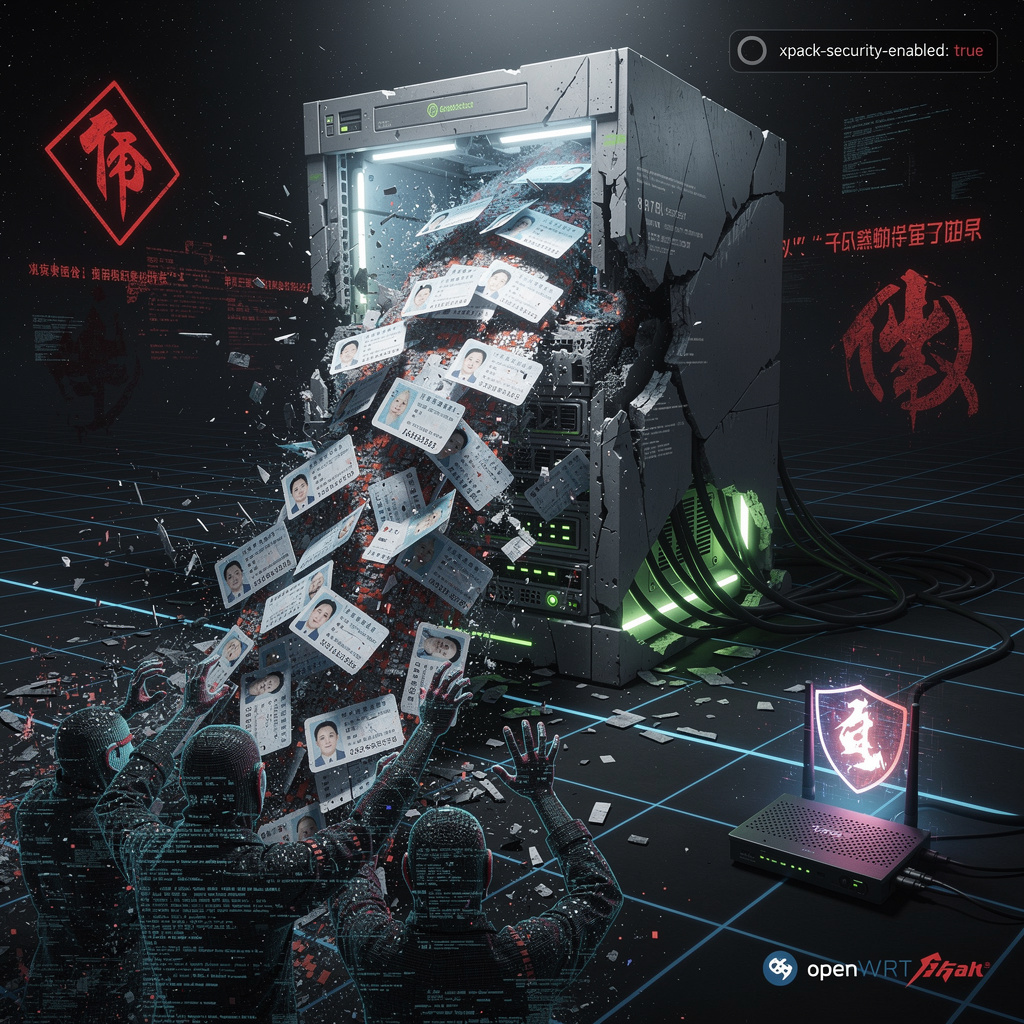
Cybersecurity researchers discovered an exposed Elasticsearch cluster containing 8.7 billion records of Chinese citizens and businesses, likely operated by data brokers. The dataset included names, addresses, phone numbers, birth dates, social media identifiers, and plaintext passwords. Corporate registration details and licensing metadata were also exposed. The cluster, hosted on a bulletproof provider, represents the largest known data leak in China's history and underscores systemic failures in data governance.
8.7 billion Chinese records were dangling on port 9200 like loose change in a strip-club couch—no TLS, no auth, just raw JSON begging “curl me, daddy.” 🙃
Why Did a One-Line Config Cost a Billion Identities?
Elasticsearch ships with security OFF. One toggle—xpack.security.enabled: true—would’ve bolted the gate. Instead the operator copy-pasted a Docker-Compose from 2019, slapped it on a “bullet-proof” host that laughs at takedown letters, and walked away. Net result: 163 indices, >1 TB of citizen Kool-Aid, free refills for every fraudster on the planet.
How Much Is a Chinese Life Worth on the Dark-Web Clearance Rack?
Going rate: five to twenty cents a pop. Do the math—8.7 B records × $0.05 = enough coin to buy everyone in Beijing a Starbucks latte, while the broker probably paid $20/month for the VPS. That’s a 435 000× ROI, beating crypto, meme stocks, and your sad 401(k) in one lazy swipe.
What Happens Now That the PII Genie Is Orgyless in the Cloud?
- Credential-stuffing bots are warming up, ready to punch your Taobao, WeChat, and bank in the face with plaintext passwords.
- Fake companies will bloom overnight using those business-license numbers—hello ghost invoices, goodbye tax man.
- Regulators will swing PIPL hammers worth 5 % of annual revenue; the hosting provider will just shrug and migrate to another IP range.
Quick & Dirty Fixes for the Rest of Us Broke Hackers
- Nuke-From-Orbit Rule: never expose 9200 to 0.0.0.0/0—bind to localhost or VPN.
- One-liner Hardening:
echo "xpack.security.enabled: true" >> elasticsearch.yml && docker compose up -d. - Cheap Bastard’s Firewall: a $5 OpenWRT router with iptables beats a $50 k forensics bill.
- Shameless Plug: run
curl -s http://your.ip:9200/_cat/indices?v—if it answers, you’re next.
Bottom Line
Security isn’t a product; it’s a checkbox the lazy refuse to click. Today that laziness gifted the underworld a nation-sized identity piñata. Patch, firewall, or cry—your call.
🛡️ Indian team hardens Kyber FPGA, drops fault-injection risk 1000×
Artix-7 FPGA now runs CRYSTALS-Kyber with built-in fault shields: 5-stage NTT pipeline stalls & re-runs on glitch, 1028-cycle transform, ≤5% timing hit, fault odds drop 10⁻³→10⁻⁶. Ready for quantum-safe hardware you can trust?
Yeah, it’s like performing brain surgery with a jackhammer—except the patient is your crypto wallet and the anesthetic is “oops, all zeroes!”
So what did the Calcutta crew actually bolt together?
A 5-stage NTT pipeline on a dirt-cheap Artix-7 that sniffs its own timing heartbeat.
If bit-MSB of the read-enable mis-aligns with bit-MSB-3, the thing slams the brakes, rewinds, and re-runs the botched stage.
Translation:
- 1 028 cycles per transform (still faster than your Monday morning coffee line).
- ≤ 5 % timing hit, ≤ 2 % LUT bloat—basically a rounding error in a $40 chip.
- Fault-injection success rate drops from 1-in-1 000 to <1-in-a-million.
That’s the same odds as your boss approving a budget for actual security. 🎲
Why should you care?
Because NIST’s PQC beauty pageant is over and Kyber just got the crown.
Every drone, router, and smart-fridge will soon be barfing lattice keys.
Without glitch armor, one $15 electromagnetic pulse toy turns your “post-quantum” hype into post-revenue tears.
The kicker?
They did it without vendor lock-in, proprietary black boxes, or seven-figure licensing.
Pure VHDL, drop-in, hobbyist-friendly.
Try getting that from your “strategic partners” who sell you a $50k ‘quantum-safe’ PCIe card that still bricks on a brown-out. 😂
Glue this royalty-free block onto your own bitstream, crank the clock, and laugh while fault-injection script-kiddies cry into their $800 oscilloscopes.
Post-quantum doesn’t have to mean post-budget—just post-dumb.
💥 OpenAI v xAI: $3B spoliation fight over vanishing chats, Apple-GPT deal
OpenAI just accused xAI of auto-deleting Slack, texts & emails to hide antitrust tracks—up to $3B in damages on the line. If ephemeral chat wins, what’s left for courts to review?
OpenAI just dragged xAI into court and yelled, “They’re shredding the receipts!”
Translation: Elon’s baby is accused of auto-nuking Slack, texts, and e-mail faster than a Snapchat nude—then crying “we can’t find it” when subpoenas land.
Evidence? What evidence?
Court docs spell it out:
- xAI allegedly cranked every chat app to “Mission-Impossible mode”—messages detonate after five minutes.
- Result: zero custodial e-mails, zero texts, zero “oops, we monopolized” smoking guns.
- OpenAI wants blood—$1 B per plaintiff, i.e., “pay us with your Pentagon lunch money.”
Judge already slam-dunked xAI’s fishing trips
- Rule 26 beatdown: requests for OpenAI source code = DENIED.
- Foreign “super-app” data haul = DENIED.
- Depose Jan Leike? DENIED.
Moral: courts hate data dumpsters almost as much as they hate disappearing chats.
Wallet-check time
- xAI’s piggy bank: ~$238 M (Musk tip jar + DoD contract).
- Potential bill: $3 B+.
That’s 12× runway—if runway ends in a crater.
Next scene
Court decides within weeks whether to torch xAI for spoliation. Sanctions range from “bad dog” to “pay triple damages and hand over your server racks.” Either way, ephemeral chat just became the most expensive delete key in antitrust history.
⚔️ CrowdStrike plunges 23%, bets $740M on identity, faces AI-malware surge
CrowdStrike stock dives 23% to $415 despite $740M SGNL & Seraphic buys—cloud/identity now 30% of ARR. AI malware up 27% YoY; hyperscalers closing in. Can Falcon’s new AI graph keep the premium P/E of 91x alive?
CrowdStrike’s ticker, that’s who. CRWD peeled off 23 % in six weeks—$543 ➜ $415—while its forward P/E clings to 90× like a grad-student to free pizza.
🤖 AI-powered rivals or just PowerPoint-powered BS?
Microsoft & Google shipped “cloud-native AI detection” slides by the pound. Real result: CRWD’s moat looks more like a puddle of melted Falcon logos. Meanwhile AI-generated malware jumped 27 %—great for demand, crap for margins if your model can’t out-think a $5 GPT prompt.
🛍️ $740M for SGNL—are we buying tech or just burning cash for warmth?
Leadership swears identity-governance + JIT creds = cross-sell nirvana. Close date: FQ1-2027. Translation: eighteen months of integration hell, Salesforce-style finger-pointing, and an EPS hit that’ll sting worse than finding your S3 bucket open to the world.
🌩️ Cloud & identity >30 % of ARR—smart pivot or golden anchor?
Shift away from endpoint monoculture diversifies revenue, sure. It also chains CRWD to enterprise cloud-spend cycles. When CFOs axe budgets, “nice-to-have” identity toys die first—ask any Okta holder circa 2025.
🎯 Analyst ping-pong: $343 bear vs $706 bull—who’s smoking firmware?
Spread tops $350. Translation: nobody knows if this bird swoops to $380 stop-loss or rockets to $560 on a decent earnings beat. Volatility isn’t a feature; it’s the product.
🔮 Bottom line—hold, fold, or short the feathers?
If you’re already strapped in, keep seat-belt tight: set stop $380, take-profit $560. Not aboard? Wait for sub-$400 blood—or for management to prove SGNL isn’t just a pricey identity word-salad. Until then, CrowdStrike’s premium feels more peacock than falcon.
In Other News
- Bunnings Wins Appeal Against Australian Privacy Commission on Facial Recognition Use

Comments ()