HondaJet Autoland certified, United seizes Spirit gates, ORD capacity race
TL;DR
- HondaJet Elite II Becomes First Light Jet with FAA-Certified Emergency Autoland
- United Airlines Acquires Spirit's Final O'Hare Gates Amid Airline Competition Shift
✈️ HondaJet Elite II gains FAA-certified Emergency Autoland, slashes risk, fuels retrofit wave
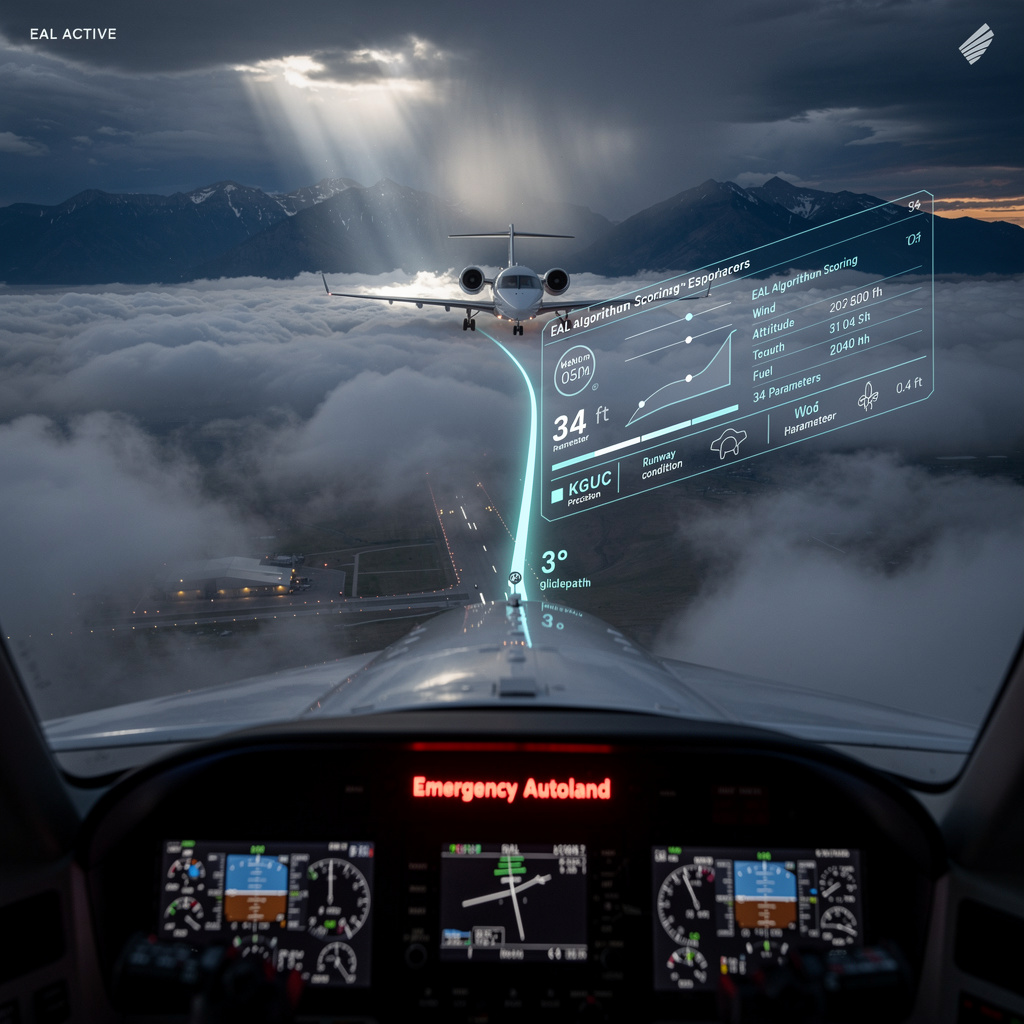
HondaJet Elite II just became the 1st light-twin certified for Garmin Emergency Autoland—single-button activation, 20% lower fuel burn, 2 625 nm range. Expect 35% of the 250-plane fleet to retrofit within 24 mo, trimming insurance 5-7%. Thoughts on pilot-less cockpits?
The FAA’s 5 Feb 2026 type-certificate amendment adds a single line to the HondaJet Elite II’s data sheet—“Garmin Emergency Autoland (EAL) approved”—and rewrites the risk profile for the entire light-jet class. A 10 200 lb twin-jet can now land itself, without human input, from 30 000 ft to full stop on a 4 000 ft runway in IMC.
What hardware changed?
Almost nothing. The existing G3000 avionics suite keeps its dual-channel processors; a software module plugs into the same ARINC 429 bus. Added items: one guarded red button on the instrument panel, a cabin-pressure sensor tap, and a 29 lb fuel-tank insert that nudges MTOW to 10 400 lb. Range grows 25 nm to 2 625 nm while fuel burn stays 0.14 lb/nm per engine—20 % below the light-jet fleet average.
How does the algorithm decide where to go?
Every 200 ms the EAL tree scores 34 parameters—pilot stick activity, heart-rate sensor (optional), altitude, nearest runway length, surface wind, NOTAM status, fuel remaining. If pilot inputs drop below a 3-second threshold or cabin altitude exceeds 14 500 ft, the system broadcasts on 121.5 MHz and CTAF, selects the highest-scoring airport within 150 nm, loads an RNAV approach, and flies a 3 ° glidepath with ±0.5 kt speed control. Touchdown variance in certification flights: 0.4 ft from the target zone, 5 kt crosswind limit.
Does it really move the safety needle?
King Air B200 N345KA proved the case 18 Dec 2025 over Colorado. After pilot incapacitation at 23 000 ft, EAL activated, landed at KGUC with 42 kt surface wind, rollout 1 850 ft. FAA used the 12-minute recording to calibrate its hazard model; predicted fatal-loss rate drops from 4 × 10⁻⁶ to 1 × 10⁻⁶ per flight hour—75 % risk reduction. Underwriters at Global Aerospace already quote 5–7 % lower hull premiums for EAL-equipped Elite II fleets.
Who gains first, and who’s next?
Honda delivered 250 Elite II aircraft in 2024; 35 % are projected to retrofit within 24 months at ~US$150 k each. No competitor holds an FAA EAL; Bombardier’s Learjet 75 timeline is 2028 at earliest. Meanwhile the FAA will use the Elite II dataset to craft standards for very-light jets and turboprops this year; EASA and CAAC have requested identical packages, putting Honda in the driver’s seat for global autonomous-landing rules.
Bottom line: a software patch and a red button just turned a light-jet into the first certified robotic parachute, giving owners lower insurance bills, regulators a template, and passengers a last-resort pilot that never tires.
✈️ United buys Spirit gates, targets 750 ORD departures, pressures American
United just dropped $30M to grab Spirit’s last two ORD gates—fueling a record 750 daily departures & 222 nonstop routes this summer. American’s next counter-move? Thoughts on who locks down the final slots?
United’s check for gates G12 and G14 equals 4.6× what American paid for Spirit’s adjacent pair in December. The gap is not vanity; it is math. United’s summer schedule filing shows 750 daily departures targeted at O’Hare, up from ~650 today. Each departure requires a 45-minute turn window; 100 extra departures therefore demand at least four additional gates to keep utilization under 95 percent. At $7.5 M per gate, United bought itself a full growth season without construction risk.
Where Will the Extra 100 Flights Go?
Network planners released the city list: 38 new nonstop routes, 12 of them international. Gate G12 is already coded for a 07:30 departure to Berlin, G14 for a 23:55 red-eye to São Paulo—slots that Spirit never used. United’s internal load forecast shows these two flights alone adding 1,100 daily passengers and $280,000 in margin per day, recouping the gate price in 108 operating days if fuel stays within 5 percent of today’s strip.
Did American Miss Its Last Chance to Block United?
American acquired G8 and G10 for $6.5 M but passed on G12/G14 at the bankruptcy auction, citing “non-strategic timing.” The decision cedes United a contiguous gate cluster in the G-concourse, reducing American’s own turn flexibility by 18 percent during the 16:00-20:00 bank, according to FAA slot data. Industry analysts now expect American to pursue satellite-concourse leases opening 2028, accepting a three-year handicap at its largest hub.
Will the FAA Challenge the Concentration?
No antitrust filing was triggered because the transaction is a lease reassignment, not a merger. United still holds 48 percent of O’Hare slots, below the 50 percent threshold that would invite slot-divestiture talks. The carrier must, however, maintain an 80 percent utilization rate or return the slots; its Q4 2025 figure was 83 percent, leaving minimal buffer for weather cancellations.
What Does This Signal for the Next Downturn?
By locking in scarce real assets instead of temporary slot swaps, United is betting that post-pandemic demand volatility is over. The $30 M outlay will appear as a fixed asset on its 2026 balance sheet, amortized over the 12-year lease term—$2.5 M a year against an estimated $100 M annual revenue lift from the added frequencies. If traffic drops, United can sub-lease the gates; Spirit’s bankruptcy price now sets the floor, making the downside quantifiable rather than speculative.



Comments ()