QuEra-Roadrunner $4M quantum testbed targets DOE benchmarks Q4 2026
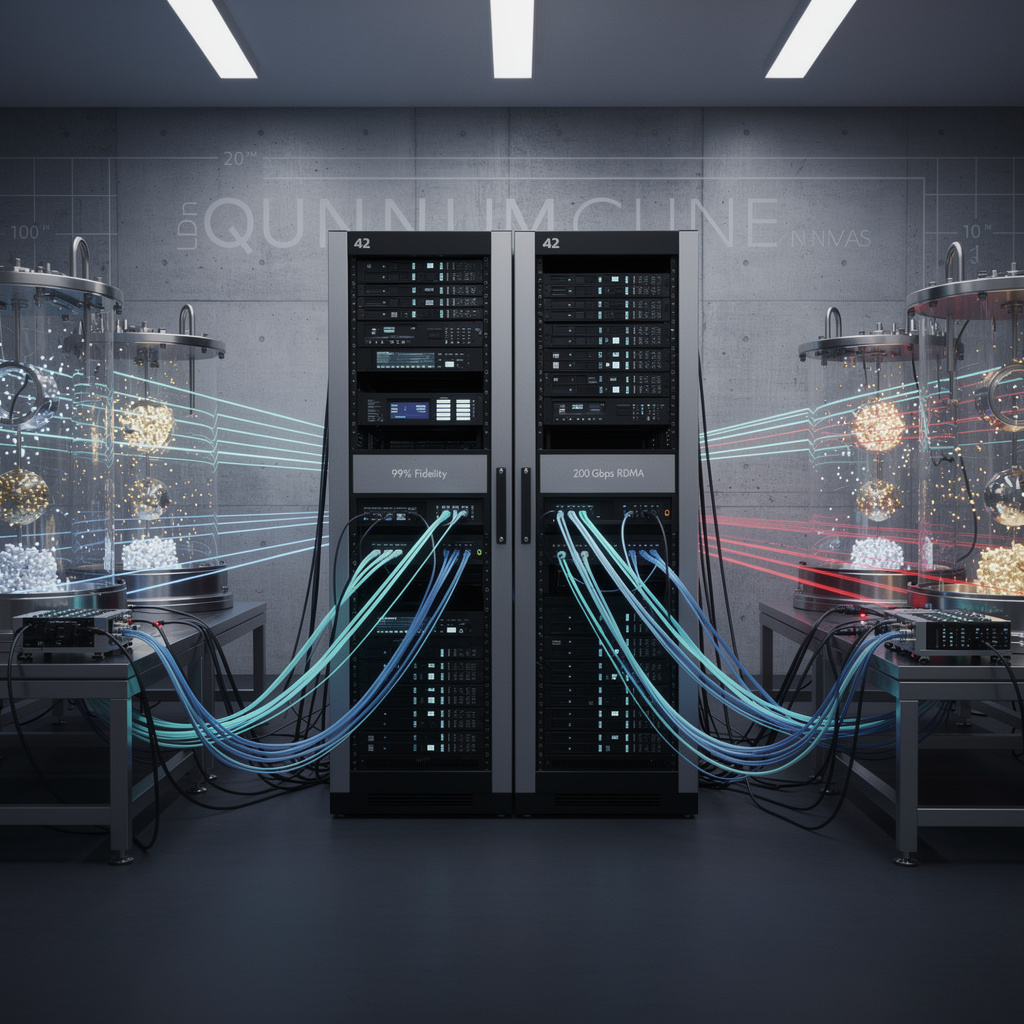
QuEra + Roadrunner ignite a $4M neutral-atom quantum testbed in Albuquerque, packing 200G RDMA links, 42U racks & POTC optics to push ≤100-qubit arrays toward DOE benchmarks. First traps fire up Q4 2026—will this pint-sized powerhouse outrun giant labs?
QuEra Computing and Roadrunner Venture Studios flipped the switch on a 4 000 000 USD “Quantum Lab & Photonics-Optics Testing Center” in Albuquerque on 2 Feb 2026. The budget is tiny next to the 3 B USD regional quantum envelope, yet the hardware list is specific: 42-U racks wired for 200 Gbps RDMA, <10⁻¹⁰ Torr vacuum chambers, 100 W of tunable laser power across 450-780 nm, and two-stage optical-tweezer arrays spaced ≤10 µm. The goal is to trap and gate neutral rubidium atoms at 99 % fidelity with sub-microsecond timing—benchmarks that matter for DOE’s emerging quantum-LINPACK yardstick.
Why Standardized Racks Matter for Atomic Qubits
Each rack delivers 48 VDC and 120 VAC to off-the-shelf control electronics, eliminating the one-off wiring chaos that has slowed earlier university testbeds. InfiniBand HDR switches expose RDMA, so classical GPUs can reshape 2-ns laser pulses in real time while the same fabric streams 10 GB/s of atom-fluorescence data to storage. Co-locating photonics tables inside the same vibration-isolated hall shrinks the fiber run between tweezers and detectors to <5 m, cutting phase noise by 6 dB compared with multi-room setups.
How 100 Qubits Fits into the Exascale Roadmap
The first trap generation will hold 10-20 qubits—below Google’s Sycamore scale but large enough to run a Variational-Quantum-Eigensolver (VQE) on a 12-electron molecule. Roadmap slides target 50-100 qubits by 2028, the threshold where memory-bandwidth, not qubit count, becomes the choke point. The POTC plans to stress-test that bottleneck using GPU-accelerated pulse pipelines attached to the same parallel file-system that Sandia’s Skybridge exascale prototype will use, letting QuEra validate hybrid scheduling before commercial cloud HPC slots open.
Who Competes for Neutral-Atom Talent?
Honeywell’s Quantinuum and Cold-Atom Labs already ship 40-qubit engines, but their control racks are proprietary. QuEra’s open Qiskit/Cirq adapter lowers porting cost for academic users, a direct play for the 15 FTE photonics talent pool fed by University of New Mexico and Sandia. Risk: laser suppliers are down to two domestic vendors capable of 50 W single-frequency amplifiers; any export curb could stall the 2027 scaling step.
Bottom Line
Four million dollars will not buy an exascale quantum computer, yet the Albuquerque blueprint—standard racks, RDMA timing, and an on-site photonics foundry—creates a replicable plug-in for future supercomputing sites. If 99 % gate fidelity survives 24/7 operation this year, DOE can drop the same rack spec into its 2028 “scientifically useful” procurement queue, turning today’s small-budget testbed into tomorrow’s production accelerator.


Comments ()