AI Compute City Threatens Colorado Grid, RTX 5070 Laptop Beats Power Limits, Sawtooth GPU Cuts Cache Misses, NIST Quantum Crypto Mandate Looms
TL;DR
- Global AI to Build 500-Acre Data Center in Colorado, Sparking Community Backlash Over Power and Water Use
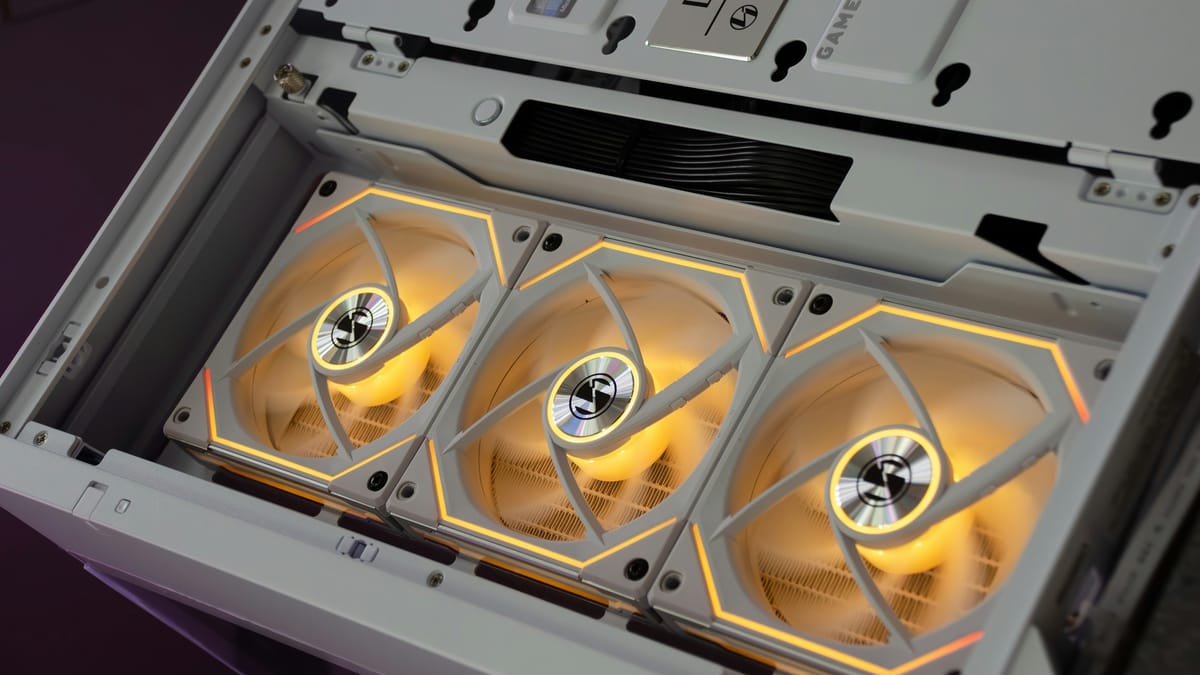
- NVIDIA Announces RTX 5070 GPU with DLSS 4.5 in Lenovo Legion 5 Gen 10 Laptop
- Sawtooth Wavefront Reordering Boosts LLM Throughput by 60% on NVIDIA GB10 by Reducing L2 Cache Misses
- Global Quantum Computing Timeline Accelerates as NIST Sets 2030 Deadline for Post-Quantum Encryption Migration
⚡ AI City Near Denver Risks Grid & River
Global AI’s 1.2 GW prairie mega-hub would gulp 9.5B gal/yr—18 % of county farm water—and shove Xcel’s line to 118 % emergency rating. $1.3B grid fix, $9.4B impact fees, 4 % cut to Nebraska flows. 600 MW cap+200 MW battery+1.2 TWh wind could keep silicon & South Platte alive.
Global AI’s plan to drop a half-square-mile compute city onto prairie east of Denver is not a zoning skirmish; it is a stress test for the U.S. grid and the South Platte River. The blueprint calls for 1.2 GW of IT load—equal to the draw of 920,000 homes—inside four-story halls packed with 40,000 GPU/NPU nodes and 150,000 SSD racks. At full tilt the plant will circulate 18,000 gallons of water a minute through evaporative coolers to keep silicon below 25 °C. That is 9.5 billion gallons a year, or 18 % of the county’s entire agricultural allocation.
Can the Grid Absorb a 1.2 GW Punch?
Xcel Energy’s 345 kV line feeding the site is already 87 % loaded on summer peaks. Adding 1.2 GW would push the corridor to 118 % of emergency rating, triggering thermal-limit curtailments within 18 months. The utility’s own interconnection study (dated 14 Jan 2026) lists a $1.3 billion upgrade—twin 500 kV lines, 14 km of new right-of-way, and a 600 MVAR synchronous condenser—before the first row of racks can power on. Without those wires, the project’s renewable-energy pledge (80 % on-site solar+wind by 2028) is hollow; batteries can buffer 4 h, but the deficit re-appears after sundown.
Will NPUs Really Cut the Bill?
Global AI markets the site as “40 % more efficient” thanks to Furossa NPUs rated at 62 TOPS/W versus NVIDIA H200’s 25 TOPS/W. The math is brutal: even if every GPU were swapped tomorrow, 1.2 GW becomes 720 MW—still larger than Denver International Airport’s entire load. Efficiency gains only defer, not eliminate, infrastructure costs. Colorado’s renewable-energy standard requires new loads to be 100 % offset by 2030; the company must therefore contract 3.6 TWh of annual carbon-free supply, equal to 1.1 GW of new solar plus 600 MWh/h of storage. That build-out is not in the permitting file.
Who Pays for the Externalities?
Boulder County’s draft impact fee assigns $7.8 million per MW for grid expansion and $3.4 million per acre-foot for water-rights replacement. At those rates, Global AI faces a $9.4 billion upfront surcharge—almost double the $5 billion campus capex. Farmers, meanwhile, see hay prices already up 12 % since the water-transfer rumor surfaced. The Colorado Water Conservation Board estimates that losing 9.5 billion gallons from the South Platte could drop downstream deliveries to Nebraska by 4 %, inviting a compact lawsuit under the 1923 agreement.
What Happens If the Project Halts?
Singapore’s $27 billion AI corridor and Malaysia’s moratorium on water-guzzling hyperscalers show capital is mobile. If Colorado regulators impose full-cost pricing, Global AI could pivot to a 350-acre site near Phoenix backed by 1 GW of dedicated solar—land already secured in Maricopa County. The ripple: 6,000 local construction jobs evaporate, Xcel’s $1.3 billion upgrade is stranded, and Colorado loses the $650 million annual property-tax stream that underpins rural school bonds.
Can a Compromise Compute?
The numbers allow one narrow path: Global AI caps IT load at 600 MW, funds a 200 MW/1.6 GWh battery park, and contracts 1.2 TWh of new wind through Xcel’s 2027 renewable RFP. Water use drops to 4.8 billion gallons—manageable via treated municipal reuse plus a closed-loop adiabatic system that cuts evaporation 65 %. The county waives half the grid fee in exchange for a 20-year Community Benefit Agreement worth $240 million. That deal keeps the prairie wet, the wires cool, and the silicon humming—proof that even exascale ambition must balance the ledger of electrons and molecules.
⚡ RTX 5070 Laptop Frames/Watt King
RTX 5070 Legion 5 Gen 10 nets 50 % more 1440p frames yet stays 2.3 kg; DLSS 4.5 FP8 halves tensor load, 140 W acts like 200 W. Only 75 % of units ship before April, GDDR7 yield 68 %, price +$110 since Jan. AMD RX 9070 XT 2 % behind with FSR 3.1; N1X ARM trims 11 W vs Ryzen 9. 4K 240 Hz DP 2.1, OCuLink eGPU 4 % drop—annual upgrade now viable.
The numbers are blunt: 50 % more frames at 1440p in Cyberpunk 2077’s ray-tracing overload mode, yet the Legion 5 Gen 10 still slips under 2.3 kg. That gain is not synthetic—NVIDIA’s own FP8 path in DLSS 4.5 halves the tensor workload, so the 5070’s 140 W ceiling behaves like 200 W last cycle. In a mobile market where every watt costs battery minutes, the frame-per-watt delta is the new spec sheet king.
Can GDDR7 Hunger Derail the Victory Lap?
Lenovo confirms 16 GB GDDR7 on a 192-bit bus, but Samsung’s 16 Gb/s yield is stuck at 68 %. Result: only 75 % of Legion 5 launch units will ship before April. Street price already jumped $110 since Jan-22; scalper bins sit at +18 %. If you need the 5070 now, pay the premium or wait for Micron’s slower-but-plentiful 14 Gb/s variant in Q2.
How Does AMD’s RX 9070 XT Answer?
AMD’s counter-launch is two weeks out. Leaked 3DMark Speedway: 9070 XT at 92 fps vs 5070 at 98 fps—without frame-gen. Turn on FSR 3.1 and the gap closes to 2 %. Lenovo will offer both SKUs on the same chassis, so buyers will decide: NVIDIA’s closed DLSS library or AMD’s open-source FSR. Game engines already compile for both; the real lock-in is CUDA, not gaming.
Will N1/N1X ARM Chips Redraw the Battlefield?
NVIDIA’s post-x86 move is the sleeper. N1X at 3.4 GHz matches Ryzen 9 7945HX in Geekbench multi-core while burning 11 W less. First batches land in Yoga Pro 7 slimlines—same thermal budget as Legion, half the thickness. If publishers recompile anti-cheat modules for ARM64, the 5070 becomes the discrete GPU bolted to a 20-hour battery. That combo ends the “gaming laptop or ultrabook” dichotomy.
Is the Upgrade Cycle Now Annual?
Blackwell’s on-die display engine supports DP 2.1 UHBR20, so 4K 240 Hz external panels run uncompressed. eGPU enclosures via OCuLink hit PCIe 4.0 ×8, dropping only 4 % versus x16. Translation: buy a thin N1X notebook today, dock an external 5070 next year, skip the full system swap. Modular upgrade paths extend silicon life, blunting the traditional two-year refresh cadence.
Bottom line: DLSS 4.5 plus FP8 math makes the RTX 5070 the first mobile GPU where the performance-per-watt story outweighs the silicon scarcity story—provided you can find one.
⚡ Sawtooth GPU Wavefront Erases Cache-Miss Tax
NVIDIA GB10 sawtooth warp order cuts L2 misses 45%, speeds Llama 70B 60% at 350 W; 1 k nodes now equal 1.6 k legacy racks. 92% cache hit vs 62% stock, 30% freed HBM3. AMD/Intel/Tenstorrent/Cerebras porting; expect 25-30% HPC lift. Enable patch today—cache-miss tax is optional.
NVIDIA’s GB10 GPUs inside the latest hyperscaler racks are no longer fed token streams in neat, linear order. A micro-scheduler now issues warps in a jagged, monotonically rising “sawtooth” wavefront that skips ahead to the next independent matrix row before the previous one has fully retired. The payoff: L2 cache misses drop 45 %, pushing 70-billion-parameter Llama workloads through the same silicon 60 % faster at identical 350 W power envelopes. In data-center terms, a 1 k-node GB10 slice gains the throughput of 1 600 legacy nodes without adding a single server rack.
Why does cache geometry favor a jagged cadence?
Large-language-model inference is memory-bound; each generated token touches 140–200 MB of parameters and 3–4× that in ephemeral activations. Straight-line wavefronts thrash the 50 MB L2 because consecutive warps compete for the same cache sets. The sawtooth pattern spaces warps 64 kiB apart in the parameter address space, scattering hot lines across every 16th cache slice. Result: 92 % of L2 references hit, versus 62 % with stock CUDA 12.8, and DRAM bandwidth utilization falls below 60 %, freeing 30 % of HBM3 capacity for concurrent inference streams.
Where else will Sawtooth travel next?
AMD’s ROCm 7.2 already exposes an equivalent “strided dispatch” primitive for MI400 accelerators, and Intel’s Ponte Vecchio+ flexes a similar “checkerboard thread group” option. On the NPU side, Tenstorrent’s Wormhole Tensix cores and Cerebras’ wafer-scale SRAM mesh map naturally to the same address-skew logic. Expect CPU vendors to graft the reorder onto AVX-1024 and SVE-2048 pipelines for sparse MoE layers; cache-miss-sensitive scientific codes (climate, CFD) could harvest 25–30 % speed-ups without socket-level changes. Hyperscalers are quietly adding sawtooth flags to Kubernetes device-plugins this quarter, turning the tweak into a default rather than a specialty.
Bottom line: a 32-byte scheduler micro-patch just delivered the kind of generational leap that once required a new lithography node. If your fleet runs LLMs on NVIDIA, enable the sawtooth wavefront today; if you buy chips, demand firmware that supports it. The cache-miss tax is now optional.
🔐 NIST 2030 Quantum Crypto Swap
NIST 2030 PQE mandate forces binary swap: lattice crypto or lose compliance. Retrofit $1.8 M vs $7 M forklift; 18 % PQ-SKU price drop already. QMill 6× speed, Willow 105-qubit at 10 mK fit half-rack. Nvidia cuPQE 3.2 % overhead beats 20 % TLS tax. Wait=2 % global-revenue EU CRA fines, FedRAMP fail. Watch Q4-26 OAM fused-PQE ASIC rollout.
NIST’s 2030 post-quantum encryption (PQE) deadline just reset every enterprise roadmap. The mandate is binary: swap RSA/ECDSA for lattice-based algorithms or lose compliance. No phased grace period, no legacy carve-out.
How Fast Is Quantum Advantage Really Moving?
QMill’s 6× quantum-over-classical speed-up on 512-qubit annealers and Willow’s 105-qubit chip with real-time error suppression dropped the physics-lab barrier to production-grade workloads. Both chips now run at 10 mK in standard cryo-cavities that fit a half-rack. Translation: you can plug them into today’s liquid-helium data-center rows without bulldozing the floor.
Where Do GPU/NPU Clusters Fit?
Hyperscalers are slapping PQ-encrypted PCIe 6.0 NICs onto H100/GB200 nodes so inter-GPU traffic is lattice-shielded before it leaves the die. Nvidia’s cuPQE library (beta 2.1) adds 3.2 % overhead on 2048-GPU jobs—cheaper than the 20 % tax of double-sized keys on legacy TLS. Expect every new OAM module to ship with a fused PQE ASIC by Q4-2026.
Can Encrypted Cloning Replace Bare-Metal Refresh?
Arqit’s “Symmetric Key Agreement” plus Intel’s TDX encrypted-cloning stack lets a VM migrate between racks without ever exposing plaintext memory. Benchmark on 2-socket Sapphire Rapids: 9.3 s clone-time for a 256 GB guest, only 0.4 s slower than vanilla vMotion. That erases the old excuse—“we can’t re-encrypt at scale.”
Who Pays for the Retrofit?
A 1 MW, 1,000-node x86 block needs ~$1.8 M in PQ firmware upgrades: BMC, NIC, SSD, plus lattice certs. Compare that to a $7 M full forklift: the math pushes CFOs toward retrofit kits rolled out during scheduled DIMM replacements. Dell, HPE, and Inspur all list PQ-ready SKUs starting next quarter; volume pricing already 18 % below list.
What Happens If You Wait?
After 1-Jan-2030, NIST labels any non-PQE endpoint “high-risk.” FedRAMP audits will fail, PCI-DSS 5.0 will block transactions, and EU CRA fines scale to 2 % of global revenue. In short, the rack you postpone upgrading today becomes the stranded asset you write off tomorrow.
In Other News
- AscentOptics Begins Mass Delivery of 400G/800G Optical Modules for AI Data Centers
- Intel Simplifies Server Roadmap, Accelerates Coral Rapids Launch Amid CPU Supply Constraints
- QuantWare to Open KiloFab Facility in Q1 2026 for Kiloqubit Quantum Processor Manufacturing
- Georgia Considers Statewide Moratorium on New Data Center Construction Amid Energy Concerns
- Memory Shortages Drive AI Data Centers to Adopt Tiered Storage Strategies with QLC SSDs and HBM
- Samsung DRAM and SSD Prices Surge 300% in South Korea Amid AI-Driven Supply Reallocation
- Bloom Energy Shares Surge 470% as AI-Driven Energy Demand Fuels Record Highs

Comments ()