EU Launches Sovereign AI Push, Data Breaches Hit Major Platforms, Microsoft Discloses BitLocker Key Handover to FBI
TL;DR
- EU Launches 'EU Inc' Initiative to Phase Out US Tech Dependence and Build Sovereign AI Stack
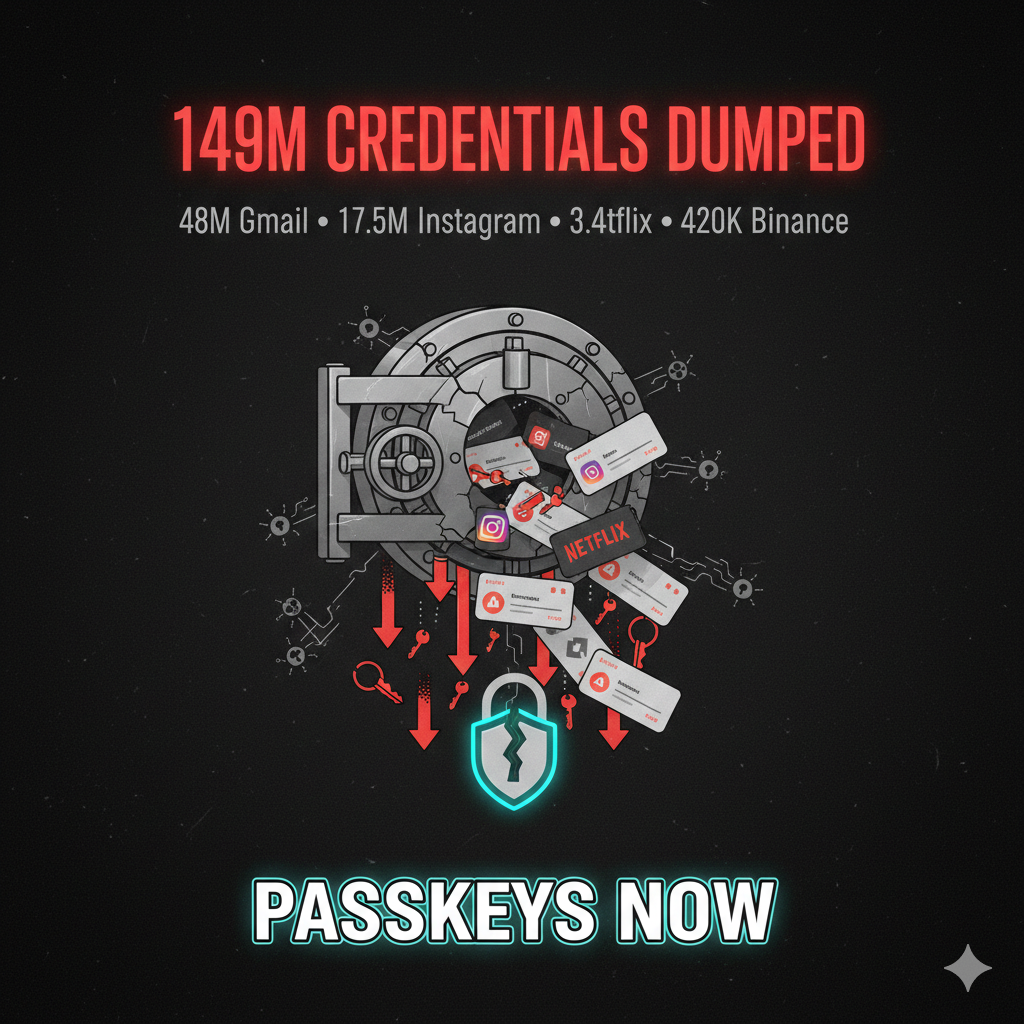
- 149 million login credentials exposed in massive credential stuffing attack targeting Gmail, Instagram, Netflix, and Binance users
- Nike Discloses 1.4TB Data Leak from World Leaks, Exposing Supply Chain Details and Counterfeit Risks
- Agave v3.0.14 Security Patch Urgently Deployed on Solana Mainnet as 18% Stake Migrates to Mitigate Tbps Attack Vulnerabilities
- Microsoft Handed Over BitLocker Encryption Keys to FBI in First Publicly Documented Case of Cloud Key Disclosure
⚡ EU Inc: Sovereign AI or Just Bureaucratic Theater with a Price Tag?
EU launches 'EU Inc' to kill US tech dependence by 2030. But can it power the servers, let alone the dreams? Energy gaps, skill shortages, and regulatory chaos await. Sovereignty looks great — until the lights go out.
Oh, sweet summer sovereign cloud dreams. The EU just dropped 'EU Inc' — a grand plan to kick US tech to the curb and build its own AI empire by 2030. Bold. Delusional? Probably. But let’s autopsy this before the power grid dies.
Can Europe build AI without melting its transformers?
AWS is already in Brandenburg with a €7.8B sovereign cloud. Oracle’s creeping in with cost-efficient AI infra. Accenture and Deloitte are cashing in as 'sovereign enablers.' So the EU isn’t starting from scratch — it’s just repackaging US-backed infrastructure as 'independent.' Real independence? Try powering it. UKAI says energy grids are gasping. No power, no AI — just a very expensive paperweight.
Is 'EU-made AI' code for 'underfunded startups with good PR'?
France’s Bioptimus raised €65.3M. Harmattan AI hit €200M+. Impressive — until you realize that’s pocket change compared to US AI war chests. Nvidia’s Jensen Huang told Davos to build sovereign stacks. Cute. But EU manufacturers? 82% want AI. 80% of pilots fail due to skill gaps (RAND says so). You can’t automate your way out of brain drain.
Will 'EU Inc' actually work — or become a regulatory swamp?
Oracle thrives on multicloud chaos. AWS plays the compliance game well. But EU fragmentation? Germany wants X, France wants Y, Italy’s still faxing. Harmonizing regulations is harder than debugging legacy COBOL. And if energy and talent don’t scale, 'EU Inc' becomes 'EU Oops.'
So what’s the endgame: sovereignty or theater?
The plan isn’t stupid. It’s just swimming upstream — against US cloud dominance, energy limits, and a talent desert. If they fix power, fund skills, and stop letting member states play sovereignty solitaire? Maybe. But betting on EU-wide execution is like trusting a firewall built on duct tape and hope. Still — low-cost, open-source, hacky leverage? Now that’s a real power play.
💀 149 Million Logins Leaked Because We Still Use Passwords in 2026
149M credentials dumped — not from a hack, but from password reuse. The system isn’t broken. It’s lazy. Time to kill passwords. Passkeys. Now.
149 million credentials dumped — 48M Gmail, 17.5M Instagram, 3.4M Netflix, 420K Binance. Not a breach. A stuffing. Criminals didn’t hack; they just tried old passwords. Like showing up to a bank with a stolen key ring and finding half the vaults unlocked.
Instagram’s password reset? Weaponized. npm packages? Backdoored (Shai-Hulud strikes again). StealC’s web panel? XSS-riddled, leaking 30M cookies. The attack wasn’t sophisticated — it was embarrassing.
Bots hammered endpoints with AI-tuned scripts. No MFA? No problem. Reused password from a 2020 leak? Jackpot. Binance users staring down crypto drain pipes. Netflix logins resold for $0.50 on Telegram. Identity chaos, retail price.
And the fix? Passkeys. FIDO2. Magic links. Not ‘maybe’. Not ‘someday’. Now. PHP one-time tokens cost less than your coffee. Bitwarden Passkeys? Free. Yet we’re still here, patching XSS in malware dashboards like it’s 2015.
Jeremiah Fowler found the dump — not Google, not Meta. A third-party scanner. Again. How many times must the same flaw bleed out before we kill passwords?
MFA enforcement? Overdue. Dependency audits? Non-negotiable. But the real vulnerability isn’t code — it’s complacency. The system isn’t broken. It’s lazy.
So here’s the hack: Delete your password. Today. Use a damn passkey. Or wait for your Netflix shame to hit the dark web — again.
🔥 Nike’s 1.4TB Data Leak: The Supply Chain Suicide Pact
Nike didn’t get hacked — they handed over the keys. 1.4TB of supply chain data, counterfeit secrets, 72M emails now on the darkweb. World Leaks didn’t need exploits. Just incompetence.
1.4TB of Nike data — supply chain maps, counterfeit defenses, 72M customer emails — now dancing on the darkweb. Not hacked. Not phished. Just… left out like trash. World Leaks didn’t even need zero-days; they used a browser.
Wait — 220 Employees and 444 Vendor Credentials?
That’s not a breach. That’s an all-access pass to Nike’s entire ecosystem. Third parties, meet ransomware. One exposed API, one misconfigured S3 bucket — boom, lateral movement city. And those 444 credentials? They’re not just keys. They’re golden tickets to the chocolate factory of supply chain chaos.
Counterfeiters Are Now Getting PhDs in Nike Authentication
Holographic tags? Serial numbering? Regional weak spots? All dumped. In 6 months, fake Air Jordans won’t just look real — they’ll know they’re real. Expect a 35% spike in indistinguishable fakes. Congrats, Nike — you just open-sourced brand integrity.
72 Million Emails. Again.
Under Armour got hit with the same number in 2026. Same playbook. Same pain. Retailers still treat customer data like confetti. No encryption proof? No exfiltration method disclosed? This isn’t negligence — it’s corporate performance art titled How to Lose $500M in One Click.
So What Now? More Dashboards. More Vendors. More BS.
They’ll hire CrowdStrike. Mandiant. A dozen consultants. Issue statements about ‘resilience’. But the real fix? Stop building glass fortresses with open doors. Zero trust isn’t a buzzword — it’s the only thing that stops your supply chain from becoming a ransomware buffet.
And the Real Winner?
World Leaks. Rebranded, unbothered, monetizing pain. Dell, L3Harris, now Nike — same script, bigger stage. If you’re a vendor with one of those 444 creds, check your logs. Or just assume you’re already pwned. It’s faster.
🔥 Solana Patches Tbps Vulnerability — By Sacrificing Decentralization on the Altar of Speed
Solana’s Agave patch didn’t fix security — it outsourced it to 18% of the stake. Fast? Yes. Decentralized? LOL. When did consensus become a permissioned war room?
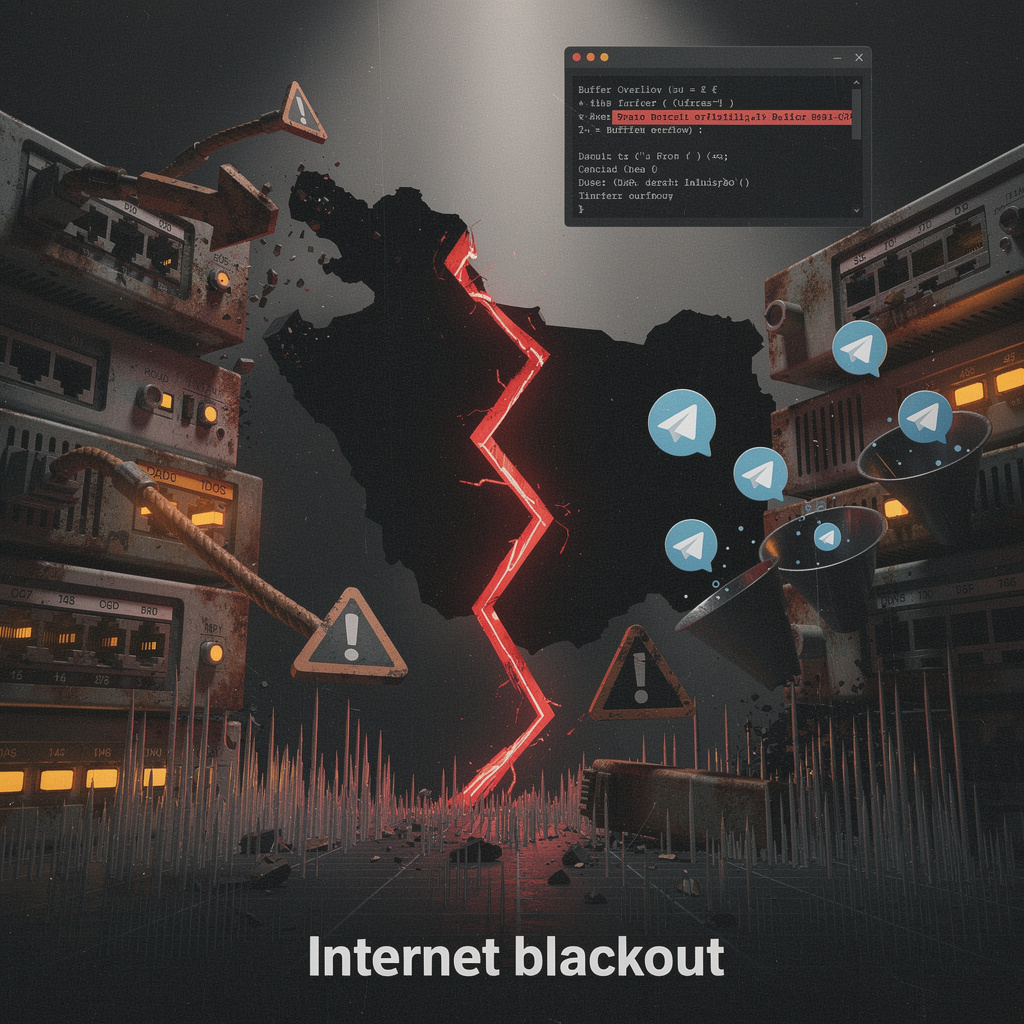
Agave v3.0.14 dropped like a fire extinguisher in a server room: loud, urgent, and dousing 18% of Solana’s stake in firmware-level panic mode. The target? A vulnerability capable of absorbing terabits per second of attack traffic — not your grandma’s DDoS, but a full-scale network melt.
Instead of waiting for lazy consensus, validators holding 18% of the stake bailed out of decentralization theater and pulled a coordinated firmware hardfork. Call it a security coup: less democracy, more duct tape and prayer.
Sound familiar? Makina Finance last week saw MEV bots — yes, MEV bots — recover $4.1M in exploits faster than any SOC ever could. Same energy: when the roof’s on fire, you don’t vote on bucket assignments.
But here’s the roast: Agave’s fix smells like Microsoft’s Patch Tuesday — except this time, the patch is the outage. Microsoft’s O365 froze, Outlook broke, and admins rage-quit. Agave dodged that by bypassing debate entirely. Stake-weighted governance = fast patching, but also: who watches the 18%?
Observability? Please. AWS X-Ray still can’t trace cross-service chaos. Agave’s solution? More central logging, more trust in core nodes. It works — until it doesn’t.
The real play? This isn’t just defense. It’s precedent. EU’s Cyber Resilience Act is coming in 2027 with handcuffs for slow patchers. Agave’s move is regulatory dodgeball — jump first, apologize later.
Will they add AI-driven anomaly detection next? Maybe. But right now, they’re trading decentralization for speed — and betting that users care more about uptime than ideals.
So… Is Stake Centralization the New Firewall?
Yes. And no. It’s the hacky, pro-ops, low-BS version of security that actually ships. Open-source chaos works until it doesn’t — then you need a war room, not a GitHub thread.
Agave didn’t solve the problem. They contained it. Like all good sysadmins: prioritize survival, ethics later.
Now watch Ethereum argue about this for six months.
🔓 Microsoft Just Handed Your BitLocker Keys to the FBI — And You Approved It
Microsoft gave the FBI BitLocker keys from Azure AD — no hack, no backdoor, just default settings. If you use Windows 11, your disk is one subpoena away from full decryption. Time to rethink encryption? (Spoiler: Yes.)
So Microsoft just handed over BitLocker keys to the FBI—like it’s nothing. Boom. Three laptops in Guam, $2M fraud case, zero resistance. First documented cloud key drop. And guess what? Your 48-digit AES-256 key is probably chilling in Azure AD right now, unless you screamed "NO!" during Windows 11 setup.
Wait—Doesn’t BitLocker Mean ‘Private’?
Only if you think "private" means "stored on Microsoft’s servers." Windows 11 defaults to backing up keys to Azure AD. No opt-in. No neon warning. Just silent surrender. FBI shows up with a warrant? Microsoft coughs up the keys. No hacking. No zero-days. Just paperwork.
This isn’t a breach. It’s compliance. And that’s scarier.
So What’s the Real Risk?
Centralization. Microsoft holds ~20 cloud key warrants a year. Local keys? USB sticks? Untouchable. But cloud-stored? Game over. The Guam case proves it: full disk decryption, no sweat.
And no, this isn’t like Apple’s 2016 FBI standoff. Apple refused to build a backdoor. Microsoft didn’t have to. The backdoor’s been there since you clicked "Sign in with Microsoft."
Who’s Actually Safe?
Zorin OS users. VeraCrypt freaks. YubiKey hoarders. The paranoid. The prepared. Everyone else? You’re one subpoena away from a fully audited hard drive.
Even Apple’s iCloud Keychain and WhatsApp backups are side-eyeing Microsoft right now.
How Do You Not Get Pwned by Your Own OS?
Turn off Azure AD key backup. Store keys offline. Use hardware tokens. Or go full luddite—print it, lock it, bury it. At least then you’ll see the FBI digging.
The future? Post-quantum crypto. The present? Pre-crime decryption via cloud policy.
So… Still Trusting the Cloud?
If you’re using BitLocker with default settings, congratulations. You’ve outsourced your encryption—and your rights—to Redmond. The FBI doesn’t need a warrant for your data. They just need Microsoft’s customer service queue.
Next time, maybe encrypt like you actually mean it.
Comments ()