Tezos Protocol Upgrade Tallinn Cuts Block Times to 6 Seconds, Boosts TPS, Lowers Storage Costs
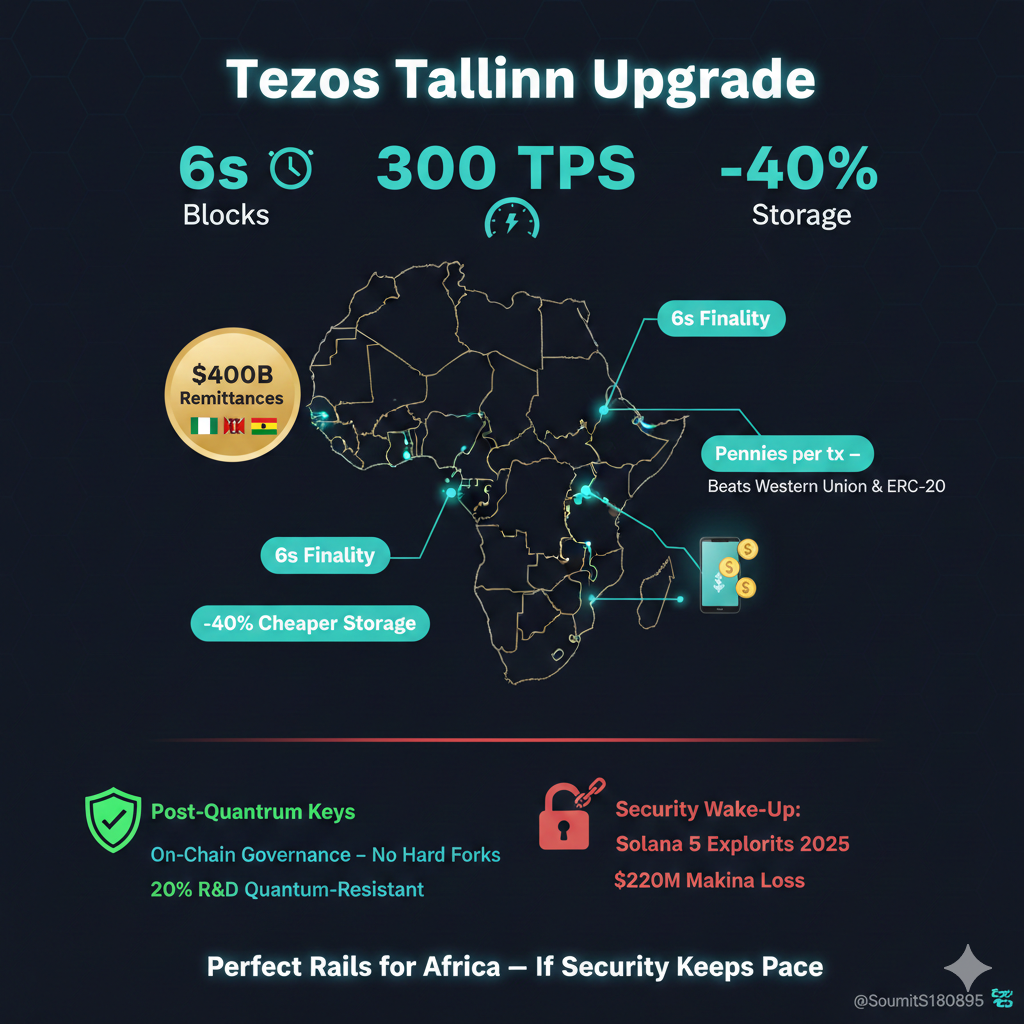
Tezos Tallinn upgrade: 6s blocks, 300 TPS, 40 % cheaper storage. Perfect rails for African stablecoins—if security keeps pace.
Tezos just proved they can cut block time from 15 s to 6 s, lift throughput to 300 TPS and slash storage fees 40 %. On paper that’s a straight scalability win; in practice it’s the ticket to remittance corridors in Nigeria, Kenya and Ghana where $400 B moves each year at 7 % average cost. Stablecoin issuers can now mint, send and redeem inside 12 s for pennies, undercutting both Western Union and ERC-20 gas.
Why Africa first?
Mobile-money wallets already outnumber bank accounts. A 6-second finality matches the UX of M-Pesa yet keeps a public ledger. Add post-quantum keys—already on Ethereum’s roadmap—and central banks get compliance plus future-proofing. Tezos’ on-chain governance means upgrades deploy without hard-fork chaos, a selling point to regulators still scarred by 2017 ICO mayhem.
Security wake-up call
Solana’s speed crown came at a price: five major exploits in 2025 alone. Makina Finance lost $220 M last month through a validator-side flaw. Tezos must therefore pair Tallinn’s performance with mandatory formal verification; the Foundation’s 20 % R&D carve-out for quantum-resistant signatures is not academic—it’s survival. CertiK’s rumored IPO shows auditors are now systemically important; bakers that skip third-party review will leak value faster than they mint blocks.
Bottom line
Watch Q2 2026: if a CFA-franc stablecoin launches on Tezos and passes a Big-4 audit, trading volumes will flip the chain from “ghost network” to settlement layer. Fail that, and 6-second blocks become a forgotten footnote in the next bear market.
In Other News
- Cometh Secures MiCA License in France to Offer DeFi Lending Services with ISIN-Backed Private Debt Products


Comments ()