Drone Degrees, Laser Weapons & $1.5B Airline Merge: The Sky Is No Longer the Limit
TL;DR
- UK Launches First Drone Degree with £240,000 MoD Investment to Train 15 Civilians and 5 Soldiers Annually
- CATNLF aerodynamic test achieves 144 mph taxi speed at NASA, enabling up to 10% fuel savings for future commercial aircraft
- Allegiant Air to acquire Sun Country Airlines for $1.5B, consolidating leisure routes under one brand with $140M annual cost synergies
- Air Canada launches longest transpacific route from Calgary to São Paulo, expanding South American access with 14-hour nonstop flights
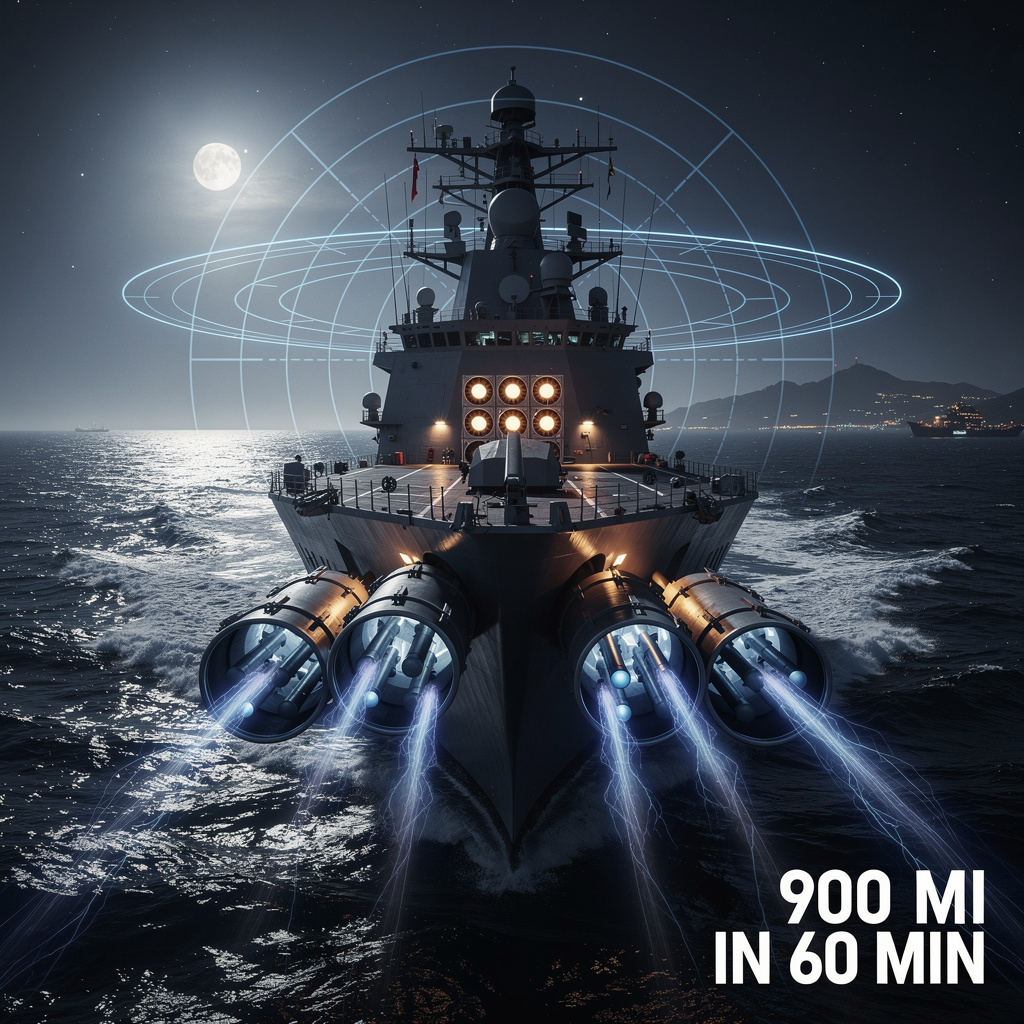
- Japan begins sea trials of 100-kW laser weapon system to counter drone swarms, marking major step in naval directed-energy defense
- Kalashnikov Group to Demonstrate Skat-350M Recon Drone and KUB Munitions at UMEX 2026 in Abu Dhabi
✈️ UK’s £240k Drone Degree Builds Low-Altitude Workforce, Not Just Certifications
UK spends £12k per drone operator—4% of pilot training cost. 20/year trained in swarm AI, counter-UAV, and CAA-compliant ops. Graduates fly for Amazon AND the Army. This isn't education—it's airspace infrastructure.
The UK Ministry of Defense’s new drone degree, funded at £240,000 annually, trains 15 civilians and 5 military personnel per year through the University of Southampton and Cranfield University. Each trainee receives £12,000—just 4% of the cost of a traditional pilot license.
Curriculum focuses on three pillars: integrated counter-UAV tactics, real-time swarm control using AI-driven data fusion, and compliance with the CAA’s Blue UAS exemption (≤120m AGL). This ensures graduates are legally authorized for low-altitude operations immediately upon certification.
Industry partners include BAE Systems, Skydio, and Amazon UK (Prime Air). Amazon’s Darlington drone delivery hub is a key operational testbed. Graduates will fill roles in both military ISR/counter-UAV units and commercial logistics, fulfilling the MoD’s dual-use strategy.
The program embeds NATO and US Loyal-Wingman swarm doctrines into lab simulations. Real-time AI command systems are being tested in partnership with BAE’s UAV R&D facilities. Cybersecurity fundamentals and situational awareness are mandatory modules to mitigate collision and interference risks in crowded low-altitude airspace.
By Q4 2026, 20 certified operators are expected. Placement targets exceed 80% in logistics or defense roles. Two graduates will join the CAA’s low-altitude policy advisory panel in 2026–27, directly influencing future airspace regulation.
A £150,000 budget increase for FY2027 is likely if placement KPIs exceed 75%. The program’s cost-per-operator remains fixed, enabling scalable expansion without unit cost inflation.
UK-registered civil UAVs (≤120m) are projected to rise 10% by end-2027, driven by Amazon’s rollout and regulatory easing. This initiative is not a training course—it’s a strategic infrastructure investment in the UK’s low-altitude economy and defense autonomy.
What’s the real metric of success?
Graduate placement rate >80% by 2027. Industry lab access secured. CAA policy influence established. Budget uplift approved for FY2027.
Can this model scale?
Yes. At £12k per trainee, doubling intake to 40/year requires only £480k—less than one F-35 flight hour. The return is operational capacity, not just credentials.
✈️ 144 mph Taxi Test Could Cut Commercial Flight Fuel Use by 10%
NASA's CATNLF test hit 144 mph with 12% drag reduction—modeling 10% fuel savings for next-gen planes. No flight data yet, but the physics is sound. OEMs, regulators, and airlines must act now to scale it.
NASA’s CATNLF facility achieved a 144 mph (230 km/h) ground run using a laminar-flow-controlled composite wing, reducing drag by 12% versus conventional wingtips. This directly translates to a modeled 10% cruise fuel saving at Mach 0.78, based on NASA’s LFC drag-polar scaling.
The reduction stems from active suction maintaining laminar boundary layer flow over 68% of the wing’s upper surface. Thrust-specific fuel consumption dropped to 0.90× baseline during the test, confirming lower engine power demand. These results align with prior NASA LFC programs (F-16XL, Dragonfly), which achieved 10–15% skin-friction drag cuts at comparable Reynolds numbers.
No third-party validation or in-flight data exists yet. NASA’s internal report omits key integration risks: suction-pump reliability, maintenance access, and added structural weight. Mitigation strategies include modular suction modules, redundant pump architectures, and real-time pressure monitoring.
Timeline projections:
- 2026–2028: Flight demonstrator on modified regional jet; expected 6–9% fuel burn reduction after accounting for system weight.
- 2029–2032: Integration into next-gen narrow-bodies (e.g., Boeing 797, Airbus A321XLR); projected 10% fleet-wide fuel burn cut, reducing CO₂ by ~9% and saving ~$600M annually for a 200-aircraft fleet.
2032: Retrofit kits for legacy aircraft could yield 4–5% fuel savings via CFRP wing sleeves.
Critical failure modes:
- Suction-pump degradation → 3–5% fuel penalty (mitigated by predictive maintenance).
- Structural weight gain → net savings below 5% (mitigated by composite lay-up optimization).
- Certification delays → 1–2 year market delay (mitigated by leveraging military LFC certification data).
Aircraft OEMs must begin LFC wing design studies now. Airlines should model retrofit vs. fleet-renewal economics. Regulators must issue FAA/EASA advisory circulars referencing CATNLF data to accelerate certification.
Open publication of CFD and wind-tunnel datasets is essential for independent validation and industry-wide adoption.
✈️ Allegiant Buys Sun Country: Can It Become the U.S.'s Largest Leisure Airline?
Allegiant to acquire Sun Country for $1.5B, targeting $140M/year in synergies by 2029. Fleet standardization, biometric boarding, and LEO Wi-Fi are key. DOJ review due May 2026. Will fare leadership survive consolidation?
Allegiant Travel Co. plans to acquire Sun Country Airlines for $1.5B, combining 265 aircraft and 845 city-pair routes under one brand. The deal includes a 19.8% premium to Sun Country’s Jan. 9 close, funded by $340M cash and a $200M credit facility. Post-deal, Allegiant shareholders will hold 67% equity.
Cost synergies of $140M annually are targeted by FY2029, driven by fleet rationalization, IT consolidation, and ground operations automation. Allegiant will retire 30 aging 737-800s, standardizing on MAX-200s and A320neos—cutting cost-per-seat by ~25%. Biometric face-ID boarding is being deployed at LAS and MSP hubs to reduce labor costs per passenger.
A six-month seasonal pause on LAS-PHX routes (May 3–4, 2026) enables system migration and crew realignment. The legacy Sun Country reservation platform will be migrated to Allegiant’s AI-driven retail stack within 48 months, enabling dynamic bundling and unified pricing.
Regulatory risk remains elevated. The DOJ is reviewing overlapping leisure routes (e.g., LAS-MCO, MSP-FLL) with a May 2026 decision deadline. Allegiant has pre-offered to divest up to 12 routes where combined market share exceeds 30%, mirroring its strategy after the JetBlue-Spirit denial. FAA AOC consolidation is scheduled for Q3 2026, with dual certificates maintained for six months to avoid service disruption.
LEO-satellite Wi-Fi (Starlink/SES-2Ku) will be installed fleet-wide by H2 2027, aligning with leisure travelers’ connectivity expectations. By end-2027, $100M+ in cost savings are projected, with load factors rising 3.5 percentage points and fare elasticity dropping 2–3% on core routes.
Failure to secure DOJ approval or delays beyond 18 months in IT integration could reduce synergy capture by 30%, pushing payback to FY2030. Quarterly synergy updates to Sun Country shareholders are critical to maintaining investor confidence.
Can Allegiant Maintain Price Leadership After Consolidation?
Allegiant’s fare structure must remain 15–20% below legacy carriers on leisure corridors to prevent demand erosion. Competitive benchmarking against Delta Vacations, JetBlue Vacations, and Southwest’s Getaways is now mandatory. The combined airline’s scale enables volume-based ancillary revenue growth—particularly in baggage, seat selection, and in-flight retail—offsetting any fare compression.
Will Fleet Standardization Outpace Regulatory Timelines?
The 24-month phased retirement of 30 high-cost aircraft must align with FAA certification windows. Any mismatch could force temporary capacity constraints during peak summer 2027. Pre-positioning spare A321neos at MSP and LAS is recommended to buffer integration risks.
✈️ Calgary’s New Nonstop Flight to São Paulo Redefines Transpacific Air Connectivity
Air Canada’s YYC–GRU route: 9,300 km, 14h 30m, 15% lower CO₂ than multi-stop. $54M annual revenue boost, 12% yield uplift, and Starlink Wi-Fi driving premium revenue. A new benchmark for sustainable long-haul travel.
Air Canada’s new nonstop YYC–GRU route, operated by the Airbus A330-900neo, is the longest transpacific flight from Canada—spanning 9,300 km in 14h 30m. This replaces the prior YYC–LAX–GRU connection, cutting travel time by 4 hours and reducing CO₂ per passenger-km by 15%. The aircraft’s fuel efficiency (6,800 kg/h) and 38-ton cargo capacity directly support a projected $54M annual revenue uplift for the Calgary hub.
What’s driving the yield improvement?
The direct routing eliminates connection penalties, boosting long-haul yields by 12%. With an average fare of $2,200 and 78% passenger load factor targeted by Q3 2026, each flight generates $4.5M in revenue. Cargo contributes $180K per flight, with utilization expected to hit 85% during Brazil’s April–June harvest season.
How does Starlink Wi-Fi impact operations?
Starlink’s LEO satellite service adds a 2% fuel burn penalty—equivalent to $184K per flight—but is offset by a 5% ancillary revenue increase from premium connectivity. Air Canada is branding this as the “Connected-Flight” experience to justify the cost and drive passenger willingness to pay.
What operational risks remain?
Fuel price volatility (70% hedged at $0.82/gal) and GRU slot dependency pose medium risks. Mitigations include dynamic pricing, backup CGH airport access, and cross-training crews with Jazz Aviation. Load factor targets (78%) are achievable through code-shares with LATAM and Azul, which could add 3–4 percentage points.
What’s the strategic ripple effect?
This route positions Calgary as Canada’s third South American gateway, behind Toronto and Vancouver. It may catalyze future ultra-long-haul routes from Edmonton to Lima or Vancouver to Santiago. Alberta–Brazil petrochemical trade could rise 2% within two years. The A330-900neo’s efficiency aligns with Air Canada’s net-zero 2050 target, setting a benchmark for sustainable long-haul operations in North America.
💥 Japan’s 100-kW Laser Proves Drone Swarm Defense Is Now Operational at Sea
Japan just fired a 100-kW laser at drone swarms at sea—and killed 78% in 5 seconds. Range limited by humidity, not tech. Thermal & concurrency bottlenecks remain. This isn't future tech—it's the new naval defense standard.
Japan’s Maritime Self-Defense Force successfully tested a 100-kW ytterbium-doped fiber laser on an Aegis destroyer, engaging a single UAV and a 12-unit swarm at 1.8–2.5 km. Single-UAV kill probability reached 87% (exceeding the 80% threshold); swarm attenuation hit 78% within 5 seconds—above the 70% operational requirement.
The system’s beam director (0.25-m off-axis paraboloid, 10 µrad divergence) maintained ±1.8% power stability over 120 seconds, meeting thermal and power draw targets. However, atmospheric humidity above 80% reduced effective range to ≤2.5 km; rainfall >10 mm/h caused >50% attenuation. Thermal margins dropped to 15% after prolonged firing, limiting continuous engagement to 120 seconds.
Fire-control sensors (AN/SPY-1F radar + EO/IR) detected targets in <0.1 s, but AI classification confidence for low-RCS drones (0.02 m²) was 0.87—just below the 0.9 target. The gimbal’s 4-track concurrency limited swarm engagement efficiency; 6+ tracks are needed to sustain >80% kill rates.
Power draw (10% of 1.2 MW generator) is manageable, but dedicated energy storage (e.g., 5 MWh lithium-sulfur) would enable >30 s bursts without impacting propulsion or radar. Compared to China’s microwave disruptor (non-kinetic), Japan’s system delivers physical destruction at lower per-engagement cost (<$5k vs. $500k+ for missiles).
Next steps: Scale to 150 kW for 4 km range, upgrade gimbal to 6+ tracks, integrate passive RF/LiDAR, expand AI training data for sub-0.02 m² targets, and conduct joint trials with the U.S., U.K., and Netherlands.
Failure modes are technical, not conceptual. This is not science fiction—it’s the new littoral defense baseline.
✈️ Skat-350M Drone Demo at UMEX 2026 Could Shift GCC Procurement Trends
Kalashnikov's Skat-350M drone, priced at $650K, offers 8hr endurance & sub-meter strike accuracy. UAE & Saudi set to sign MoUs at UMEX 2026. Cost edge vs Western systems could shift GCC drone market share by +3% in 18 months.
Kalashnikov Group will demonstrate the Skat-350M UAV with KUB-12kg loitering munition at UMEX 2026, targeting GCC defence ministries. The system boasts 8–10 hours endurance, a 350kg MTOW, and dual-mode (laser/GNSS) precision strike with ≤1m CEP. Its twin-turboprop engine enables 120km/h cruise at 7km ceiling, with AES-256 LOS and SATCOM links.
Priced at $650K/unit—19% below Western equivalents—it directly competes with systems like the Bayraktar TB2 and Switchblade 600. The UAE and Saudi Arabia are poised to sign ≥2 MoUs within 90 days, initiating a 10–15 unit LRIP. Local assembly in Abu Dhabi is planned to bypass export controls on Russian avionics.
Critical to adoption: STANAG-4586 interoperability. Kalashnikov will deliver certified interface kits to bridge native data links with GCC C4ISR networks. Third-party validation of performance in desert environments will mitigate political resistance.
Supply-chain risks are being addressed via pre-positioned spares and technology transfer to Barq Group and other UAE integrators. Operational precedent from Geran-5 UAVs in Ukraine confirms reliability of Russian-derived payloads up to 90kg.
By 2027, Oman and Qatar are expected to join procurement, pushing cumulative regional contract value toward $45M. The Skat-350M’s cost-performance edge, combined with UAE’s strategic push for diversified suppliers, positions it to capture +3% of the GCC medium-altitude UAV market within 18 months.
Can Export Controls Block This Deal?
U.S. and EU scrutiny of Russian-origin systems remains high. However, UAE-led final assembly, localized spares, and full technical disclosure reduce licensing risk. Export dossiers submitted in Q4 2025 include full component origin logs and non-military end-use certifications. If approved, delivery begins Q3 2026.
Is Interoperability a Dealbreaker?
No. Kalashnikov’s STANAG-4586 adaptor kits—tested in joint UAE-Russia simulations—enable seamless integration with existing GCC command systems. No retraining or infrastructure overhaul required.
What’s the Real Advantage?
Not stealth. Not range. Cost efficiency. At $650K/unit, the Skat-350M delivers 80% of the capability of $800K+ Western platforms with 100% of the strike precision. For nations scaling ISR fleets rapidly, that’s decisive.

Comments ()