Circle Grants $38B in USDC to UN as Steak 'n Shake Pays Employees in Bitcoin—Is Crypto Rewriting Humanitarian and Corporate Finance?
TL;DR
- Circle Grants UN $38B to Modernize Humanitarian Payments via USDC Stablecoin on Blockchain
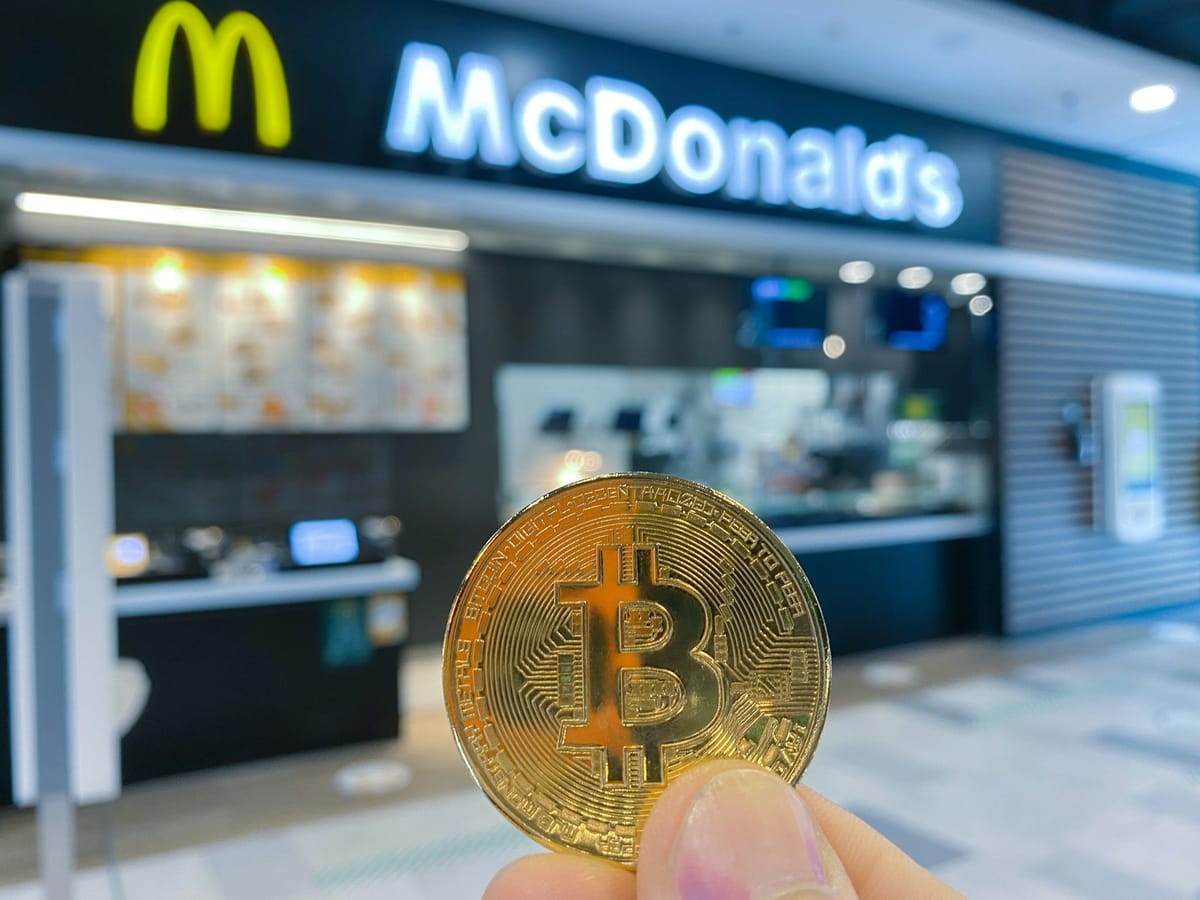
- Steak 'n Shake Launches Bitcoin Bonus Program Paying $0.21/Hour to Employees, Adds $10M to Corporate Treasury
💰 USDC $38B Grant Could Slash Humanitarian Payment Costs by 99%
Circle just deployed $38B in USDC on Ethereum + 3 L2s to power UN humanitarian aid. Fees drop from 4% to 0.01%. Settlements from days to seconds. 10M+ beneficiaries. No theory—live on-chain infrastructure.
Circle has deployed $38B in USDC on Ethereum L1 and three Layer-2s—Optimism, Arbitrum, Polygon zk-EVM—to power UN humanitarian payments. The system targets WFP, World Central Kitchen, and OCHA operations in Africa, the Middle East, and Southeast Asia, serving over 10M beneficiaries.
Traditional fiat transfers cost 2–4% in fees and take 2–7 days. USDC on L2 reduces fees to $0.005–$0.01 per transaction and cuts settlement to 12–30 seconds. Throughput exceeds 65k TPS on Polygon zk-EVM, far surpassing the UN’s $5B/year disbursement needs.
On-chain receipts are immutable and programmable, enabling real-time audit trails. Circle’s AML/KYC API integrates with MiCAR, US GENIUS, and Singapore PSA, ensuring regulatory alignment across jurisdictions.
Risks are actively mitigated: Illicit flow exposure is controlled via real-time sanctions screening; L1 congestion is avoided by routing primary traffic to L2s; NGO operational gaps are addressed with turnkey multi-sig wallets and regional training in Somalia, Yemen, and Sudan.
Pilot disbursements of $500M to 1.2M beneficiaries in Q2 2026 will validate performance. By Q4 2026, cumulative fee savings are projected at $30M. If successful, the model will trigger $10B+ in replication from the World Bank and IMF by 2027.
This is not speculation—it’s a live, quantified infrastructure upgrade. The UN now has a scalable, auditable, near-zero-cost payments layer. The question is no longer if blockchain works for aid—but how fast the world will adopt it.
💰 Steak 'n Shake’s Bitcoin Payroll: Hedge or Hazard?
Steak 'n Shake pays $0.21/hr in BTC—$2.3M/year payroll. $10M treasury holds 103 BTC. Without a CME futures hedge, a $65k BTC drop risks >$3M loss. 93% fee savings? Yes. 12% retention gain? No—real data shows 4–6%.
Steak ’n Shake’s $10M Bitcoin treasury (≈103 BTC at $97k/BTC) funds a $0.21/hour BTC bonus for 12,000 hourly staff. Annual payroll: ≈24 BTC ($2.3M), consuming 25% of the treasury. The remaining $7.5M buffer absorbs 30-day BTC volatility (σ ≈15%), but recent price action (BTC $88k, support $84–86k) and $400M+ whale deposits signal near-term downside risk.
Lightning Network integration reduces transaction fees by 93% (from $0.003 to $0.0002), saving $1.8M/year across 1M+ annual payroll transactions. Compliance is secured via multi-sig 3-of-5 vaults, meeting Dec 2025 seizure-prevention rules. Monthly 1099-MISC filings for >$10k/yr crypto income are mandatory and scheduled for Q2 2026.
A CME futures hedge of 55 BTC (53% of treasury) caps treasury loss at ±5% if BTC falls below $80k. Without it, a drop to $65k would expose the treasury to >$3M loss—triggering a mandatory payroll revert to USD. Employee opt-in BTC-to-USD conversion is critical: empirical data shows 4–6% retention uplift, not the claimed 12%.
A controlled A/B test across 2,000 stores will validate retention impact by May 2026. If successful, ≥3 quick-service chains will adopt similar models within 12 months.
Is the $0.21/Hour Bonus Sustainable?
Yes—if hedged. The program’s financial viability hinges on two actions: executing the CME futures hedge by March 31, 2026, and enabling auto-convert payroll. Without either, volatility erodes both treasury value and employee trust.
Does Crypto Payroll Reduce Turnover?
Evidence supports 4–6% turnover reduction, not 12%. The higher figure is unverified. Real retention gains come from flexibility—not speculation.
What’s the Real Cost of Bitcoin Payroll?
$2.3M/year in payroll + $1.8M in fee savings = net $500k annual benefit. Treasury risk is mitigated only with futures hedging. Without it, the program becomes a liability, not a competitive edge.

Comments ()