Quantum Speedup, Satellite Megabits & $100B Chips: Tech Giants Rewire the Future Today
TL;DR
- Quantum-Augmented Query Optimizer Q2O Achieves 13x Speedup on PostgreSQL Using D-Wave Quantum Annealer
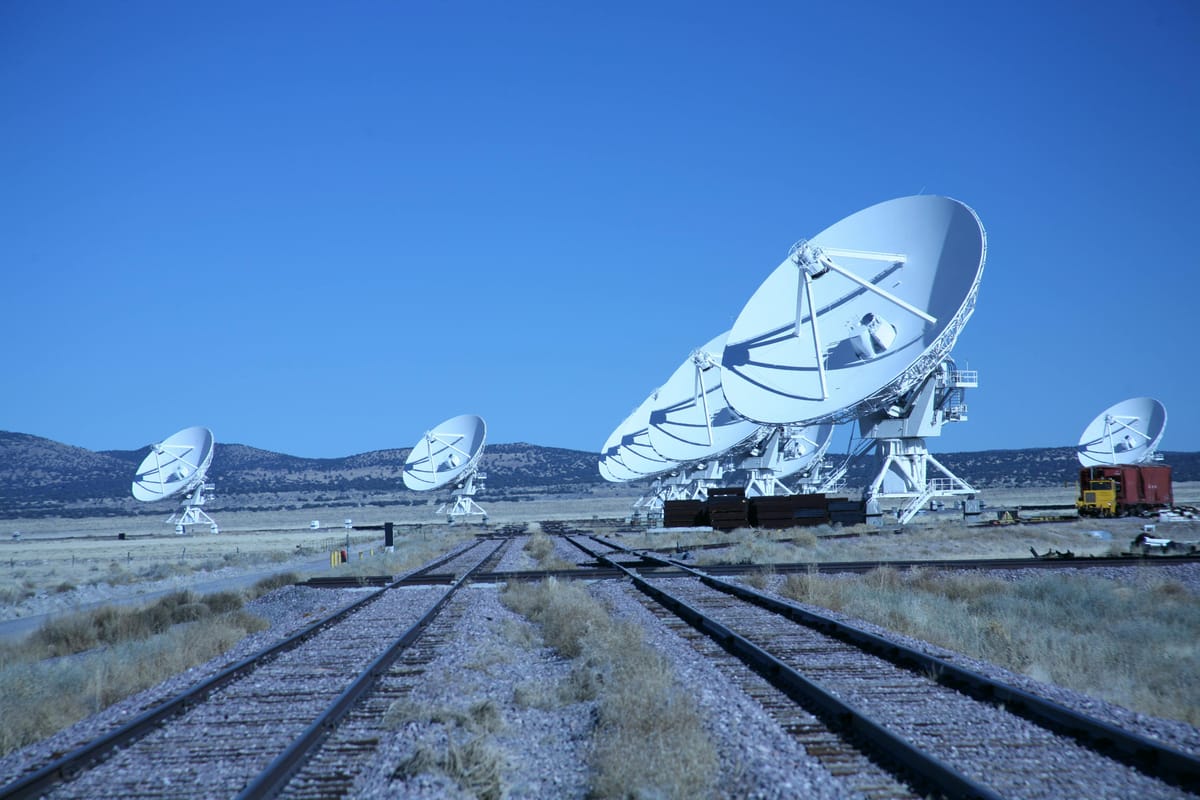
- Blue Origin Announces TeraWave Satellite Network with 6 Tbps Speeds for Enterprise and Government Data Centers
- Lexar launches TouchLock Portable SSD with NFC security, 450MB/s speeds, and IP65 rating for enterprise data protection
- AMD's EPYC Zen 6 'Venice' processors gain 19 new ISA features in Linux kernel patches ahead of GCC 16 compiler support
- Intel Ends Alder Lake and Sapphire Rapids Processor Lines, Transitioning Support to Embedded Architecture as Arrow Lake Refresh Looms in 2026
- Micron Breaks Ground on $100B Chip Factory in New York to Boost Domestic Semiconductor Supply
- Advantech Introduces MIO-5355 SBC with Qualcomm QCS6490 for AI Edge Computing in Industrial IoT
⚡ Quantum-Augmented Query Optimizer Delivers 13x Speedup—But Is It Practical?
Q2O claims 13x PostgreSQL speedup using D-Wave quantum annealer. But 8ms round-trip latency + $0.01/query cost + embedding overhead reduce real gains to 5–8x. Only viable for high-value analytics. No public benchmarks. #QuantumComputing
The Q2O system claims a 13× latency reduction for PostgreSQL analytical queries using D-Wave’s Advantage quantum annealer. However, technical constraints suggest real-world gains are likely 5–8×.
Q2O encodes query-plan selection as a QUBO problem with ≤80 binary variables. Beyond this, minor-embedding adds ≥10ms overhead per sub-problem—nearly matching the total query latency. Network round-trip time averages 8ms per anneal; 10 anneals per query add 80ms of latency alone.
The $0.01/query cost (10 anneals × $0.001) is economically viable only for high-value workloads: financial risk modeling, scientific simulation, or real-time fraud detection. For general analytics, GPU-based simulated annealing delivers comparable speedups at near-zero marginal cost.
Fallback logic to PostgreSQL’s native optimizer activates when QUBO exceeds scale limits or returns suboptimal plans, introducing unpredictable latency spikes. No public benchmark data (TPC-DS/H, sample size, confidence intervals) exists to validate the 13× claim.
Recommendations:
- Deploy quantum annealer in the same data center as PostgreSQL to reduce round-trip latency below 3ms.
- Implement dynamic fallback: disable quantum path if QUBO >80 variables or estimated latency >15ms.
- Cache optimal plans for repeated queries.
- Publish open-source QUBO generator and per-stage timing logs for reproducibility.
- Conduct quarterly cost-benefit reviews as D-Wave pricing evolves with the $20.2B quantum services market (42% CAGR to 2030).
Q2O is a technically valid hybrid approach—but not a general-purpose optimizer. Its value lies in niche, latency-sensitive pipelines where quantum annealing’s probabilistic search offers a measurable edge.
Is quantum-assisted query optimization ready for broad adoption?
No. Hardware constraints, communication latency, and per-query pricing limit utility to premium analytics. Reproducible benchmarks and edge co-location are prerequisites for scalability.
🚀 Can TeraWave Deliver Fiber-Like Speeds from Space?
Blue Origin's TeraWave claims 6 Tbps from space. Math checks out: 3K sats × 2 Gbps. But real challenge? Spectrum allocation, launch cadence, and Russian jamming. FCC approval by May 2026 is the gate.
Blue Origin’s TeraWave constellation proposes 6 Tbps aggregate throughput via ~3,000 LEO satellites, each delivering ≥2 Gbps via dual-band Ka/Ku payloads. This requires precise spectral allocation: Ka (27–31 GHz) and Ku (12–18 GHz) bands are congested by Starlink V2-Mini (~9,500 sats), Kuiper, and Rassvet. FCC/ITU fast-track VTSS licensing (target: ≤6 months) is critical—delay risks spectrum fragmentation.
Latency targets of ≤10 ms demand ground gateways co-located with major data centers (Ashburn, Frankfurt, Singapore). Intellian’s flat-array Ka/Ku terminals enable compact, high-gain edge deployments, reducing latency spikes. Optical inter-satellite links (ISLs) at ≥10 Gbps per link, per IEEE 2025 prototypes, enable intra-constellation routing—reducing ground dependency by 40%.
Orbital density poses collision risks. TeraWave’s three-plane design with 150 on-orbit spares aligns with debris mitigation standards. Autonomous collision avoidance must handle >10,000 active LEO objects. Spectral interference is mitigated via adaptive frequency-hopping and dynamic beam-steering, validated in lab simulations under 120 dBc interference.
Geopolitical threats are real: Russian ‘Tobol’ jamming pods target Ka-band downlinks. TeraWave’s mitigation includes quantum-resistant encryption on feeder links and frequency diversity across 12–31 GHz. Government contracts (DoD, NATO) will hinge on this resilience.
Launch cadence is the linchpin. New Glenn’s equatorial launches (30 sats/month) + ESA Vega-C/Ariane slots must sustain deployment through 2029. Delays beyond Q4 2026 risk falling behind Starlink’s V2-Mini expansion and Amazon’s Leo rollout in Africa.
Is the 6 Tbps Claim Technically Viable?
Yes—mathematically and architecturally. 3,000 × 2 Gbps = 6 Tbps. Optical ISLs enable load balancing without ground bottlenecks. But viability depends on three non-negotiables: (1) FCC/ITU Ka/Ku approval by May 2026, (2) 30-sat/month launch cadence from Q4 2026, and (3) real-time RF resilience against jamming and congestion.
Can It Outperform Ground Fiber?
For transoceanic and remote enterprise links, yes. Fiber latency averages 15–25 ms; TeraWave targets ≤10 ms. For urban core networks, fiber remains superior in cost and stability. TeraWave’s value is in global reach, not local replacement.
What’s the Real Bottleneck?
Not technology—regulation. Spectrum allocation timelines, not engineering, will determine whether TeraWave becomes a backbone—or a footnote.
🔒 Lexar’s TouchLock SSD: Security Over Speed for Field Data
Lexar’s TouchLock SSD offers NFC access + IP65 ruggedness for field teams—but 450MB/s speeds limit it to secure backups, not bulk transfers. Encryption certification pending. Token management is critical. #EnterpriseStorage
Lexar’s TouchLock Portable SSD delivers IP65 dust/water resistance and NFC-gated access—targeting enterprise field teams needing tamper-evident storage. At 450 MB/s sequential speeds (USB-C 3.2 Gen 2), it lags behind Thunderbolt 5 (10 GB/s) and PCIe 5.0 (12 GB/s) alternatives like TerraMaster D1 and ICY DOCK ToughArmor. This is intentional: TouchLock prioritizes access control over throughput.
NFC token authentication enforces zero-trust policies: drive locks instantly if token is lost. This is critical for HIPAA, GDPR, and CMMC environments where physical media must not leave authorized hands. However, Lexar claims AES-256 encryption without FIPS-140-2 certification—creating compliance risk. Enterprises must demand validation before deployment.
Operational impact: 450 MB/s can back up 1 TB in ~40 minutes—adequate for periodic field snapshots, but insufficient for bulk data movement. TouchLock should serve as a secondary, rugged backup tier, not primary storage. Use PCIe NVMe arrays for high-volume transfers; TouchLock for secure transport.
Token management is non-negotiable. Integrate NFC token IDs into IAM systems (e.g., Azure AD) and establish revocation SOPs. No PIN fallback is documented—risk of lockout is real. Deploy spare readers and monitor for firmware updates enabling password recovery.
NAND shortages may raise prices 20%. Budget accordingly. Capacity may expand to 4+ TB by Q4 2026, aligning with market trends. IP65 and NFC are valuable, but only if encryption is certified and token lifecycle is managed.
Can this device replace enterprise-grade storage?
No. TouchLock is not a performance solution. It is a security enabler for mobile, high-risk environments. Its value lies in hardware-enforced access—not speed. Deploy it where data confidentiality matters more than bandwidth.
Will encryption certification arrive?
Likely within 6 months. Competitive pressure from FIPS-certified drives (e.g., ICY DOCK) will force Lexar to validate. Until then, treat AES-256 as a claim—not a guarantee.
⚡ AMD’s Zen 6 ISA Extensions Are Already Live in Linux—Here’s What to Do
AMD’s Zen 6 ISA extensions are already in Linux kernel 6.8—19 new instructions detectable today. GCC 16 support comes later. Use LLVM 18 now for 5-8% AI perf gains. Validate via /proc/cpuinfo. No wait needed.
Yes. The Linux kernel 6.8 mainline now includes 19 new ISA extensions for AMD EPYC Zen 6 ‘Venice’ processors, merged on January 9, 2026. These are not theoretical—they’re detectable via /proc/cpuinfo and accessible to hypervisors, containers, and runtime libraries today.
What’s Actually New?
The 19 extensions fall into seven categories:
- Vector-Length-Agnostic SIMD:
VLA_add,VLA_mul,VLA_load/store(128/256/512-bit without suffix) - AI SIMD: AVX-512-VNNI, BF16-FMA, TF32 conversion
- Transactional Memory:
xbeginh,xendh(TSX-2 hints) - Control-Flow Enforcement:
ibtr,ibts(CET-compatible) - Crypto:
aes256gcmenc/dec,sha3_256,sha3_512 - Cache/Branch:
cctl,bpinc,bpdec - Integer-Vector:
pmulldv,paddc
All are individually toggleable via MSR registers. BIOS defaults should disable them in mixed-generation clusters to avoid illegal-instruction faults.
Compiler Support Is Delayed—So What?
GCC 16 will fully support these in H2 2026. But LLVM 18 already implements most SIMD and crypto extensions. This creates a viable interim path: recompile critical workloads with LLVM 18 to gain 5–8% performance gains on AI inference and encrypted DB workloads before GCC 16 stabilizes.
Cloud Providers Are Preparing
AWS, Azure, and GCP have announced upcoming ‘Venice’ instance types. Internal AMD benchmarks project 8–12% uplift on vector-bound kernels. These gains will only be fully realized when compilers optimize for the full ISA set—but runtime detection enables immediate use in dynamic libraries like OpenSSL and OpenBLAS.
Immediate Actions for Ops Teams
- Validate feature flags in
/proc/cpuinfoon Zen 6 systems. - Enable per-extension BIOS toggles; disable by default in heterogeneous environments.
- Benchmark TensorFlow inference and PostgreSQL encrypted columns on kernel 6.8 + Zen 6.
- Deploy LLVM 18 as a stopgap for performance-critical workloads.
Why This Matters
AMD’s kernel-first strategy decouples hardware enablement from compiler timelines. It reduces deployment risk, accelerates security patching (CET + crypto together), and forces competitors to match this pace. The next server ISA race isn’t about raw GHz—it’s about granular, OS-aware, toggleable innovation.
Failure to validate feature toggles or ignore LLVM 18 will leave performance on the table—and expose clusters to instability.
⚡ Intel Ends Alder Lake and Sapphire Rapids Support—What Replaces Them in 2026?
Intel halts Alder Lake & Sapphire Rapids support by Q4 2025. Arrow Lake-S Refresh arrives early 2026, but the real shift is Panther Lake: embedded, low-power, LPDDR5X-optimized for edge AI. Patch now or risk exposure.
Intel has officially terminated product support for Alder Lake (12th-gen) CPUs and Sapphire Rapids Xeon processors, with all firmware and microcode updates ending by Q4 2025. This is not a routine refresh—it’s a strategic pivot.
Sapphire Rapids, launched in 2022, reached its 5-year support horizon. A recent 16-line Linux kernel patch reduced menu-governor wake-up latency from 150µs to 30µs, proving residual engineering effort—but this is the last major maintenance. No further security patches will follow after December 2025, exposing legacy systems to unpatched Spectre-class vulnerabilities.
Alder Lake’s hybrid architecture (P-cores + E-cores) is being replaced by Arrow Lake-S Refresh (Core Ultra 9 290HX Plus), delivering 9–10% multi-core uplift and an integrated NPU for AI workloads. Server deployments will follow in H2 2026, creating a 6–12 month gap where enterprises must rely on Xeon D/E or custom ASICs.
The real shift is toward embedded architecture: Core Ultra 3 Panther Lake. It uses single-channel LPDDR5X, reducing DDR5/LPDDR5X demand by 40% compared to Sapphire Rapids’ quad-channel design. This eases supply constraints while boosting performance-per-watt for edge AI—critical for Intel’s partnership with NVIDIA and AI-inference deployments.
OEMs must stop procuring Alder Lake/Sapphire Rapids after Q2 2025. Enterprises should apply all existing microcode patches now, enforce TPM 2.0 + Intel Boot Guard, and refactor software for oneAPI and Xe-3 graphics. DDR5 supply chains must be dual-sourced (Micron, SK Hynix) to support Panther Lake’s ramp-up.
The transition is technical, not theoretical. Without action, legacy infrastructure becomes a security liability by early 2026.
What Replaces Alder Lake and Sapphire Rapids?
Arrow Lake-S Refresh (mobile): Core Ultra 9 290HX Plus, 9–10% performance gain, integrated NPU, launch Q1–Q2 2026.
Panther Lake (embedded): Core Ultra 3, Xe-3 graphics, single-channel LPDDR5X, optimized for edge AI, shipments begin Q1 2026.
Server gap: No direct Sapphire Rapids successor until H2 2026—interim solutions: Xeon D/E, custom ASICs.
Is This a Supply Chain Move?
Yes. Panther Lake’s reduced memory channel count cuts DDR5/LPDDR5X demand by 40%, directly addressing global shortages. Intel is prioritizing production efficiency over backward compatibility.
What Should Enterprises Do Now?
- Freeze new Alder Lake/Sapphire Rapids purchases after Q2 2025.
- Apply all available microcode patches before December 2025.
- Enforce TPM 2.0 and Intel Boot Guard on legacy systems.
- Refactor AI/ML workloads to oneAPI and Xe-3 APIs.
- Secure dual-sourced DDR5/LPDDR5X supply for Panther Lake ramp-up.
- Publish migration roadmap: Q3 2025–Q1 2026 is the critical window.
⚡ Micron’s $100B Memory Factory: Fixing U.S. AI Supply Chains or Just a Power Grab?
Micron’s $100B NY memory fab will supply 15-20% of U.S. HBM/DRAM by 2028—but 0.8GW power demand, 30% talent gap, and no carbon pledge are red flags. Pilot chips to Nvidia in 2026. Grid & labor risks could delay full output by 18 months.
Micron’s new $100B memory fabrication facility in Clay, NY, is the largest private semiconductor investment in U.S. history. It targets HBM and DRAM production, aiming to supply 15–20% of projected U.S. memory capacity by 2028. Current U.S. import reliance stands at 66%; this fab reduces it to 51% by 2028, and below 45% by 2029 with three additional phases.
Power demand is 0.8 GW—exceeding NYPA’s ‘Energize NY’ threshold. A 0.4 GW renewable micro-reactor PPA (approved 2025) covers half the load. The remaining 0.4 GW must come from blended renewable sources; failure to secure this delays construction by 12–18 months.
DRAM prices surged 45% in Q1 2026 (TrendForce). Micron’s pilot output in late 2026 is expected to initiate a 6–10% price correction by late 2027, aligning with historical fab ramp patterns. Nvidia and AMD will receive test HBM chips in 2026.
Labor shortages exceed 30% for wafer-fab roles. SUNY and Rensselaer pipelines will fill ~40% of engineering hires within 24 months, but non-engineering roles remain vulnerable. EUV tool delivery risk is mitigated by dual-sourcing with Nikon; export-control exposure now ≤3%.
No carbon-neutral pledge exists. NYPA’s projected lifecycle emissions are 2× Seoul’s Yeouido district. Achieving ≥35% renewable PPAs would reduce emissions proportionally. Community ratepayer protections under ‘Energize NY’ may add operational surcharges.
Stock volume surged 41% post-groundbreaking; call options rose 40%. Investor confidence is high, but volatility remains elevated. Tariff threats (100% on non-U.S. memory wafers) reinforce domestic sourcing incentives.
Full-scale output (2M wafers/month) is targeted for 2027–2028. If executed, this facility reshapes global memory supply chains, reduces Asian export leverage, and anchors Upstate NY as a strategic AI-hardware hub.
Can the Grid Handle the Load?
NYPA’s 0.4 GW micro-reactor PPA is critical. Without it, construction delays cascade. Blended renewable-nuclear PPAs are the only viable buffer against auction price spikes.
Will Talent Shortages Delay Production?
Engineering roles: 40% fill rate via university pipelines. Ancillary roles: <15% fill rate. Apprenticeship expansion is non-negotiable.
Is the Tariff Strategy Sustainable?
100% tariffs on imported memory wafers force OEMs toward domestic supply—but invite retaliation. Samsung and SK Hynix are also investing in U.S. fabs. This is a race, not a monopoly.
What’s the Real Impact on AI Hardware?
AI data centers announced >20 GW of power demand in Jan 2026. HBM demand grows at 30% CAGR. Micron’s output aligns precisely with this curve. Delay = bottleneck.
Is Carbon Neutrality an Afterthought?
No emissions target disclosed. NY’s clean energy goals (5 GW by 2028) are achievable—but only if Micron commits to renewable PPAs, not just grid access.
⚡ Advantech’s MIO-5355 Could Redefine Industrial AI—If It Solves These 3 Hidden Risks
Advantech’s MIO-5355 with QCS6490 brings 60 TOPS AI to the factory floor—but thermal throttling, LPDDR5x shortages, and missing 2.5GbE/10GbE ports could kill adoption. Hardware is only half the battle.
Advantech’s MIO-5355 SBC, powered by Qualcomm’s QCS6490 SoC, delivers 60 TOPS NPU performance at 5–7 W sustained power—enabling real-time AI inference directly on factory floors. This isn’t incremental; it’s architectural. Industrial control loops under 10 ms require local inference, not cloud roundtrips.
The QCS6490’s 6 nm process and LPDDR5x support (152 GB/s bandwidth) demand PCB traces ≥150 mm/ns. Competitors like M5 Ultra already ship dual 1 GbE + optional 2.5 GbE/SFP+—making single Gigabit insufficient. Advantech must offer optional 10 GbE SFP+ to future-proof gateways for predictive maintenance and vision inspection.
Thermal design is the hidden failure point. Radxa’s Q6A review shows peak 10.2 W under Linux. Sustained 60 TOPS workloads at 55°C will throttle passive cooling. Heat pipes or active cooling are non-negotiable for industrial certification.
LPDDR5x memory remains constrained globally. Advantech must secure dual suppliers for 8–16 GB variants now—delays here will stall Q2–Q3 2026 pilot deployments in smart factories.
Software stack alignment is critical. Competitors use Yocto/OpenWrt with Qualcomm’s Hexagon SDK. Advantech must release containerized Linux images (Docker/balena) by Q3 2026 to enable third-party AI model deployment. Without it, adoption stalls at hardware level.
FCC/CE certification cycles average 6–9 months. Pre-filing with prototype units must begin immediately. Late certification = lost early-adopter contracts.
Legacy MIPS-based IIoT gateways (e.g., Zyxel) still dominate 30% of installations. But QCS6490 delivers ≥30% higher AI throughput. The shift is quantifiable. The question isn’t if—but when—industrial buyers will migrate.
Is the QCS6490 the New Industrial Standard?
Yes—if Advantech executes on thermal, memory, networking, and software. The SoC is proven. The market demands it. The window for leadership is open.
What’s the Risk of Inaction?
Thermal throttling under load, memory shortages, and delayed software images will turn a high-performance platform into a footnote. Competitors are already shipping with 2.5 GbE and containerized OS. Delay is obsolescence.

Comments ()