ATR 42 Crash in Indonesia Sparks Global Safety Overhaul as Oreshnik Strikes Expose the New War of Deception in Ukraine
TL;DR
- Indonesia ATR 42-500 crashes near Mount Bulusaraung with 11 aboard, debris found 12 miles from Makassar airport
- Russian Oreshnik missile strikes Lviv aircraft repair plant, Ukrainian officials confirm decoy used in Kharkiv Patriot strike
✈️ ATR 42-500 Crash into Mount Bulusaraung: CFIT Confirmed, Terrain Warning System Under Scrutiny
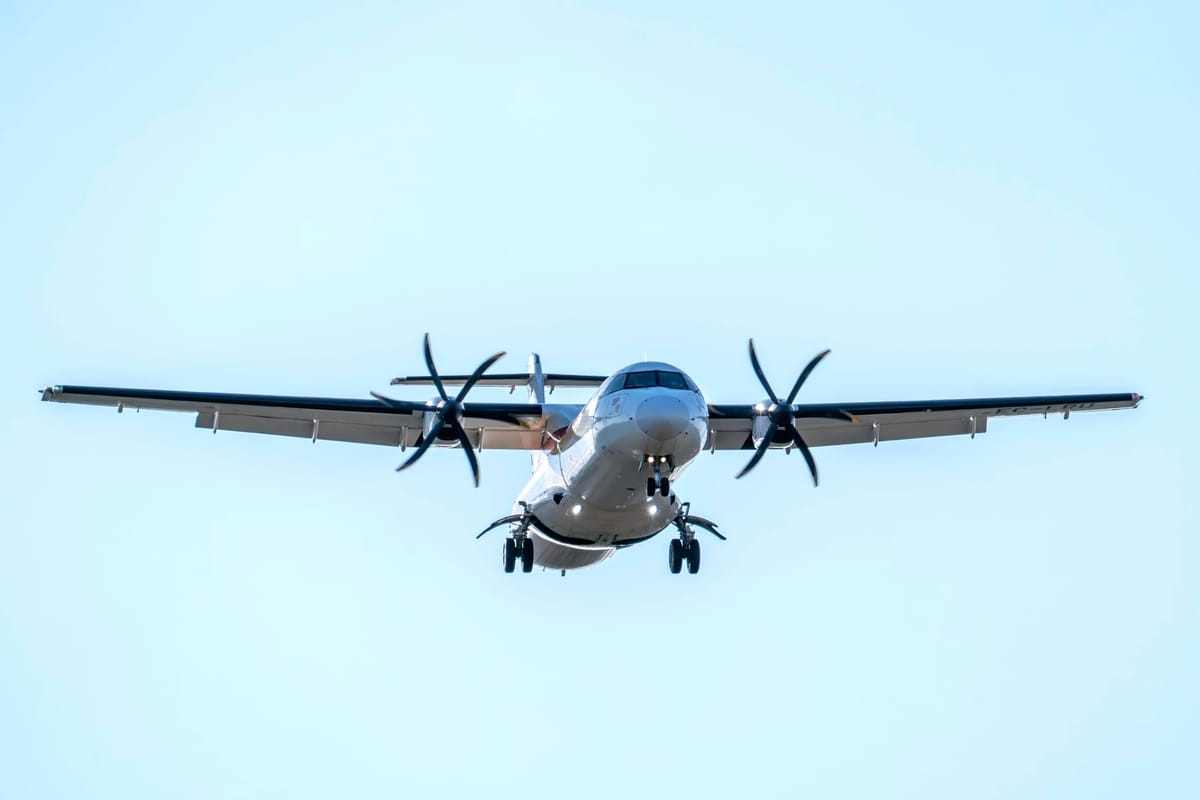
ATR 42-500 PK-THT crashed into Mount Bulusaraung (19km NE of Makassar) on 17 Jan 2026. 11 fatalities. NTSC confirms CFIT. FDR/CVR retrieved. Terrain-warning antenna suspected. Fleet-wide GPWS upgrades ordered. #AviationSafety #ATR42 #IndonesiaCrash #CFIT
On 17 Jan 2026, Indonesia Air Transport’s ATR 42-500 (registration PK-THT), operating a government service flight from Yogyakarta to Makassar, lost radar contact at 13:30 local time (06:30 UTC). The aircraft crashed into the slope of Mount Bulusaraung, 19 km northeast of Sultan Hasanuddin Airport (UPG), at an elevation of 200 meters. All 11 on board—7 crew, 3 government passengers, and 1 ministry staff—perished. No distress call was transmitted.
Wreckage was sighted by SAR helicopters at 07:46 local time (00:46 UTC) on 18 Jan, 12 miles from Makassar. The flight data recorder (FDR) and cockpit voice recorder (CVR) were recovered the same day. The National Transportation Safety Committee (NTSC) has classified the incident as a Controlled-Flight-Into-Terrain (CFIT), with no evidence of mechanical failure prior to impact.
Initial technical analysis points to a degraded terrain-warning antenna as a probable contributor. The Directorate General of Civil Aviation has ordered fleet-wide inspections of ATR 42-500s, focusing on Ground-Proximity Warning System (GPWS) integrity. The government-service route between Yogyakarta and Makassar is suspended pending safety upgrades.
A SAR operation involving 1,200 personnel was deployed. Compensation frameworks for families are being finalized, with NTSC committing to public release of recorder data within 30 days. Daily briefings have been instituted to maintain transparency.
The aircraft was on a low-altitude segment during approach. ADS-B data confirms the final ping at 04:20 UTC (11:20 local), indicating descent into mountainous terrain without altitude correction. This mirrors the 2023 Lombok ATR 72 CFIT incident, where terrain-warning system failure preceded impact.
Immediate action: Temporary grounding of government-operated ATR 42-500s; mandatory GPWS upgrade for all similar aircraft in state service by 15 Feb 2026.
💥 Oreshnik Strikes Lviv Industrial Site — But Did It Really Hit Aircraft Repair Plant?
Oreshnik missile (CEP ~200m) hit Lviv industrial zone — no aircraft damaged. Gas shut-off, roof damage, 0 fatalities. Claim of Kharkiv Patriot decoy? Unverified. Russia’s strategy: volume over precision. Ukraine counters with forensic transparency. #Ukraine #Russia #Oreshnik #WarInUkraine #PrecisionStrike
On January 9, 2026, a Russian Oreshnik medium-range ballistic missile struck an industrial facility in Lviv, damaging roofs and triggering a gas safety shut-off affecting 376 homes. Ukrainian authorities confirmed the strike but explicitly stated no aircraft were lost and the State Aircraft-Repair Plant was not directly hit. Russian state media claimed a "70-missile campaign" targeting western Ukraine, but the missile’s Circular Error Probable (CEP) of ≈200 meters makes pinpoint strikes on small, mobile assets like aircraft repair bays statistically implausible.
The Oreshnik (Mach 10–11, 400 kg warhead) is designed for area suppression, not precision. Its impact on Lviv’s industrial zone aligns with Russia’s volume-based doctrine: saturate logistics hubs, energy infrastructure, and symbolic sites to strain civil defense and media response. The gas-system activation — a measurable, verifiable effect — underscores the missile’s collateral footprint, not its surgical utility.
Separately, claims that a decoy Patriot system was used in Kharkiv to lure a strike remain unverified. No geolocated imagery, radar data, or independent forensic analysis supports the assertion. However, given the Oreshnik’s inaccuracy, deploying mock-ups of air-defense systems to fabricate "hits" is a logical, low-cost information-warfare tactic. If confirmed, such decoys would undermine NATO’s credibility in publicly reporting air-defense successes.
Ukraine’s response has been data-driven: rapid release of LIDAR scans, photogrammetry, and CEP analysis has successfully debunked Russian narratives of "precision strikes." This forensic transparency is now a core pillar of its strategic communication.
Looking ahead: Expect 3–5 additional Oreshnik strikes on large infrastructure targets in western Ukraine over the next 30 days. Simultaneously, Russia may expand decoy deployments near Kharkiv, Zhytomyr, or Ivano-Frankivsk. In response, NATO is accelerating delivery of ATACMS and HIMARS to enable precision counterstrikes against Oreshnik launchers — shifting the balance from volume to accuracy.
The Oreshnik is not a weapon of destruction — it’s a weapon of distraction. Its real power lies not in what it destroys, but in what it forces the enemy to defend.
In Other News
- U.S. Navy Deploys MQ-9B SeaGuardian Drones with Doubled Sonobuoy Capacity for Anti-Submarine Warfare
- WestJet reverses Boeing 737 seat densification, restores 30-inch pitch after passenger backlash and viral videos
- United Airlines flight UA2323 suffers nose wheel separation on landing at Orlando, triggers ground stop and aircraft grounding
- Boeing 777X business class unveiled by Emirates with enclosed suites and social lounge, delivery delayed to 2027
- China to Field 1,000 J-20 Stealth Fighters by 2030 Amid 3x Surge in Taiwan Airspace Violations
- Airbus A350-1000 Delivered to PAL for Southeast Asia–North America Routes, Marking Fleet Modernization
- U.S. Navy Arms Zumwalt-Class Destroyers with Hypersonic Missiles to Counter Long-Range Threats in Indo-Pacific
- U.S. Air Force Inks $9.2B Deal for 351 T-7A Red Hawk Trainers to Prepare Pilots for F-35 and Sixth-Gen Fighters


Comments ()