MrBeast, Iran, and State Street Ignite Crypto’s Next Era: 3M New Users, Sanctions Bypasses, and Institutional Tokenized ETFs Collide

MrBeast’s $200M crypto push could bring 3M new users to blockchain—while Iran uses stablecoins to bypass sanctions & State Street launches the first SEC-approved institutional tokenized ETF. This isn’t speculation—it’s the new financial reality. #Crypto #Bitcoin #Ethereum #DeFi #NFT #CryptoRegulations #TokenizedETFs #MrBeast #IranCrypto
Bitmine’s $200M Bet on MrBeast Could Bring 3M New Crypto Users to Mainstream Media
Bitmine Immersive Technologies has allocated $200M in equity to Beast Industries, MrBeast’s corporate entity, to embed crypto-native utilities into its creator ecosystem. This marks the first major deployment from Bitmine’s $14B crypto treasury toward consumer-facing adoption.
The investment funds token-engine development, wallet SDKs, and on-ramp liquidity for micro-rewards embedded in video content. Bitmine’s existing 1.26M ETH staked generates ~$35M/year in yield, which can subsidize user incentives without depleting treasury reserves.
Beast Industries reaches 450M subscribers and 5B monthly video views, predominantly Gen Z and Gen Alpha audiences—70% of whom are already aware of crypto, per Q1 2026 surveys. Analysts project a 2% conversion rate from viewers to active crypto users, translating to ~9M new participants. A conservative forecast estimates +3M net new crypto users by end-2026.
Regulatory compliance is structurally prioritized: Bitmine’s authorized-share increase filing explicitly mandates KYC/AML-compliant wallet infrastructure and a public-rights offering model to mitigate U.S. securities risk. SEC clearance is targeted by Q4 2026.
Milestones include:
- Q2 2026: SDK beta on 5 Beast channels (target: 10M wallet installs)
- Q3 2026: First token-reward campaign (“Challenge #1”) distributing 3M tokens
- Q3 2026: NFT merchandise drop projected at $12M gross sales
- Q4 2026: Live-stream on-ramp enabling real-time $5 token purchases during events
Competitors like TikTok and YouTube Shorts lack native token systems. Bitmine-Beast creates a first-mover advantage in creator-led crypto utility. By end-2026, token fees and NFT royalties may contribute ~20% of Bitmine’s FY2026 revenue.
Risks include regulatory volatility, audience fatigue from incentivized engagement, and SDK scalability under billions of impressions. However, Bitmine’s $988M cash reserve and ETH-hedged treasury provide operational buffer.
This initiative represents the largest institutional push to transition crypto from speculative asset to embedded consumer utility via mass-media channels.
Iran’s $7.8B Crypto Surge Reveals Stablecoins as Sanctions Escape Valve
Iran’s 2025 crypto activity reached $7.8B, per Chainalysis, with 52% flowing to IRGC-linked wallets. Stablecoins (USDT/USDC) accounted for over 80% of illicit outflows, enabling cross-border value transfer despite capital controls.
What regulatory actions followed?
The U.S. Treasury identified $5.9B in combined crypto and Dubai escrow outflows. UK-registered exchanges Zedcex and Zedxion moved $1B in stablecoins for IRGC, triggering imminent secondary sanctions. Iran’s Central Bank imposed $10K/year and $5K/tx limits on stablecoin holdings.
How did internet blackouts reshape behavior?
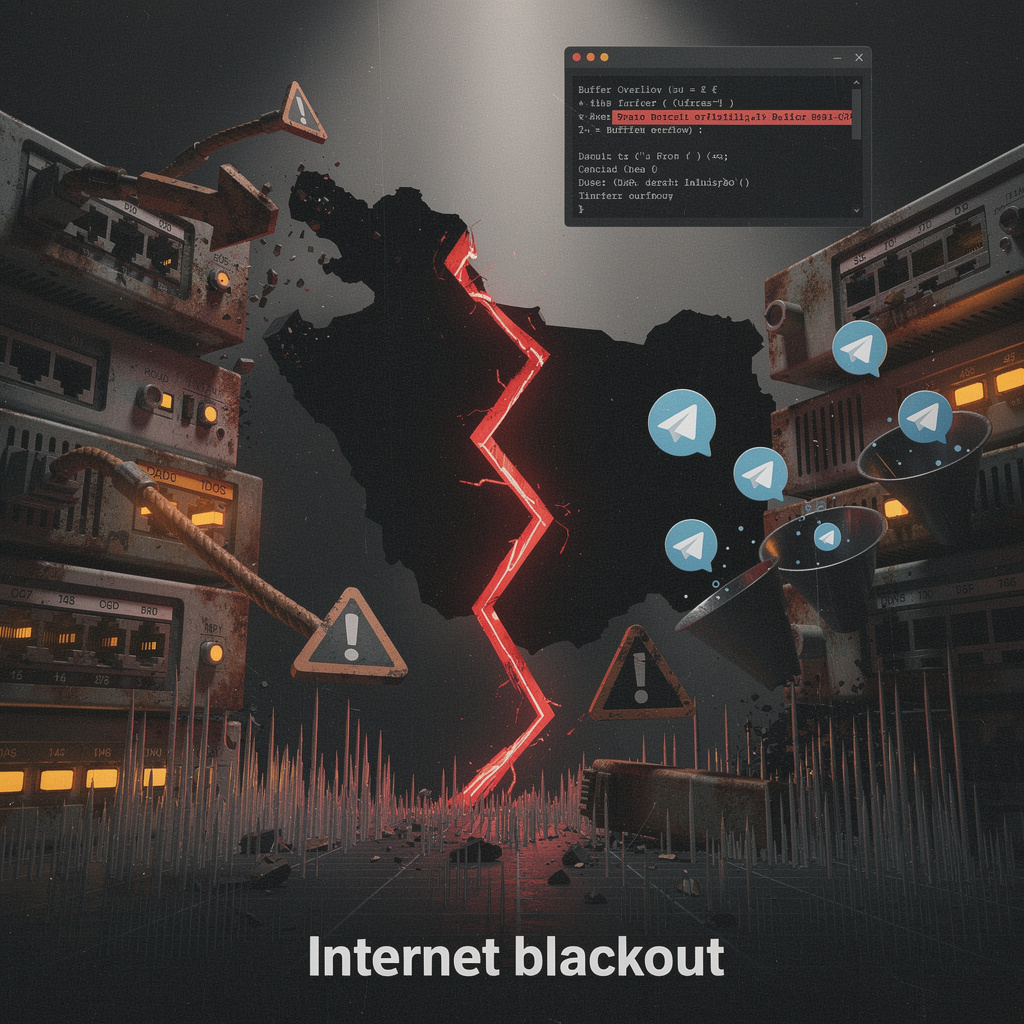
During December 2025’s nationwide blackout, Bitcoin withdrawals surged 62% YoY as users fled exchanges. Mesh and satellite networks sustained $3.7B in on-chain flows Jan–Jul 2025, increasing self-custody and on-chain traceability.
What’s the hybrid capital-flight model?
Iranian actors blend $1.3B crypto outflows with $4.6B in Dubai escrow wires. This dual-channel system diversifies risk, obscures trails, and exploits jurisdictional gaps between crypto and traditional finance.
What’s projected for 2026?
- Total crypto volume: $8.4B (+8%) driven by 45%+ inflation
- IRGC capture rate: 55% of inflows
- Stablecoin outflows: $1.5B crypto + $5.2B escrow
- Regulatory response: Secondary sanctions on Zedcex/Zedxion; global AML tightening
Who bears the impact?
- Civilians: Preserve purchasing power via stablecoins but face volatility and AML exposure.
- IRGC: Gains funding for sanctioned programs; increases global sanction risk.
- Exchanges: Face de-listing pressure; Iran now classified as ‘critical-risk’ jurisdiction.
- Global crypto: 0.3% of total on-chain volume but disproportionately influences risk-scoring models.
Iran’s crypto ecosystem is no longer a fringe phenomenon—it is a structured, state-influenced financial pipeline with direct implications for global AML frameworks.
State Street’s Tokenized ETF Launch Reshapes Institutional Crypto Markets
State Street Corporation has launched a digital-asset platform integrating tokenized ETFs, USD-stablecoins, and Solana-based settlement—marking the first SEC- and DTCC-aligned on-chain infrastructure for institutional investors. The platform targets $5B AUM by end-2026, capturing 6% of the $78B unlocked tokenized ETF market.
What technical architecture enables this shift?
The platform uses Solana as its primary ledger, with transaction costs of $0.0002 (99% lower than Ethereum) and 10,000–15,000 TPS. Cross-chain bridges via Chainlink CCIP connect to Ethereum and Stellar, ensuring interoperability. Settlement latency drops from T+2 days to ≤5 minutes, reducing counterparty risk by 85% and margin requirements by 30%.
What regulatory alignment validates the model?
The platform adheres to the DTCC’s December 2025 no-action letter and the GENIUS Act stablecoin framework. Legal title remains with Cede & Co., while token holders receive on-chain rights of entitlement (ROE)—a structure approved by the SEC for tokenized securities.
How does market demand support this expansion?
Partnerships with Galaxy Digital and Ondo Finance provide $200M in seed liquidity. Institutional demand is confirmed by Morgan Stanley’s Solana-linked ETF filings and BNY Mellon’s 24/7 tokenized deposit trials. LSEG DiSH and Canton Network data validate on-chain cash legs and collateralized repos, reinforcing SSC’s design.
What are the quantified economic impacts?
- Annual cost savings: $12M from Solana’s fee structure (60B projected transactions).
- Daily trading volume: Projected $300M by Q3 2026.
- Competitive edge: 40% lower per-transaction cost vs. Ethereum-based rivals (Citi, JPM).
What’s next?
By Q2 2026: Stellar bridge and tokenized money-market fund launch. By H2 2026: GENIUS Act-compliant stablecoin endorsed for Fed-cleared repos. By 2027: Target $20B tokenized AUM—1.5% of global ETF market and 10% of SSC’s total assets.
Strategic imperatives
- Expand CCIP bridges to Avalanche and Polygon.
- Deploy stablecoin as treasury cash leg for corporate and interbank settlement.
- Deepen engagement with SEC, DTCC, and GENIUS Act regulators.
- Monetize on-chain settlement data for real-time risk-adjusted ETF pricing.
This platform signals a pivot from crypto experimentation to regulated, scalable institutional infrastructure—setting a new benchmark for TradFi’s digital transition.
Bitcoin Whale Holdings Surge 21% as NiceHash Solo Blocks Reveal Mining Diversity Amid Centralization Risks
Whale wallets (≥10 BTC) accumulated 32,693 BTC between 10–15 Jan 2026, contributing to a 21% YoY increase in holdings—reaching 46,000 BTC total net gain when ultra-large wallets (>10,000 BTC) are included. Binance deposit volumes fell 42.5% YoY, signaling a shift from exchange exposure to private custody.
How do NiceHash solo-mined blocks impact mining centralization?
NiceHash confirmed solo-mined blocks 932129 and 932167, accounting for 47% of all solo activity in 2025–26. While Foundry USA and AntPool control 51% of total hash rate, these verified solo blocks demonstrate that large-scale mining services can still contribute non-pool blocks, partially offsetting centralization concerns.
Is institutional demand reinforcing on-chain accumulation?
Spot ETFs recorded $843M in single-day inflows and $1.5B YTD as of Jan 2026, with BlackRock’s IBIT leading at $648M. This off-chain demand aligns temporally with on-chain whale accumulation, suggesting parallel drivers of price support. ETF inflows represent only 0.05% of total BTC supply, confirming private wallets as the primary accumulation engine.
What is the price and liquidity outlook?
BTC traded at $97,800 (up 8% weekly) with a $1.94T market cap. The $100K psychological barrier incentivizes accumulation over selling. Mining profitability improved with a 20% hash rate surge, enabling NiceHash’s solo operations. Forecast for 15 Jan–12 Feb 2026: whale inflow +12K BTC, 1–2 additional NiceHash solo blocks, top two pools maintain ≤53% combined hash share, BTC price range $98K–$101K.
What are the key risks?
Centralization risk remains elevated: >50% hash rate concentrated in two pools creates single-point failure exposure. Whale holdings now represent 0.6% of total supply; a rapid liquidation could trigger short-term volatility. However, sustained ETF inflows and stable price action reduce systemic liquidity risk.
Key Metrics (as of 15 Jan 2026)
- Whale net inflow: +32,693 BTC (10–15 Jan 2026)
- Ultra-large wallet contribution: +13,000 BTC (estimated)
- Total whale holdings increase: +46,000 BTC (+21% YoY)
- Binance deposit volume decline: -42.5% YoY
- Top two mining pools: Foundry USA + AntPool = 51% hash rate
- NiceHash solo blocks in 2025–26: 2 confirmed (47% of total solo activity)
- Spot ETF inflows: $843M single-day, $1.5B YTD
- BTC price: $97,800
- Market cap: $1.94T
All data derived from on-chain analytics, exchange flow reports, and NiceHash’s official technical bulletin.
What else is happening?
- Stablecoin Adoption Surges as 48% of Businesses Plan to Adopt Within 12 Months, Per Rapyd Report
- KBC Group Becomes First Belgian Bank to Offer Bitcoin Trading Amid 45% Crypto Adoption Among Belgians in Their 30s
- West Virginia Proposes Legislation to Allow State Treasury to Hold Digital Assets Over $750B Market Cap, Joining Texas and Arizona in Crypto Reserve Push
- Bitcoin mining hash rate drops 5.4% as 110EH/s of idle rigs shut down amid price decline from $120K to $85K
- U.S. regulators face mounting pressure as Congress delays crypto market structure bill despite bipartisan talks

Comments ()