California Court Upholds Democratic Map Gain, Deepening National Redistricting Divide; Hundreds Killed in Iran
TL;DR
- Federal court upholds California’s voter-approved congressional map, granting Democrats five new House seats and countering Texas GOP gerrymandering
- U.S. DOJ investigates six Democratic lawmakers over 'Don’t Give Up the Ship' video urging military to refuse illegal orders, sparking constitutional clash
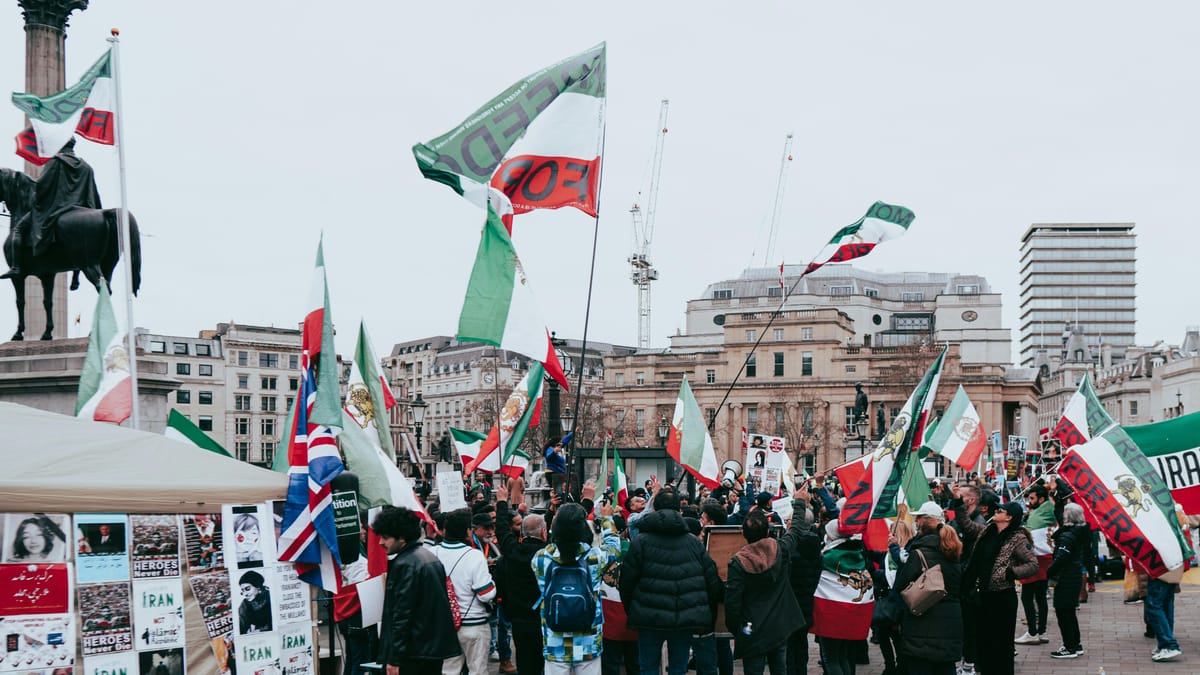
- Iran protests escalate with over 2,500+ killed; U.S. withdraws personnel from Middle East bases as Tehran warns of retaliation for potential strikes
- Uganda’s presidential election draws 21.6 million voters as incumbent Yoweri Museveni, 81, seeks seventh term amid internet blackout and opposition crackdown
California Voter-Approved Map Upheld: Five New Democratic Seats and the National Redistricting Divide
A federal court has upheld California’s voter-approved congressional map, which adds five seats favoring Democrats. The decision, issued January 14, 2026, by a 2-1 panel, found no conclusive evidence of racial gerrymandering and affirmed the legitimacy of direct democratic processes in redistricting.
What are the opposing political views?
Republican plaintiffs argued the map dilutes Latino voting strength in the Central Valley and constitutes an unconstitutional partisan power grab. They cited internal redistricting software logs and demographic shifts to support claims of racial targeting. The state and Independent Redistricting Commission countered that the map reflects a 64% voter mandate, complies with state law prohibiting racial criteria, and shows no statistically significant correlation between race and district boundaries.
The dissenting judge, appointed by Trump, emphasized the map’s impact on minority representation. The majority, appointed by Obama and Biden, focused on procedural compliance and lack of evidentiary proof for predominant racial motive.
What is the societal impact?
The ruling reinforces public confidence in ballot-initiated redistricting reforms, a model now active in 12–15 states. It also intensifies partisan narratives: Democrats frame the outcome as correcting historical underrepresentation; Republicans describe it as a partisan manipulation enabled by judicial deference.
The map reduces the number of Latino-majority districts from seven to five, raising concerns about diminished minority influence in candidate selection, even as the court found no legal violation.
How does this fit into national trends?
California’s outcome contrasts sharply with Texas, where a federal panel upheld a GOP-drawn map projected to add five Republican seats. These divergent rulings reflect an emerging pattern in federal courts—deferring to voter-approved maps in some states while permitting partisan maps in others.
This inconsistency increases pressure on the Supreme Court to clarify the scope of the Voting Rights Act and the limits of Rucho v. Common Cause. A pending case, Louisiana v. Callais, may set a national standard for race-conscious districting in 2026.
What comes next?
No appellate reversal is expected, as precedent favors deference to voter intent. However, the ruling is likely to spur similar ballot initiatives nationwide and renew litigation over minority representation thresholds—without resolving the deeper question of whether partisan outcomes, even when voter-approved, can undermine democratic fairness.
DOJ Investigation into Lawmakers' Military Dissent Video Sparks Constitutional Debate
The U.S. Department of Justice opened a criminal investigation in January 2026 into six Democratic lawmakers for their participation in a November 2025 video urging military personnel to refuse illegal orders. The video, titled "Don’t Give Up the Ship," was posted on social media and has since triggered federal legal action.
What Legal Principles Are at Stake?
The investigation centers on whether the lawmakers’ statements constitute sedition or protected political speech under the First Amendment. The Speech-or-Debate Clause of the Constitution, which shields legislative activities from executive prosecution, is central to the defense. Former military officers among the six—Sen. Mark Kelly and Reps. Chris Deluzio, Elissa Slotkin, Jason Crow, Maggie Goodlander, and Chrissy Houlahan—assert their remarks were expressions of constitutional duty, not criminal conduct.
How Has the Executive Branch Responded?
In December 2025, Defense Secretary Pete Hegseth issued a formal censure of Sen. Kelly and initiated a review that could reduce his retired rank and pension by 25%. Kelly filed a federal lawsuit in January 2026, alleging retaliation and violations of constitutional protections. This action marks an unusual overlap of executive disciplinary power and criminal prosecutorial intent targeting a sitting member of Congress.
What Societal Consequences Have Emerged?
Following public remarks by former President Trump labeling the lawmakers as "seditious, punishable by death," over 100 credible threats were reported against Rep. Slotkin. All six lawmakers now receive enhanced Capitol Police protection. The incident has intensified national discourse on the Uniform Code of Military Justice versus civilian First Amendment rights.
Are Political Narratives Influencing Legal Outcomes?
Republican officials frame the video as a threat to military discipline and national security, while Democratic leaders call the investigation a weaponization of law enforcement against dissent. Both narratives have been amplified by partisan media, contributing to public polarization. The timing of the DOJ’s action coincides with high-profile political rhetoric, raising concerns about the politicization of federal investigations.
What Institutional Shifts Are Likely?
Judicial review of Kelly’s lawsuit may clarify the scope of legislative immunity for former service members. Bipartisan hearings in the House and Senate Armed Services Committees are expected in early 2026 to define the legal boundaries of "illegal orders." Legislation to codify the definition of unlawful military directives and protect whistleblowers may follow. The case could reshape civil-military relations by establishing whether elected officials may publicly challenge military command protocols without legal reprisal.
Iran Protests Kill 2,500+ as U.S. Withdraws Troops Amid Mutual Threats
Over 2,500 deaths and 18,000 detentions were recorded by mid-January 2026, according to HRANA, AP, and Reuters. Protests, sparked by economic collapse and inflation, rapidly expanded into nationwide demands for political reform. The Iranian government responded with a communications blackout lasting over 144 hours, isolating 90 million citizens and hindering documentation of abuses.
Why did the U.S. withdraw personnel from Al Udeid?
The U.S. began a partial evacuation of approximately 10,000 troops from Al Udeid Air Base in Qatar on January 14, 2026, citing heightened threat levels. The move followed Iran’s public warning that U.S. military assets are legitimate targets if struck. The withdrawal contrasts with the deployment of the USS Abraham Lincoln carrier group to West Asia, indicating a strategic shift from forward deterrence to force protection.
How do opposing sides frame the crisis?
Iran’s regime labels protests as foreign-instigated terrorism, justifying lethal force as sovereign defense. The opposition, including reformist figures and diaspora groups, attributes unrest to economic collapse and systemic repression. Western governments condemn human rights violations and have closed embassies in Tehran, reducing consular staff by 30% in the UK and urging citizens to leave.
What societal consequences are emerging?
Medical systems are overwhelmed, with morgues at hospitals like Alghadir operating beyond capacity. Currency devaluation and renewed EU sanctions have deepened inflation. Prolonged internet shutdowns restrict freedom of expression and impede humanitarian reporting. Over 27,000 signatures have been collected in international petitions calling for action.
Is direct conflict imminent?
No kinetic strikes have occurred. Iran’s threats rely on asymmetric deterrence, primarily missile capacity, while the U.S. maintains a defensive posture. Diplomatic pressure continues through travel advisories, embassy closures, and multilateral sanctions. Escalation cycles are synchronized but contained, with neither side engaging in overt military action as of January 20, 2026.
Uganda's 21.6 Million Voters Face Internet Blackout Amid Incumbent's Bid for Seventh Term
The Ugandan government imposed a nationwide internet shutdown on 13 January 2026, one day before voting, alongside a ban on new SIM-card registrations and restrictions on outbound roaming. NetBlocks and ProtonVPN data show an 8,000% spike in VPN usage within an hour of the shutdown, indicating widespread public effort to circumvent censorship. The blackout coincided with the detention of over 200 journalists, human rights observers, and opposition activists, including prominent figures such as Kizza Besigye and Sarah Bireete.
How are opposing political views being suppressed?
The ruling NRM party asserts the shutdown is necessary to prevent misinformation and maintain stability. In contrast, the opposition National Unity Platform, led by Robert Kyagulanyi (Bobi Wine), argues the measure suppresses legitimate dissent and undermines electoral transparency. Civil society groups and the UN Human Rights Office state the blackout violates constitutional rights to free expression. International observers note the absence of independent monitoring, while Ugandan authorities claim the process will remain free and fair.
What are the societal consequences?
An estimated 70% of Uganda’s population is under 35, with mobile internet critical to informal-sector employment, e-commerce, and education. The blackout disrupted economic activity equivalent to 2–3% of GDP, costing $45–70 million in lost income. Youth-dependent sectors, including freelance work and digital marketplaces, were most affected. Historical data shows a 28% increase in protest probability following prior internet disruptions, raising concerns of localized unrest in university districts and eastern regions.
How has state security responded?
Kampala was divided into 14 military districts, with troops stationed at polling centers and opposition rallies. This granular militarization enhances state control over the voting environment but also facilitates targeted intimidation. The detention of opposition figures and media personnel reduces the capacity for real-time reporting and independent verification, increasing reliance on diaspora outlets and encrypted platforms.
What does the data suggest about electoral credibility?
Despite the blackout, voter registration reached 95% of eligible adults, suggesting strong participation. Turnout is projected at 70–75%. However, opposition reach in urban areas is estimated to have dropped by 5–7 percentage points due to communication restrictions. Internet access is expected to be restored gradually after polling, with mobile data selectively unblocked. VPN usage remains elevated 48 hours post-vote, signaling ongoing demand for uncensored information.
The convergence of high youth turnout, digital suppression, and institutionalized repression has created a high-stakes electoral environment. While the state maintains control over information flows, the resilience of alternative communication channels may shape post-election narratives and international assessments of legitimacy.
What else is happening?
- Senate Republicans kill bipartisan resolution requiring Trump to seek congressional approval for military action in Venezuela, with Vice President JD Vance breaking 50-50 tie
- House Democrats introduce articles of impeachment against DHS Secretary Kristi Noem over alleged obstruction, self-dealing, and enabling lethal ICE operations
- Minnesota officials and federal judges challenge Trump’s ICE surge operations after fatal shooting of activist Renee Good, with DOJ deploying 40 military lawyers to support enforcement
- U.S. Senate Republicans block funding for Greenland annexation as bipartisan legislation 'No Funds for NATO Invasion Act' passes to deter Trump's Arctic territorial claims
- Democrats and Republicans unite to oppose military intervention in Iran, with 70% of Americans rejecting use of force and 86% opposing armed takeover of Greenland
- U.S. Supreme Court revives Illinois lawsuit challenging mail-in ballots counted up to two weeks post-election, with conservative justices questioning federal candidate standing
- EU sanctions RT over Ukraine coverage as Russia condemns censorship, while German Chancellor Merz and India deepen ties on green hydrogen and defense submarine deals
- FBI raids Washington Post reporter’s home over Iran protest coverage, triggering global outcry over press freedom as Trump administration targets journalists and political opponents

Comments ()