Samsung Galaxy Z TriFold, Tesla Model Y Premium, and SKL Robotics Unveil 2026 Tech Benchmarks in Foldables, EVs, and Industrial AI
TL;DR
- Samsung Unveils Galaxy Z TriFold with Snapdragon 8 Elite Chip and Dual-Hinge Design, Setting New Standard for 2026 Foldable Smartphone Market
- SKL Robotics partners with Schaeffler to deploy humanoid robots in industrial environments using precision actuators and real-world data collection
- Tesla launches Model Y Premium trim with 7-seat configuration, 16-inch QHD display, and black headliner, priced at $51,490 excluding fees
- Faraday Future unveils FX Super One EV at CES 2026 with FF E.A.I. AI agent, 400–600km range, and zero-gravity seating targeting March 2026 production launch in USA
- Ola Electric launches India’s first domestically engineered residential BESS, Ola Shakti, with 0ms changeover and IP67-rated batteries for monsoon resilience in Tamil Nadu
- XPeng secures 10 billion yuan credit line from ICBC to accelerate global expansion and fund seven new EV models, including full-size flagship SUV planned for 2026
- Kia launches EV3 GT, EV4 GT, and EV5 GT electric performance models with 288–302 hp and 0–62 mph times under 6.2 seconds
- Autonomous robotics enter industrial deployment as Multiply Labs uses NVIDIA Isaac Sim to automate cell therapy labs, reducing contamination and scaling precision biomanufacturing
- Genesis GV70 disrupts German luxury SUV segment with 2026 model featuring hybrid option, 27-inch touchscreen, and Top Safety Pick+ rating, challenging BMW X3 and Audi Q5
Samsung Galaxy Z TriFold’s Dual-Hinge Design and Snapdragon 8 Elite Set New Benchmarks for Foldable Phones in 2026
The Galaxy Z TriFold features a dual-hinge mechanism that enables a 10-inch LTPO-AMOLED main display and a 6.5-inch cover screen, both with peak brightness exceeding 2,600 nits. The inner hinge folds the outer panel inward, while the outer hinge folds the entire stack, achieving a compact form factor without sacrificing screen real estate. The device is built with 12 GB LPDDR5X memory and 512 GB UFS 3.1 storage.
What performance advantages does the Snapdragon 8 Elite Gen 5 deliver?
The Snapdragon 8 Elite Gen 5, built on a 6 nm process, includes an 8-core Kryo CPU, a 30 TOPS AI engine, and an integrated X55 5G modem. This enables low-latency connectivity, on-device AI processing, and high-resolution image signal processing via a 200 MP main camera, 12 MP ultra-wide, 10 MP 3× telephoto, and dual front sensors. The 5,600 mAh battery supports 45 W wired and 15 W wireless charging.
Can the device’s hardware support autonomous vehicle or robotics applications?
The device’s hardware architecture enables technical extrapolations for automotive and robotics use cases. The 30 TOPS AI engine and multi-camera array may facilitate real-time sensor fusion for V2X communication when used as an in-vehicle infotainment or driver-monitoring unit. The dual-hinge design allows the device to function as a handheld controller or large-format display in robotic tele-operation systems. The X55 modem’s sub-6 GHz and mmWave support enables edge-compute offloading for autonomous fleets. Hardware-rooted security via Knox aligns with ISO 26262 ASIL-B baselines for infotainment systems.
What are the projected industry impacts?
- H1 2026: CES showcase establishes the TriFold as a reference device for in-vehicle UI prototypes.
- H2 2026: Fleet-testing firms adopt the device for mobile robot control stations, leveraging its form factor and sensor suite.
- 2027: Potential inclusion in ISO standards for consumer-grade camera-based ADAS validation.
- 2028+: Snapdragon 8 Elite’s AI engine may be repurposed in autonomous delivery drones as a lightweight compute node.
What actions should stakeholders take?
- Samsung: Release an AV-ready SDK with V2X and camera-streaming APIs to enable third-party integration.
- Automotive OEMs: Pilot integration of the TriFold in limited-run test vehicles for driver-monitoring validation.
- Robotics firms: Develop mounting solutions that exploit the dual-hinge for switchable handheld/tabletop modes.
- Regulators: Update testing protocols to recognize high-resolution consumer cameras in ADAS validation frameworks.
The Galaxy Z TriFold’s technical specifications position it as a platform with potential beyond consumer mobility, offering a foundation for next-generation edge-AI systems in automotive and robotics domains.
SKL Robotics and Schaeffler Deploy Humanoid Robots with Precision Actuators in Industrial Settings
SKL Robotics’ HMND-01 Alpha and HRND-01 platforms integrate Schaeffler’s precision planetary-gear actuators featuring 24-bit encoders, torque-sensing, and closed-loop control. These actuators achieve joint-position repeatability under 0.02 mm and torque density exceeding 150 Nm/kW. The system supports torque-limited soft-contact mode for delicate part handling and recovers up to 12% of kinetic energy during deceleration, extending battery life from 4 to 4.5 hours.
How is real-world data used to improve robot performance?
A sensor suite—including 6-DoF IMU, 6-axis force/torque sensors, LiDAR, and stereo cameras—streams data at 10 Gbps with <10 ms latency to edge compute nodes. This data feeds reinforcement learning models trained on 10 TB/week of tele-operation records, reducing skill acquisition time from 48 hours to under 12 hours. Success rates on unseen obstacle courses reached 0.87, matching Atlas benchmarks.
What industrial integration capabilities are enabled?
The robots operate on ROS 2 with DDS-TSN for deterministic <5 µs jitter, enabling V2X-style coordination among multiple units. They interface with enterprise MES via OPC-UA and comply with ISO 3691-5 and IEC 61508 safety standards. Predictive maintenance triggers when vibration RMS exceeds 0.15 g, extending actuator service intervals by 20%.
What is the projected scale and economic impact?
A pilot deployment is scheduled for a Boston electronics assembly line in 2026 H2, targeting >95% uptime. By 2028, 5,000 units are planned across automotive, aerospace, and consumer electronics OEMs. At $120,000 per unit, cumulative labor-cost avoidance is projected at $1.2 billion annually in high-mix, low-volume lines.
What future advancements are anticipated?
By 2027 H1, edge AI accelerators (Cortex-M55 + NPU) will reduce perception-to-action latency to ≤3 ms, enabling on-board obstacle avoidance without cloud dependency. By 2028, the Schaeffler-SKL actuation API may become a de facto standard, supporting third-party gripper and skill libraries. MTBF is projected to exceed 10,000 hours by 2029, enabling mass deployment in logistics and precision assembly.
What risks are mitigated in this deployment?
Actuator fatigue is managed by firmware torque throttling and adaptive load scheduling. Factory layout data is protected via edge encryption and zero-knowledge model updates. Network latency spikes are prevented by TSN-backed deterministic fallback control. Regulatory compliance is modular, with automated certification scripts generating region-specific safety reports for US, EU, and Korean markets.
Tesla Model Y Premium Adds 7 Seats and Enhanced Display, Aligning Hardware with FSD and EU Regulatory Timelines
The 2026 Model Y Premium features a 16-inch QHD display with 80% more pixels than the prior model, enabling higher-resolution visualization of FSD telemetry without increasing driver distraction. The wheelbase has been extended by 186 mm, and the rear camera relocated 10 cm backward, improving rear-blind-spot coverage and reducing false-negative detections in cross-traffic scenarios.
What regulatory advantages does the trim offer?
The vehicle’s hardware changes preemptively align with EU UNECE R155/156 cybersecurity and functional safety mandates. Rear-camera geometry updates require additional 10% rear-impact test cases under ISO 26262 ASIL-D, with certification due by July 2026. V2X communication capabilities, including e-Call and cooperative cruise, will be integrated OTA by Q4 2026 to meet emerging EU mandates.
How does pricing correlate with autonomous features?
The Premium trim’s $51,490 base price (excluding fees) includes a $4,010 AV-related premium over the standard Model Y. This equates to $0.13 per added display pixel and $0.20 per additional seat. A 30-day FSD trial is bundled, with projected 15% conversion to paid subscription, generating $1.2–$1.5k in incremental annual revenue per vehicle.
What is the revenue and rollout timeline?
- Q2 2026: ISO 26262 ASIL-D certification completed for EU Type-Approval submission.
- Q3 2026: EU-wide FSD beta launches in Germany and France, with expected 18% subscription conversion.
- Q4 2026: Full V2X integration deployed via OTA update.
- Q1 2027: In-house insurance program introduces discounts for FSD users with ≤2% claim rates.
By end-2027, the Model Y Premium is projected to generate approximately $3 billion in combined vehicle sales and autonomous service revenue across U.S. and EU markets, while maintaining compliance with all major regulatory frameworks.
Faraday Future FX Super One EV Aims to Lead with AI-Driven HMI and V2X Integration
Faraday Future unveiled the FX Super One electric sedan at CES 2026, targeting a March 2026 production launch in Arizona. The vehicle offers a 400–600 km WLTP range and integrates the FF E.A.I. conversational AI agent to manage driver-vehicle and vehicle-to-everything (V2X) interactions.
What technology enables its AI and connectivity features?
- FF E.A.I.: Voice-first human-machine interface supporting navigation, system control, and encrypted C-V2X messaging.
- Sensor suite: Four LiDARs, six radars, twelve cameras for Level 2+ ADAS.
- Compute platform: NVIDIA Drive AGX for real-time processing with sub-30 ms latency.
- V2X compliance: Qualcomm C-V2X modem certified under SAE J3061 with AES-256 encryption.
How does it align with broader AV industry trends?
- Low-cost perception: LiDAR costs are falling below $100, improving affordability for premium EVs.
- V2X adoption: C-V2X is becoming a baseline for safety-critical communication, with regulatory pathways established by NHTSA and FCC.
- AI-mediated HMI: Conversational agents are replacing traditional controls; ISO 26262 compliance requires context-aware voice disabling during critical driving events.
What is the roadmap to higher autonomy?
- 2026 Q3: Launch Level 2+ ADAS under NHTSA Limited-Function waiver.
- 2027: OTA upgrade to Level 3 conditional automation on highways.
- 2028: Submit formal Level 3 safety case to NHTSA; begin robotaxi pilot in Phoenix and Austin.
- 2029: Target Level 4 operation in low-complexity suburban zones.
What broader impact could it have?
- Accelerates sub-$100 LiDAR supply chains for freight and passenger vehicles.
- Generates real-world V2X data for smart-city infrastructure planning.
- Sets a benchmark for ISO 26262-compliant AI dialog systems in consumer vehicles.
- Provides a regulatory case study for federal AV policy development.
The FX Super One does not lead in range or performance but positions itself as an AI-first platform. Its success depends on timely integration of affordable LiDAR, rigorous cybersecurity certification, and safe human-AI interaction design. If executed, it could transition from premium EV to autonomous mobility service provider within three years.
Ola Shakti BESS Enables Grid Resilience for Future EV and Autonomous Fleets
Ola Electric’s Ola Shakti is a 13.5 kWh modular battery energy storage system (BESS) with 0ms changeover and IP67-rated enclosures, designed for monsoon-resilient residential use in Tamil Nadu. The system uses domestically produced Bharat Cells and supports scalable deployment via three 4.5 kWh units.
What grid capabilities does Ola Shakti provide?
- Grid-forming inverter technology enables islanded operation and frequency regulation
- 0ms switch-over ensures uninterrupted power during outages
- IP67 rating guarantees dust and water resistance under 1m immersion for 30 minutes
- Modular design allows aggregation into virtual power plants (VPPs)
How might this impact autonomous vehicle ecosystems?
- Grid-forming inverters can stabilize charging stations in regions with unstable supply
- IP67-rated enclosures support reliable operation of roadside V2X communication nodes in high-rainfall zones
- Domestic cell production reduces supply chain exposure for local EV and AV manufacturers
- VPP-capable residential units may contribute to peak-shaving and demand-response services for autonomous fleet depots
Are direct integrations with AVs confirmed?
No direct linkage between Ola Shakti and autonomous vehicles exists in the current deployment. The system is marketed exclusively for residential energy storage. Any application to AV infrastructure remains speculative and contingent on future integration with V2G or fleet management systems.
What policy and technical developments should be monitored?
- Future announcements of Ola Shakti integration with V2G pilots
- Real-time performance data from BESS deployed near AV charging hubs
- Alignment with Indian grid-forming incentives under Viability Gap Funding schemes
- Compliance with IEC 61850-9-2 and ISO 26262 standards for grid-vehicle interoperability
XPeng Secures 10 Billion Yuan to Launch Seven New EVs and Advance Level-3 Autonomy by 2026
XPeng has secured a 10 billion yuan credit line from ICBC to fund seven new electric vehicle models and accelerate global market entry. The funding supports hardware upgrades, production scaling, and regulatory compliance for autonomous driving systems.
What autonomous capabilities are being deployed?
All seven 2026 models support SAE Level 2+ autonomy, with the flagship full-size SUV targeting Level 3 pilot status by Q4 2026. The vehicle will feature a 5-LiDAR, 8-radar, 16-camera sensor suite and edge-AI processing compliant with UNECE R155/R156.
How is production capacity being expanded?
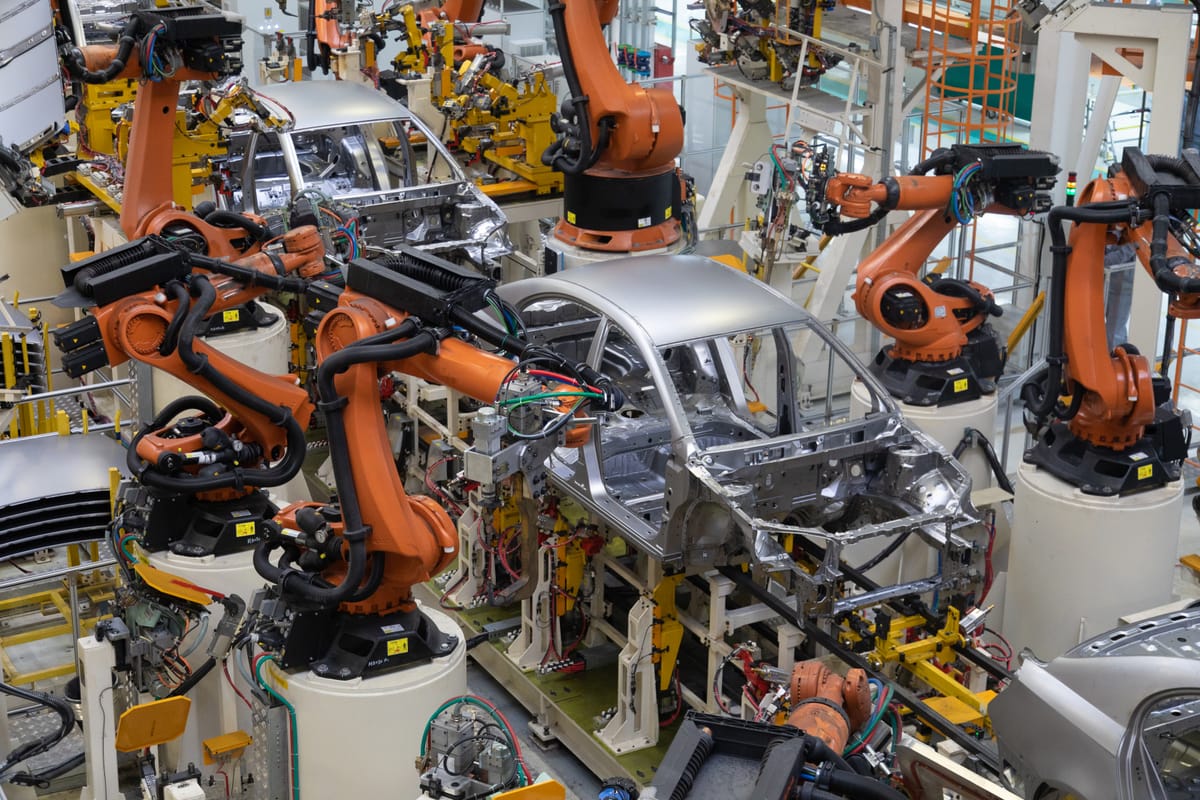
The Zhaoqing manufacturing facility is upgrading to a 90-second takt time with robotic battery pack integration. This increases throughput and reduces per-unit autonomous hardware costs by approximately 12%.
What international markets are being targeted?
EU markets are prioritized through partnerships with VW for C-V2X integration and Magna Steyr for homologation testing. The credit line includes tariff hedging to achieve a 20% reduction in EU import duties. Pilot programs for the P7+ sedan will begin in Germany and France.
What regulatory milestones are planned?
- EU Type Approval (P7+): Q3 2026, under UNECE R155/R156
- US NHTSA Level-3 pilot: Conditional approval targeted for California and Arizona
- China MIIT Level-3 rollout: Nationwide deployment by Q4 2026
What sensor and software upgrades are underway?
- Sensor suite standardized across models: 3–5 LiDAR, 4–8 radar modules, 12–16 cameras
- OTA-updatable Xpilot 4.0 software with PKI-based V2X security
- 10⁶ km virtual mileage per model tested via hardware-in-the-loop simulation
What is the long-term roadmap?
- 2027: Robotaxi service launch in Berlin and Munich using Flagship SUV platform
- 2028: Geofenced Level-4 operation in Chinese Tier-1 cities via VLA 2.0
- 2029: Driverless P7-X prototype for limited-area deployment in Shanghai
What supply chain actions are critical?
- Dual-sourcing for LiDAR and high-frequency radar to mitigate shortages
- Credit line liquidity used to hedge EU duty exposure
- Integration of thermal management for edge-AI chips to ensure <30ms perception latency
Kia EV-GT Models Launch as High-Performance EVs Without Autonomous Features
No. The EV3 GT, EV4 GT, and EV5 GT are performance-oriented electric vehicles with power outputs of 288–302 hp and 0–62 mph times of 5.6–6.2 seconds. All use the 400V E-GMP platform and lack LiDAR, radar, high-performance compute units, V2X communication, or Level 2+ ADAS hardware.
Can these models be upgraded to support autonomous driving?
Not without hardware redesign. The 400V architecture limits data bus bandwidth to approximately 1 Gbps, insufficient for high-resolution sensor fusion required for Level 3 autonomy. Kia’s existing EV6 GT includes Highway Driving Assist 2 (Level 2), but this feature is not standard on the GT models and would require a firmware update to activate.
What is Kia’s timeline for integrating autonomy?
Kia plans to migrate flagship models to an 800V platform by 2026–2027, enabling higher bandwidth and future integration of Level 3 systems. The EV-GT lineup, built on the older 400V platform, is not included in this roadmap. A mid-cycle refresh post-2027 would be necessary to support LiDAR, redundant sensors, or ASIL-D certified safety architectures.
What autonomous features are currently feasible?
OTA updates to enable Level 2+ features—such as adaptive cruise control and lane-keeping—are technically possible and should be deployed by Q1 2026. These updates improve safety but do not alter regulatory classification or enable semi-autonomous operation.
What strategic options exist for future autonomy?
- Engineering: Publish sensor specifications to clarify integration limits.
- Product: Align a 2027 hardware refresh with 800V platform migration.
- Regulatory: Begin UN-R157 pre-certification testing on prototype variants.
- MaaS: Equip GT models with external V2X telematics modules for pilot fleet trials.
- Investors: Monitor 800V platform rollout as an indicator of future autonomous capability.
Conclusion
The EV-GT series is a performance EV launch, not an autonomous vehicle initiative. Its value lies in powertrain efficiency and driving dynamics. Autonomous functionality remains contingent on future platform upgrades not yet announced.
Autonomous Robotics Cut Contamination and Costs in Cell Therapy Manufacturing
Multiply Labs has deployed NVIDIA Isaac GR00T humanoid robots, guided by Isaac Sim 5.2 digital twins, to automate sterile cell-processing tasks in GMP-compliant labs. The system eliminates human contact, reducing contamination risk by approximately 90%. Throughput increased three- to fivefold, cell yield rose sevenfold, and cost per dose dropped by about 80%.
What technologies enable this automation?
The robots integrate 6-DOF force-feedback arms, 12-MP stereo vision, LiDAR, and ROS-2 middleware. Isaac Sim replicates fluid dynamics and kinematics at sub-millimeter precision, enabling virtual validation of aseptic procedures. This digital-twin approach reduces FDA certification time by approximately 40%.
How is the industry adopting similar systems?
- Doosan and NVIDIA launched a Sim-to-Real training pipeline (Jan 9, 2026).
- Krones reduced computational fluid dynamics cycles from hours to minutes using digital twins (Jan 10, 2026).
- Boston Dynamics’ Atlas production model adopted identical ROS-2 perception and high-torque actuation (Jan 11, 2026).
- NVIDIA released Isaac Lab-Arena and LeRobot as open-source libraries (Jan 5, 2026), enabling cross-platform policy reuse.
What regulatory changes support this shift?
The FDA’s 2025 Software as a Medical Device (SaMD) guidance now accepts simulation-based sterility verification. Multiply Labs’ digital-twin logs are used in FDA pilot programs. IEC 62443 Level 3 compliance is met via tamper-proof audit trails. ISO 13485 is expected to require continuous-learning safety cases by 2027.
What are the projected impacts by 2028?
- 30% of U.S. cell therapy GMP sites will use Isaac Sim-enabled robots.
- Industry-wide cell yield improvements of 5–10×.
- Per-dose manufacturing costs reduced by 60–80%.
- Validation timelines shortened by 30–45%.
- Contamination rates projected below 0.1% per batch.
Is this trend expanding beyond biomanufacturing?
Yes. The same sensor fusion (LiDAR + stereo vision + ROS-2), GPU-accelerated simulation, and closed-loop control systems are deployed in autonomous freight (Waymo), heavy machinery (Caterpillar), and automotive assembly (Hyundai). A shared autonomy kernel is emerging across domains, accelerating deployment timelines from years to months.
Genesis GV70 2026 Challenges German Luxury SUVs with Hybrid Power and Large Infotainment, Not Autonomous Driving
The 2026 Genesis GV70 introduces a hybrid powertrain and a 27-inch OLED touchscreen, enhancing its appeal in the luxury SUV segment. It also earns the NHTSA Top Safety Pick+ rating, indicating robust standard safety features including forward collision avoidance, lane-keeping assist, and blind-spot monitoring. These capabilities align with the baseline ADAS offerings of the BMW X3 and Audi Q5 for the same model year.
Is the GV70 differentiated by autonomous driving technology?
No. The GV70, BMW X3, and Audi Q5 all lack disclosed sensor suites, V2X communication, or hands-free driver-assist systems like Super Cruise. None of the three models specify SAE autonomy levels, OTA update policies, or sensor counts. While the GV70’s large infotainment screen suggests potential for future software updates, no official documentation confirms OTA support for ADAS features.
What AV capabilities are missing compared to industry benchmarks?
The GV70 does not include LiDAR, radar/camera fusion beyond standard Level 2, or V2X modules. Competitors such as the 2024 Cadillac Escalade-V offer hands-free highway driving via Super Cruise, a feature absent in all three models. Without explicit hardware disclosures or ISO 26262/ISO 21434 safety certifications, the GV70 cannot be evaluated for future upgradability to Level 3 autonomy.
What is the projected timeline for AV enhancements?
- 2026–2027: Introduction of optional Level 2+ driver-assist package using Hyundai’s SmartSense platform.
- 2027–2028: OTA firmware updates for map and sensor calibration, leveraging existing infotainment architecture.
- 2028–2029: Optional C-V2X module for European smart-infrastructure compliance.
- 2029+: Potential Level 3 highway autonomy if Hyundai’s Autonomous Driving Unit reaches production readiness.
What actions should Genesis take to close the AV transparency gap?
- Publish detailed sensor specifications (camera, radar, ultrasonic count).
- Declare an SAE autonomy target (e.g., "Level 2 ready").
- Implement ISO 26262 and ISO 21434 safety certification processes.
- Confirm OTA capability for ADAS feature upgrades.
- Market the GV70 as a hybrid-first vehicle with a future-proof software architecture.
The GV70’s current competitive advantage lies in powertrain efficiency and display technology. Without transparent AV hardware and software planning, it remains functionally equivalent to its German rivals in autonomous capability.


Comments ()