Intel & Khadas Launch 86-TOPS Mini PCs; Micron 3610 SSD Sets Compact Storage Benchmark
TL;DR
- Intel and Khadas Launch AI X1 Pro-470 and Mind Pro Mini PCs with 86 TOPS NPU and RTX 5060 Ti, Redefining Compact HPC Workstations
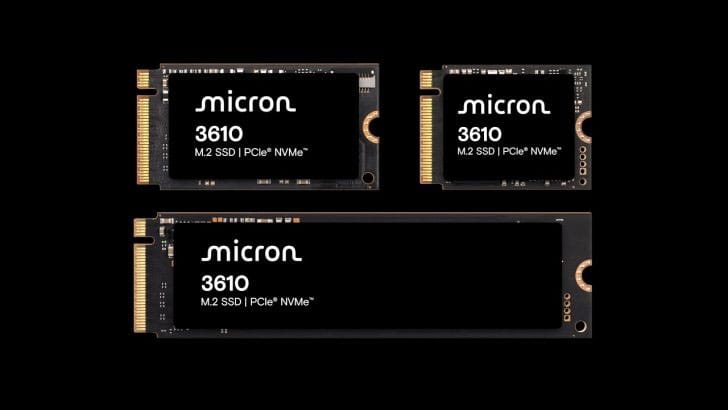
- Micron launches 3610 NVMe SSD with PCIe Gen5 and NVMe 2.0 support, offering 4TB capacity in M.2 2230 form factor with 57% faster sequential reads and 800 TBW endurance
- NVIDIA Unveils RTX 5090 GPU with 800W Power Draw, Triggering Asus Recall Over Liquid Metal Thermal Issues
- D-Wave Quantum Acquires Quantum Circuits Inc. for $550M to Accelerate Quantum Cloud Platform and Dual-Rail Technology Integration
- Microsoft and AMD Collaborate on Ryzen 9000X3D and Radeon RX 7900 XTX Systems, Proving Linux Gaming Competitiveness at 4K Ultra
- DTE Electric Secures Michigan Regulatory Approval for $1.8GW Data Center with Conditional Safeguards on Energy Costs and AI Demand
- JinkoSolar and XtalPi Deploy First AI-Driven Closed-Loop Tandem Solar Cell Development Line, Achieving 34.76% Efficiency with Quantum Physics Models
Intel and Khadas Launch Compact Workstations with 86 TOPS NPU and RTX 5060 Ti for Edge AI
The Minisforum AI X1 Pro-470 and Khadas Mind Pro introduce sub-liter HPC systems with 86 TOPS NPU and RTX 5060 Ti GPU, targeting on-site AI inference and graphics-intensive workflows. Both devices measure 0.43L and weigh 1.5kg, matching laptop-sized form factors while delivering desktop-class performance.
How do the two systems differ in architecture?
| Feature | AI X1 Pro-470 | Khadas Mind Pro |
|---|---|---|
| CPU | AMD Ryzen AI 9 HX470 (Zen 5) | Intel Core Ultra 9 388H (Panther Lake) |
| GPU | Integrated Radeon 890M | Discrete RTX 5060 Ti (8GB GDDR7) |
| AI Accelerator | 86 TOPS dedicated NPU | Tensor Cores via RTX 5060 Ti (~45 TOPS) |
| Memory | Up to 128GB DDR5 | 64GB LPDDR5-X |
| Storage | Up to 12TB NVMe PCIe 4.0 | 2TB NVMe PCIe 4.0 |
| Connectivity | Dual 2.5GbE, Wi-Fi 7, USB4 | Dual 2.5GbE, Wi-Fi 7, USB-C PD 100W |
The AI X1 Pro-470 prioritizes dedicated NPU efficiency for low-latency inference, while the Mind Pro emphasizes discrete GPU throughput for mixed AI-graphics tasks.
What trends do these devices reflect?
- Hybrid AI acceleration is standard: NPU and Tensor Core paths coexist, enabling workload-specific optimization.
- Enterprise networking (2.5GbE + Wi-Fi 7) is now baseline for edge deployments.
- Storage capacity exceeds memory scaling: 12TB NVMe in a 0.43L chassis signals demand for edge-data pipelines.
- Power efficiency improved by ~30% vs. 2024 models, supporting fanless or quiet operation.
What is the projected evolution through 2028?
- Late 2026: Intel Core Ultra 4 with ≥70 TOPS on-chip NPU and Xe-4 iGPU.
- 2027: AMD Ryzen AI 400 with ≥120 TOPS NPU and RDNA 3.5 graphics.
- 2028: RTX 6000 Ti-class GPUs in sub-liter form factors, PCIe 6.0 storage standard.
These systems redefine portable computing by enabling real-time video analytics, 3D reconstruction, and digital twin simulations at the edge, reducing reliance on cloud infrastructure.
What market impact is expected?
OEMs combining high-TOPS AI acceleration with enterprise-grade connectivity will capture demand for portable AI labs, remote rendering nodes, and on-premise inference systems. Software ecosystems (CUDA, oneAPI, ROCm) are already certified across platforms, ensuring developer compatibility.
The convergence of compact size, high performance, and edge-ready networking positions these mini PCs as viable replacements for rack-mounted inference servers in industrial, medical, and media applications.
Micron 3610 SSD Sets New Standard for Compact High-Endurance Storage in Thin Devices
The Micron 3610 NVMe SSD delivers 11 GB/s sequential reads and 9.3 GB/s writes via PCIe Gen5 ×4 and NVMe 2.0, representing a 57% and 45% improvement over Gen4 QLC drives. It is the first 4TB SSD in the M.2 2230 form factor, enabling deployment in ultrathin laptops and edge-AI modules with Z-heights under 2mm.
How does endurance compare to competing drives?
The 4TB variant offers 800 TBW endurance, double the typical 300–400 TBW of Gen5 QLC competitors. This supports sustained workloads such as 4K video editing and AI training snapshots without premature wear. Enterprise models benefit from TCG Opal 2.02 encryption and FIPS-140-2 compliance.
What are the power and efficiency advantages?
The drive improves performance-per-watt by 43% compared to Gen4 QLC, extending battery life by approximately 1 hour in fanless ultrabooks. NVMe 2.0 features like DEVSLP reduce idle power by 15% through namespace-level power gating.
How does it fit into current industry trends?
The 2230 form factor is becoming standard for next-generation thin devices. OEMs including Dell and Lenovo have already qualified the 3610 for upcoming models. Competitors like Phison, Netac, and Kingston offer higher peak speeds but lack the same endurance or form-factor density.
What is the projected market trajectory?
- Q2 2026: First laptops with 3610 4TB units ship at ~$250/GB premium pricing.
- Q4 2026: Phison’s E38T (8TB, DRAM-less) may reduce Gen5 pricing by 15%.
- H1 2027: Windows 11 23H2 NVMe 2.0 power optimizations will boost battery life an additional 12% on compatible systems.
- Q3 2027: Micron is expected to unveil a Gen6 prototype with PCIe 6.0 support, maintaining the 2230 footprint.
Who benefits most from this drive?
OEM designers gain a density-optimized solution for fanless devices. System integrators can pair it with low-power CPUs to reduce idle power. Enterprise IT gains durable, encrypted storage for VDI and thin-client deployments. Channel partners can position it as a premium-capacity alternative to bulkier 2280 drives with lower endurance.
The Micron 3610 does not lead in raw speed but defines a new benchmark for compact, high-endurance storage in space-constrained applications.
Comments ()